
10 Nicknames for Ireland and the History Behind Them

Destguides may receive commissions from purchases made through affiliate links in this article.
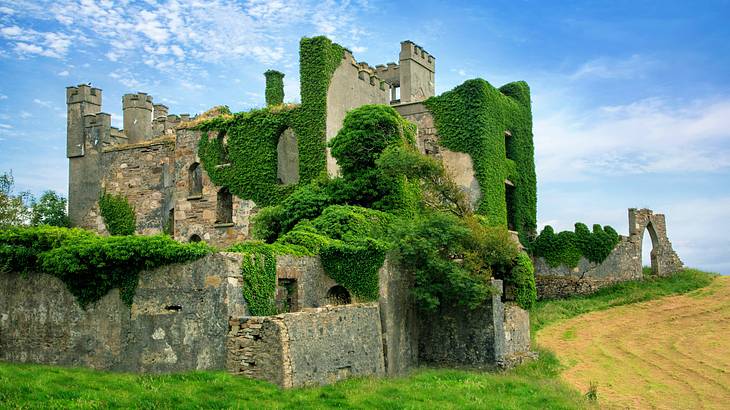

Ireland is known for its lush green landscapes, lively pubs, and friendly people. Visitors come from all over the world to experience its rich history, stunning scenery, and delicious food. But what truly sets Ireland apart is its deep cultural heritage.
Over the years, the country has picked up many nicknames, including "Hibernia" and the "Land of a Thousand Welcomes." Some nicknames are still used today, while others are more historical. Each one highlights a different part of Ireland's character.
Here are 10 nicknames for Ireland, each with its own story. Continue reading to uncover their origins and what they reveal about this unique country.
10 Ireland Nicknames

Hibernia
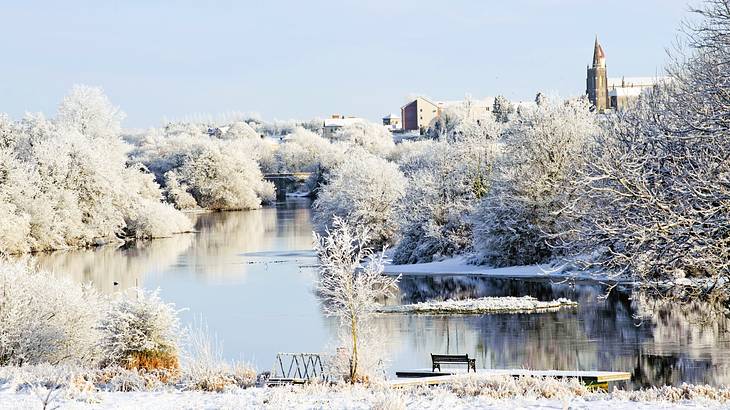
One historic nickname for Ireland is "Hibernia," which was the name used by the ancient Romans to refer to the island. It likely came from earlier Greek references to Ireland and may have been influenced by the Latin word hibernus, meaning "wintry," possibly due to the island's climate or remote location.
The earliest known use of "Hibernia" in writing was by the Roman historian Tacitus in his 98 AD work Agricola. While the Romans never invaded Ireland, the name stuck and was used in classical texts and maps.
Although it's an old term, "Hibernia" still appears today in names like Hibernian F.C., a Scottish football club, as well as in poetry, songs, and other literary references to Ireland.
Inis Fáil
The Lia Fáil is a standing stone situated on the Hill of Tara in County Meath, Ireland. In Irish mythology, it was said to roar when the rightful High King of Ireland stood upon it, which is why it was used as a coronation stone in ancient times.
According to legend, the Lia Fáil was brought to Ireland by the Tuatha Dé Danann, a supernatural race in Irish mythology. The stone became associated with the poetic name "Inis Fáil," meaning "Island of Destiny," and Fál later became an ancient name for Ireland.
While the nickname isn't commonly used today, the Lia Fáil still stands on the Hill of Tara as a powerful symbol of Ireland's mythic past.

The Land of Saints and Scholars
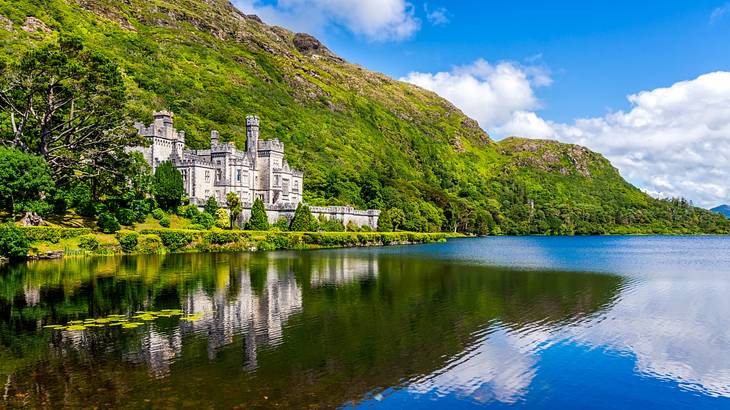
Ireland became known as the "Land of Saints and Scholars" during the early medieval period, a nickname that reflected its deep religious devotion and intellectual activity. Christianity spread rapidly after arriving around 400 AD, leading to the growth of monasteries and convents across the island.
These religious institutions became important centers of learning. While much of Western Europe experienced decline after the fall of the Roman Empire, Ireland's remote location helped shield it from invasions and instability, allowing its monastic culture to flourish.
This period, often referred to as Ireland's Golden Age, was characterized by exceptional religious, intellectual, and artistic achievements. Irish monks not only preserved classical texts but also traveled extensively across Europe to establish monasteries and disseminate knowledge. This legacy earned Ireland the Latin title "Insula Sanctorum et Doctorum"—the "Island of Saints and Scholars."
The Emerald Isle
Ireland is famously known for its lush greenery, which inspired the nickname the "Emerald Isle." The phrase is believed to have first appeared in a 1795 poem by William Drennan titled When Erin First Rose.
While the poem utilizes Ireland's green landscape as a symbol, it primarily addresses the political struggles against British rule during that time. In one of the stanzas, Drennan refers to Ireland as the" Emerald Isle," highlighting its vibrant natural beauty.
Today, the nickname is still used, though less frequently in everyday conversation. Tourism companies most commonly employ it to attract visitors by promising the island's famous verdant landscapes.

The Celtic Tiger
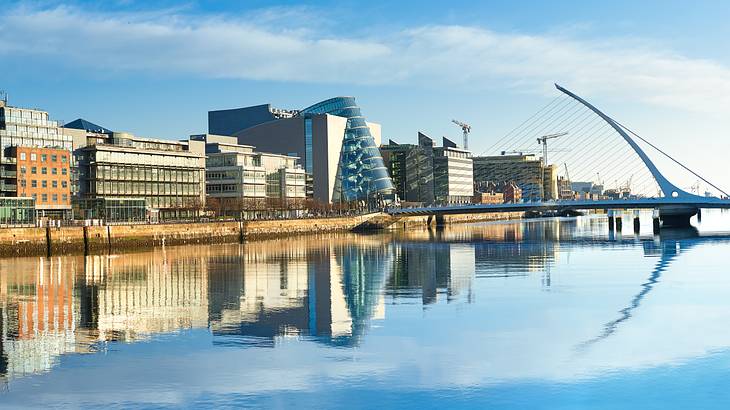
Between 1995 and 2007, Ireland experienced a period of rapid economic growth known as the "Celtic Tiger." Until 2020, the economy expanded at an average annual rate of around 9.4%, transforming Ireland from one of the poorest countries in Western Europe into one of the fastest-growing economies.
The term "Celtic Tiger" was popularized by Kevin Gardiner, an economist at Morgan Stanley, in a 1994 report titled The Irish Economy: A Celtic Tiger? The nickname drew inspiration from the Four Asian Tigers—Hong Kong, Singapore, South Korea, and Taiwan—whose economies had seen similar rapid growth.
The phrase quickly gained traction and became widely used in global media to describe Ireland's economic transformation. Although the boom ended with the global financial crisis in 2008, the term "Celtic Tiger" remains occasionally referenced today, especially in economic commentary and publications such as The Irish Times.
The Land of a Thousand Welcomes
Ireland is often called the "Land of a Thousand Welcomes," a nickname inspired by the Irish phrase céad míle fáilte, which means "a hundred thousand welcomes." You'll see this greeting across the country — on shop signs, doormats, airport banners, and tourism brochures — as a warm symbol of Irish hospitality.
The phrase reflects a deep cultural value: generosity toward guests and strangers. While Brehon Law, the ancient Irish legal system, hasn't been practiced in centuries, it did emphasize the importance of hospitality.
One such law required hosts to care for travelers, even if they were strangers. Although the laws are no longer in effect, the spirit behind them remains an integral part of Ireland's identity.
This reputation for warmth has helped make the nickname popular among visitors, and it's often used in tourism marketing to showcase Ireland's well-known friendly welcome.
Irish Free State
Irish Free State was the official name of Ireland from 1922 to 1937, following the country's independence from the United Kingdom after the Anglo-Irish Treaty. The name marked the establishment of Ireland as a self-governing dominion within the British Commonwealth, similar to Canada at the time.
While not a nickname, the term is sometimes used informally or historically to refer to Ireland during that transitional period. It was later replaced by the name Éire in the 1937 Constitution, and eventually by the Republic of Ireland in 1949.
Éire
This one isn't technically a nickname — Éire is the official Irish-language name for Ireland. It originates from the name Ériu, a goddess in Irish mythology associated with the land and sovereignty. Along with her sisters Banba and Fódla, Ériu was said to represent the spirit of Ireland, and the island was named in her honour.
Over time, Ireland has had several official names, but Éire and Ireland continue to be used today. You'll see Éire on Irish Euro coins, postage stamps, government seals, and passports.
While not a nickname, Éire is deeply symbolic and sometimes used poetically. The names Éire and Ériu have occasionally been chosen as baby names, both in Ireland and abroad, though they remain relatively rare.

The Home of Guinness
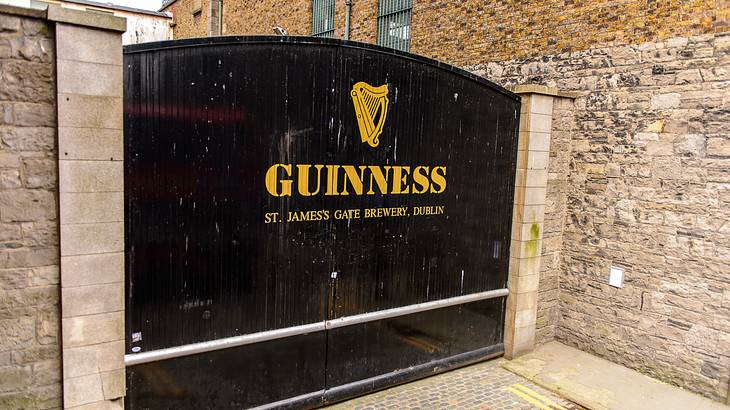
One self-explanatory Ireland nickname is the "Home of Guinness." In 1759, Arthur Guinness founded the now-famous St. James's Gate Brewery in Dublin, signing a remarkable 9,000-year lease for the property.
As Guinness grew in popularity, the brewery became the largest in Ireland by 1838, and the largest in the world by 1886. The beer has since become a global icon, brewed in over 40 countries and sold in more than 100.
While "Home of Guinness" isn't a widely used nickname in everyday speech, it's strongly associated with Ireland. The Guinness brand often uses it in marketing campaigns, and for many around the world, the name Guinness instantly brings Ireland to mind.
Auld Sod
During the 19th century, much of Ireland's population became heavily dependent on potatoes as a primary food source. When a crop disease known as late blight struck in 1845, it devastated harvests for several years, triggering the Great Famine (1845–1852).
With widespread starvation and poverty, around one million people died, and another million or more emigrated, many to the United States, Canada, and Britain. Among Irish emigrants, the phrase "the Auld Sod" — with sod meaning soil and auld meaning old — became a nostalgic nickname for Ireland, symbolising the homeland they had left behind.
Though many had no choice but to leave, calling Ireland the "Auld Sod" helped preserve a connection to their roots. While the nickname isn't commonly used in everyday speech today, it still appears in Irish-American writing, memorials, and folk songs as a term of affection for Ireland.
In Summary
Poetic nicknames like the "Emerald Isle" highlight Ireland's breathtaking landscapes, while others, such as the "Land of Saints and Scholars," honor its rich cultural heritage. These 10 nicknames capture different sides of this beautiful country—one even celebrates Ireland's favorite beer!
If you learned something new from this article, share it with your family and friends. Who knows? It might encourage you all to visit Ireland and see the places that inspired these names. And don't forget to enjoy a Guinness in its birthplace while you're there.

Want to keep exploring?
Subscribe for our latest guides.
Thank you for subscribing
We will be in touch soon with our latest guides.
Want to keep exploring?
Subscribe for our latest guides.
Thank you for subscribing
We will be in touch soon with our latest guides.