
13 Nicknames for Alaska and the Reasons for Them

Destguides may receive commissions from purchases made through affiliate links in this article.
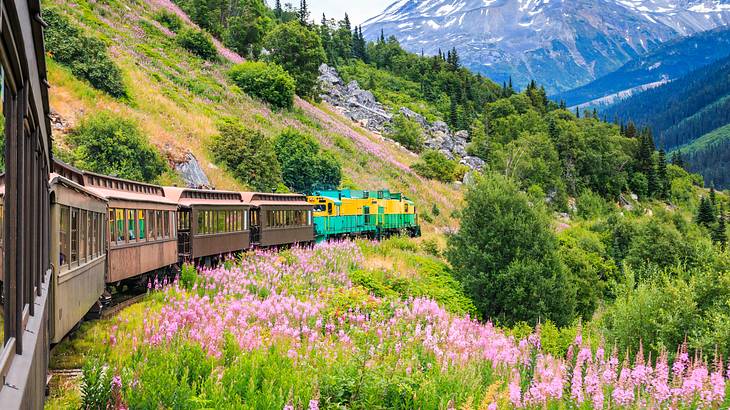

Alaska may be one of the least-populated states in the U.S., but it's also one of the most fascinating. With its vast territory, harsh climate, and untamed wilderness, it's a place full of mystery and wonder.
One way to get to know Alaska a little better is by exploring its many nicknames. Most people are familiar with the state's official nickname, the "Last Frontier," but Alaska goes by several other monikers—some of which may surprise you.
Whether you're planning a trip or are just curious about this rugged northern state, keep reading for 13 nicknames for Alaska and the unique stories behind them.
13 Alaska Nicknames

The Great Land
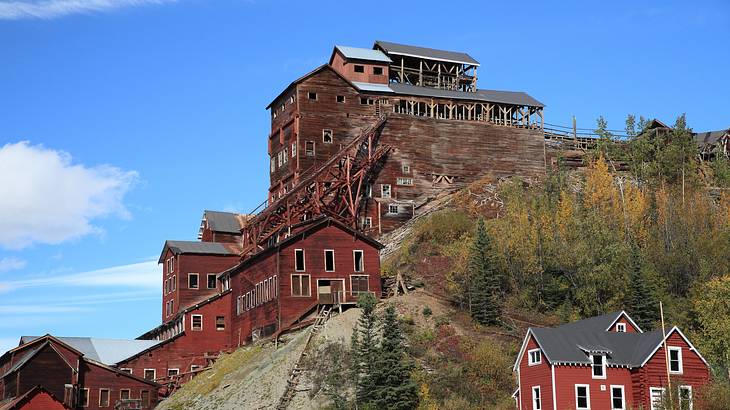
The "Great Land" is a nickname with deep roots in Alaska's Indigenous heritage. It originates from the word Alyeska, used by the Aleut people from the area. This term roughly translates to the "great land," and eventually evolved into the name "Alaska" as we know it today.
The nickname is thought to have gained further meaning during events like the Klondike Gold Rush, when over 100,000 people passed through Alaska in search of fortune. For many, the vast and resource-rich wilderness truly was a "great land."
Today, the phrase is still used—especially in reference to Alaska's Native linguistic origins and in tourism promotions that highlight the state's beautiful landscapes and rich history.
The Last Frontier
The "Last Frontier" is the official state nickname of Alaska. While it's widely associated with the state, few people know the origins of the term.
Though the exact origin is unknown, the nickname stems from Alaska's vast, rugged, and largely undeveloped landscape. With its remote wilderness, extreme weather, and limited infrastructure in many areas, Alaska has long symbolized the edge of American exploration and settlement—earning it the title of the "Last Frontier."
Today, the nickname appears prominently in Alaska's tourism campaigns, promotional materials, and on a wide range of souvenirs and artwork celebrating the state's wild and untamed character.

The Territory of Baranov
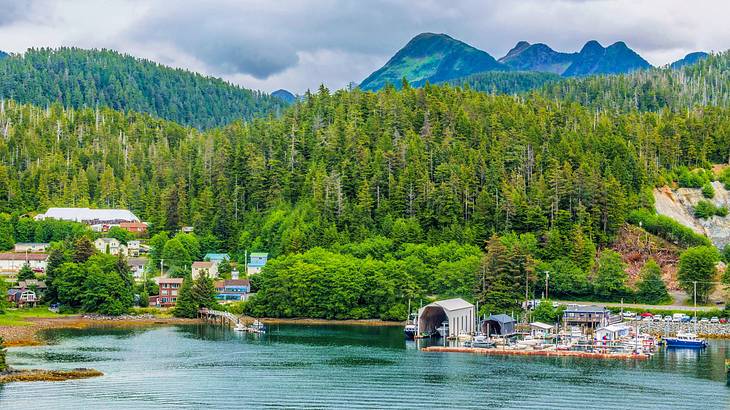
The "Territory of Baranov" is an informal nickname that reflects Alaska's Russian colonial past. It refers to Alexander Andreyevich Baranov, the first chief manager (effectively governor) of the Russian-American Company, who played a major role in expanding and administering Russian settlements in Alaska during the late 18th and early 19th centuries.
By 1799, Baranov had established near-total administrative control over Russian interests in Alaska. His lasting influence led to the region being informally associated with his name during and after his tenure.
While the nickname "Territory of Baranov" is no longer commonly used, his legacy endures—most notably in Baranof Island, which still bears his name.
The Sourdough State
The "Sourdough State" is one of Alaska's more endearing nicknames, rooted in the daily life of early pioneers and gold rush settlers. In Alaska's harsh climate, the ability to prepare food without modern conveniences was essential.
Sourdough bread became a staple because its starter—a fermented mixture of flour and water—could be maintained for long periods, even in remote conditions. To prevent the starter from freezing during bitterly cold winters, pioneers often wore it in a pouch around their neck, using their body heat to keep it alive.
Although the "Sourdough State" is not widely used today, the term sourdough has endured as a nickname for long-time Alaskans and seasoned residents. Businesses, events, and even local lingo continue to use the term as a nod to the state's rugged and resourceful past.

The 49th State
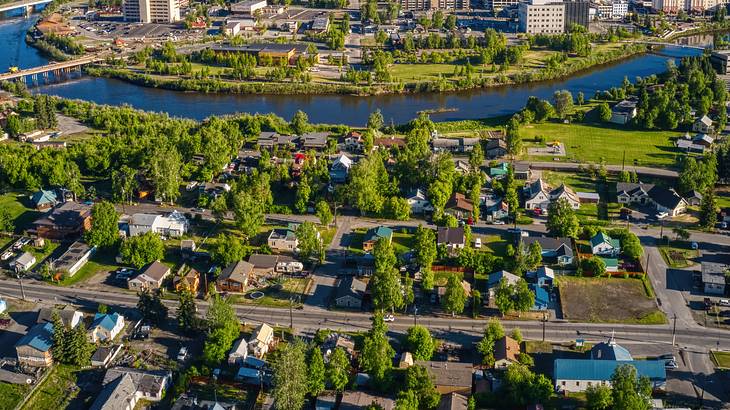
"The 49th State" is perhaps the most straightforward of Alaska's nicknames. It was coined in 1959, when Alaska officially became the 49th state of the United States.
Though Alaska didn't achieve statehood until then, it had been a U.S. territory since 1867, when the United States purchased it from Russia. This purchase was partly a strategic political move to end Russian claims in North America and expand U.S. territory.
Today, the nickname "The 49th State" is commonly found in historical texts, commemorative materials, and souvenirs celebrating Alaska's milestone in becoming part of the Union.
Land of the Midnight Sun
"Land of the Midnight Sun" originally began as a nickname for the city of Fairbanks, but it has since come to represent the entire state of Alaska.
Because of Alaska's northern latitude, parts of the state experience 70 to 85 days of continuous daylight during the summer months, meaning the sun remains visible even at midnight. This natural phenomenon inspired the nickname.
While "Land of the Midnight Sun" is not Alaska's official state nickname, its influence is visible in some of the state's license plate designs, which feature a sun design. The phrase is also commonly used in tourism campaigns promoting summer travel to Alaska.

Russian America
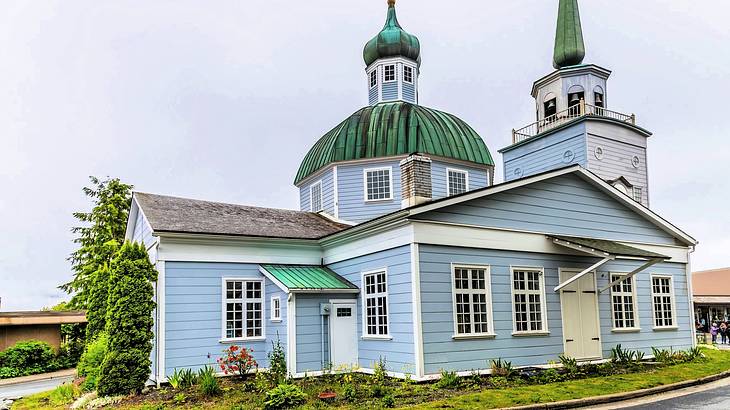
"Russian America" may not be a common nickname today, but it was once the official name for Alaska during the period of Russian colonial rule. This term referred to Russia's North American territories, which included the entire Alaskan region.
Following the 1867 purchase of Alaska by the United States, the nickname gradually fell out of everyday use. Though "Russian America" is rarely used in casual conversation today, it still appears in history books and educational materials.
Remnants of Russian heritage remain visible across the state—most notably the Russian Bishop's House in Sitka, a well-preserved landmark that connects visitors to Alaska's colonial past.
Up Over
"Up Over," sometimes written "Up and Over," is a playful nickname that points to Alaska's geographic location northwest of the contiguous United States.
Because traveling to Alaska from the lower 48 states requires going "up" through Canada and then "over" to the West, locals humorously dubbed the state "Up and Over." This nickname playfully mirrors Australia's nickname as the "Land Down Under," giving Alaska a quirky, lighthearted identity.
As one of the more comedic Alaska state nicknames, "Up Over" frequently appears on t-shirts, souvenirs, and novelty items. It's also a favorite phrase in casual, joking conversations between Alaskans and visitors alike.

The Mainland
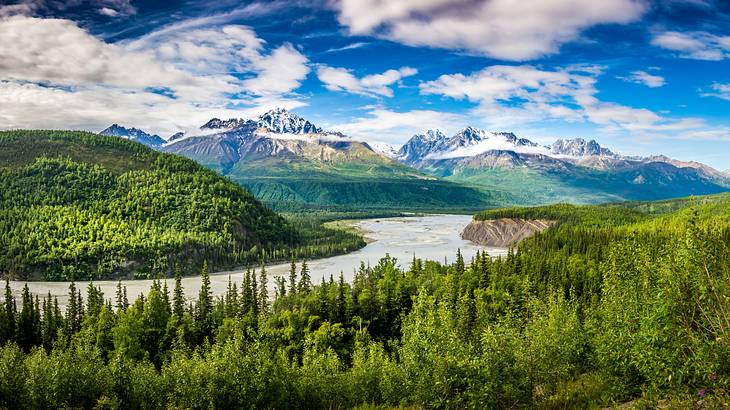
The "Mainland" is another nickname rooted in Alaska's Indigenous heritage. It also traces back to the Aleut people, who called the Alaskan peninsula "Alaxsxaq." This term roughly translates to "the mainland."
While this nickname isn't widely used in everyday conversation, it occasionally appears alongside the original Aleut word in artwork, cultural references, and promotional materials that honor Alaska's Indigenous history.
Seward's Folly
"Seward's Folly" is a nickname tied to the 1867 purchase of Alaska from Russia, orchestrated by U.S. Secretary of State William H. Seward.
At the time, many Americans were skeptical about the wisdom of buying what seemed like a remote and frozen wilderness, dubbing the acquisition "Seward's Folly"—a term implying it was a foolish or wasteful decision.
Today, the nickname is mostly historical, no longer used in common speech but still appearing in textbooks and discussions about Alaska's acquisition. Of course, history has since proven Seward's decision to be a pivotal moment that greatly benefited the United States.
The North Star State
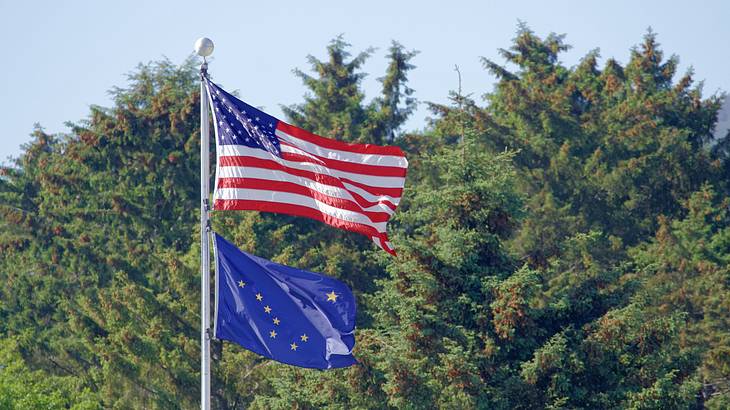
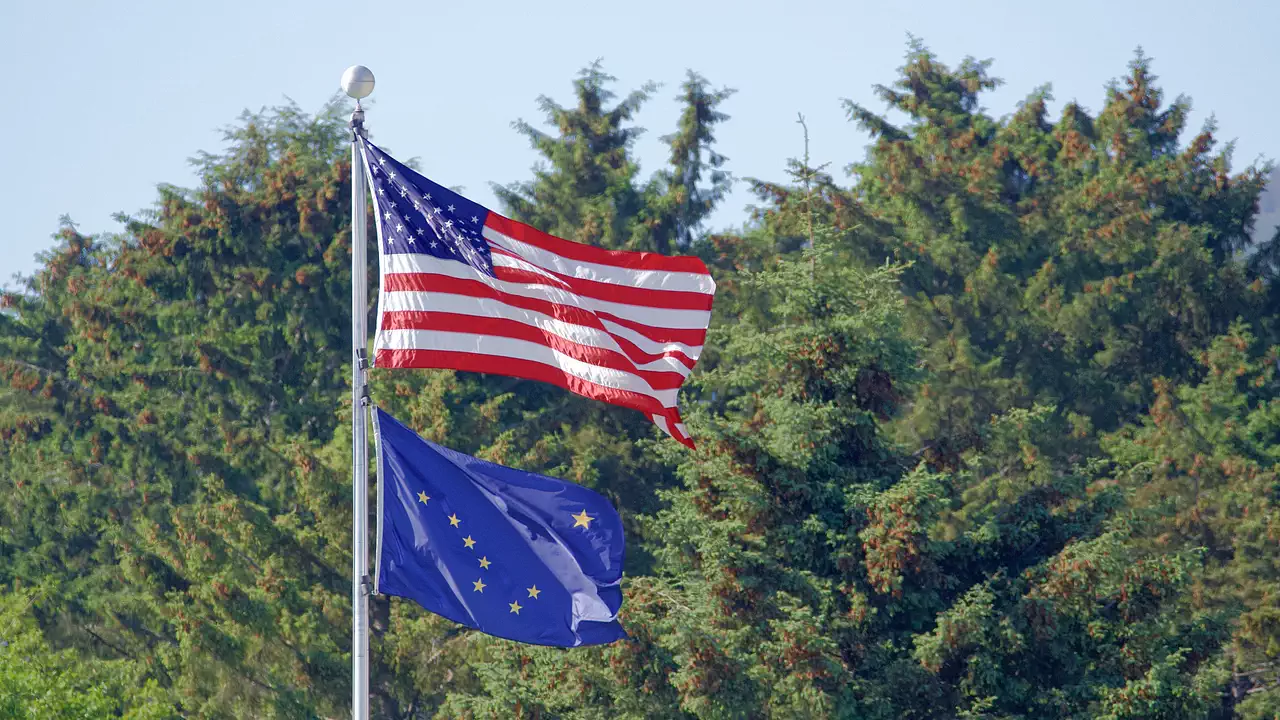
The" North Star State" is a nickname that can be associated with both Alaska and Minnesota, due to their northern locations. In Alaska's case, the name draws symbolic meaning from the state flag, which features the Big Dipper constellation and the North Star (Polaris).
The North Star represents a guiding light, symbolizing Alaska's place as a beacon of opportunity and direction for the future. The inclusion of these celestial symbols on the flag reflects the state's vast wilderness, northern position, and cultural identity.
Because this nickname is shared with Minnesota—where it is used more officially—it is not commonly seen in formal Alaskan contexts. However, the phrase occasionally appears on souvenirs, commemorative items, and materials featuring the state flag.
Seward's Ice Box
"Seward's Ice Box" is another sarcastic nickname given to Alaska following its 1867 purchase by the United States, led by Secretary of State William H. Seward.
Critics of the acquisition mocked the deal by calling Alaska "Seward's Ice Box," portraying the territory as a frigid, useless wasteland. The nickname reflected the common belief at the time that the region was nothing more than an empty, ice-covered wilderness with little value.
Today, "Seward's Ice Box" is not used in everyday speech but remains a well-known historical phrase, often referenced in articles, textbooks, and discussions about Alaska's acquisition.

The Salmon State
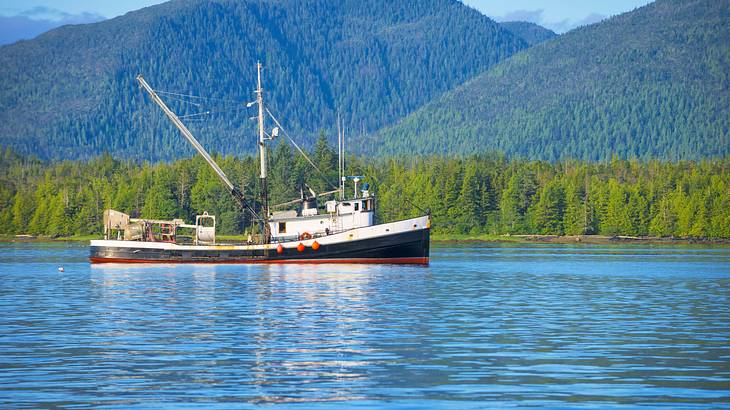
The "Salmon State" may sound lighthearted, but it reflects a vital part of Alaska's natural heritage and economy. For thousands of years, salmon has been a dietary and cultural staple for Alaska Native peoples.
Today, it remains one of the state's most iconic wildlife species and a major part of the state's identity. Alaska is home to all five species of Pacific salmon, and wild salmon fishing continues to be one of its largest commercial industries and exports.
In the summer months, visitors to Alaska's rivers, lakes, and national parks can often see salmon swimming upstream during the annual spawning runs—making it not only a key economic resource but also a memorable part of the Alaskan experience.
While the "Salmon State" isn't an official nickname, it's sometimes used informally in travel, environmental, and culinary contexts to celebrate the state's deep connection to this important fish.
In Summary
Alaska is a land rich in history, culture, and untamed wilderness—yet it remains a mystery to many. While you may have been familiar with a few of Alaska's nicknames, did any of the others catch you by surprise?
Whether you knew one, all, or none of the Alaskan monikers featured here, hopefully, you've come away with a deeper appreciation for what makes the "Last Frontier" unique. From its Russian roots to its resilient pioneers, each nickname tells a story that's distinctly Alaskan.

Want to keep exploring?
Subscribe for our latest guides.
Thank you for subscribing
We will be in touch soon with our latest guides.
Want to keep exploring?
Subscribe for our latest guides.
Thank you for subscribing
We will be in touch soon with our latest guides.