
13 Kansas Nicknames and the History Behind Them

Destguides may receive commissions from purchases made through affiliate links in this article.
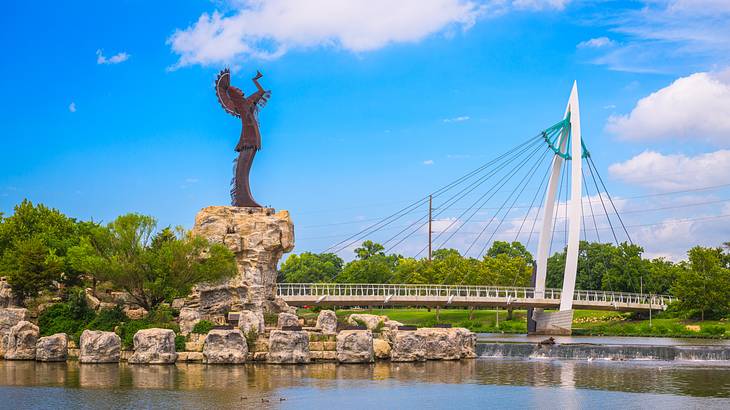

Kansas played a big role in American history. It was a battleground over the enslavement of people before the Civil War even started. It became one of the country's most important agricultural producers. And the state sits so close to the geographic center of the US that centrality has become part of Kansas' identity.
All of that has left Kansas with a long list of nicknames. Some are well known, like the "Sunflower State." Others, like the "Grasshopper State," tell a stranger and less flattering story. Below are 13 Kansas nicknames and what they reveal about the state. Continue reading to learn more.
13 Nicknames for Kansas

Jayhawker State
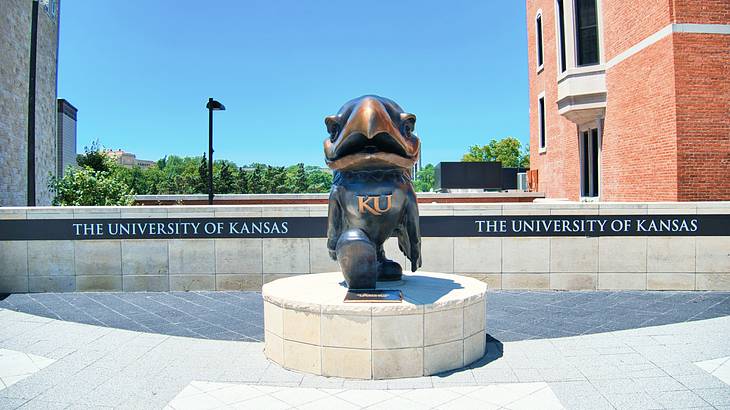
The term "Jayhawker" refers to anyone native to Kansas. Its origins trace back to the Bleeding Kansas era of the 1850s, when free-state settlers used it to describe those fighting against the expansion of the enslavement of people into the territory.
The exact origin of the word is uncertain. Some historians link it to James Lane, a powerful free-state leader who rallied his troops by comparing them to jayhawks. Others believe the term goes back further.
Over time, it lost its wartime edge and became a point of pride. The University of Kansas adopted the Jayhawk as its mascot, and Kansans today use the term with affection.
The Cyclone State
Kansas sits in the heart of Tornado Alley, one of the most tornado-prone regions in the world. The state averages dozens of tornadoes each year, and some years have seen well over 100. That history of severe weather earned it the nickname "Cyclone State."
The name is more commonly associated with Iowa, but it applies to Kansas just as well. Anyone who has spent a spring in the state knows why.

The Garden of the West
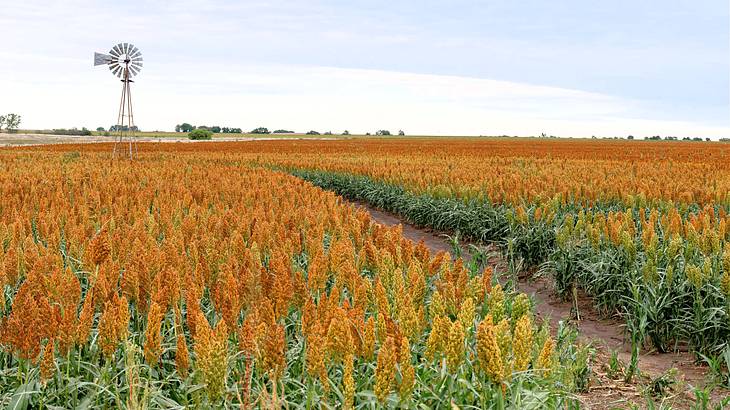
In the mid-1800s, promotional advertisements for Kansas farmland described the state as the "Garden of the West." The nickname reflected the territory's reputation for fertile soil and strong agricultural output.
At the time, so many crops were grown in Kansas that the state was seen as a food source for the rest of the country. That reputation was well earned. Even today, almost 90% of the state's land is devoted to agriculture.
Midway, USA
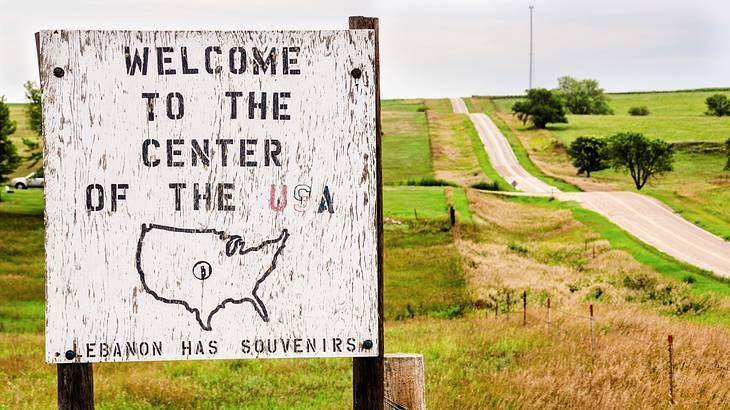
This nickname started with the town of Kinsley in central Kansas, which is 1,561 miles from both San Francisco and New York City. That made it almost exactly the midpoint of the US.
The name dates to 1939 and eventually expanded from Kinsley to the state as a whole. Kansas is the state closest to being precisely halfway across the country. The phrase even appeared on Kansas license plates between 1965 and 1970.

Bleeding Kansas
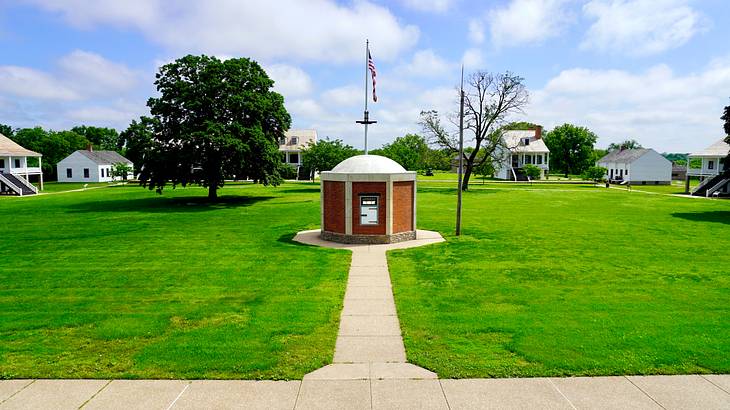
Between 1854 and 1861, the Kansas Territory became a violent battleground over whether the state would permit the enslavement of people. The Kansas-Nebraska Act of 1854 left the decision to settlers through popular sovereignty, and both sides flooded in to tip the balance.
About 56 people were killed in the fighting before Kansas entered the Union as a free state on January 29, 1861. The era gave the territory a name that still appears in history textbooks. Visitors can learn more at sites like the Kansas Museum of History in Topeka.
The Breadbasket of the World
Kansas has been growing wheat since before the territory officially opened in 1854. By 1876, it had surpassed every other state in winter wheat production. That dominance earned it the nickname the "Breadbasket of the World."
The state's wheat industry received a major boost in the mid-1870s when thousands of German-Russian immigrants, already skilled wheat growers, settled in central Kansas and brought their farming expertise.

The Central State
As stated, Kansas lies near the geographical center of the contiguous US. The geographic center of the lower 48 states is commonly cited as being near Lebanon in Smith County, which has made centrality a quiet part of the state's identity. The "Central State" nickname is not widely used, but it reflects a simple geographic fact that Kansans take some pride in.
America's Heartland
The central states of the US are often referred to collectively as "America's Heartland." Kansas fits the label in every sense. It is geographically central, heavily agricultural, and home to the kind of small towns and rural communities the term tends to evoke. The nickname is not unique to Kansas, but few states embody it as naturally.
The Free State
This nickname is a direct product of the Bleeding Kansas era. Those who opposed the expansion of the enslavement of people into Kansas were known as "free-staters." When Kansas entered the Union in 1861, it did so as a free state, and the name stuck. It remains one of the state's most historically significant titles.

The Battleground of Freedom
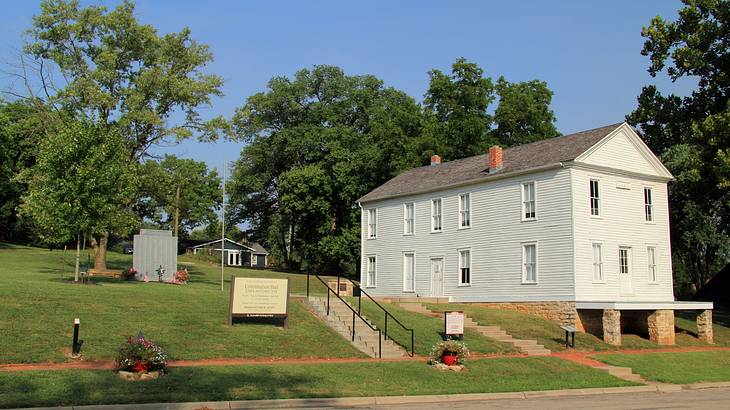
Where Bleeding Kansas and the Free State describe the outcome, the "Battleground of Freedom" captures what the territory represented at the time. Kansas was where the national debate over the enslavement of people turned physical.
Many saw the territory's fate as a preview of the larger conflict to come. The name is used mainly in historical contexts today, but it reflects the weight Kansas carried in the years leading up to the Civil War.
The Grasshopper State
In the 1870s, swarms of Rocky Mountain locusts descended on Kansas, destroying crops across the state. The insects, a now-extinct species of grasshopper, caused devastating losses to the agricultural industry.
Kansas was not the only state affected. Colorado and Nebraska suffered similar plagues. But the damage was severe enough in Kansas to earn it the nickname "Grasshopper State" during that period.

The Sunflower State
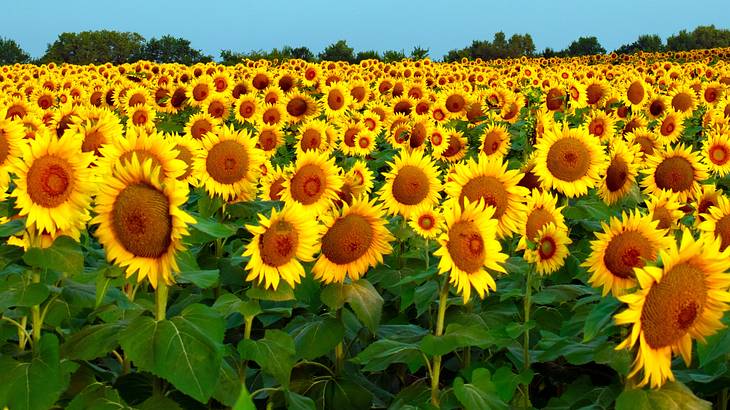
This is arguably the most recognizable Kansas nickname. The wild sunflower grows abundantly across the state and has been the official state flower since 1903. It also appears at the top of the Kansas state flag.
Between August and the end of September, fields of sunflowers stretch across the landscape in every direction. It is one of the most photographed sights in Kansas and a point of genuine local pride.
The Wheat State
Kansas adopted this nickname by the late 1800s, when it became the leading wheat producer in the US. The state's flat terrain, fertile soil, and climate made it ideal for large-scale wheat farming.
Today, Kansas and North Dakota trade the top spot back and forth. But the "Wheat State" name has stuck. You can still find it on merchandise and souvenirs across the state.
In Conclusion
Kansas has been called many things across its 165-plus years of statehood. Some names, like the Sunflower State and the Wheat State, celebrate what grows from its soil. Others, like Bleeding Kansas and the Battleground of Freedom, remember what was fought for on it.
And a few, like Midway, USA, simply point out where the state sits on the map. Together, they tell the story of a state that has always been closer to the center of things than people might expect.

Want to keep exploring?
Subscribe for our latest guides.
Thank you for subscribing
We will be in touch soon with our latest guides.
Want to keep exploring?
Subscribe for our latest guides.
Thank you for subscribing
We will be in touch soon with our latest guides.