
9 Wichita Nicknames You Should Know

Destguides may receive commissions from purchases made through affiliate links in this article.
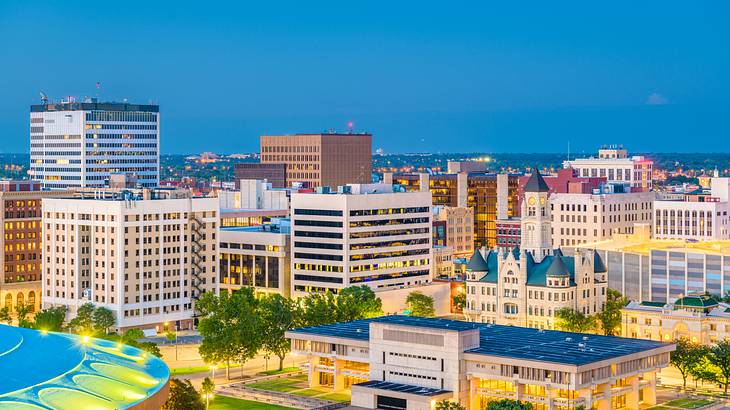

Wichita, Kansas, began as a trading post in the 1860s and was incorporated a decade later. Today, Wichita is the state's cultural, media, and economic hub, and it is home to Wichita State University.
The city's name honors the Native American Wichita tribe, and its culture and history have inspired nicknames like "Doo-dah" and the "Emerald City." Continue reading to discover the stories behind these names and others!
9 Nicknames for Wichita
The Air Capital of the World
Due to its significant contributions to the aircraft industry, Wichita is known as the "Air Capital of the World." The city serves as a design and manufacturing hub, home to facilities for companies like Textron Aviation, Learjet, and Airbus.
Several airports are located in Wichita, including McConnell Air Force Base and Colonel James Jabara Airport. Wichita is also home to Dwight D. Eisenhower National Airport, renamed in 2014 to honor the former president and Kansas native.
Cowtown
Another common nickname for Wichita is "Cowtown." In the mid-1800s, Wichita was a key stop for wranglers driving cattle north from Texas. Its location on the Chisholm Trail connected them to railroads leading to markets in eastern cities.
The Old Cowtown Museum, a Wichita landmark, showcases the city's history during this era. Visitors can tour historic and recreated buildings, explore thousands of artifacts, and see the Percheron horses living here. The museum has also been featured in several films, highlighting "Cowtown's" significance in popular culture.
Doo-Dah
Wichita is also known by the nickname "Doo-Dah." While the exact origin is unclear, many believe it reflects the city's friendly residents and laid-back culture. According to Visit Wichita, the name was coined by a KFDI radio DJ.
Several local businesses have embraced the nickname. The Doo-Dah Diner, opened in 2012, embodies this easygoing vibe. "Doo-Dah" appeared on the city's Riverfest poster in 2014 as well.
ICT
"ICT" is another nickname for Wichita with a straightforward origin. It serves as the airport code for the city's Dwight D. Eisenhower National Airport. When the airport was developed, the FCC prohibited airport codes starting with "W," so officials used "ICT" as an abbreviation for Wichita.
Since then, locals have adopted "ICT" as a term of endearment for their city. It's also informally linked to Wichita's prominence in the aircraft industry.

The River City
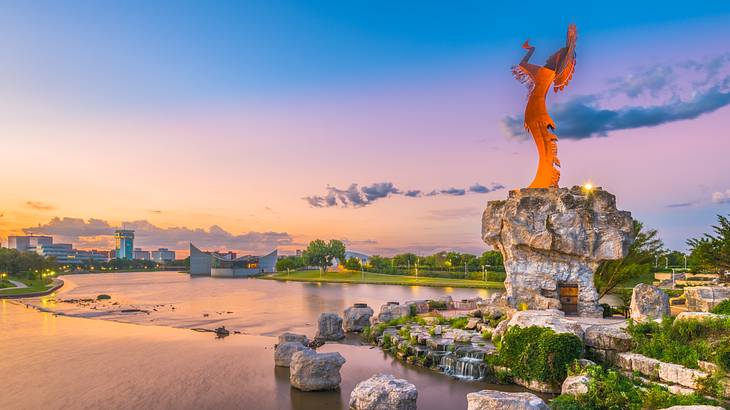
Wichita is also known as the "River City" due to its geographic location along the banks of the Arkansas River. The downtown river district is a popular area for shopping, dining, and visiting the Wichita Art Museum.
The Arkansas River, a tributary of the Mississippi River, has been designated a National Water Trail by the U.S. National Park Service. Residents fully embrace their river city by hiking or biking the Arkansas River Trail, as well as kayaking, paddleboarding, and rowing on this historic river.
316
Some residents fondly call Wichita the "316," a nickname that nods to the city's telephone area code. The area code 316 was initially assigned to all phone numbers in southern Kansas.
In 2001, the Kansas Corporation Commission implemented a split due to the growing number of cell phones and pagers. As a result, most of southern Kansas received a new area code, while Wichita retained the 316 one.

Dub
The nickname "Dub" is another play on the name Wichita. "Dub" is often short for "double-u," referencing the first letter of the city. Wichita is also known as "Dub-K," with "Dub" referring to "Dubya," a common nickname for former President George W. Bush, and "K" representing Kansas.
Despite the ambiguous origins, references to "Dub" can be found in several local businesses, including clubs and barbershops. If you're in town, consider participating in the annual Dawn of the Dub Halloween celebration, which embraces this nickname and the local culture.
The Emerald City
While Seattle is also called the "Emerald City," the nickname takes on a special meaning in relation to Wichita through L. Frank Baum's Oz books, which began in the early 1900s. The story features a girl from Kansas who finds herself in the magical land of Oz.
Although the "Emerald City" is a destination in this fantastical realm, Dorothy ultimately longs to return home to Kansas. Thus, the nickname the "Emerald City" is a fitting tribute to Wichita's prominence as Kansas' cultural and economic center.
The Oz books also inspired the famous movie adaptation. If you're interested in learning more about the significance of this story, visit the Oz Museum in Wamego, Kansas.
The Magic City
The "Magic City" is one of Wichita's lesser-known nicknames. In 1889, H. Craig Miner published Wichita: The Magic City, An Illustrated History, in which he chronicles the city's transformation from a simple trading post on Chisholm Creek into a vibrant and bustling urban center.
Miner's work features illustrations of street scenes, business buildings, and early residences, capturing the spirit of a city in rapid growth. This nickname reflects not only Wichita's historical development but also its ongoing significance and vibrancy within the state of Kansas.
In Summary
Wichita's nicknames, from the historically significant "Cowtown" to the economically relevant "Air Capital of the World," reflect its rich heritage. Residents also refer to the city by its area code, 316, and the airport code, ICT.
Regardless of the nickname that draws your interest, Wichita's cultural, historical, and economic significance is undeniable. Hopefully, you've learned a new nickname or two to use on your next trip to Wichita!

Want to keep exploring?
Subscribe for our latest guides.
Thank you for subscribing
We will be in touch soon with our latest guides.
Want to keep exploring?
Subscribe for our latest guides.
Thank you for subscribing
We will be in touch soon with our latest guides.