
10 Montana Nicknames and the History Behind Them

Destguides may receive commissions from purchases made through affiliate links in this article.
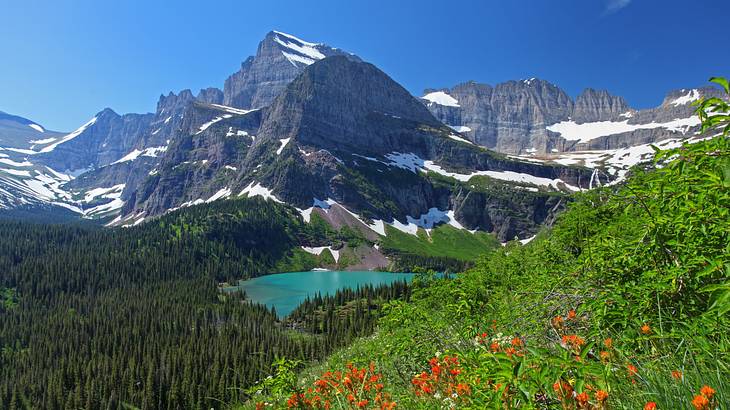

The name Montana comes from the Spanish word for mountain. Everything else followed from there: a landscape so vast it needed its own sky, mountains so bright they earned their own nickname, and land so good for cattle that ranchers called it paradise.
Ten names have attached themselves to this state over the years, each one pulling at a different thread of the same story. Here are 10 Montana nicknames, with their origins explained.
10 Nicknames for Montana

Big Sky Country
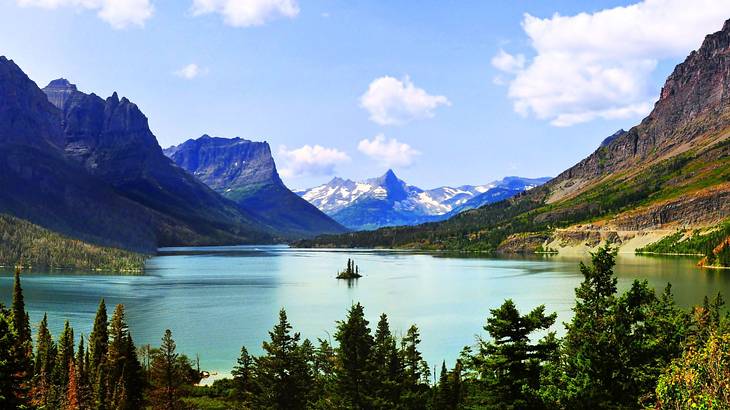
Of all Montana's nicknames, this is probably the most well-known one. Wide-open outdoor spaces with skies that stretch seemingly without interruption gave the state its most recognizable name.
The nickname is also connected to the novel The Big Sky by Alfred Bertram Guthrie Jr., which covers the American West, the Oregon Trail, and the early history of Montana. The nickname was officially adopted in 1961 when the state received permission from Guthrie to use "Big Sky" in tourism promotion.
Ez 2 Luv
In the mid-1990s, Montana's tourism bureau spotted a local university student's license plate, which led to another popular slogan for Montana: "Ez 2 Luv."
The name captures what the state wanted visitors to feel: that its beautiful outdoor areas, many recreational activities, and friendly residents made it impossible not to love.

The Headwaters State
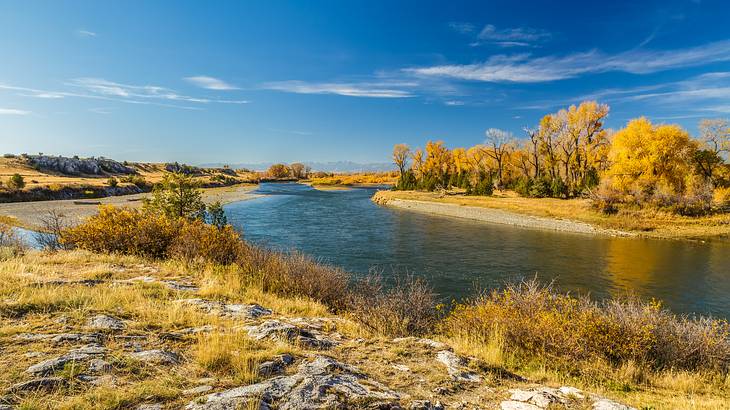
Montana is home to the headwaters of several rivers, most notably the Missouri River, which begins where the Jefferson, Madison, and Gallatin rivers converge in the southwestern part of the state.
Missouri Headwaters State Park preserves and commemorates that confluence, giving this lesser-known nickname a tangible landmark to stand behind.
The Land of Shining Mountains
Snow-capped peaks gave Montana this name. The state is home to two major mountain ranges, the Rocky Mountains and the Bitterroot Range, and when sunlight catches their summits, the effect is striking.
According to the Montana Historical Society, the name dates back to French-Canadian fur traders who gazed upon the northern Rockies and called them the "Shining Mountains."
The phrase gained further literary traction through the book Montana: The Land of Shining Mountains by Katharine Berry Judson, which covers the state's history.

The Huckleberry State
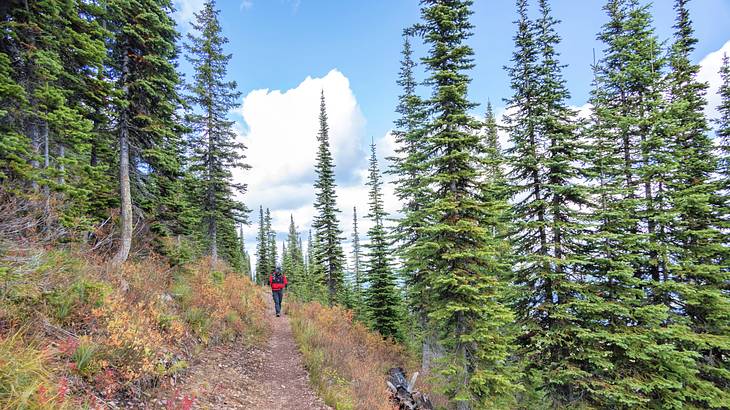
Huckleberries thrive at high elevations across Montana, and locals have long treated the fruit as a staple, eating it fresh and working it into jams, pies, and other confections. The "Huckleberry State" nickname reflected that affection for years before the fruit became official.
In mid-2023, Governor Greg Gianforte signed House Bill 880, making the huckleberry Montana's official state fruit and giving this once casual moniker formal standing.
Mountain State
The most literal nickname on the list, and arguably the most accurate. Montana's mountainous landscape includes over 100 mountain ranges and sub-mountain ranges across the state.
The name Montana itself comes from the Spanish word montaña, meaning mountain, so in a sense the state has always been the "Mountain State" in name as well as character. The nickname is more commonly associated with West Virginia, but Montana's geography makes the case just as convincingly.
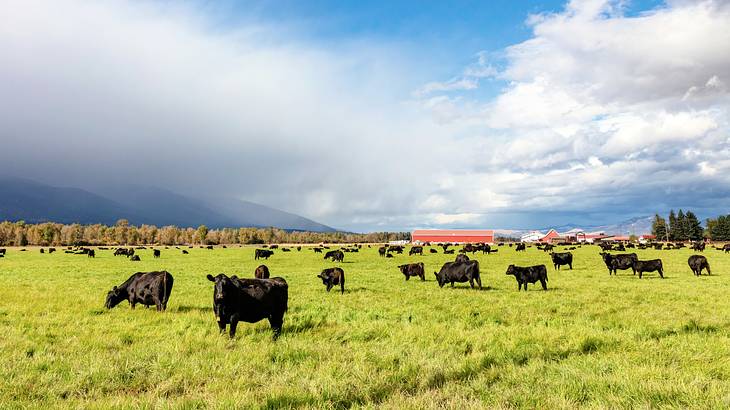

Cattleman's Paradise
Cattle ranching shaped Montana's economy throughout the 19th and early 20th centuries, and the vast stretches of flat, open land made the state an attractive place for anyone in the business.
The "Cattleman's Paradise" nickname dates to that era and even appears in written text. Its origins are connected to a Canadian, Johnny Grant, who established a cattle ranch in the area.
That site is now the Grant-Kohrs Ranch National Historic Site, a working ranch maintained by the National Park Service that commemorates the frontier cattle era. Cattle ranching remains an important part of Montana's economy to this day.
The 406
Area codes have a way of becoming identities, and Montana's is a particularly strong example. The entire state shares a single area code, 406, which it has used since 1947.
That unity has turned three digits into a symbol of the state as a whole, representing its mountains, its national parks, and its way of life. The moniker appears on merchandise and in local business names across Montana, like 406 MT Sports.
The Treasure State
Gold, silver, and copper built Montana's early economy, and this nickname reflects that mineral wealth. "The Treasure State" first gained wide appeal in 1895 when it appeared on the title of a promotional book published by the Montana Bureau of Agriculture, Labor, and Industry. It has endured ever since, appearing on even the state's license plates.

The Last Best Place
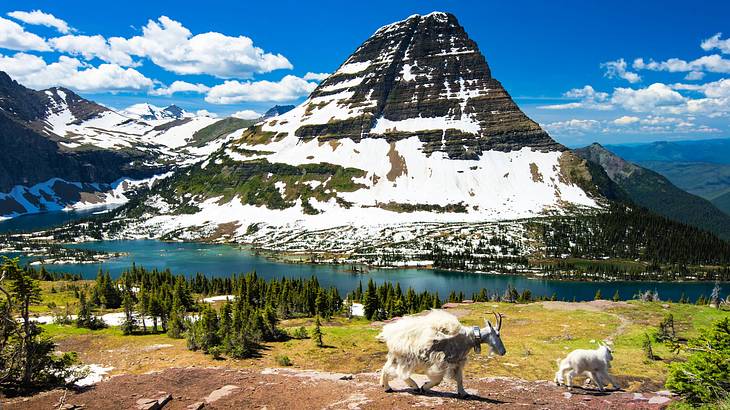
Montanans are particularly attached to this nickname. Its exact origin is unknown, but it is generally thought to have first appeared in Douglas Chadwick's book A Beast the Color of Winter. It gained wider recognition when William Kittredge compiled The Last Best Place: A Montana Anthology.
State agencies and institutions have since adopted the phrase to capture what makes Montana different: its landscapes and natural beauty, which, to those who know the state, feel genuinely irreplaceable.
In Conclusion
Montana's nicknames don't oversell the place. They describe it. The sky is that big, the land really did make cattle ranchers rich, and the huckleberries really do grow wild across the hillsides. For a state with this much to work with, the names almost wrote themselves.

Want to keep exploring?
Subscribe for our latest guides.
Thank you for subscribing
We will be in touch soon with our latest guides.
Want to keep exploring?
Subscribe for our latest guides.
Thank you for subscribing
We will be in touch soon with our latest guides.