
10 Landmarks in Newark, New Jersey to Visit

Destguides may receive commissions from purchases made through affiliate links in this article.
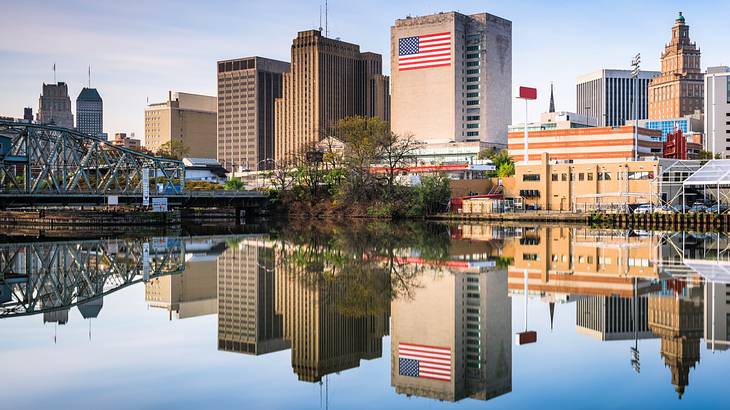

Newark was founded in 1666, making it one of the oldest cities in the United States. Its landmarks reflect that depth, from a park where Washington's troops camped to a French Gothic cathedral that took half a century to build.
This article covers 10 landmarks in Newark, New Jersey, spanning historic parks, performance halls, monuments, and museums. Continue reading to learn about which Newark landmarks to include on your next visit.
Planning a last-minute trip to Newark?
Book your entrance tickets and tours for your trip to Newark early! We've pulled together top suggestions below.
☂️ Top tours and experiences in Newark
- New York City Skyline Helicopter Tour From New Jersey (likely to sell out)
- Washington DC, Niagara Falls & Philadelphia Three-Day Tour From NYC
- Half Day New York City Private Tour
- Paramus Indoor Skydiving Experience With Two Flights & Personalized Certificate
- American Dream Angry Birds Indoor Mini Golf Ticket
10 Newark Landmarks
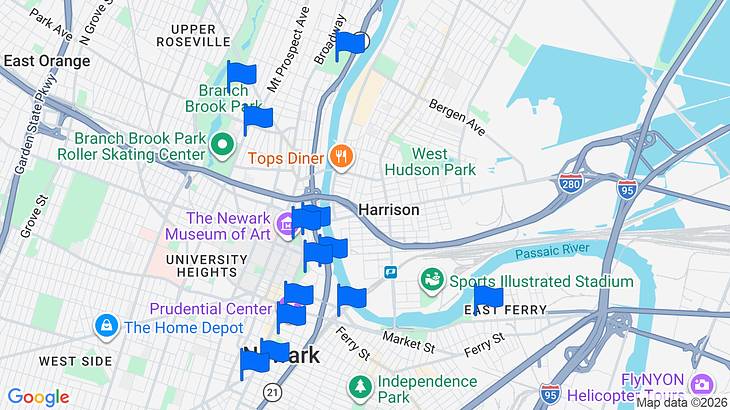
Newark Landmarks Map
A map of Newark landmarks. Use the map to explore all of the points of interest.

Branch Brook Park
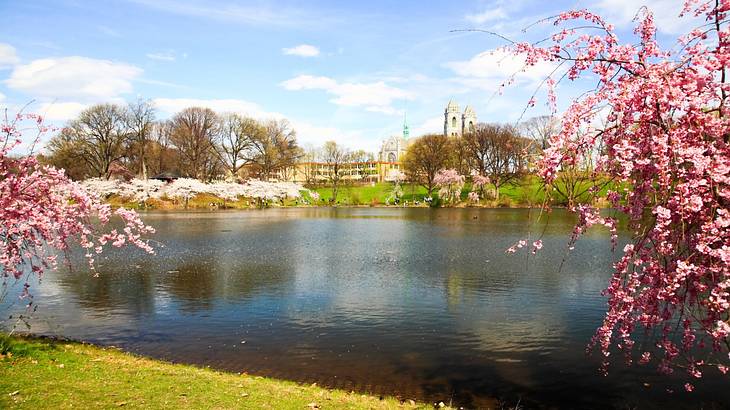
In 1895, the City of Newark transferred 60 acres of former reservoir land to the newly created Essex County Park Commission, forming the nucleus of what would become Branch Brook Park. It was the first county park opened for public use in the United States.
The park has since grown to 360 acres, making it the largest developed park in Essex County. Frederick Law Olmsted's firm revised its original layout in 1900, reshaping it into the naturalistic design of curving paths and open meadows that visitors see today.
Every April, the park hosts its Cherry Blossom Festival, centered on more than 4,000 cherry trees, a collection larger in number and variety than the display in Washington, D.C.

Cathedral Basilica of the Sacred Heart
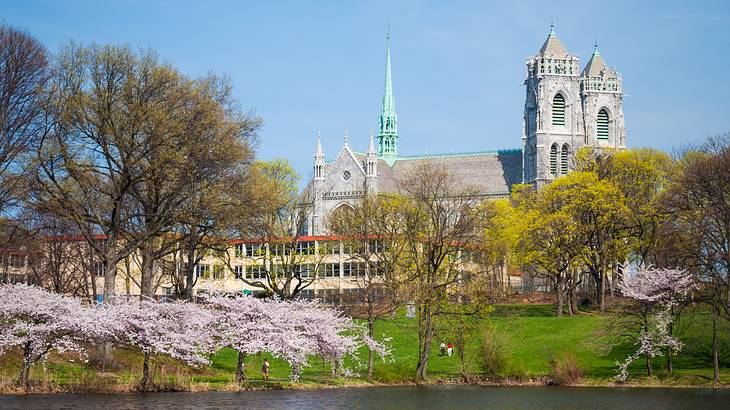
Construction on this French Gothic Revival cathedral began in January 1898, and the building was finally dedicated on October 19, 1954, after more than 50 years of work. It sits on the highest point in Newark, right next to Branch Brook Park.
The twin towers rise 232 feet, and its copper spire soars nearly 300 feet, making the cathedral taller than Notre-Dame in Paris. Artisans in Germany produced the stained glass, and a foundry in Padua, Italy, cast the 14 bells that hang in the west tower.
Both a state and national historic landmark, it is the seat of the Roman Catholic Archdiocese of Newark and one of the largest cathedrals in North America.
An insider tip is to check the cathedral's concert schedule before visiting, since it holds public concerts throughout the year and houses the largest pipe organ ever built by the Schantz Organ Company.

Military Park
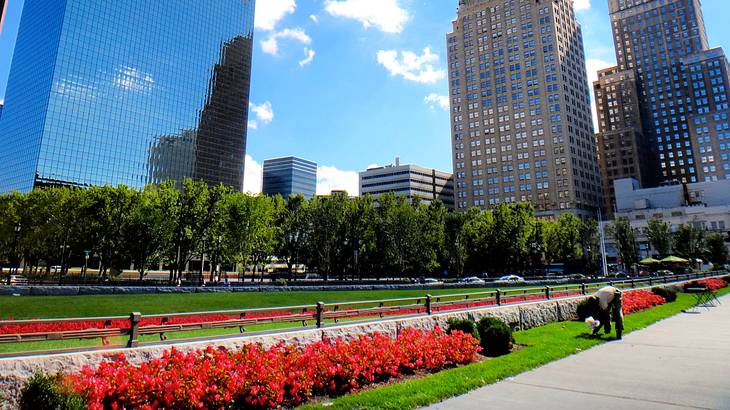
When Newark was founded in 1666, Robert Treat laid out this nearly triangular commons as a training ground for soldiers. It served that purpose for around two centuries, during the French and Indian War, the American Revolution, and the War of 1812. George Washington's troops camped here during their November 1776 retreat from New York.
After the Revolutionary War, the commons became a public park. Today, it anchors downtown Newark, home to Gutzon Borglum's sculpture "Wars of America" and a regular farmers' market. The park underwent a major renovation and reopened in 2014.
Mount Pleasant Cemetery
Newark's oldest surviving cemetery opened in 1844 and spans around 36 acres along the Passaic River in the city's North Ward. Designed by Horace Baldwin, it is listed on both the New Jersey and National Registers of Historic Places.
Its Gothic brownstone gateway, designed by architect Thomas Stent, was built in 1877 and still marks the entrance. Notable Newarkers buried here include Prudential Insurance founder John F. Dryden, inventor Seth Boyden, and several New Jersey governors.

New Jersey Performing Arts Center
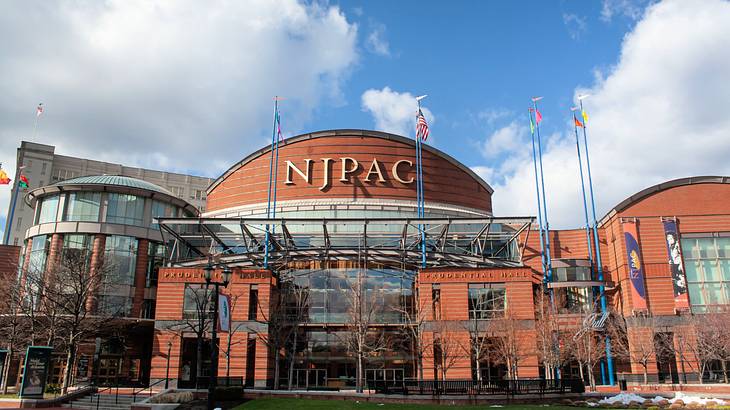
Proposed by then-Governor Thomas H. Kean in 1986, the New Jersey Performing Arts Center opened in October 1997 and is the home of the New Jersey Symphony Orchestra. Designed by architect Barton Myers, it sits in the heart of Newark's downtown cultural district.
The center comprises four venues: the 2,800-seat Prudential Hall, the 514-seat Victoria Theatre, the roughly 350-capacity Chase Room, and an 88-seat black box theater. It anchors a stretch of downtown alongside Military Park, the Newark Museum of Art, and the New Jersey Historical Society.
An insider tip is to check for performances in the Victoria Theatre, where the smaller size means every seat feels closer to the stage.
Harriet Tubman Monument
Titled "Shadow of a Face," this 25-foot steel monument dedicated to abolitionist Harriet Tubman was unveiled in March 2023 in what is now Harriet Tubman Square. It was designed by New Jersey-born architect Nina Cooke John. The monument replaced a statue of Christopher Columbus that the city had removed in June 2020.
A circular learning wall surrounds the structure, inscribed with the history of Newark's abolitionist movement and the Underground Railroad. The mosaic at the monument's base features ceramic tiles contributed by Newark residents, connecting the community's present to Tubman's legacy.

Newark City Hall
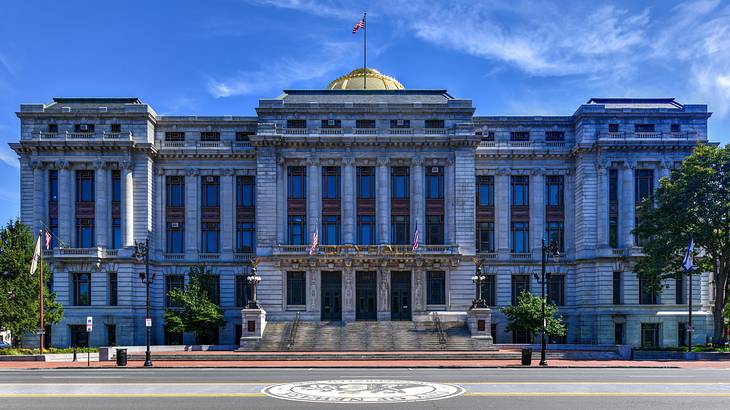
Construction on Newark City Hall began in 1902, and the five-story Beaux-Arts building was completed in 1906 for $2.6 million. Its interior features carved marble, a grand central staircase, stained-glass skylights, and wrought-iron detailing throughout.
The dome wasn't always gold. Developer Harry Grant funded its gilding in 24-carat gold in 1986, turning it into one of the most recognizable features of the Newark skyline. A renovation completed in 2006 cost around $18 million. The building was added to the National Register of Historic Places in 1978.
Newark Symphony Hall
Built in 1925 by the Shriners as the Salaam Temple, Newark Symphony Hall has gone by several names over the decades, much like the state itself has collected many New Jersey nicknames. The four-story neoclassical building was designed by Newark architect Frank Grad at a cost of more than $2 million.
Its interior pairs Greek columns with Egyptian ornamental details, and the main hall originally seated about 3,500. For decades, the building served as the home of the New Jersey Symphony Orchestra, the New Jersey State Opera, and the New Jersey Ballet Company. It was added to the National Register of Historic Places in 1977.

Newark Riverfront Park
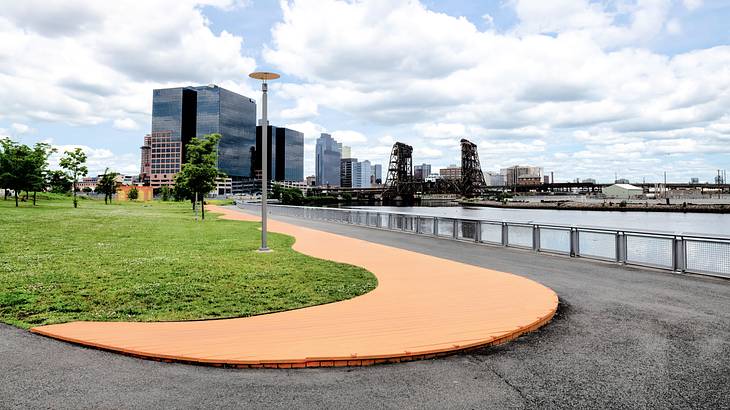
The first section of Newark Riverfront Park opened along the Passaic River in 2012, with 12 acres of fields, a boardwalk, playgrounds, and walking trails. It gave Newark residents public access to the riverfront for the first time in more than a century.
The park was developed by the City of Newark, Essex County, and the Trust for Public Land. A paved promenade connects it to the New Jersey Performing Arts Center, making it easy to pair with a visit downtown.
The Newark Museum of Art
Founded in 1909 by librarian and reformer John Cotton Dana, the Newark Museum of Art is the largest museum in New Jersey. Its campus spans more than three acres in the city's downtown Arts District.
The museum's Tibetan art galleries hold one of the most significant collections in the Western Hemisphere, including an in-situ Buddhist altar consecrated by the Dalai Lama in 1990.
The complex also includes a planetarium, the Victoria Hall of Science, and the Alice Ransom Dreyfuss Memorial Garden. The garden is home to an old stone schoolhouse dating to 1784 and the Newark Fire Museum.
In Summary
Newark's landmarks cover more than three centuries of history, from a colonial commons that sheltered Washington's retreating army to a 21st-century monument honoring Harriet Tubman. The city's parks, churches, performing arts halls, and museums offer far more than most visitors expect from New York's neighbor across the river.

Want to keep exploring?
Subscribe for our latest guides.
Thank you for subscribing
We will be in touch soon with our latest guides.
Want to keep exploring?
Subscribe for our latest guides.
Thank you for subscribing
We will be in touch soon with our latest guides.