
9 Nicknames for Buffalo, New York, to Know

Destguides may receive commissions from purchases made through affiliate links in this article.
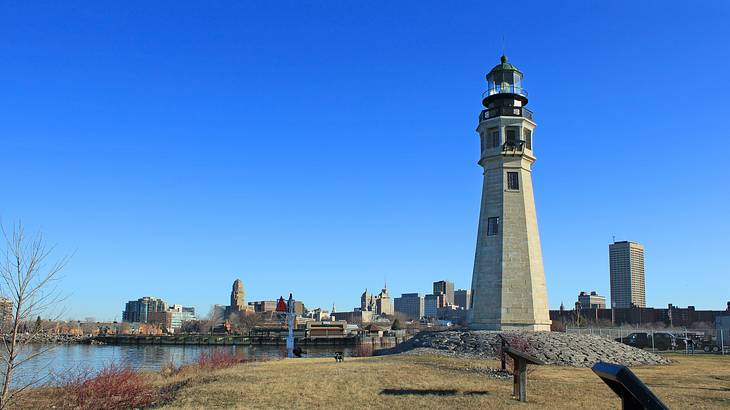

Sitting on Lake Erie, Buffalo is New York state's second-largest city. Its name comes from a creek that once ran through the area, attracting the first settlers.
Known for its craft beer, sports teams, and snowy winters, Buffalo has also earned several nicknames over the years, each one reflecting the city's unique history and character.
From Nickel City, named after the old five-cent coin, to Queen City of the Lakes, highlighting its role as a bustling port, these names capture the spirit of the city. Read on to discover the most popular nicknames for Buffalo, New York, and their histories.
9 Buffalo Nicknames

Bison City
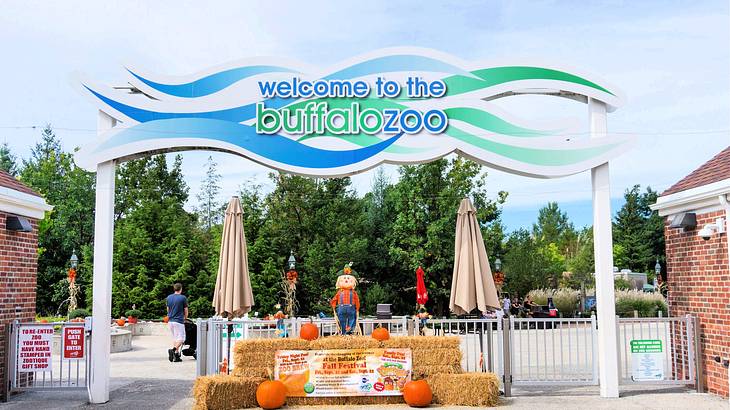
"Bison City" is a playful nickname for Buffalo. While buffalo and bison are different animals, the terms are often used interchangeably in the US. The bison has become a city symbol, most famously appearing in the Minor League Baseball team, the Buffalo Bisons. You can even see a small herd of bison at the Buffalo Zoo.
The City of Good Neighbors
The "City of Good Neighbors" is a Buffalo nickname that highlights the city's welcoming nature. Buffalo is known for its hospitality and approachable, small-town feel, which visitors notice immediately.
Buffalo has also long been a destination for migrant communities. Since 2000, over 14,000 refugees have settled here, and the city's immigrant population grew nearly 95% between 2006 and 2013. These communities have helped shape Buffalo into the multicultural, vibrant city it is today.

The City of Lights
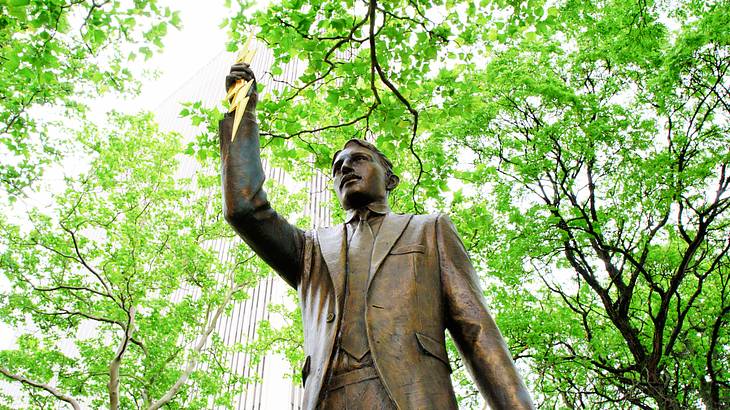
The "City of Lights" (or"City of Light") is one of Buffalo's most dazzling nicknames. It refers to the city being one of the first in the United States to have a widespread electricity system, powered by the Niagara Falls Power Company.
In November 1896, Nikola Tesla flipped the switch that illuminated parts of Buffalo, marking a historic moment for the city. This early adoption of electric power placed Buffalo at the forefront of technological development in the late 19th century, helping to shape the city's growth and innovation.
City of No Illusions
Buffalo earned the nickname "City of No Illusions" because of its practical, no-nonsense approach and optimistic spirit, especially during the city's more challenging times. The phrase was popularized in 1977 by Buffalo artist Michael Morgulis, who created one of the city's most iconic t-shirts featuring the slogan.
The phrase also appears in local art. In 2022, a mural by Mickey Harmon was installed at the atrium entrance of the University at Buffalo's Center for the Arts, showcasing the nickname for all to see.

The City of Trees
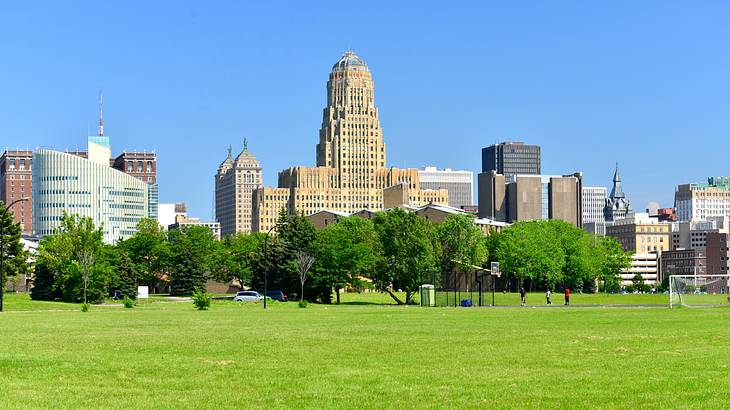
Buffalo is also known as the "City of Trees" for its abundant greenery and historic park system. When Frederick Law Olmsted visited in 1868, he envisioned a city in a park. His first proposal for Buffalo included a network of connected parks and walkways that integrated nature into urban life.
Visitors can experience this lush environment at places like Buffalo Harbor State Park and explore the many other green spaces that contribute to the city's serene atmosphere.
Nickel City
Another name for Buffalo is "Nickel City." This popular nickname comes from a coin minted between 1913 and 1938. The coin, informally called the Buffalo nickel, featured an American bison on the back. Because it was named the Buffalo nickel, locals began referring to their city as Nickel City.
Although the Buffalo nickel was replaced by the Jefferson nickel in 1938, the nickname became popular in the 1970s, thanks to radio and television broadcasters who widely promoted it.
Flour City
The city's role in the flour industry gave it the nickname "Flour City." Buffalo was once a major transshipment point for wheat from western grain fields to eastern ones and other milling centers.
George Earle Shankle noted in his 1951 book that Buffalo was credited as being the second-largest flour-milling center in the U.S. These facts come from a 1892 source cited by Shankle and reflect the city's prominent role in the nation's flour industry during that period. Although this history is less visible today, it remains a key part of Buffalo's industrial heritage.
Queen City
"Queen City" mainly refers to Buffalo being the second-largest city in New York state, making it the "queen" to New York City's "king." The name also reflects Buffalo's historic role as a major trade and industrial hub on the Great Lakes. Its location along the Erie Canal and Lake Erie made it one of the region's busiest trade hubs during the 19th and early 20th centuries.

Queen City of the Lakes
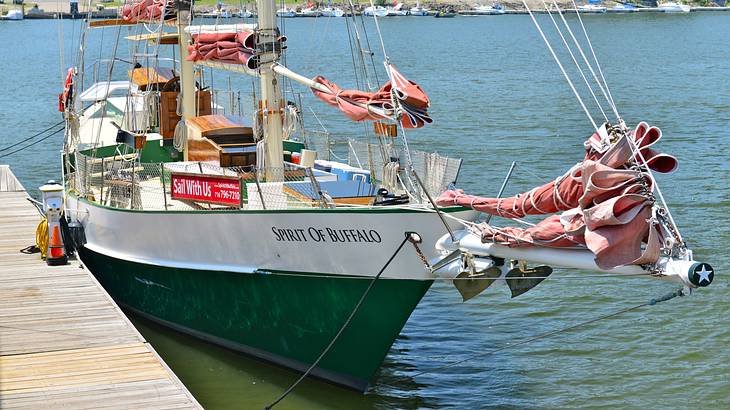
After the completion of the Erie Canal in 1825, Buffalo became a key center for shipping and manufacturing, extending the title of the previous nickname to "Queen City of the Lakes." Earlier versions of the nickname date back to 1828, when the Buffalo Emporium and General Advertiser referred to Buffalo as the "Queen of the Lakes."
In Summary
Buffalo's many nicknames reflect its history, culture, and character. From City of Good Neighbors, highlighting its residents' friendliness, to Queen City of the Lakes, nodding to its past as a major trade hub, these names tell the story of a city that has played an important role in New York and the US. Keep them in mind next time you visit and see the city for yourself!

Want to keep exploring?
Subscribe for our latest guides.
Thank you for subscribing
We will be in touch soon with our latest guides.
Want to keep exploring?
Subscribe for our latest guides.
Thank you for subscribing
We will be in touch soon with our latest guides.