
10 Cincinnati Nicknames You Should Know

Destguides may receive commissions from purchases made through affiliate links in this article.
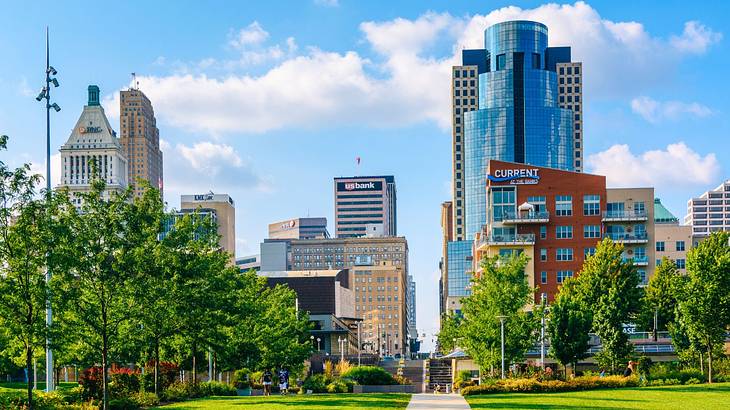

Cincinnati has always had something to prove. Perched on the Ohio River, just across the water from Kentucky, the city spent much of the 1800s racing to become the cultural and economic capital of the American West. It built theatres, processed enormous quantities of pork, and fielded the country's first professional baseball team.
All of that ambition left Cincinnati with a lot of names. Some stuck. Others were quietly retired. Here are 10 Cincinnati nicknames and the stories behind them.
10 Nicknames for Cincinnati

The Athens of the West
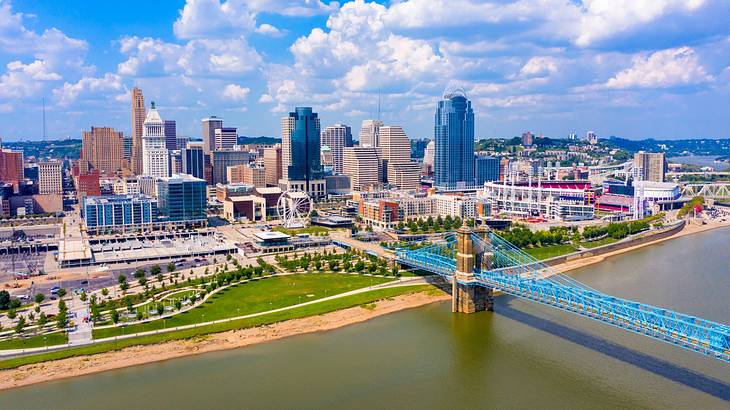
In the early to mid-1800s, Cincinnati developed a thriving literary and cultural scene that earned it the nickname "The Athens of the West." The city was home to influential newspapers, literary journals, and a growing number of writers and thinkers.
Sitting directly across the Ohio River from Kentucky, where the enslavement of people was still legal, the city became a hotbed for political debate. That tension fueled the growth of journalism and public discourse. While the nickname is no longer widely used for Cincinnati, several other cities, including Lexington, Kentucky, still claim it.
Cincy
Spelling this one has caused more debate than you might expect. Some argue it should be "Cinci" since it's the short form for Cincinnati, but most locals disagree. "Cincy" is the preferred version, and even the University of Cincinnati has taken that side, using it on official merchandise.
Both residents and visitors widely use the nickname. The broader Cincinnati region, including Covington and Newport in Kentucky, is sometimes referred to as "The Cincy Region."

Porkopolis
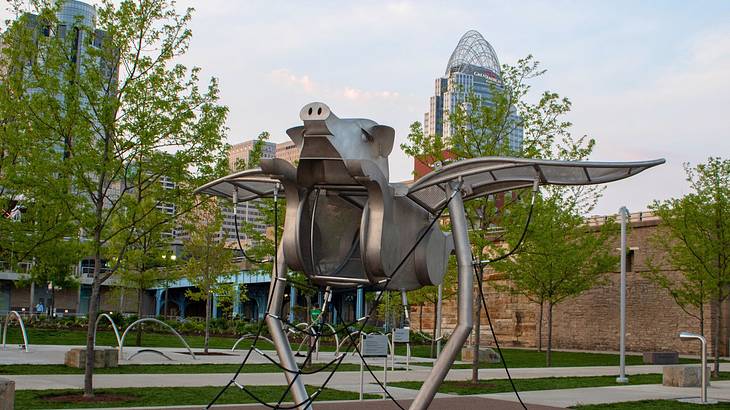
In the early 1800s, Cincinnati became the country's leading pork processing hub. Its location on the Ohio River gave it easy access to farmland and river transport. There were so many pigs that they wandered the city streets freely, earning Cincinnati the nickname "Porkopolis."
Locals were not thrilled about it. The name carried an unflattering image, and residents were relieved when Chicago overtook Cincinnati as the nation's main meatpacking center by 1875. Today, the city has made peace with its porcine past. Pig imagery appears throughout Cincinnati, from public art to the annual Flying Pig Marathon.
The 'Nati
This one is relatively recent. In 1998, a nonprofit called Keep Cincinnati Beautiful launched a litter prevention campaign with the slogan "Don't Trash the 'Nati."
The nickname caught on and is still popular today, especially among younger residents. It works as a casual, affectionate shorthand for the city. You are more likely to hear it in conversation than see it in print.

The Birthplace of Professional Baseball
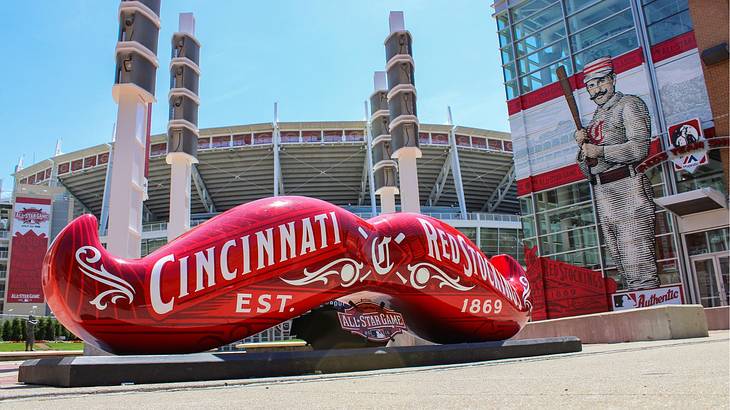
Cincinnati earned this title in 1869, when the Cincinnati Red Stockings became the first professional baseball team. They played their first game against an opposing club on May 4 of that year and went on to finish the season undefeated at 57-0.
Before this, baseball was considered an amateur sport. Some players had been paid under the table, but the Red Stockings were the first to do it officially. The nickname is not commonly used in everyday conversation, but it holds an important place in American sports history.
The Blue Chip City
In 1983, the Greater Cincinnati Chamber of Commerce trademarked the phrase "Cincinnati The Blue Chip City." The idea was to position Cincinnati as an economically stable, investment-worthy city. The term was borrowed from finance, where blue-chip stocks represent high-quality, reliable companies.
The nickname never gained much traction. It remains a footnote in the city's branding history rather than a name anyone actually uses.

The City of Seven Hills
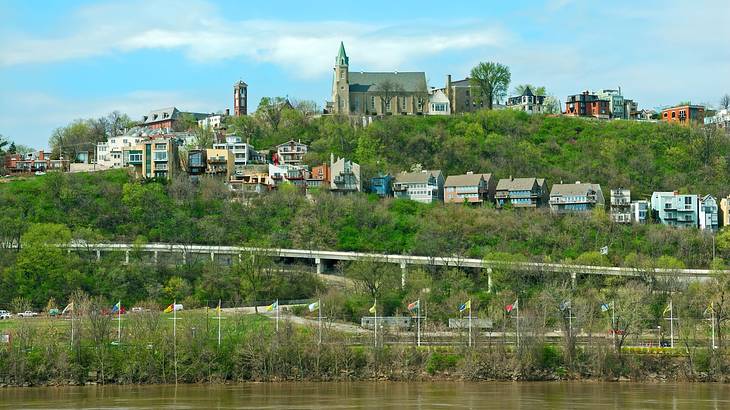
Cincinnati has drawn comparisons to Rome since at least 1853, when an article in The West American Review described and named seven specific hills forming a crescent around the city. The hills include Mount Adams, Walnut Hills, Mount Auburn, Vine Street Hill, College Hill, Fairmount, and Mount Harrison (now known as Price Hill).
The comparison never fully stuck. Cincinnati actually has more than seven hills, which led to an ongoing debate about which ones belonged on the list. Rome's long-standing claim to the title also made it a tough sell.
The Tri-State
The Cincinnati Tri-State area, also known as Greater Cincinnati, spans 15 counties across Ohio, Kentucky, and Indiana. Government agencies and news outlets, such as the Cincinnati Enquirer, use this term regularly.
It is not a nickname for Cincinnati itself. Many metropolitan areas across the US use the same label, making it more of a geographic descriptor than a distinctive name.

The Queen City
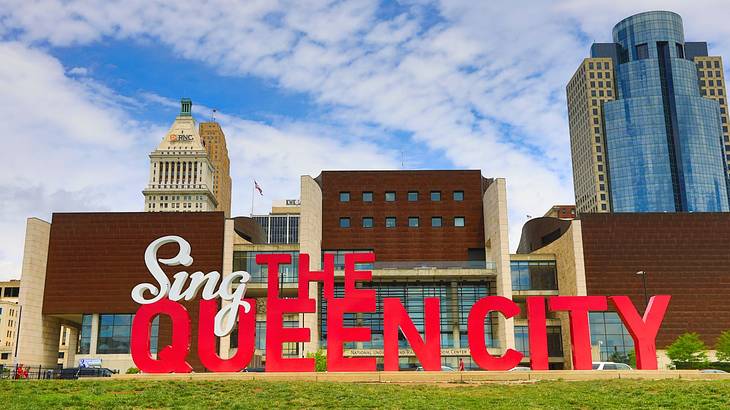
This is Cincinnati's best-known and most enduring nickname. It dates back to 1819, when journalist Ed B. Cooke wrote in the Inquisitor and Cincinnati Advertiser that Cincinnati was "the fair Queen of the West." At the time, Cincinnati was the first major inland city built west of the Alleghenies, and locals were fiercely proud of its rapid growth.
The name was further cemented in 1854, when poet Henry Wadsworth Longfellow referenced the "Queen of the West" in his poem Catawba Wine, a tribute to the vineyards of the Ohio River Valley. "The Queen City" remains widely used today in media, local businesses, and everyday conversation.
The Paris of America
Several American cities have claimed the title of "The Paris of America," including Detroit and others. Cincinnati's version dates back to the late 1800s, when the city undertook ambitious architectural projects like Music Hall, the Cincinnatian Hotel, and the Shillito Department Store.
Combined with a thriving scene of theatres, saloons, and breweries, the city earned a reputation that felt more European than midwestern. The nickname is rarely used today, though some longtime residents may still know its origins.
In Summary
Not every nickname sticks, and Cincinnati has the track record to prove it. The Blue Chip City faded almost as fast as it arrived. The City of Seven Hills never quite escaped Rome's shadow.
But the Queen City endures, and Porkopolis, once a source of civic embarrassment, has become something the city wears with pride. That willingness to own the messy parts of its history is what makes Cincinnati's story worth knowing.

Want to keep exploring?
Subscribe for our latest guides.
Thank you for subscribing
We will be in touch soon with our latest guides.
Want to keep exploring?
Subscribe for our latest guides.
Thank you for subscribing
We will be in touch soon with our latest guides.