
10 Nicknames for Australia and the History Behind Them

Destguides may receive commissions from purchases made through affiliate links in this article.
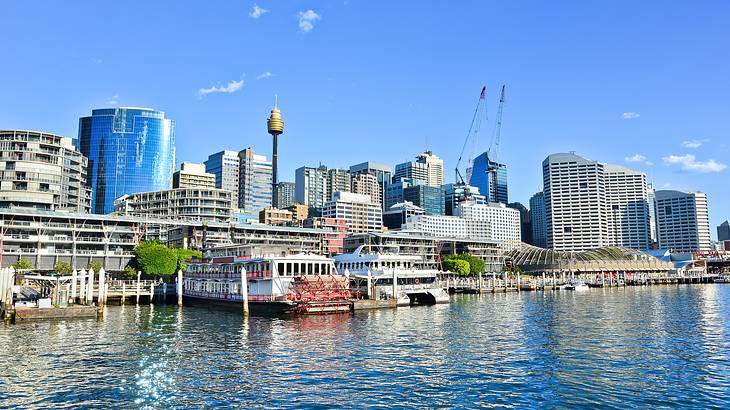

Australia is a country known for its warm climate, expansive beaches, and remarkable wildlife. There are also more nicknames for Australia than most people realize.
Some are rooted in the country's geography, others in its literature and history. Here are 10 nicknames, from well-known monikers to lesser-known ones, and the stories behind them.
10 Australia Nicknames


The Great Southern Land
The name Australia derives from the Latin word "Australis," meaning southern. During the 16th and 17th centuries, European explorers theorized that because land existed in the Northern Hemisphere, there must be a landmass in the Southern Hemisphere to balance it. That hypothetical territory became known as the "Great Southern Land."
In the early 19th century, explorer Matthew Flinders became the first person to circumnavigate Australia, helping to establish it on the map. The nickname also gained wider cultural recognition in 1982, when Australian band Icehouse used it as the title of a song.
Aus
Australia's ALPHA-3 country code is "AUS," a shortened form of the country's full name. The abbreviation appears on international correspondence and shipping, and is also used informally in everyday speech. Locals who use it verbally, however, would likely spell it "Oz."
Oz
"Oz" is one of the most widely used informal names for Australia. It evolved from the abbreviation "Aus," spelled to reflect the way it sounds when spoken. While the word may bring to mind The Wizard of Oz, for Australians, it is simply casual shorthand for home.
The Land of the Long Weekend
This nickname is rooted in Australia's labor movement history. In 1856, stonemasons in Melbourne became among the first workers in the world to win an eight-hour working day, earning the country a reputation as a workers' paradise.
The phrase "Land of the Long Weekend" captures that spirit of work-life balance. It later inspired a 1994 film of the same name, which explored how that legacy has shaped modern Australian life.


The Sunburnt Country
Australia is sometimes called the "Sunburnt Country," a name drawn from the poem My Country by Dorothea Mackellar. First published in the London Spectator in 1908, the poem opens its second stanza with the words "I love a sunburnt country."
It goes on to celebrate Australia's vast and unforgiving landscapes, from its droughts and flooding rains to its far horizons. The imagery has endured as one of the most recognizable expressions of Australian identity.
'Straya
"'Straya" is an informal, phonetic rendering of how many Australians pronounce the word Australia in casual speech. It is used as slang among locals and reflects the relaxed, colloquial style that has become part of Australian culture.


The Land Down Under
One of the most globally recognized Australian nicknames, the "Land Down Under," has its origins in European exploration. As mentioned previously, early explorers knew only that this landmass lay south of Asia and below the equator. That geographical fact became the basis of the name, which has since appeared widely in film, music, and popular culture around the world.
The Antipodes
The term "antipodes" comes from the Greek word anti, meaning opposite, and podes, meaning feet. It describes two places located on directly opposite sides of the globe.
Once again, early European explorers, including Abel Tasman, used the word to communicate the vast distance between Europe and the newly discovered southern landmass, framing Australia as a world away from everything familiar.

The Wide Brown Land
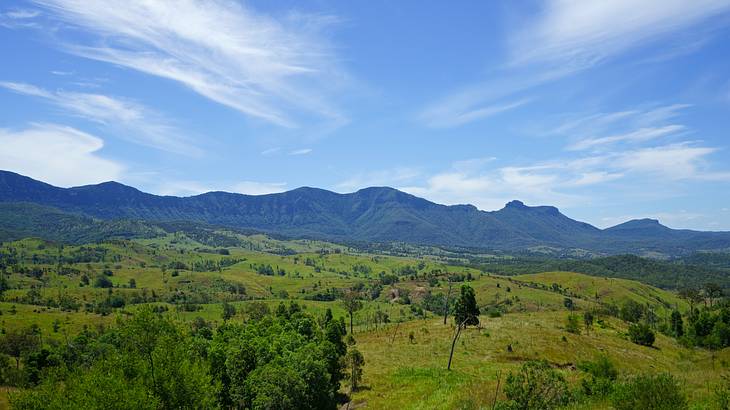
Like the name Sunburnt Country, this nickname also originates from Dorothea Mackellar's 1908 poem My Country. The phrase appears in the second stanza, where Mackellar describes Australia's landscape as "the wide brown land." It has since become a lasting shorthand for the country's expansive interior and distinctive terrain.
The Lucky Country
The Lucky Country comes from a 1964 work of non-fiction by Australian writer Donald Horne. Horne's intention was critical. He argued that Australia's prosperity was built on luck rather than strong political or economic foundations.
Despite his pessimistic intent, the phrase was widely embraced as a celebration of the country's good fortune, and it has been used as a term of endearment for Australia ever since.
In Summary
Australia has accumulated quite a few names over the years. Each one reflects a different side of the country, from its history and geography to the way locals refer to their home. And as this list shows, no two nicknames tell the same story.

Want to keep exploring?
Subscribe for our latest guides.
Thank you for subscribing
We will be in touch soon with our latest guides.
Want to keep exploring?
Subscribe for our latest guides.
Thank you for subscribing
We will be in touch soon with our latest guides.