
15 Cleveland Nicknames That Will Surprise You

Destguides may receive commissions from purchases made through affiliate links in this article.
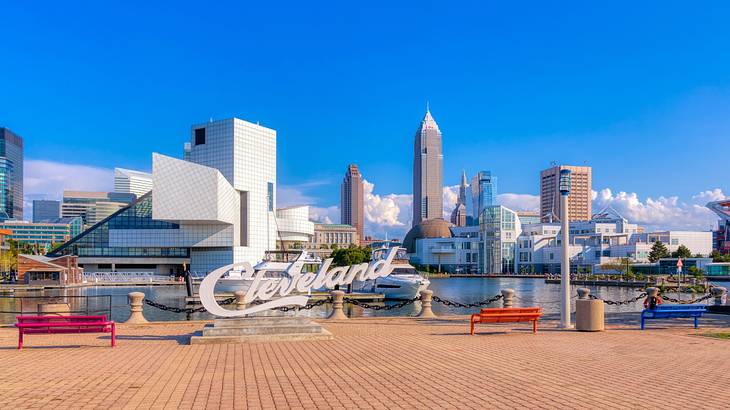

General Moses Cleaveland surveyed the swampy shore of Lake Erie in 1796 and promptly left, never to return. The city named after him dropped the "a" from his surname to fit a newspaper headline, then spent the next two centuries giving itself more names than any one place probably needs.
At last count, there are 15 Cleveland nicknames to learn about, and yes, one of them involves a plum. Continue reading to discover the history behind each one.
15 Nicknames for Cleveland, Ohio

America's North Coast
Cleveland launched this nickname as its official tourism slogan in the early 1980s to reposition itself as a waterfront destination after years of negative press.
A billboard near Cleveland Hopkins Airport greeted arrivals with "Welcome to America's North Coast!" In 1987, when the city developed its lakefront, a naming contest in The Plain Dealer gave the area the title North Coast Harbor.
Believeland
This nickname first appeared in 1995 when a fan held up a "Believeland" sign at a Cleveland Indians baseball game. The Cleveland Browns printed it on t-shirts in 2007.
But 2016 was when the name truly took off, after Cleveland beat the Golden State Warriors 4-3 in Game 7 of the NBA Finals. It brought the city its first major professional sports championship since 1964.
The moment validated years of stubborn optimism from fans who had refused to give up on their team. ESPN released a 30 for 30 film called Believeland that same year.
C-Town
Cleveland's hip-hop and rap scene popularized "C-Town" in the 1990s, though it appeared in music contexts as far back as the 1960s, including a local 1980s band called The C-Town Four.
Jay-Z and Kurupt both used the phrase in the late 1990s, in interviews and at concerts, to refer to Cleveland. Bone Thugs-N-Harmony and Twista also released a track called "C-Town" in 2007 about Cleveland and Chicago. "C-Land" is another variation that gets used in the same way.
The Metropolis of the Western Reserve
Northeastern Ohio was once part of the Connecticut Western Reserve, a stretch of land owned by the Colony of Connecticut. Cleveland emerged as the largest and most important city in that territory, earning it the formal-sounding title of the "Metropolis of the Western Reserve." A variation, "Prodigy of the Western Reserve," was coined by local journalist George E. Condon.
The City of Light
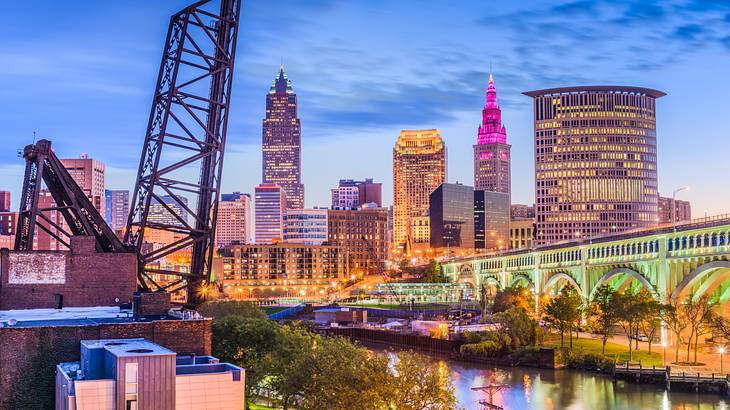
On April 29, 1879, inventor Charles F. Brush lit 12 arc lamps around Public Square, making Cleveland the first city in the US with electrically lit public streets. Thousands gathered to watch, some wearing smoked glasses because they had no idea how bright it would be.
Brush's system was soon adopted by New York, Boston, and Philadelphia, and his company supplied 80% of the country's arc street lighting before General Electric acquired it.
CLE
This nickname grew out of Cleveland Hopkins International Airport's IATA code, but it crossed into everyday use after the airport launched its "CLE: Going Places" marketing campaign in 2006.
Since then, "CLE" has appeared in organization names, events, retail brands like CLE Clothing Co., and the #ThisIsCLE hashtag from Destination Cleveland's 2014 tourism campaign.
The 216
Cleveland's area code "216," established in 1947, covers the city and parts of Cuyahoga County. Local businesses worked it into branding with phrases like "Made in the 216" and "Shop the 216," and it became popular shorthand in the hip-hop community as well.
During the 2014 season, Cleveland Indians player Nick Swisher paid tribute by wearing custom shoes featuring 216 and the city skyline.

The Best Location in the Nation
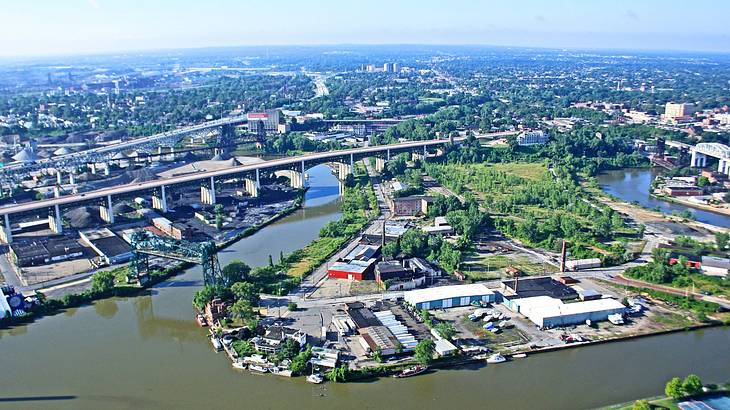
The Cleveland Electric Illuminating Co. launched the slogan "The Best Location in the Nation" in 1944 to recruit businesses to Northeast Ohio as the economy surged following World War II.
The campaign promoted the region's skilled workforce, natural resources, and transportation options by water, road, rail, and air. It worked for a while, but the same suburban expansion it encouraged eventually drained the city of population and investment. The slogan faded by the 1960s.
The Big Plum
An advertising campaign in the 1980s tried to rebrand Cleveland with the slogan "New York's the Big Apple, but Cleveland's a Plum." There was a week-long promotional event and a variety of merchandise created with the saying. The campaign drew attention at first but gradually became the butt of jokes, and the nickname fell out of favor.
The Land
Bone Thugs-N-Harmony put this one on the map with their 1995 album E. 1999 Eternal, where "The Land" appeared in the track "East 1999." It stayed in the hip-hop and rap community until around 2015, when LeBron James started using the phrase and named a Nike sneaker after it.
Machine Gun Kelly also used the nickname in his song "Till I Die" the same year. The Cleveland Cavaliers later put The Land on their city-edition jerseys.

The Forest City
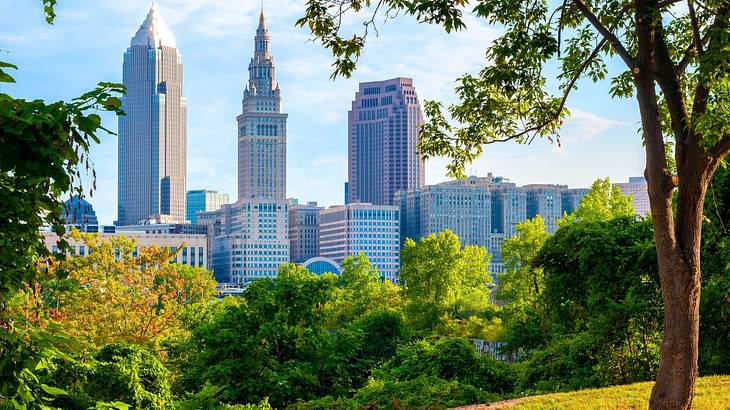
Cleveland's oldest nickname dates to the 1850s. Credit is usually given to William Case. He led the Cleveland Horticultural Society, served as mayor from 1850 to 1851, was passionate about greenery, and initiated a citywide effort to line the streets with trees.
By the 1850s, the name was attached to businesses, a race track, a hotel, and the city's baseball teams. Cleveland has lost significant canopy cover since the 1940s, but local organizations are working to reverse the decline.
The Green City on a Blue Lake
This nickname describes tree-covered Cleveland on the shore of Lake Erie and doubles as an environmental statement. The Mayor's Office of Sustainability adopted the phrase to frame the city's shift from industrial polluter to sustainability hub. It also works as a deliberate counter to the less flattering "Mistake on the Lake" that Cleveland spent decades trying to shake.
The New American City
Cleveland adopted this phrase as it worked to reinvent itself after the economic decline of the 1970s. The city's official website used "The New American City" as a tagline.
The name also appeared as the title of a 1999 book, The New American City Faces Its Regional Future: A Cleveland Perspective, which examined the city's shifting social and economic landscape.

The Rock and Roll Capital of the World
Record store owner Leo Mintz noticed white customers buying rhythm and blues records at his Cleveland shop, Record Rendezvous, and rebranded the genre as rock and roll to reach a wider audience.
He then persuaded disc jockey Alan Freed to play the music on WJW radio starting in 1951. Freed championed the new genre term and, in March 1952, hosted the Moondog Coronation Ball at the Cleveland Arena, widely considered the first major rock concert.
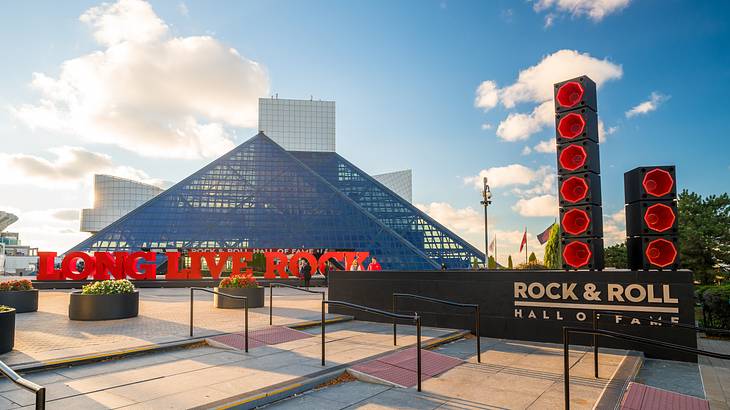
WMMS program director Billy Bass gave Cleveland the capital title in 1972 after reading about Mintz and Freed's role in naming the genre. The Rock and Roll Hall of Fame opened on Cleveland's lakefront in 1995. The city is also sometimes referred to simply as "Rock City."
The Sixth City
Cleveland passed Baltimore in the 1910 census to become the sixth most populous city in the country, and locals made sure everyone knew it. The Chamber of Commerce urged businesses to put "Cleveland, Sixth City" on their correspondence, and the phrase spread to postcards and advertisements.
The 1920 census pushed Cleveland up to the fifth position, where it hovered for the next two decades. After the 1940s, the numbers started going in the other direction. Cleveland is now the 54th most populous US city.
In Conclusion
Fifteen nicknames in, and the pattern is clear: Cleveland keeps naming and renaming itself. Some names stuck for over a century, like Forest City. Others lasted about as long as the merchandise, like Big Plum.
The ones residents actually use tend to be the simplest: The Land, C-Town, and the 216. They don't need a campaign behind them because they come from the people who live here.

Want to keep exploring?
Subscribe for our latest guides.
Thank you for subscribing
We will be in touch soon with our latest guides.
Want to keep exploring?
Subscribe for our latest guides.
Thank you for subscribing
We will be in touch soon with our latest guides.