
31 Famous Australian Landmarks to Visit

Destguides may receive commissions from purchases made through affiliate links in this article.
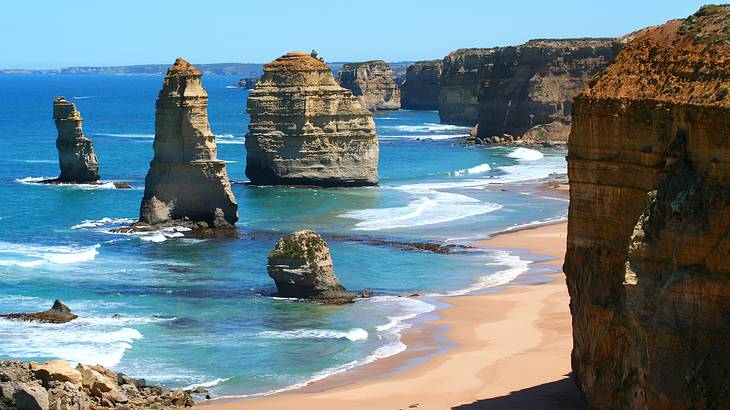

Australia is the sixth-largest country in the world and the smallest continent. It is home to UNESCO World Heritage Sites, diverse ecosystems, and over 34,000 kilometers of coastline. Despite its enormous size, the country has a relatively small population of around 27 million people.
From coral reefs and ancient rock formations to modern performing arts venues and heritage railways, Australia's landmarks reflect the country's natural and cultural diversity.
This list, which is in no particular order, covers 31 famous Australian landmarks across every state and territory. Continue reading to discover natural wonders, historic sites, and architectural achievements worth adding to your Australia travel itinerary.
Organizing a last-minute visit to Australia?
Book your entrance tickets and tours for your trip to Australia early! See the short list of top suggestions below.
☂️ Top tours and experiences in Australia
- Cairns - Skyrail Cableway to Kuranda & Rail Tickets (likely to sell out)
- From Margaret River - Margaret River Wine Adventure (likely to sell out)
- Great Barrier Reef Snorkeling & Diving Cruise From Cairns (very popular)
- Cairns - Great Barrier Reef Half-Day Snorkelling Tour (very popular)
- One-Hour Whitsunday Islands & Heart Reef Scenic Flight (very popular)
31 Famous Landmarks in Australia
- The Great Barrier Reef
- Bondi Beach
- Sydney Opera House
- Sydney Harbour Bridge
- Uluru Rock
- The Great Ocean Road
- Kakadu National Park
- Lord Howe Island
- Shark Bay
- Port Arthur Historic Site
- Watarrka National Park
- Kangaroo Island
- The Blue Mountains
- Sovereign Hill
- Mount Kosciuszko
- Kuranda Scenic Railway
- The Pinnacles Desert
- The Brighton Bathing Boxes
- Flinders Street Railway Station
- Daintree National Park
- Rottnest Island
- Broome
- The Story Bridge
- Karijini National Park
- Litchfield National Park
- Darwin Military Museum
- Australian War Memorial
- Parliament House
- Undara Lava Tubes
- Gwalia Ghost Town
- Whitehaven Beach
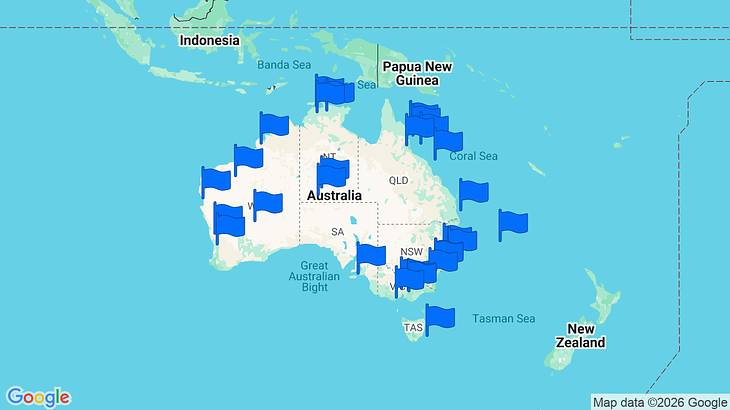
Australia Landmarks Map
A map of Australia landmarks. Use the map to explore all of the points of interest.

The Great Barrier Reef
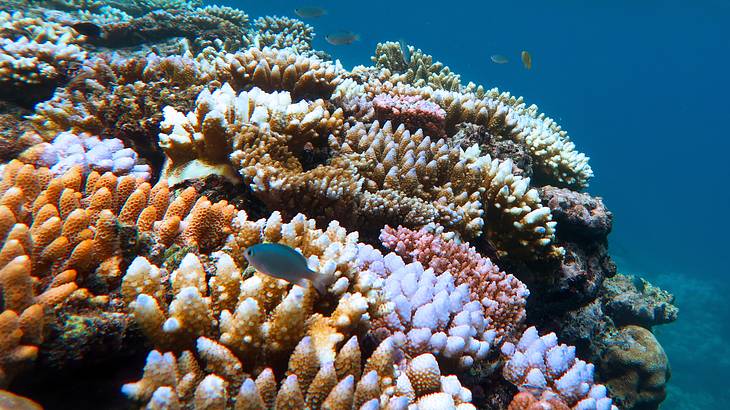
A UNESCO World Heritage Site since 1981, this reef system off the coast of Queensland is the largest on Earth. It is made up of around 3,000 individual reefs and over 900 islands.
More than 1,500 fish species live within the Great Barrier Reef, along with marine turtles, sharks, dugongs, giant clams, and whales. Over 400 coral species support the ecosystem. Visitors can explore by snorkeling, diving, or scenic flight from towns like Cairns and Airlie Beach.
☂️ Explore the Great Barrier Reef on a tour

Bondi Beach
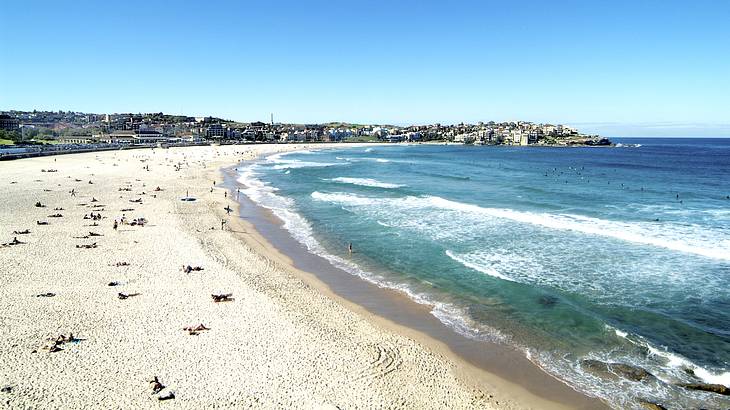
Stretching about one kilometer along Sydney's eastern coast, Bondi Beach sits roughly seven kilometers from the city center. It is one of the most recognized beaches in the country, popular for surfing, swimming, and coastal walks.
One of the oldest surf life-saving clubs in Australia operates here, and whale and dolphin watching is common during migration season. The six-kilometer Bondi to Coogee Coastal Walk runs south along the cliffs and is one of the best things to do in Sydney.
☂️ Visit Bondi Beach with an excursion
- Sydney City Highlights & Hidden Gems - Private or Small Group Tour (highly rated)
- Sydney Harbour Scenic Helicopter Flight (a sort after tour)
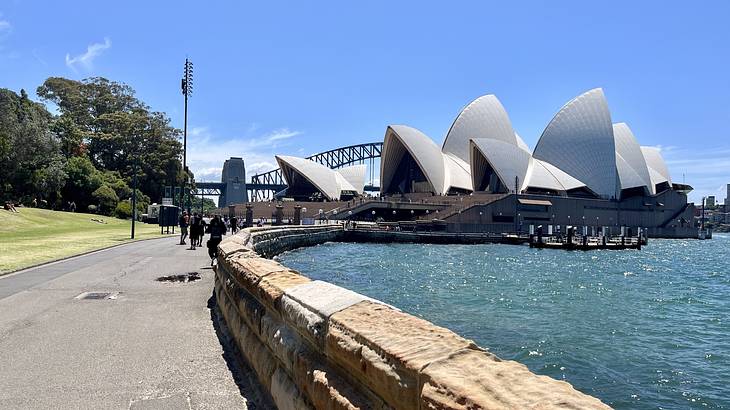

Sydney Opera House
On October 20, 1973, Queen Elizabeth II opened the Sydney Opera House on Bennelong Point in Sydney Harbour. Danish architect Jorn Utzon designed the building, which was listed as a UNESCO World Heritage Site in 2007.
The Opera House hosts over 1,500 performances a year and welcomes around 11 million visitors annually. It is a multi-venue center with concert halls, theaters, and studio spaces.
Guided tours of the interior can be booked in advance through the venue's website. If you want to enjoy views of this landmark from your hotel, the best places to stay in Sydney for this are the CBD, The Rocks, or Circular Quay.
☂️ Visit the Sydney Opera House on a tour
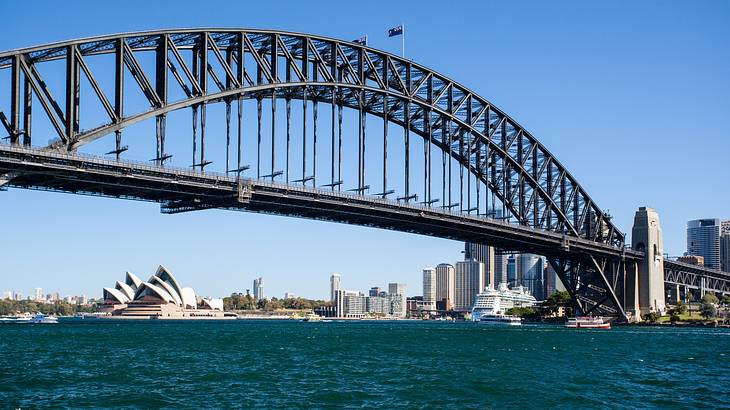

Sydney Harbour Bridge
Locals call it the "Coathanger." The Sydney Harbour Bridge connects the northern and southern shores of Sydney Harbour and was officially opened on March 19, 1932, after construction began in 1923.
The top of the arch stands 134 meters above sea level, making it the world's tallest steel arch bridge. The road deck sits 49 meters above the water.
You can admire the structure from the Pylon Lookout or take a guided climb to the top for panoramic views of the city. For the best views, arrive at the bridge around sunset.
Uluru Rock
Rising 348 meters above the surrounding desert plain, Uluru, also known as Ayers Rock, is one of the world's largest monoliths. The rock is made of red sandstone and sits at an elevation of 863 meters above sea level in the Northern Territory's Uluru-Kata Tjuta National Park.
The sandstone formation is estimated to be about half a billion years old. It holds deep spiritual significance for the Anangu people, the traditional owners of the land.
Caves at the base contain ancient rock paintings. The best time to visit is before sunrise or after sunset, when the sun casts the rock in a sunburned red. It is no coincidence that one of the most well-known nicknames for Australia is the "Sunburnt Country."
☂️ Experience Uluru with a tour
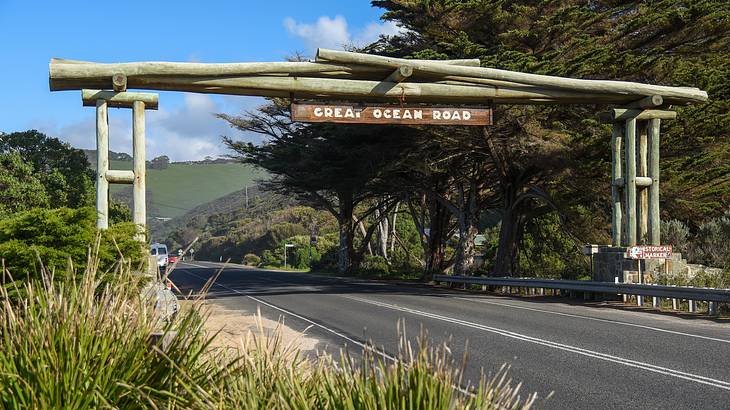

The Great Ocean Road
Returned soldiers built this 243-kilometer coastal route between 1919 and 1932, dedicating it to those killed during World War I. It runs along Victoria's southwestern coast from Torquay to Allansford and is an Australian National Heritage site.
Along the way, you will pass the Twelve Apostles limestone stacks, the lush Great Otway National Park, and the seaside town of Apollo Bay. Driving east to west keeps you closer to the ocean and provides the best views.
☂️ Discover Twelve Apostles on a tour
Kakadu National Park
Kakadu National Park covers around 20,000 square kilometers in the Northern Territory. It is listed as a World Heritage Site for its cultural significance and natural environment.
Over 5,000 Aboriginal rock art sites are found within the park, some dating back tens of thousands of years. The Bininj/Mungguy people have lived in this region for over 65,000 years. Waterfalls, wetlands, and monsoon forests can be explored across the park's many trails.
☂️ Visit Kakadu National Park with an excursion
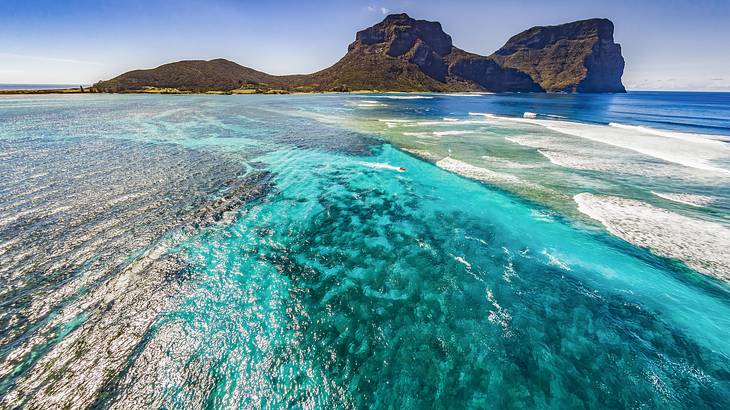

Lord Howe Island
Only 400 visitors are allowed on Lord Howe Island at any one time. This crescent-shaped island in the Tasman Sea is about two hours by plane from Sydney and home to around 445 permanent residents.
The island is roughly 10 kilometers long and two kilometers wide. Cycling and walking are the main ways to get around. White-sand beaches, coral reefs, and the twin peaks of Mount Gower and Mount Lidgbird define the landscape.
Shark Bay
In 1991, Shark Bay became the first location in Western Australia to receive UNESCO World Heritage status. It covers 23,000 square kilometers in the Gascoyne region.
Around 10,000 dugongs live in the bay, making it one of the most significant populations on Earth. The seagrass beds here span over 4,000 square kilometers, the largest anywhere.
In addition, living stromatolites found along the shore are among the oldest forms of life on the planet. Shell Beach, made entirely of tiny white cockle shells, stretches for over 60 kilometers along the bay's coast.
Port Arthur Historic Site
What began in 1830 as a small timber station on Tasmania's Tasman Peninsula grew into one of the largest penal settlements in the Australian colonies.
Port Arthur received convicts who had re-offended after their initial transportation. An estimated 12,000 to 14,000 prisoners passed through the site between 1830 and 1877.
The settlement became known for its shift toward psychological punishment, including solitary confinement in the Separate Prison built in the 1840s. You can also take a boat to the Isle of the Dead, a small island used as a burial ground when Port Arthur was in operation.
☂️ Discover Port Arthur Historic Site on a tour
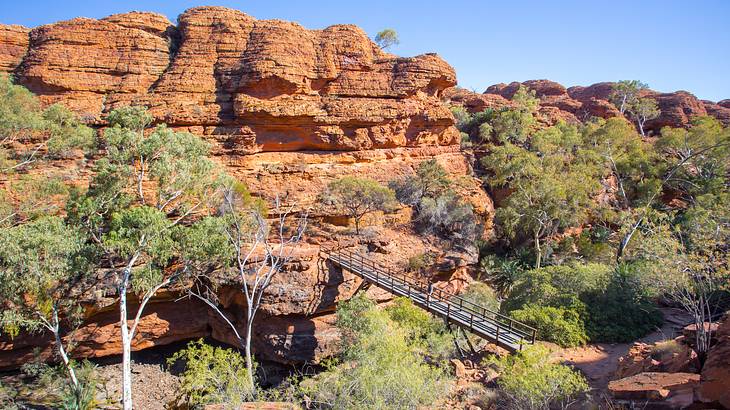

Watarrka National Park
Kings Canyon is the main draw of Watarrka National Park, a protected area within the George Gill Range in the Northern Territory. The sandstone gorge has walls rising over 100 meters high.
The Rim Walk is a six-kilometer loop that passes through the Garden of Eden, a natural pool surrounded by ferns and cycads. Trails here suit both beginners and experienced hikers. Over 600 species of native plants grow within the park.
☂️ Join a tour to see Watarrka National Park
- Seven Day Uluru to Adelaide Cultural & Adventure Tour (rated five stars)
Kangaroo Island
Australia's third-largest island, after Tasmania and Melville Island, sits 13 kilometers off the coast of South Australia. Ferries run daily from Cape Jervis, and regular flights depart from Adelaide.
Kangaroo Island is home to populations of Australian sea lions and short-beaked echidnas. Lathami Conservation Park protects the endangered glossy black-cockatoo. The island's relative isolation has helped preserve its unique wildlife.
☂️ Explore Kangaroo Island with a tour
The Blue Mountains
The Three Sisters rock formation near Katoomba draws visitors from around the world, but the Greater Blue Mountains World Heritage Area stretches far beyond that single viewpoint. It covers one million hectares and is about an hour's drive west of Sydney.
Eucalyptus forests, sandstone cliffs, waterfalls, and deep canyons define the landscape. Well-marked walking and hiking trails wind through gorges and past waterholes. You can reach the area by train, car, or coach from the city.
☂️ Visit the Blue Mountains with a tour
- Intimate Blue Mountains Wild Kangaroos & Sunset for Nature Lovers (often fully booked)
- Blue Mountain Small Group Tour All Inclusive Multi Award Winner (very popular)
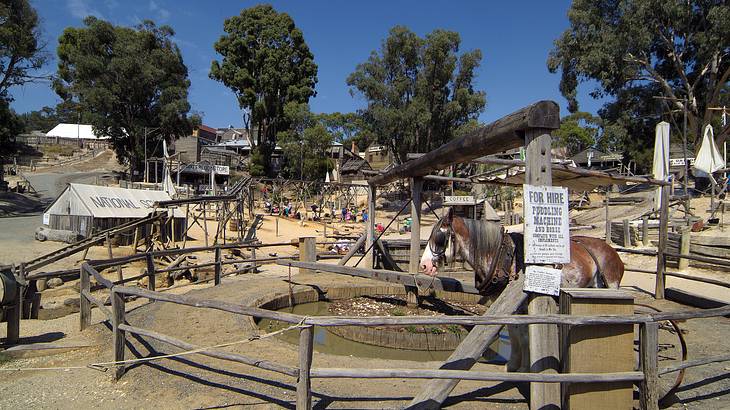

Sovereign Hill
Step into the 1850s at this open-air museum in the gold-rush city of Ballarat, Victoria. Sovereign Hill offers hands-on activities, such as panning for gold, touring an underground mine, and watching craftspeople demonstrate various skills.
Costumed staff portray characters from the era and bring the history to life. Entry includes access to the Gold Museum, which holds a large collection of gold items and showcases Ballarat's mining past. There is also the Sovereign Hill Hotel, a heritage accommodation located on the grounds.
☂️ Experience Sovereign Hill with a tour
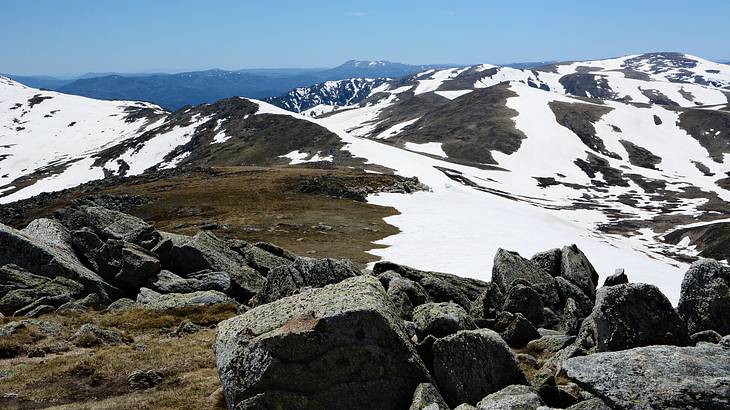

Mount Kosciuszko
The highest peak on the Australian mainland stands at 2,228 meters above sea level. Mount Kosciuszko is located within Kosciuszko National Park in the Snowy Mountains of New South Wales.
Polish explorer Paul Edmund Strzelecki reached the summit in 1840 and named it after Tadeusz Kosciuszko, a Polish-Lithuanian military engineer.
Two main routes lead to the top: one from Charlotte Pass and one from Thredbo, where a chairlift shortens the hike. Lake Cootapatamba, the highest lake in Australia, sits along the Thredbo route.
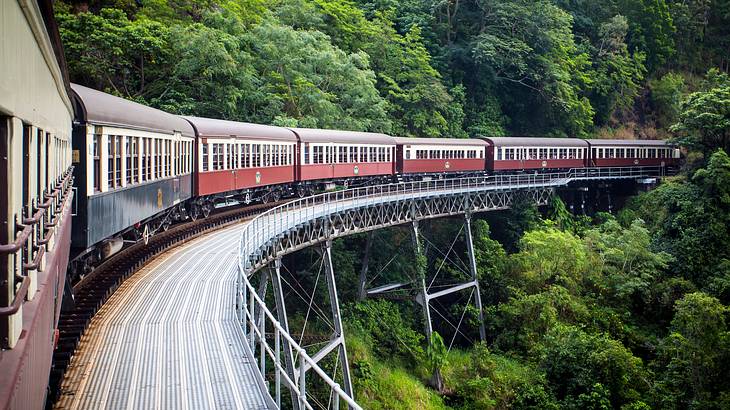

Kuranda Scenic Railway
Since 1891, this railway has carried passengers from the coastal city of Cairns up through the tropical rainforest to the village of Kuranda. The track passes through 15 hand-carved tunnels and crosses 37 bridges.
The journey covers about 37 kilometers and takes roughly two hours. It climbs to 328 meters above sea level, passing waterfalls and dense tropical canopy along the way. A 10-minute stop at Barron Falls is included in the trip.
☂️ Explore the Kuranda Scenic Railway on a tour
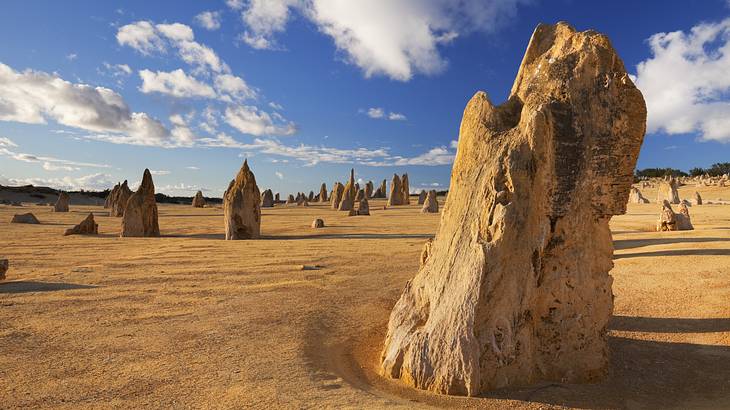

The Pinnacles Desert
Thousands of limestone pillars rise from the sandy ground of Nambung National Park, about a two-hour drive north of Perth. Some reach up to five meters in height. The Pinnacles Desert covers approximately 190 hectares and draws over 250,000 visitors each year.
Scientists estimate the formations took shape between 25,000 and 30,000 years ago. You can explore them by car on the designated loop drive or on foot along walking trails.
☂️ Visit The Pinnacles Desert on a tour
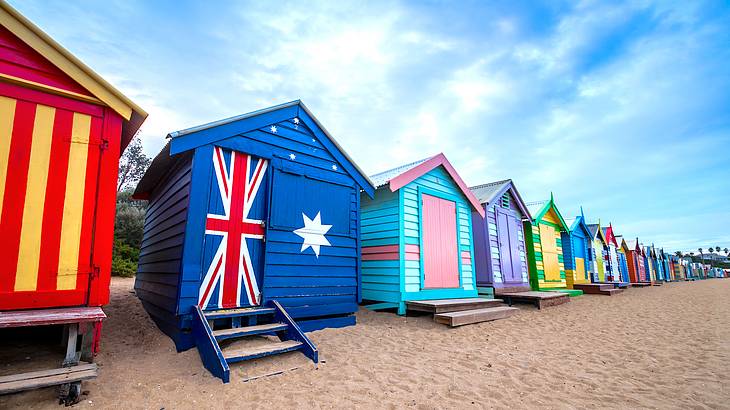

The Brighton Bathing Boxes
Eighty-two colorful Victorian-era beach huts line Brighton Beach, about 13 kilometers from Melbourne's city center. They are one of the most photographed landmarks in Victoria.
Originally built in the mid-1800s as changing rooms for women before bathing, the huts are now privately owned. Some serve as storage, and others display art.
All have retained their original Victorian architecture. Visiting early in the morning or near sunset helps you avoid the crowds.
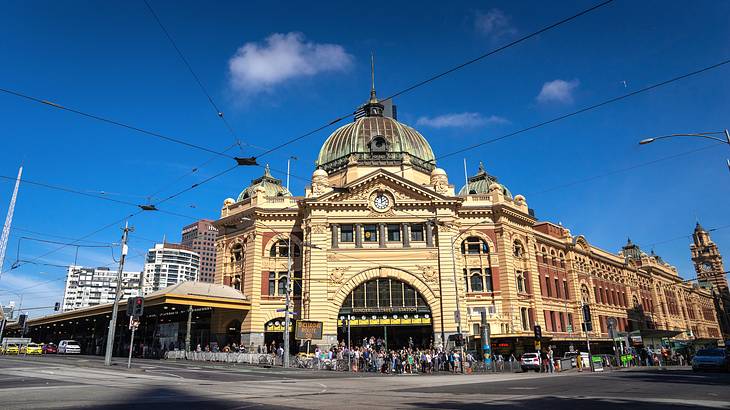

Flinders Street Railway Station
Melbourne's first railway terminus opened on this site in 1854, making it the first urban railway station in Australia. The current building was completed in 1910 and quickly became one of the city's most recognizable landmarks.
By 1926, Flinders Street had become the busiest passenger station in the world. Today, it is listed on the Victorian Heritage Register. Its main platform stretches 708 meters, one of the longest railway platforms in the world.
Daintree National Park
Few rainforests on Earth are older than the Daintree. Estimated at around 180 million years old, it is one of the most ancient tropical rainforests on the planet and a UNESCO World Heritage Site recognized for its global biodiversity significance.
The park is in Queensland and is divided into two main sections: Mossman Gorge, about 80 kilometers north of Cairns, and Cape Tribulation, roughly 140 kilometers farther north. A concentration of plant and animal species found nowhere else in the world lives within the rainforest.
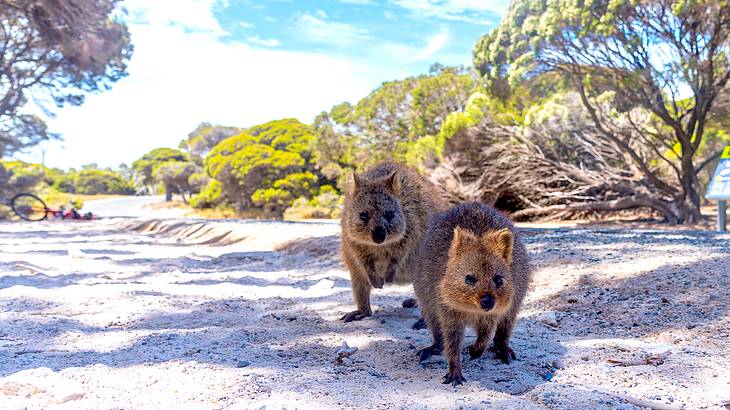

Rottnest Island
A car-free island about 19 kilometers off the coast of Western Australia, Rottnest Island is a popular day trip from Perth and Fremantle. Ferries run regularly from the mainland.
The island has 63 beaches and is best known for its quokka population, small marsupials found mainly here and in small pockets on the Western Australian mainland. Snorkeling, diving, surfing, and cycling are among the main activities.
☂️ Visit Rottnest Island with an experience

Broome
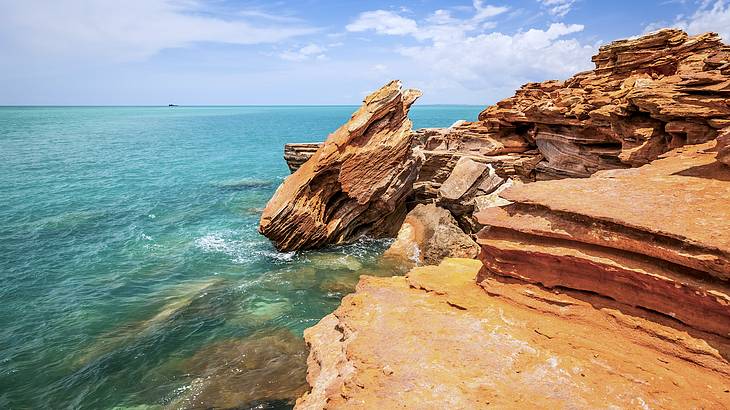
In the Kimberley region of Western Australia, Broome is a coastal town shaped by Aboriginal culture and the pearling industry of the late 19th and early 20th centuries.
Cable Beach, a 22-kilometer stretch of white sand along the Indian Ocean, is the town's most famous attraction. Working pearl farms and pearl showrooms are also open for visitors.
Aboriginal craft shops and outdoor markets add to Broome's character. Red cliffs along the coastline contrast sharply with the turquoise water.
☂️ Discover Broome on a tour
The Story Bridge
Completed in 1940, the Story Bridge is a steel cantilever bridge spanning the Brisbane River. It connects Kangaroo Point to Fortitude Valley and is one of Brisbane's most recognizable structures. It is a must on any Brisbane itinerary!
Guided adventure climbs take visitors to the top for panoramic views of the city skyline, Mount Coot-tha, and Moreton Bay. The bridge is also lit in various colors for special events throughout the year.

Karijini National Park
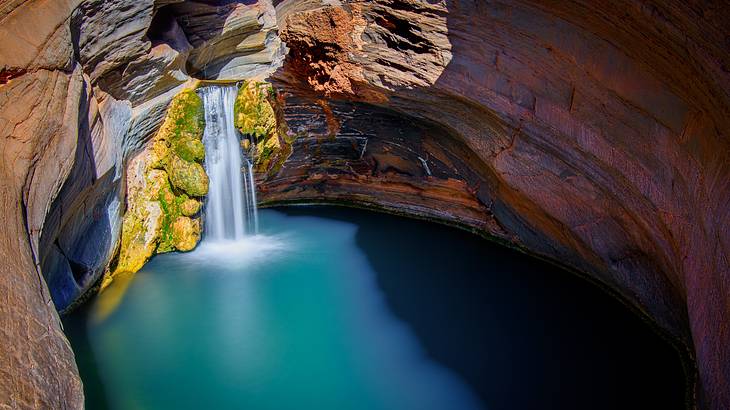
Some of the oldest rocks on Earth, dating back over 2.5 billion years, are found in Karijini National Park. It is the second-largest national park in Western Australia, situated in the Hamersley Range of the Pilbara region.
Deep, narrow gorges cut through the landscape, with cascading waterfalls and natural swimming pools at the bottom. A few days are recommended to explore the park's main trails and swimming spots.

Litchfield National Park
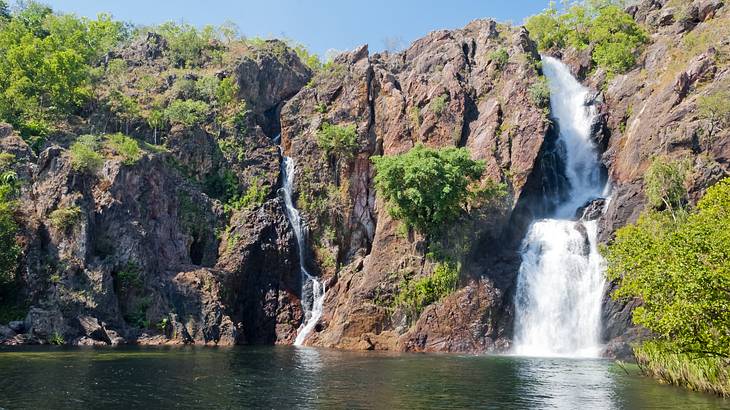
About 100 kilometers south of Darwin, Litchfield National Park is one of the most accessible parks in the Northern Territory's Top End. Entry is free year-round.
Wangi Falls, Florence Falls, and Buley Rockhole are among the park's most popular swimming spots. Giant magnetic termite mounds, some standing over two meters tall, are another notable feature. The dry season, from May to October, is the best time to visit.
Darwin Military Museum
Originally established as an artillery museum in the mid-1960s, the Darwin Military Museum is now located at East Point within the grounds of a former World War II defense installation. It tells the story of Australia's involvement in WWII and the bombing of Darwin.
Exhibits include original artillery guns, wartime artifacts, and information about key battles. An on-site cafe offers a place to rest with refreshments during your visit.

Australian War Memorial
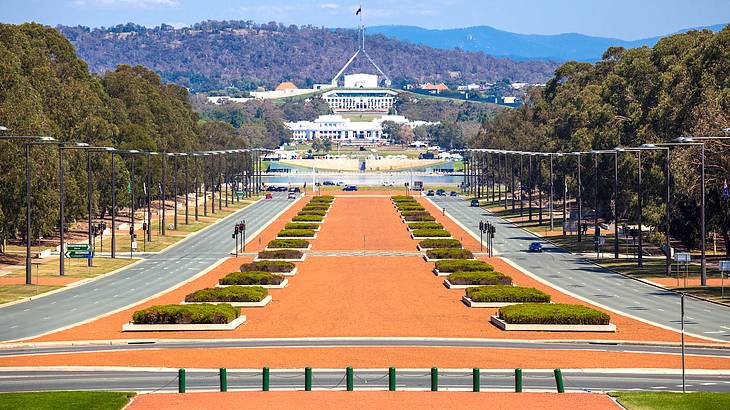
Opened in 1941 in Canberra, the Australian War Memorial serves as both a shrine and a museum. It sits near Parliament House and is one of the country's most significant historic landmarks.
The memorial includes the Commemorative Area, where the daily Last Post Ceremony is held, as well as several galleries of wartime exhibits. A sculpture garden and research center are also on the grounds. Tickets and guided tours can be booked in advance through the memorial's website.
☂️ See the Australian War Memorial on a tour
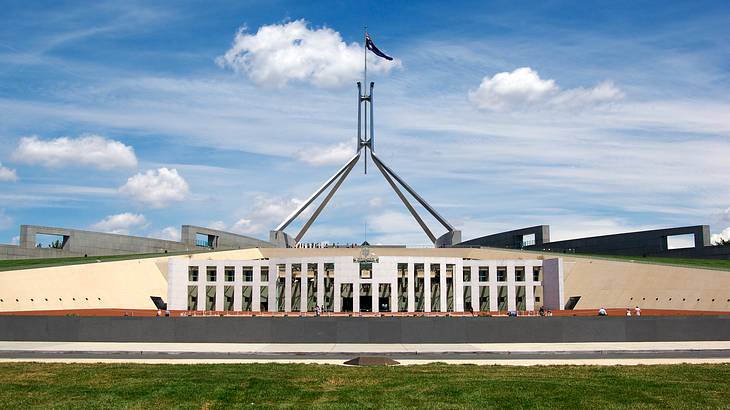

Parliament House
Queen Elizabeth II opened Australia's Parliament House in 1988 in the capital city of Canberra. It is where the country's legislative meetings are held and has around 4,500 rooms.
The building's design features two curved walls that resemble boomerangs, topped by an 81-meter flagpole. Temporary and permanent galleries inside display historical artifacts and contemporary art. Parliament House is open to the public daily.
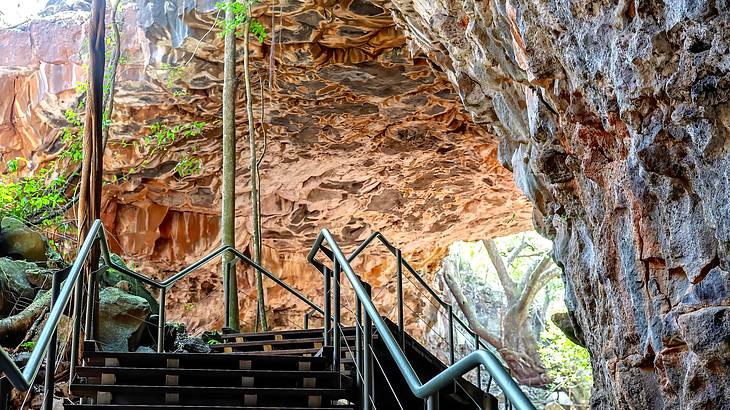

Undara Lava Tubes
Formed about 190,000 years ago by volcanic activity, the Undara lava system in Queensland's Undara Volcanic National Park contains some of the longest lava flows from a single volcano on Earth. The flow extends approximately 160 kilometers.
Visitors can access the lava tubes only on a guided tour, which covers the area's history and geology. The national park is located southwest of Cairns.
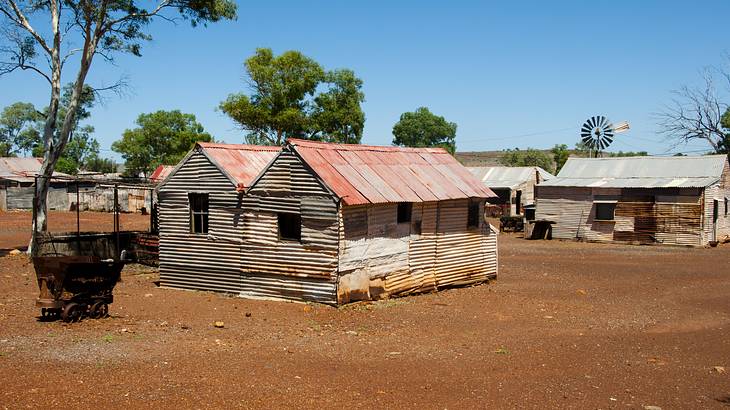

Gwalia Ghost Town
Once a thriving mining settlement near the city of Kalgoorlie, Gwalia is now one of Australia's best-known ghost towns. It sits in the outback of Western Australia along the Golden Quest Discovery Trail.
The town has a museum, abandoned shops and houses, a swimming pool built in 1943, and the remains of several mines. Gwalia's well-preserved buildings give a clear picture of life during the early gold-mining era.
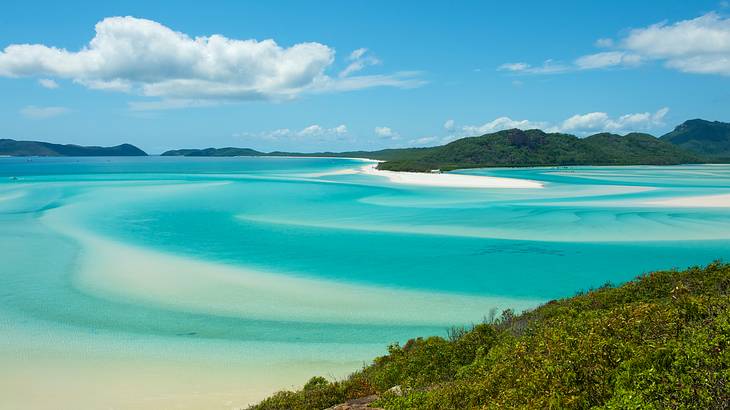

Whitehaven Beach
Seven kilometers of white silica sand stretch along Whitsunday Island in Queensland. Whitehaven Beach is consistently ranked among the best beaches in the world.
To reach it, you first need to make your way to Airlie Beach on the mainland. From there, boats, seaplanes, and helicopters provide access to the island. The beach's sand is 98% pure silica, which keeps it cool underfoot even on hot days.
☂️ Visit Whitehaven Beach with a tour
- Fly Raft Package - Whitehaven Beach, Snorkel & Scenic Flight (highly rated)
- Ocean Rafting - Whitehaven Beach, Snorkelling & Hill Inlet Lookout (well-attended)
In Summary
The landmarks covered in this guide span every corner of Australia, from ancient coral reefs and billion-year-old rock formations to colonial-era convict settlements and modern civic buildings. Whether you are drawn to natural landscapes, cultural heritage, or modern buildings, Australia has something for every type of traveler.

Want to keep exploring?
Subscribe for our latest guides.
Thank you for subscribing
We will be in touch soon with our latest guides.
Want to keep exploring?
Subscribe for our latest guides.
Thank you for subscribing
We will be in touch soon with our latest guides.