
11 Nicknames for Canada and the Reasons for Them

Destguides may receive commissions from purchases made through affiliate links in this article.
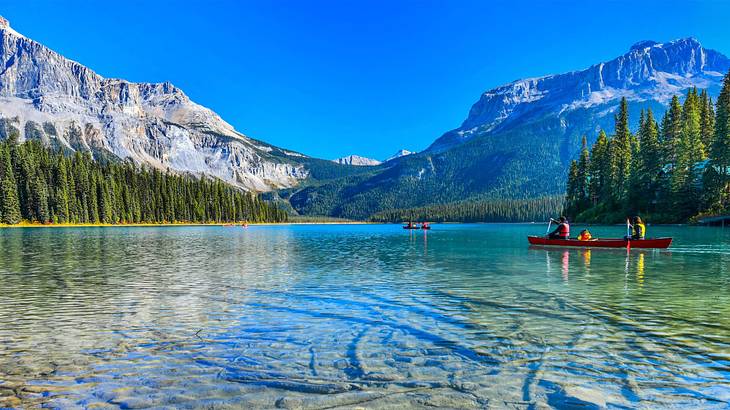

Canada is a vast and diverse country, known for its stunning scenery, outdoor adventures, maple syrup, and national love of hockey. Whether you're exploring the rugged coastlines, bustling cities, or remote northern landscapes, there's something here for every kind of traveler.
With such a rich history and distinct geography, it's no surprise that Canada has picked up a handful of nicknames over the years. From names that highlight its natural beauty to ones rooted in its culture and economy, each nickname offers a glimpse into Canada's unique identity.
Ready to learn about some of the most popular nicknames for Canada? Let's dive in.
11 Canada Nicknames

Borealia
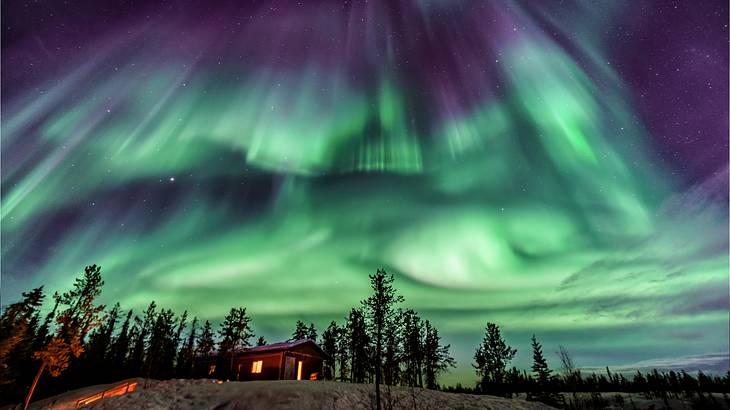
Canada's nickname, "Borealia," is a nod to its northern location. The term "Borealia" is derived from the Latin word Borealis, meaning "northern." Interestingly, "Borealia" was also one of the original proposed names for Canada.
Additionally, "Borealia" references the Aurora Borealis, commonly known as the Northern Lights, which can be seen across much of Canada from early fall to spring. For the best viewing experience, skywatchers often head to rural areas, especially Yellowknife in the Northwest Territories, one of the prime spots to witness this spectacular natural phenomenon.
Lumberjack Country
The nickname "Lumberjack Country" has deep roots in Canadian history. Lumberjacks—now more commonly known as loggers—have played a significant cultural and economic role in Canada since the early 19th century. The first lumberjacks harvested trees using simple hand tools and draft animals, such as oxen, long before the emergence of modern logging equipment.
The lumberjack theme remains a recognizable part of Canadian culture today. With Canada continuing to rank among the world's top exporters of wood products, the nickname remains both culturally and economically relevant.

The Great White North
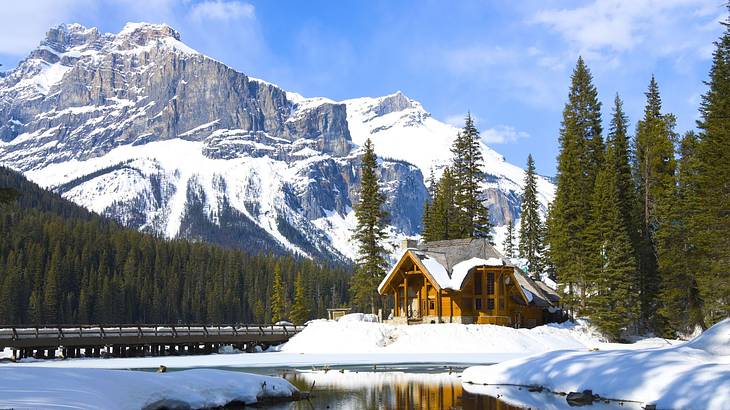
The "Great White North" is one of Canada's most iconic and widely recognized nicknames. Spanning nearly four million square miles, Canada is the second-largest country in the world by land area, surpassed only by Russia.
A significant portion of Canada's northern territory lies within the Arctic Archipelago, where snow cover is common for much of the year. Many of these remote regions remain sparsely populated or entirely uninhabitable due to extreme conditions.
Canada also occupies the northernmost portion of North America, situated directly above the United States. The nickname "Great White North" was popularized in the 1980s by the hit comedy series SCTV, which satirized stereotypical Canadian traits like snowy landscapes, ice hockey, and the famously friendly demeanor of its people.
Nova Britannia
Another historical name for Canada is "Nova Britannia," Latin for New Britain. The term reflected British ambitions in North America, especially following the Treaty of Paris in 1763, which ended the Seven Years' War and transferred most of New France—including much of present-day Canada—into British control.
French explorer Jacques Cartier charted the Gulf of Saint Lawrence and parts of what is now Prince Edward Island in the 1530s. He was among the first Europeans to explore the North American interior, enabling France to establish early territorial claims. After the region was ceded to Britain, the name "Nova Britannia" symbolized the rise of a new British presence on the continent.

The Land of Maple
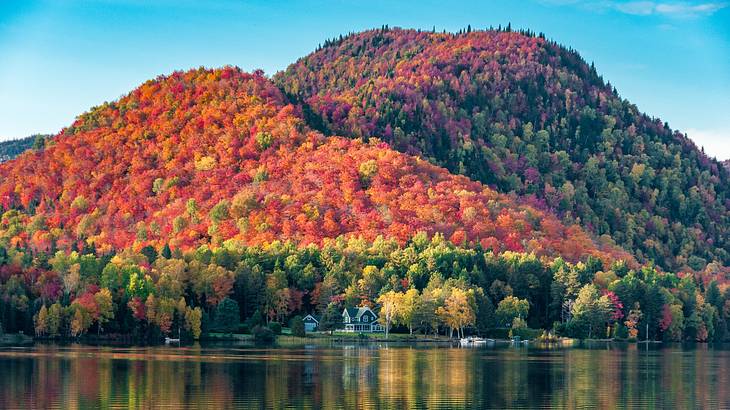
The "Land of Maple" or the "Land of the Maple Leaf" is a nickname for Canada that carries two key associations. First, it refers to the maple leaf, a national emblem featured prominently on the Canadian flag. This symbol reflects the widespread presence of maple trees across the country and their deep cultural significance.
Second, the nickname highlights Canada's dominant role in global maple syrup production. In 2024, Canada produced almost 20 million gallons of maple syrup, with the vast majority coming from the province of Quebec. As a major export and source of national pride, maple syrup reinforces Canada's identity as the "Land of Maple."
The True North Strong and Free
The nickname "The True North Strong and Free" comes directly from Canada's national anthem, O Canada, which is available in both French and English versions. The 1908 English lyrics by Robert Stanley Weir include the line: "With glowing hearts we see thee rise, the True North strong and free!"
The phrase "True North" may have been inspired, in part, by a line from British poet Alfred, Lord Tennyson, who referred to Canada as "that true North, whereof we lately heard." In the context of the anthem, "True North" reflects not only Canada's geographic position but also, at the time, its loyalty to the British Crown—signaled by the word "true."
America's Hat
A humorous and somewhat tongue-in-cheek nickname, "America's Hat" refers to Canada's position directly north of the United States, as if it were a hat sitting atop the country. While not an official or widely embraced nickname by Canadians, it's often used in internet memes and casual conversation.
This nickname reflects the close geographical and cultural relationship between the two countries, but with a light-hearted twist. That said, given the recent political and cultural tensions between the U.S. and Canada, the nickname may come across as dismissive or outdated, and is best used with caution.
The North
"The North" once again refers to Canada's geographic position as the northernmost country in mainland North America. The nickname gained renewed cultural traction through the NBA's Toronto Raptors, who adopted the slogan "We The North" as a statement of identity and pride.
While the term can refer to the entire country, it resonates most strongly with Canada's three northern territories: the Yukon, the Northwest Territories, and Nunavut. These regions are known for their isolation, shaped by extreme weather, rugged terrain, and limited infrastructure.
Canadians—often colloquially referred to as Canucks—who live in the North are respected for their resilience and self-sufficiency in the face of harsh conditions, thereby reinforcing the symbolic power of the nickname.

Ursalia
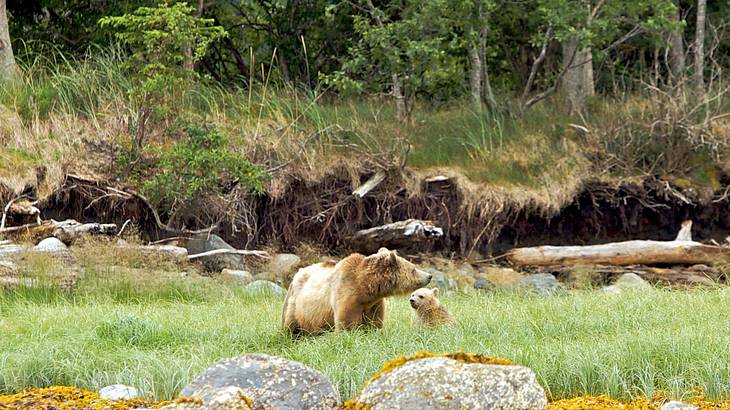
"Ursalia," derived from the Latin word ursus meaning "bear," translates roughly to "land of bears" or "place of bears." It's a fitting nickname for Canada, often referred to informally as "bear country," given that it is home to an estimated 400,000 black bears alone. "Ursalia" was even proposed as a possible name for the country during early naming discussions.
Canada is home to three species of bear. Grizzly bears inhabit the western provinces and parts of the North, including areas of Alberta, British Columbia, and the Yukon.
Black bears are the most widespread, commonly found in forested regions from British Columbia to New Brunswick. Polar bears roam Canada's Arctic coastline, particularly in northern Manitoba, where they hunt seals on the sea ice during the colder months.
Victorialand
While not a widely used or official nickname, "Victorialand" is occasionally used in poetic or literary contexts to reference Canada's colonial past and enduring ties to the British monarchy—particularly Queen Victoria, after whom many places in Canada are named (such as Victoria, British Columbia).
The name evokes a historical image of Canada as part of the British Empire, especially during the Victorian era. Today, it's more of a nostalgic or stylized term rather than a common nickname, and it's rarely used in everyday conversation.
The Dominion of Canada
"The Dominion of Canada" refers to the official title given to Canada when it became a self-governing country within the British Empire in 1867. The term "Dominion" was chosen to emphasize Canada's status as a semi-independent nation under the British Crown, marking its transition from a collection of British colonies to a unified federation.
Although the word "Dominion" is rarely used in everyday language today, it remains an integral part of Canada's historical identity and is still found in some legal documents and formal contexts.
In Summary
Canada is an incredible country with so much to explore! Beyond its famous natural landmarks and ice hockey culture, learning about some of Canada's nicknames is a fun way to get to know the country better.
Hopefully, you've discovered a few new monikers for Canada and learned more about the stories behind the names you already knew. Now, you're all set for your next visit to Canada!

Want to keep exploring?
Subscribe for our latest guides.
Thank you for subscribing
We will be in touch soon with our latest guides.
Want to keep exploring?
Subscribe for our latest guides.
Thank you for subscribing
We will be in touch soon with our latest guides.