
Hong Kong Nicknames and the History Behind Them

Destguides may receive commissions from purchases made through affiliate links in this article.
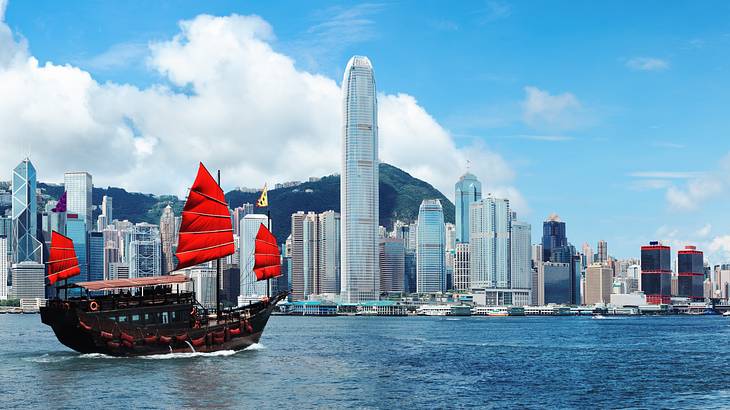

Hong Kong, often nicknamed the "City of Skyscrapers," was once a British colony and is now a major financial hub in Asia. As a special administrative region of China, Hong Kong sits in the Pearl River Delta and plays a vital role in the region's economy and culture.
But the "City of Skyscrapers" is just one of the many nicknames Hong Kong has earned over the years. From the "Pearl of the Orient" to lesser-known titles, each moniker reveals something unique about the city's history, culture, or global status.
Curious to learn them all? Keep reading to explore the fascinating origins behind Hong Kong's many nicknames.
8 Nicknames for Hong Kong

Fragrant Harbour
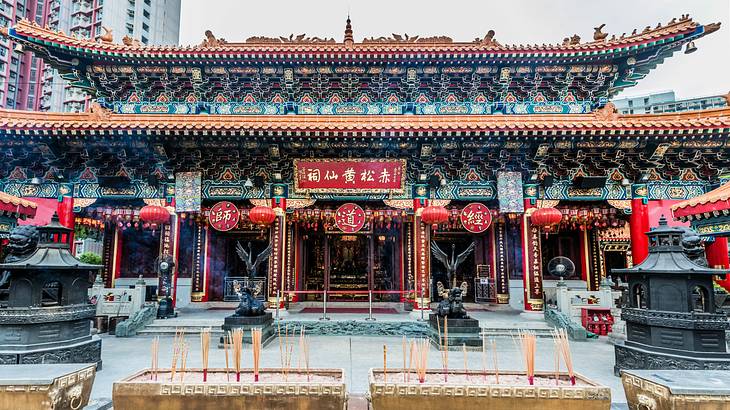
Hong Kong has a natural harbor, and its Chinese name literally means "Fragrant Harbour," which helps explain how this nickname came to be. However, many historians believe the name stuck because the area was once a major trading port for agarwood, also known as the "King of Incense."
During the Ming (1368–1644) and Qing (1644–1912) dynasties, this highly prized, fragrant wood was exported across Asia and even as far as Arabia.
Author John Lanchester nodded to this nickname in his novel Fragrant Harbour, which reflects on Hong Kong's complex history, including its time under Japanese occupation. There's also a compelling documentary series titled Fragrant Harbour, which explores the city's rich and evolving past.
The City of Skyscrapers
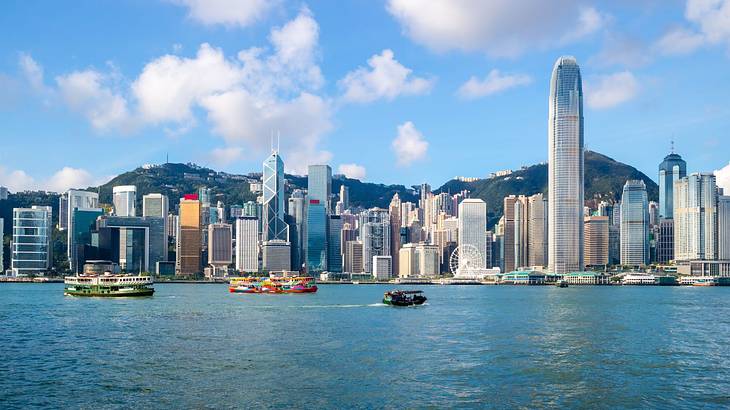
Hong Kong is one of the most densely populated places in the world, with around 7.5 million residents in 2023 living within just over 400 square miles of land. The solution to Hong Kong's space limitations? Build upward, which is why the city has earned the nickname the "City of Skyscrapers."
Hong Kong's skyline is nothing short of breathtaking, showcasing a diverse range of high-rise buildings. In fact, Hong Kong holds the record for the most skyscrapers in the world, surpassing cities like New York and Dubai.
At last count, Hong Kong had over 9,000 high-rise buildings, with more than 4,000 standing over 100 meters tall. As of 2025, 564 buildings exceed 150 meters in height, with the tallest — the International Commerce Centre — reaching nearly 485 meters.

Asia's World City
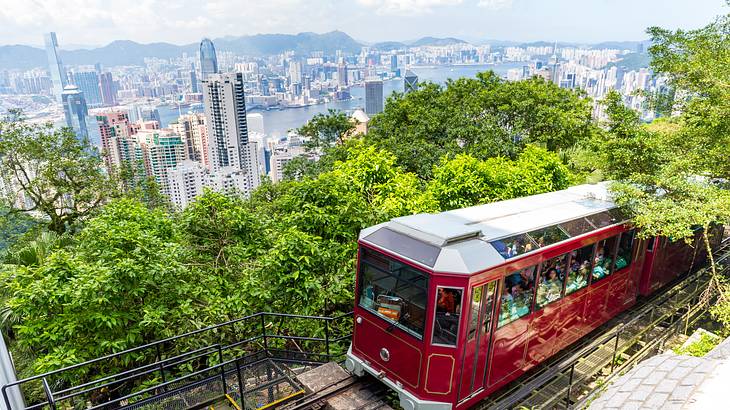
Although sovereignty over Hong Kong was transferred back to China in 1997, Hong Kong retains a free port and open economy, continuing to trade extensively with the world's major markets.
Hong Kong's strengths in financial services, international trade, and tourism have helped it earn the nickname "Asia's World City" — a title that reflects both its global connectivity and cosmopolitan spirit.
Gateway to China
While "Gateway to China" isn't one of Hong Kong's most well-known nicknames, it definitely fits. Hong Kong borders mainland China and has long served as a key entry point for goods and travelers heading into China.
Thanks to China's updated transit policy, eligible tourists can now stay visa-free for up to 240 hours (10 days) when transiting through from Hong Kong to cities like Beijing or Shanghai.
The Hong Kong International Airport offers frequent flights to major Chinese destinations, and the city is well-connected to the mainland via the high-speed rail and the Hong Kong–Zhuhai–Macau Bridge.

Pearl of the Orient
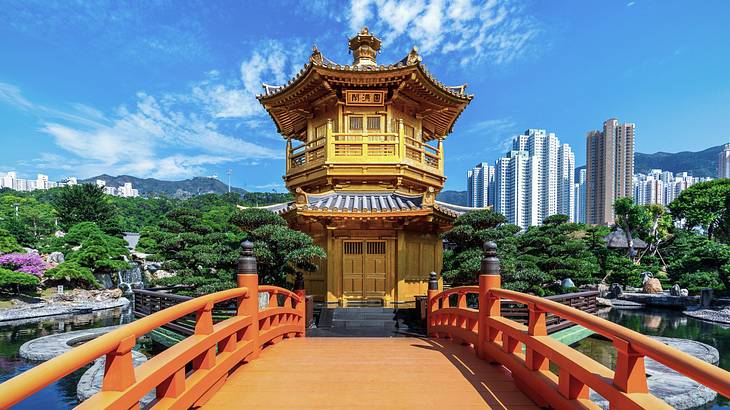
Several cities in Asia share the nickname "Pearl of the Orient," and Hong Kong is one of them. Historically, the region was a major player in the pearl trade, centered around Tai Po Harbour. Pearl harvesting there dates back to AD 761, and the industry even became a tightly guarded imperial monopoly during the Song dynasty.
Today, Hong Kong's modern success speaks for itself: it remains one of the world's most dynamic capitalist economies, and a major gateway for trade, finance, and tourism. With its global connections and vibrant cityscape, Hong Kong truly shines like a pearl among other places in the "Orient."
Silicon Harbor
Tech writers have noticed Hong Kong's rise as an emerging "Silicon Valley," earning it the Hong Kong nickname "Silicon Harbor" (or "Silicon Harbour"). Hong Kong invests heavily in education, with many schools and universities producing a large pool of highly skilled talent focused on technology.
Additionally, government initiatives like Cyberport aim to capitalize on the unstoppable growth of the Internet, fostering numerous tech startups. Cyberport currently supports over 2,200 startups and tech companies, including five listed companies and seven unicorns.

The Vertical City
While Hong Kong is widely known as the "City of Skyscrapers," it's also nicknamed the "Vertical City," and for good reason. The Council on Tall Buildings and Urban Habitat (CTBUH) has previously recognized Hong Kong for having the highest number of skyscrapers in the world.
Interestingly, the ancient Chinese practice of Feng Shui—which translates to "wind" and "water"—has influenced the Hong Kong's vertical architecture. Many of Hong Kong's high-rise buildings are designed and positioned with Feng Shui principles in mind, aiming to attract good fortune and deflect misfortune in this densely built urban landscape.
Hollywood of the East
While India is often associated with the title "Hollywood of the East" (or "Hollywood of the Far East"), Hong Kong has also earned this nickname, especially during its golden age of cinema in the 1970s and 1980s.
At the time, Hong Kong had one of the most prolific film industries in the world, producing hundreds of movies annually. Its films launched the international careers of stars like Bruce Lee, Jackie Chan, and Chow Yun-fat.
The decline of Hong Kong cinema began in the late 1990s and early 2000s, due to a combination of Hong Kong being handed back to China in 1997, rising production costs, piracy, increased competition from Hollywood and mainland China, and shifts in audience preferences.
Conclusion
After reading this article, you should have a solid understanding of the many alternate names used to describe Hong Kong. Hopefully, you've also been inspired to learn about Hong Kong further, or even consider visiting the "Pearl of the Orient" yourself!

Want to keep exploring?
Subscribe for our latest guides.
Thank you for subscribing
We will be in touch soon with our latest guides.
Want to keep exploring?
Subscribe for our latest guides.
Thank you for subscribing
We will be in touch soon with our latest guides.