
10 Arkansas Nicknames and the Stories Behind Them

Destguides may receive commissions from purchases made through affiliate links in this article.
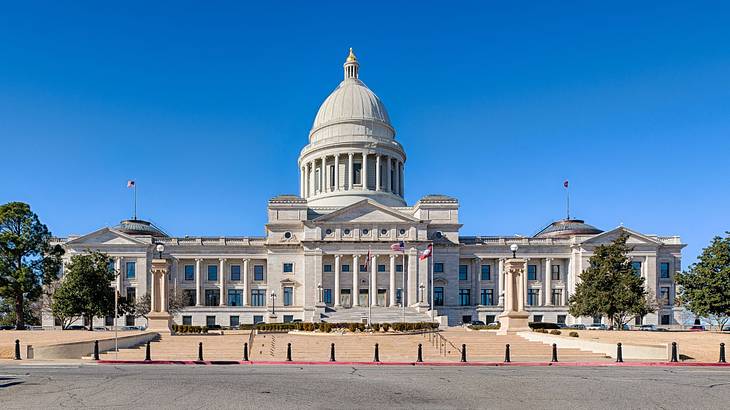

Few states have reinvented their identity as many times as Arkansas. Its earliest nicknames reflected a rough frontier reputation built on bear hunting and knife fighting. Later names signaled ambition, opportunity, and a desire to leave that image behind.
Today, Arkansas is officially known as "The Natural State." But the names that came before it reveal just as much about the state's character and history. Here are 10 Arkansas nicknames and the histories behind them.
10 Nicknames for Arkansas

The Natural State
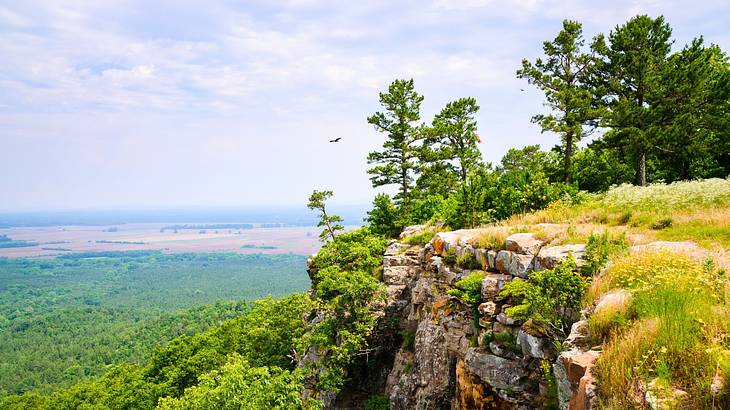
Arkansas has had plenty of names over the years, but only one is official today. The Natural State was adopted by the Arkansas General Assembly in 1995. The state parks system had already been using it since the 1980s to promote outdoor recreation and tourism.
The nickname reflects the natural beauty of the state. Arkansas has 52 state parks and seven national park sites. Its terrain ranges from the Ozark and Ouachita Mountains to bayous and delta bottomlands. The name also appears on state license plates.
The Toothpick State
On the American frontier, a "toothpick" had nothing to do with dental care. In the mid-1800s, the word was slang for a long, narrow knife commonly carried by settlers. One of the most well-known examples was the Bowie knife, which was sometimes called an Arkansas Toothpick.
This nickname had less to do with the knives themselves and more to do with how they were used. Arkansas had a reputation for violence during this period.
The most notorious incident came in 1837, when Arkansas Speaker of the House John Wilson stabbed and killed fellow representative Joseph J. Anthony during a disagreement on the floor of the Arkansas General Assembly.

The Diamond State
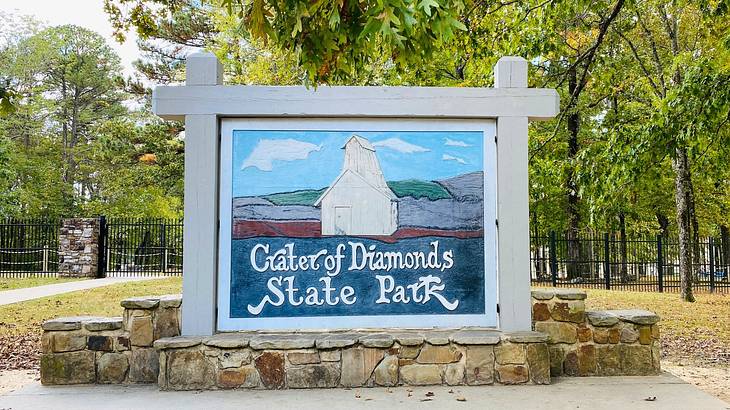
In 1906, a farmer named John Wesley Huddleston found two sparkling gemstones on his land near Murfreesboro. His discovery launched a diamond mining operation that would put Arkansas on the map. Today, that site is Crater of Diamonds State Park, the only diamond site in the US open to the public for digging.
The largest diamond ever found in the country came from this same location. Known as "Uncle Sam," the stone was discovered in 1924 by Wesley Oley Basham, a worker at the Arkansas Diamond Corporation. It had a rough weight of 40.23 carats.
The gem is now part of the collection at the Smithsonian National Museum of Natural History in Washington, DC. Arkansas license plates also pay tribute to this nickname, featuring a diamond image in the center.
The Razorback State
The "Razorback State" comes from the University of Arkansas' athletics teams, though the nickname has become synonymous with Arkansas itself. It refers to a type of wild hog with a ridge of raised hair along its back, once common across the state.
The origin of the mascot dates back to 1909. After the University of Arkansas football team beat Louisiana State University 16-0, coach Hugo Bezdek addressed a crowd of students at the Fayetteville train station.
He described his team's performance as that of "a wild band of Razorback hogs." The name stuck. Students voted to change the mascot from the Cardinals to the Razorbacks the following year.

The Land of Opportunity
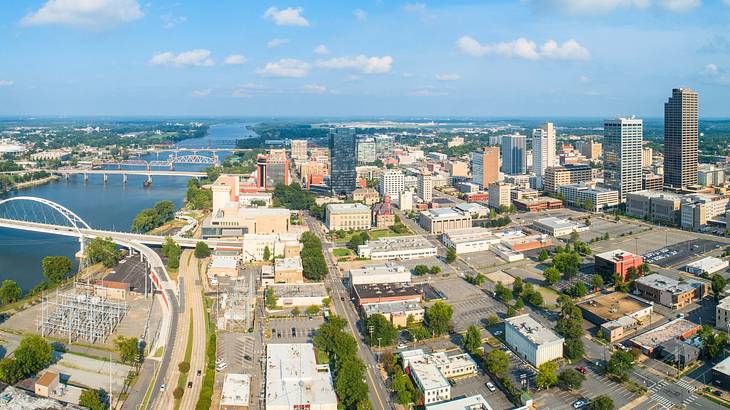
Before Arkansas became the Natural State, it was officially known as "The Land of Opportunity." This nickname was adopted by the Arkansas General Assembly in 1953 and remained in place until 1995. The slogan predates that, though.
"Opportunity Land" first appeared on Arkansas license plates in 1941. After World War II, a group of business leaders from Central Arkansas launched a campaign to rebrand the state and attract investment.
They wanted to move past the rural, backwoods image that had followed Arkansas for over a century. The effort succeeded. Arkansas saw significant growth in manufacturing and logistics over the decades that followed.
Rackensack
No one knows exactly where this nickname came from. It is thought to be a comical mispronunciation of Arkansas and dates back to at least the 1840s. At the time, it was used as a lighthearted insult aimed at the state's backwoods reputation.
Rather than reject the name, Arkansans embraced it. Writers and musicians across the state adopted it over the years. Today, the Rackensack Folklore Society carries on the musical traditions of the Ozark region and keeps the name alive.
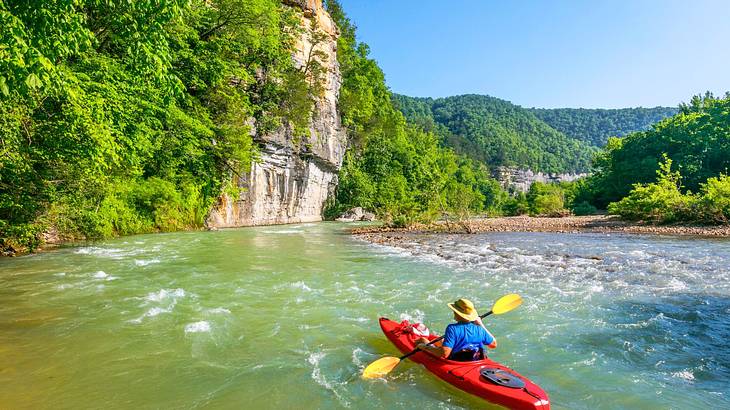

The Wonder State
Former governor Charles H. Brough gave Arkansas its first official nickname. In the early 1920s, he traveled across the South promoting the state's natural resources and attractions, calling it "The Wonder State." In 1923, the Arkansas General Assembly made it official.
The name was partly a rebranding effort. State leaders wanted to replace the "Bear State" nickname, which they felt gave people the wrong impression about the dangers posed by bears in Arkansas.
The Wonder State remained the official name until 1953, when the Land of Opportunity replaced it. President Franklin D. Roosevelt even referenced it during a 1936 speech in Little Rock, praising the beauty of Arkansas and saying the state "can claim every warrant for the name."
The Bear State
This may be the oldest of all Arkansas nicknames. In the early 1800s, American settlers moving into the Arkansas territory encountered large populations of black bears.
The state became a popular destination for bear hunting, drawing wealthy sportspeople from across the country. That popularity came at a cost. By 1940, as few as 25 black bears remained in Arkansas. Decades of overhunting and habitat loss had nearly wiped them out.
Since then, government protections, habitat conservation, and a reintroduction program using bears from Minnesota and Manitoba have brought the population back. Today, thousands of black bears live in the state once again.
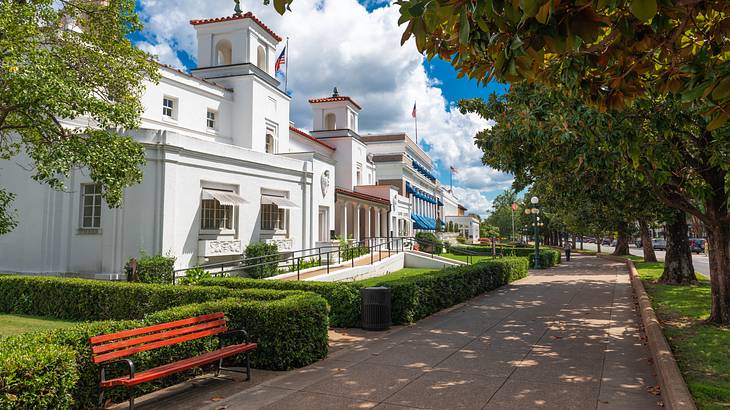

The Hot Springs State
Long before Arkansas had any official nickname, it was known for its thermal waters. The area around present-day Hot Springs had drawn visitors for centuries, including Native American tribes who regarded it as a place of healing.
In 1832, Congress designated the hot springs as federal land, making it the country's oldest federally protected area. The designation came decades before the concept of a national park even existed. Today, Hot Springs National Park is home to 47 thermal springs and remains a popular destination for visitors.
The Bowie State
While the Toothpick State nickname focused on frontier violence, the "Bowie State" name highlights the craftsmanship behind Arkansas's most famous blade. Blacksmith James Black is credited with forging one of the original Bowie knives for Jim Bowie in the early 1830s. He worked from his shop in Washington, Arkansas.
The knife's popularity quickly spread across the state. It became one of the most recognizable weapons of the era and is now the official state knife of Arkansas. Visitors can learn about its history at Historic Washington State Park, where a working blacksmith shop pays tribute to Black's craft.
In Summary
Arkansas has taken on many names across nearly 200 years of statehood. Some, like the Bear State and Rackensack, reflect a wilder time that has long since passed.
Others, like the Land of Opportunity and the Wonder State, mark deliberate efforts to reshape how the rest of the country saw Arkansas. The Natural State, the name that stuck, may be the most fitting of all. It speaks to what has remained constant through every era of change: the landscape itself.

Want to keep exploring?
Subscribe for our latest guides.
Thank you for subscribing
We will be in touch soon with our latest guides.
Want to keep exploring?
Subscribe for our latest guides.
Thank you for subscribing
We will be in touch soon with our latest guides.