
14 Landmarks in Louisville, Kentucky to Visit

Destguides may receive commissions from purchases made through affiliate links in this article.
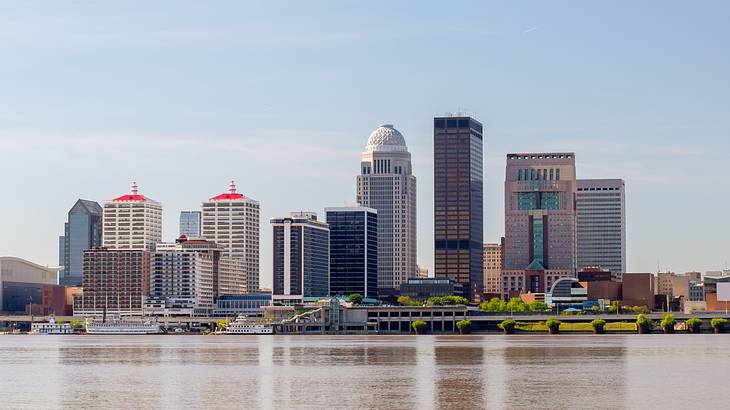

Louisville, Kentucky, sits along the Ohio River at the Falls of the Ohio, a natural feature that has drawn settlers and traders since the 18th century. The city has grown into Kentucky's largest metro area and is home to a rich collection of architectural and cultural landmarks.
Among the notable landmarks in Louisville, Kentucky, you will find a Civil War hospital, Victorian mansions, and even a working steamboat from 1914.
Sites like the Waverly Hills Sanatorium, the Conrad-Caldwell House Museum, and the Louisville Slugger Museum and Factory each reflect a different chapter of the city's history. Keep reading to explore 14 Louisville landmarks worth visiting.
Heading to Louisville and planning last-minute?
When visiting Louisville, book your entrance tickets and tours before you go. Here are some top choices to make your trip enjoyable.
☂️ Top tours and experiences in Louisville
- B&C Bourbon Experience Tour (rated highly)
- Phantoms of Prohibition - Ghosts, Cocktails, & Bites Walking Tour (rated highly)
- Buffalo Trace, Bulleit, Pappy & Coand Rabbit Hole Bourbon Tour (rated highly)
- Bourbon Tour 03 - Buffalo Trace, Woodford, Four Roses, Wild Turkey, Other (very popular)
- B&C Buffalo Trace & Chuchill Down
14 Louisville Landmarks
- Big Four Bridge
- The Brennan House
- Cave Hill Cemetery
- Historic Old Louisville
- Locust Grove
- Louisville City Hall
- Muhammad Ali Childhood Home Museum
- Riverside, the Farnsley-Moremen Landing
- The Waverly Hills Sanatorium
- The Brown Hotel
- Belle of Louisville
- United States Marine Hospital
- Louisville Slugger Museum and Factory
- Conrad-Caldwell House Museum
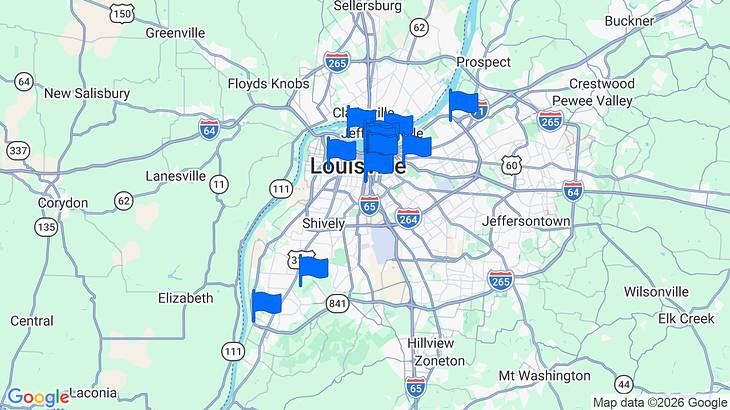
Louisville Landmarks Map
A map of Louisville landmarks. Use the map to explore all of the points of interest.
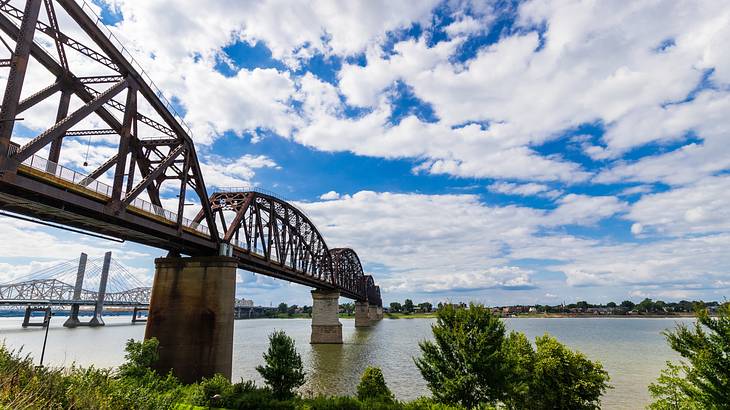

Big Four Bridge
Completed in 1895 as a railroad bridge, the Big Four Bridge takes its name from the former Cleveland, Cincinnati, Chicago and St. Louis Railway.
The six-span truss structure crosses the Ohio River, connecting Louisville to Jeffersonville, Indiana. It carried freight and passenger trains until it was decommissioned in 1969. The Ohio River also earned the city its River City nickname.
After sitting unused for decades, the bridge reopened in 2013 as a pedestrian and bicycle pathway. You can walk or bike across it for views of the Louisville skyline, especially around sunset.
The Brennan House
The only historic home still standing on a downtown Louisville street once lined with grand residences, the Brennan House was built in 1868 for tobacco merchant Francis Ronald.
Sold to the Brennan family in 1884, it remained their home for 75 years before being preserved as a house museum. The Italianate townhouse was added to the National Register of Historic Places in 1975.
Inside, the three-story house retains its original furnishings, including a signed Tiffany lamp, hand-carved furniture, and stained glass by Louisville artist Bernard Alberts. Group tours are available by appointment.
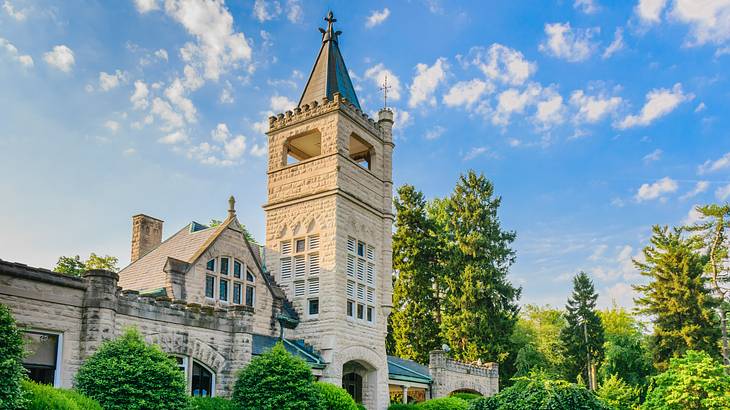

Cave Hill Cemetery
At 296 acres, Cave Hill Cemetery is the largest burial ground in Louisville by both area and number of interments. It was chartered by the General Assembly of Kentucky in 1848 and designed by civil engineer Edmund Francis Lee with winding paths, hilltop graves, and valley ponds.
The cemetery was added to the National Register of Historic Places in 1979. Cave Hill is also a recognized arboretum, home to over 600 varieties of trees and shrubs. Among its most well-known residents are Muhammad Ali and Colonel Harland Sanders, the founder of KFC.
Historic Old Louisville
Just south of downtown, Old Louisville spans roughly 48 city blocks of preserved Victorian architecture. It is the third-largest historic preservation district in the United States and the largest featuring almost entirely Victorian-era homes.
The district was added to the National Register of Historic Places in 1984, and its residential styles include Italianate, Queen Anne, and Richardsonian Romanesque.
Old Louisville also has the highest concentration of homes with stained-glass windows in the country. Guided walking tours depart from the Historic Old Louisville Visitors Center and cover the neighborhood's architecture and history.
Locust Grove
William Clark of the Lewis and Clark Expedition rested at this estate in 1806 after the famed journey west. Locust Grove was home to Clark's sister, Lucy Clark Croghan, and her husband, Major William Croghan, who had the Georgian mansion constructed in 1792.
The property was designated a National Historic Landmark in 1986, and notable guests over the years also included Presidents James Monroe, Andrew Jackson, and Zachary Taylor.
The site also preserves the history of the enslaved people who built the house and worked the farm. Guided tours of the 55-acre grounds cover the mansion, restored outbuildings, and the lives of everyone who lived here.
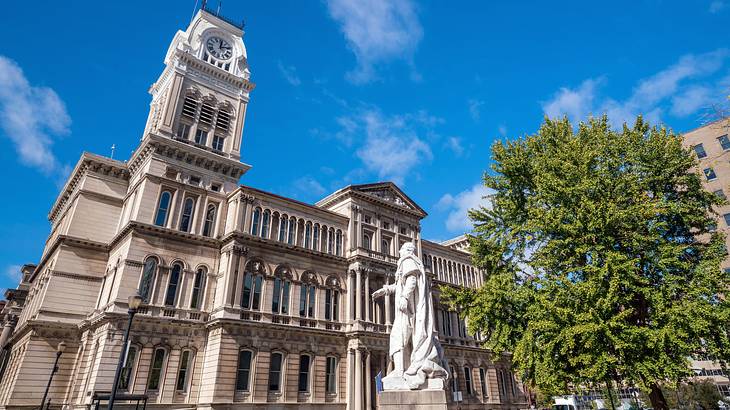

Louisville City Hall
Built between 1870 and 1873 from Indiana limestone, Louisville City Hall stands at 601 West Jefferson Street in the heart of downtown. The building blends Italianate and French Second Empire styles. It was placed on the National Register of Historic Places in 1976.
The structure still serves as a center of local government, housing the Louisville Metro Council chambers. Its clock tower and ornate stonework, including a bas-relief of the city seal above the main entrance, make it one of the most distinctive civic buildings in Kentucky.
Muhammad Ali Childhood Home Museum
Located on Grand Avenue, this modest home is where Muhammad Ali grew up. Born Cassius Marcellus Clay Jr. in Louisville in 1942, Ali went on to become one of the most celebrated boxers and activists in American history. The house was later restored and opened as a museum.
Visitors can sign up for a guided tour to learn more about Ali's upbringing, early boxing career, and legacy. Sports memorabilia and personal family items are on display throughout the home.
Riverside, the Farnsley-Moremen Landing
Sitting on a gentle rise above the Ohio River, this 300-acre historic site preserves a 19th-century farming estate in Louisville's south end.
The red brick house was built in 1837 by Gabriel Farnsley and later passed to the Moremen family, who expanded the farm to nearly 1,500 acres. The property was added to the National Register of Historic Places in 1979.
For much of the 19th century, a riverboat landing on the property served as a stop for traders and travelers on the Ohio River. Guided tours and educational programs focus on daily farm life along the river.
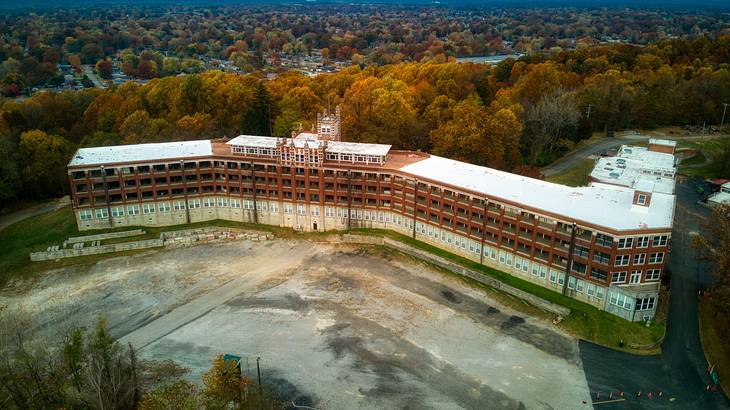

The Waverly Hills Sanatorium
When a tuberculosis epidemic swept through Jefferson County in the early 1900s, the original Waverly Hills facility opened in 1910 as a two-story building for 40 to 50 patients.
The much larger five-story structure that stands today was completed in 1926 and could house up to 400 patients. The sanatorium closed in 1961 after antibiotics rendered large-scale TB facilities unnecessary. It was added to the National Register of Historic Places in 1983.
Visitors can take daytime historical tours that cover the building's role in the fight against tuberculosis. The sanatorium also offers ghost tours, as the site has a well-known reputation for reported paranormal activity.
The Brown Hotel
Wealthy Louisville businessman J. Graham Brown opened this 16-story hotel at the corner of Fourth and Broadway on October 25, 1923.
Designed by architect Preston J. Bradshaw, the building features a Georgian Revival brick exterior with stone and terra cotta trim. Former British Prime Minister David Lloyd George was the first person to sign the guest register.
The Brown Hotel was added to the National Register of Historic Places in 1978. An insider tip is to try the Hot Brown, an open-faced turkey sandwich invented here in the 1920s by chef Fred Schmidt. It remains one of Louisville's most iconic dishes.
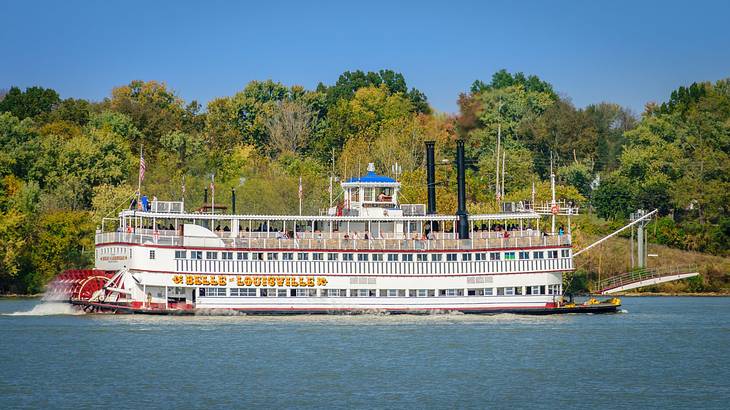

Belle of Louisville
Launched in Pittsburgh in 1914 under the name Idlewild, the Belle of Louisville is the oldest operating Mississippi River-style steamboat in the world.
The vessel originally served as a ferry and day packet between Memphis, Tennessee, and West Memphis, Arkansas. It arrived in Louisville in the 1960s and was renamed the Belle of Louisville.
The steamboat was added to the National Register of Historic Places in 1972 and designated a National Historic Landmark in 1989. You can still ride the Belle today on sightseeing and dinner cruises along the Ohio River.
United States Marine Hospital
Designed by Robert Mills, the architect behind the Washington Monument, this Greek Revival hospital was built between 1845 and 1852 in Louisville's Portland neighborhood.
It served boatmen and navigators on the Ohio and Mississippi river systems. Of the seven inland marine hospitals authorized by Congress in 1837, it is the only one still standing.
The hospital treated soldiers during the Civil War and has survived two tornadoes over its long history. It was designated a National Historic Landmark in 1997 and has been restored to match its 1899 appearance.
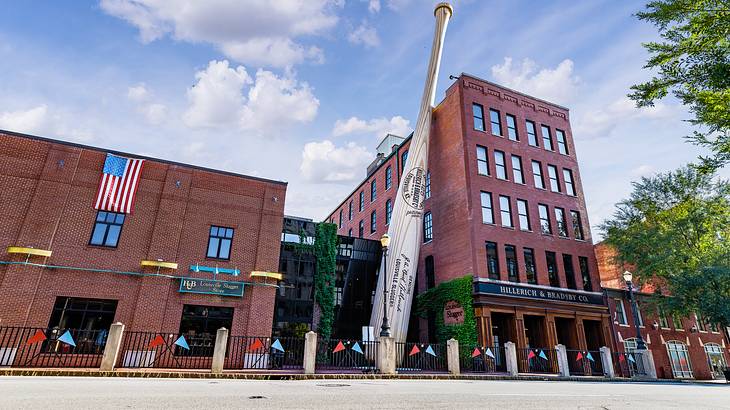

Louisville Slugger Museum and Factory
A fun Kentucky fact you may not know is that the world-famous Louisville Slugger baseball bat has been manufactured in the city since 1884.
The museum and factory on West Main Street's "Museum Row" trace the company's history from a teenage woodworker's first bat to a brand used by generations of Major League players.
You can spot the building from blocks away thanks to the 120-foot steel baseball bat leaning against the facade. Inside, exhibits cover the craft of bat-making and the sport's broader history.
Conrad-Caldwell House Museum
Known locally as "Conrad's Castle," this Bedford limestone mansion sits on St. James Court in the heart of Old Louisville. It was designed by architect Arthur Loomis and completed in 1895 for tanning merchant Theophilus Conrad. The Richardsonian Romanesque exterior features gargoyles, massive stone archways, and an ornate turret.
Inside, seven types of hardwood appear in the parquet floors and woodwork, alongside stained glass windows and furnishings from both the Conrad and Caldwell families. You can take a self-guided or group tour of this striking example of Gilded Age architecture.
In Conclusion
From the Civil War-era US Marine Hospital to the Victorian grandeur of Old Louisville, these 14 landmarks offer a window into the history and character of Kentucky's largest city. Whether you are drawn to architecture or sports history, Louisville has plenty to offer.

Want to keep exploring?
Subscribe for our latest guides.
Thank you for subscribing
We will be in touch soon with our latest guides.
Want to keep exploring?
Subscribe for our latest guides.
Thank you for subscribing
We will be in touch soon with our latest guides.