
10 Nicknames for Louisville, Kentucky

Destguides may receive commissions from purchases made through affiliate links in this article.
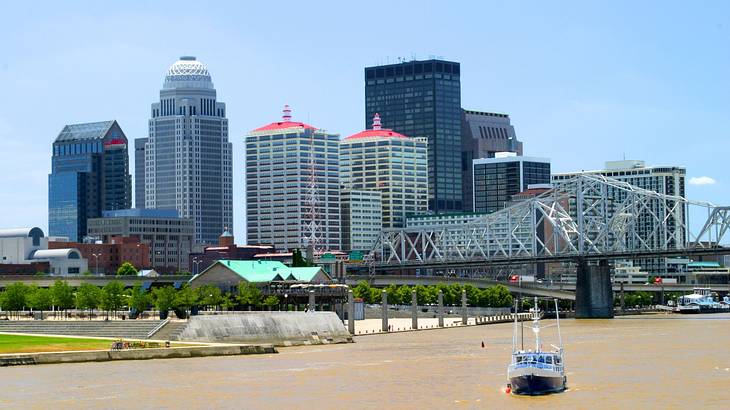

Louisville is one of Kentucky's most iconic cities—and it's easy to see why. It's at the heart of the state's culture and history, from bourbon production to the world-famous Kentucky Derby. But did you know that Louisville also goes by several nicknames?
While "Derby City" is well known, many of the city's other monikers tend to fly under the radar, especially for non-Kentuckians. Whether you're planning a visit to this Southern city or just want to brush up on some regional history, keep reading. Here are 10 Louisville nicknames and the stories behind them.
10 Louisville Nicknames
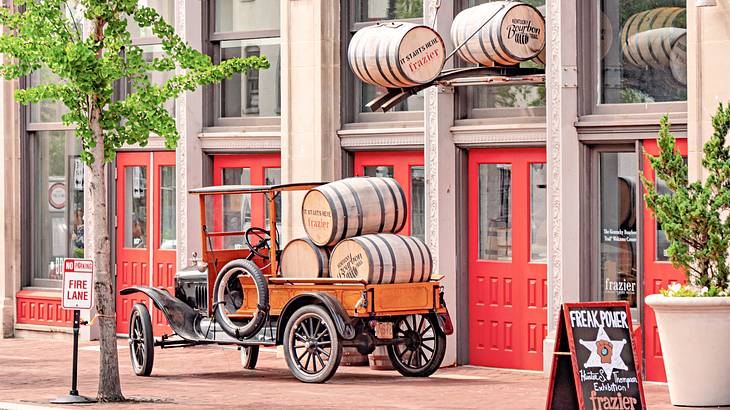

Bourbon City
"Bourbon City" has been a nickname for Louisville for many years, thanks to the city's deep ties to bourbon production. While Kentucky as a whole is responsible for producing about 95% of the world's bourbon, many of its distilleries are concentrated in and around Louisville.
In fact, Louisville is home to several major distilleries, as well as the start of the official Kentucky Bourbon Trail. Many of these locations offer tours and tastings for visitors aged 21 and older.
In recent years, local tourism boards have leveraged the "Bourbon City" identity, utilizing it in marketing campaigns, on souvenirs, and in travel publications to attract bourbon enthusiasts from around the world.
The City of Beautiful Churches
Louisville has a long-standing reputation as a religiously diverse city. In Louisville's early years, many churches were constructed in a wide range of architectural styles, reflecting the beliefs and backgrounds of its residents at the time. These beautiful buildings became landmarks admired even by those who didn't attend services.
This led to the nickname the "City of Beautiful Churches," which was once widely used. While it's less common today, the name still appears on old postcards and in historical accounts of Louisville's architectural and cultural heritage.
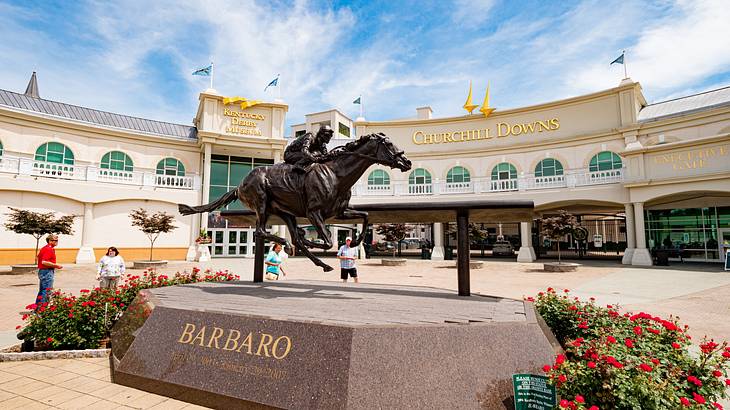

Derby City
Since 1875, Louisville has been home to the Kentucky Derby, one of the most famous horse races in the world. Each year, over 150,000 spectators attend the race and enjoy the surrounding festivities.
Appreciation for the Derby extends beyond race day. Churchill Downs, the historic racetrack where the event takes place, is a major Kentucky landmark, featuring attractions such as a year-round open museum.
Due to the event's significance, Louisville is often referred to as "Derby City." This nickname appears frequently in tourism materials, informational pamphlets, historical texts, and on souvenirs.
The Gateway to the South
The "Gateway to the South" is a historic nickname for Louisville that has sparked debate over the years. The earliest known reference to Louisville as the "Gateway to the South" comes from Henry Watterson, the famed editor of the Courier-Journal, in 1895 during an address to the Grand Army of the Republic (GAR) encampment for Union veterans.
This information is detailed in the introduction of Anne Marshall's dissertation, "A Strange Conclusion to a Triumphant War": Memory, Identity and the Creation of a Confederate Kentucky, 1865–1925, submitted for her Ph.D. at the University of Georgia. The dissertation was later published as Creating a Confederate Kentucky: The Lost Cause and Civil War Memory in a Border State.
Glitter Ball City
"Glitter Ball City" is a nickname for Louisville that comes from its legacy as a major producer of disco balls in the 1970s. At its peak, local company Omega National Products made over 160,000 disco balls annually, earning the city the title "Disco Ball Capital of the World."
More recently, Author David Dominé revived the nickname in his 2021 book A Dark Room in Glitter Ball City, which blends true crime with Louisville's vibrant history. Today, the nickname is reflected in tours and local references that celebrate this unique part of Louisville's past.
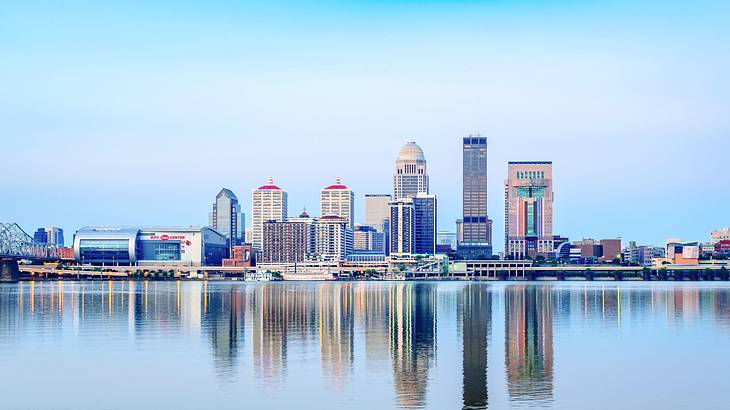

Possibility City
In the early 2000s, Louisville adopted the nickname "Possibility City" as part of a major branding campaign aimed at attracting new residents and businesses. The slogan highlighted the city's potential for opportunity across the work, education, and entertainment spheres—from the historic charm of Old Louisville to the modern downtown district.
The campaign made a notable impact. Louisville's population has steadily grown (until recently), with people relocating from other parts of the U.S. As a result, the "Possibility City" nickname still occasionally appears in tourism materials, local branding efforts, and even on souvenirs.
The 502
Louisville is often called "The 502," a nickname taken from the city's longstanding area code, established in 1947. As Kentucky's original area code, it once covered a large portion of the state but is now primarily associated with the Louisville metropolitan area and its surrounding counties.
Like "The 305" nickname for Miami, "502" has become a marker of local identity. It regularly appears in business names, event titles, merchandise, and social media, especially on 502'sDay, which is celebrated each year during Derby Week to honor the surrounding community.
River City
One of Louisville's defining features is the Ohio River, which borders the city. Historically, residents relied on the river for transportation, trade, and access to resources. Its importance in shaping the city's growth helped earn Louisville the nickname "River City."
While it was once one of Louisville's more common nicknames, "River City" gradually gave way to newer monikers, especially after the Kentucky Derby began in 1875 and gained national prominence. Still, the name hasn't disappeared entirely. You'll find it in historical references, on souvenirs, and occasionally in modern publications.
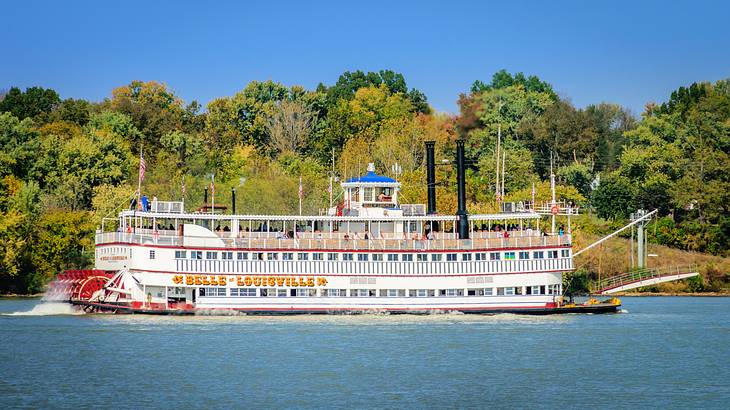

Falls City
"Falls City"—sometimes called "The Fall City"—has been a nickname for Louisville since the 1800s. The name originates from Louisville's proximity to the Falls of the Ohio, a state park featuring a series of natural rapids.
These falls played a key role in Louisville's founding and early economy, leading to the widespread use of the "Falls City" nickname. Along with "River City," it remained one of Louisville's most recognized monikers for decades.
As mentioned above, as Louisville gained fame for other things—like the Kentucky Derby and its bourbon industry—"Falls City" became less commonly used. Today, it still appears in historical and educational texts, as well as occasionally on souvenirs and in local business names.
The Ville
"The Ville" is one of Louisville's more recent and widely embraced nicknames. It's a shortened version of Louisville's full name, but it also subtly nods to the city's French roots. Louisville was named after King Louis XVI of France, and the French word "ville" means "town"—so Louisville roughly translates to "Louis' Town."
By using this moniker, locals maintain a connection to Louisville's founding history. Today, "The Ville" is especially popular in local publications, community blogs, event promotions, and advertisements. While it's still primarily a nickname used by residents, it's increasingly showing up on souvenirs and merchandise.
In Summary
Louisville is a city with a rich identity, shaped by its location on the Ohio River, its deep roots in bourbon culture, and its historic events, like the Kentucky Derby. Many of Louisville's nicknames reflect these defining traits.
While you might be familiar with the nickname "River City," others—like "Possibility City"—may have surprised you. Hopefully, this list has given you a deeper appreciation for Louisville and its many unique nicknames. Perhaps it's even inspired you to visit real soon!

Want to keep exploring?
Subscribe for our latest guides.
Thank you for subscribing
We will be in touch soon with our latest guides.
Want to keep exploring?
Subscribe for our latest guides.
Thank you for subscribing
We will be in touch soon with our latest guides.