
16 Landmarks in San Antonio, Texas to Visit

Destguides may receive commissions from purchases made through affiliate links in this article.
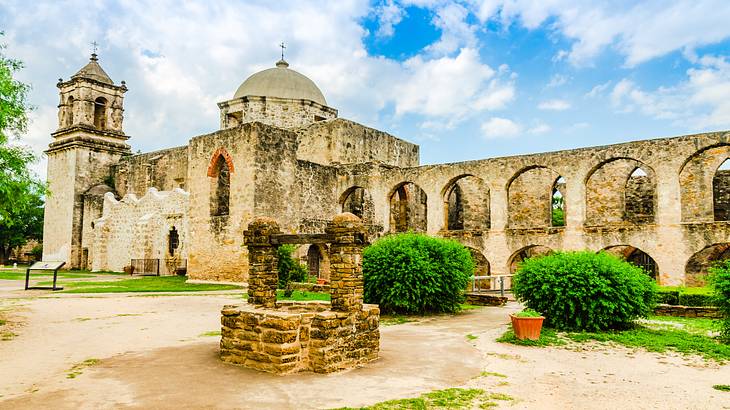

San Antonio is one of the oldest cities in Texas, with roots stretching back to the early 1700s. Its landmarks tell a story that spans Spanish Colonial missions, Texas Revolution battlegrounds, and architectural firsts. The city has five UNESCO World Heritage Sites, more than any other city in the state.
The landmarks in San Antonio, Texas, covered below range from the famous Alamo to lesser-known gems like the Espada Aqueduct and Casa Navarro. Whether you are a student researching Texas history or a tourist planning a visit, there is plenty to explore. Read on to discover 16 of the most interesting landmarks in Alamo City.
Heading to San Antonio and planning last-minute?
To make the most of your visit to San Antonio, we recommend you book entrance tickets and tours soon. Here are some top choices to make your trip enjoyable.
☂️ Top tours and experiences in San Antonio
- The Magic Saloon Immersive Experience & Show Ticket (rated highly)
- San Antonio Premium City Tour With Alamo & River Walk Cruise (very popular)
- The Haunted Ghost Bus Tour in San Antonio (very popular)
- Natural Bridge Caverns Discovery Cavern Tour
- San Antonio Premium Night Driving Tour With Riverwalk Boat Cruise
16 San Antonio Landmarks
- Japanese Tea Garden
- Casa Navarro State Historic Site
- San Antonio River Walk
- La Villita Historic Village
- Mission San Jose
- San Antonio Botanical Garden
- San Antonio Museum of Art
- San Antonio Missions National Historical Park
- San Fernando Cathedral
- Aztec Theatre
- The Alamo
- San Pedro Springs Park
- Espada Aqueduct
- Carl Hilmar Guenther House
- Majestic Theatre
- Spanish Governor's Palace
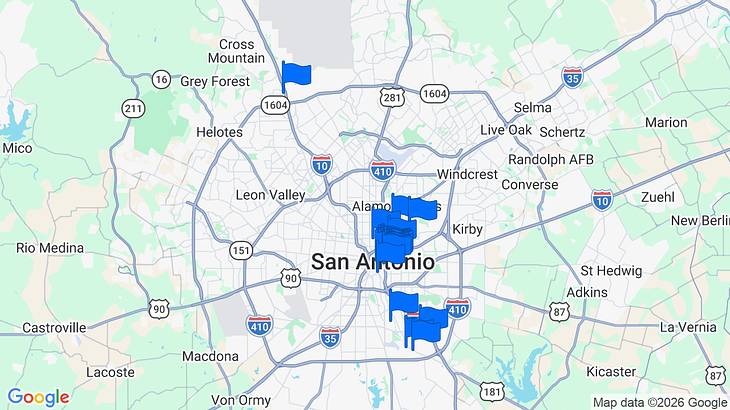
San Antonio Landmarks Map
A map of San Antonio landmarks. Use the map to explore all of the points of interest.

Japanese Tea Garden
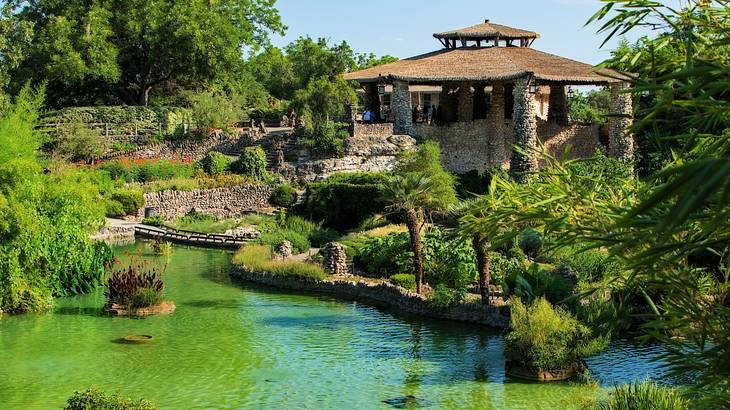
In Brackenridge Park, a former limestone quarry has been transformed into one of San Antonio's most tranquil green spaces. In 1915, Emma Koehler donated 11 acres adjacent to the quarry to the city.
Parks Commissioner Ray Lambert saw potential in the site and, between 1917 and 1918, used prison labor and donated materials to construct walkways, stone arch bridges, an island, and a pagoda.
The garden is a Registered Texas Historic Landmark, a Texas Civil Engineering Landmark, and was added to the National Register of Historic Places in 2004. Admission is free, and the grounds are especially peaceful in the early morning before crowds arrive.
☂️ Visit Japanese Tea Garden with an experience
Casa Navarro State Historic Site
Jose Antonio Navarro was one of only two native-born Tejanos to sign the Texas Declaration of Independence in 1836. His limestone and adobe home, built between 1832 and 1855, still stands in what was once the Laredito neighborhood in downtown San Antonio.
The site was opened to the public in 1964 and is now operated by the Texas Historical Commission. Casa Navarro was listed on the National Register of Historic Places in 1972 and designated a National Historic Landmark in 2016.

San Antonio River Walk
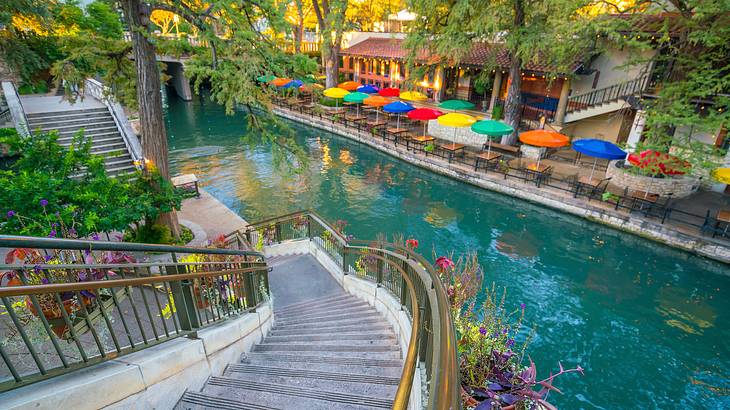
Stretching 15 miles through the city, the San Antonio River Walk is one of the most visited urban waterways in the country. The pedestrian walkway runs over and under bridges, with two sidewalks lined with restaurants and shops.
Beyond dining, seasonal festivals and events draw locals and tourists throughout the year. The River Walk also connects to several major landmarks, including the Alamo and La Villita. For a different perspective, consider taking a river cruise at night.
☂️ See San Antonio River Walk on a tour
- San Antonio Premium City Tour With Alamo & River Walk Cruise (very popular)
La Villita Historic Village
Artists and entrepreneurs fill the galleries and shops of La Villita, a preserved arts district with roots going back to the early 1800s. It occupies one block next to the River Walk and was listed on the National Register of Historic Places in 1972.
The village's architecture is an eclectic mix of early Victorian, Texan limestone, and adobe styles. Strolling the grounds takes less than an hour and pairs well with a walk along the River Walk.
☂️ See La Villita National Historic Village on a tour

Mission San Jose
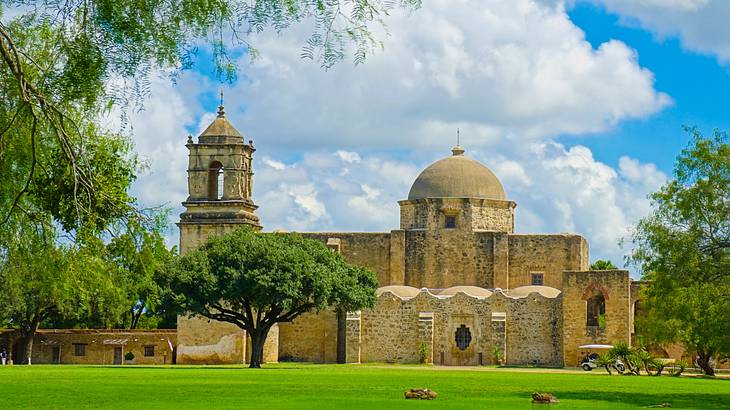
Founded on February 23, 1720, by Franciscan missionary Father Margil de Jesus, Mission San Jose is the largest of San Antonio's five Spanish Colonial missions. Known as the "Queen of the Missions," it functioned as a self-sustaining community where Coahuiltecan groups lived and worked during the 18th century.
The church facade and the celebrated Rose Window are fine examples of Spanish Colonial architecture. As part of the San Antonio Missions National Historical Park, Mission San Jose became a UNESCO World Heritage Site in 2015. Free ranger-led tours are offered daily at the visitor center.
☂️ See Mission San Jose on a tour
- Three Hours Private Historic Sightseeing Tour in San Antonio (frequently earns a five-star rating)

San Antonio Botanical Garden
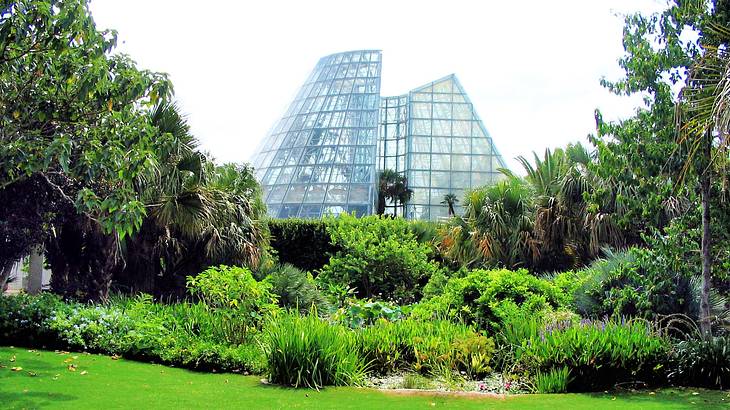
Themed gardens, research facilities, and performance space fill the 38 acres of the San Antonio Botanical Garden. Areas to explore include a rose garden, a Japanese garden, and a children's garden.
The Lucile Halsell Conservatory, a set of glass-paneled structures partly below ground, houses plants from tropical, desert, and subtropical climates. The garden also hosts seasonal art installations and concerts.
San Antonio Museum of Art
The former Lone Star Brewery building, a striking Romanesque Revival structure on the banks of the San Antonio River, became the San Antonio Museum of Art after an extensive renovation in 1981. Its collection spans roughly 5,000 years and includes Asian, Latin American, European, and Egyptian art.
The museum is one of the few in the region with a dedicated Latin American wing, making it a strong stop for anyone with an interest in art and history.

San Antonio Missions National Historical Park
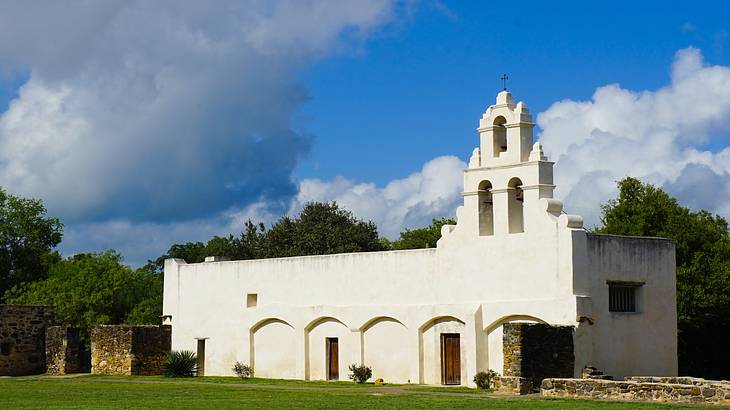
Four of San Antonio's five Spanish Colonial missions are preserved within this national park, which was authorized by Congress in 1978 and formally established in 1983. Running along the San Antonio River, the park includes Mission Concepcion, Mission San Jose, Mission San Juan, and Mission Espada.
Together with the Alamo, these five missions were inscribed as a UNESCO World Heritage Site in 2015. The missions were founded by Franciscan friars in the 18th century as part of Spain's colonization system in the Southwest. If you are looking for a free thing to do in San Antonio, admission to the park is free year-round.

San Fernando Cathedral
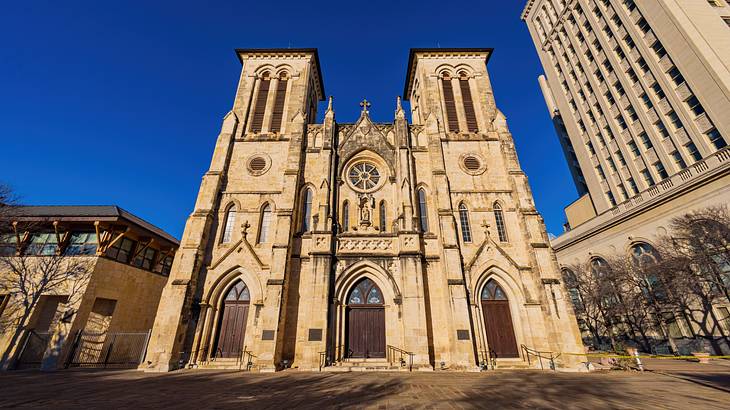
One of the oldest cathedrals in Texas, San Fernando Cathedral was built between 1738 and 1750. The church is also the mother parish of the Archdiocese of San Antonio. Notably, the cathedral is said to contain the remains of some Alamo defenders, a detail tied to the Battle of the Alamo during the Texas Revolution.
The building was extensively renovated in 1868 and again in 1874, blending Colonial and Gothic Revival elements. It was listed on the National Register of Historic Places in 1975.
☂️ Visit San Fernando Cathedral on a tour
- San Antonio's Ultimate Ghost & Murder Walking Guided Tour (highly rated)
Aztec Theatre
Meso-American motifs cover nearly every surface of the Aztec Theatre, from the lobby's massive chandelier to the columns carved with warrior figures. The theater opened on June 4, 1926, and was designed by the Los Angeles firm Meyer and Holler.
It is one of only four remaining Mayan Revival-style theaters in the country. After closing in 1989, it was saved from demolition when it was listed on the National Register of Historic Places in 1992. A major restoration brought it back to life, and it now operates as a live entertainment venue.

The Alamo
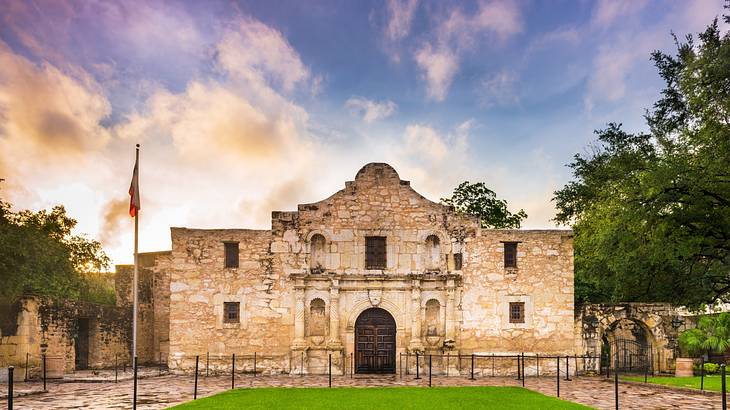
The Battle of the Alamo is one of the most well-known events in American history. In February 1836, roughly 200 Texan defenders held the former Spanish mission against a Mexican force led by General Santa Anna. The siege lasted 13 days and ended on March 6, when all the defenders were killed, including James Bowie and Davy Crockett.
Six weeks later, Sam Houston led the Texan army to victory at the Battle of San Jacinto, shouting "Remember the Alamo!" The mission is now a symbol of Texas independence and one of the reasons San Antonio has so many nicknames, including Alamo City. Arriving early in the morning helps you avoid the largest crowds.
☂️ Visit The Alamo on a tour
San Pedro Springs Park
Natural springs and a lake on land once inhabited by the Payaya people form the centerpiece of San Pedro Springs Park, the oldest park in Texas.
Spanning 46 acres, the grounds have yielded prehistoric artifacts over the years. The park was designated a Recorded Texas Historic Landmark in 1965 and listed on the National Register of Historic Places in 1979.
As the oldest park in the Lone Star State, it remains a popular spot for locals and visitors alike. Visitors can follow walking trails, swim in the public pool during summer, and enjoy playgrounds and tennis courts.

Espada Aqueduct
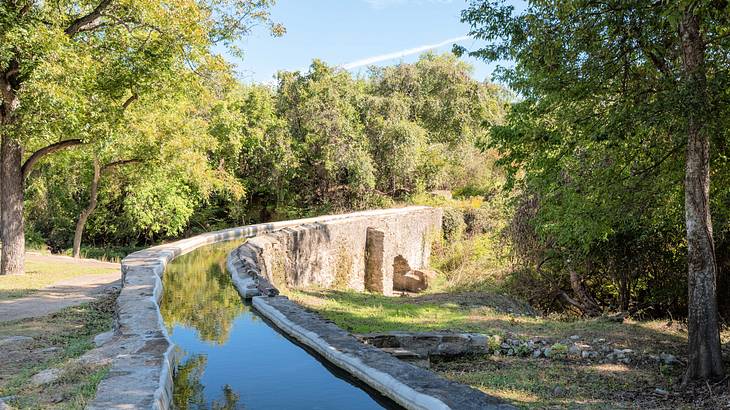
Franciscan friars built this aqueduct in 1731 to carry irrigation water to Mission San Francisco de la Espada. It is the only remaining Spanish Colonial aqueduct in the United States and is still in use today, channeling water through the acequia system within San Antonio Missions National Historical Park.
The structure has been recognized as both a National Historic Civil Engineering Landmark and a National Historic Landmark. If you are visiting the mission trail, it is a short walk west of Mission San Juan.
Carl Hilmar Guenther House
In the King William Historic District, the 1859 Carl Hilmar Guenther House is one of the neighborhood's oldest surviving residences. The original owner emigrated from Germany and founded what is now known as Pioneer Flour Mills, one of the longest-operating businesses in San Antonio.
The house was listed on the National Register of Historic Places in 1990. Today it serves as a restaurant, gift shop, and small museum showcasing the Guenther family history.


Majestic Theatre
Designed by theater architect John Eberson, the Majestic Theatre is an atmospheric theater built to resemble an open-air Mediterranean courtyard, complete with a ceiling painted to look like a starlit sky. It opened on June 14, 1929, and was the first fully air-conditioned theater in Texas.
The Majestic was listed on the National Register of Historic Places in 1975, designated a Texas Historic Landmark in 1991, and named a National Historic Landmark in 1993. You can still catch concerts and touring Broadway shows at the venue today.

Spanish Governor's Palace
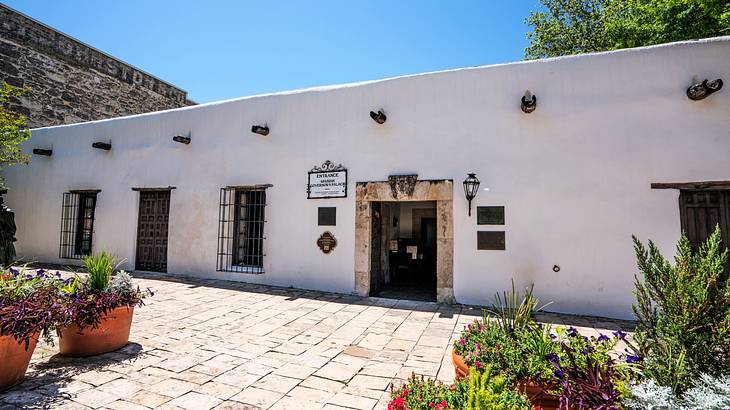
The National Geographic Society has called this building "the most beautiful building in San Antonio." Completed in 1749, the Spanish Governor's Palace is the only remaining example of an aristocratic 18th-century Spanish Colonial in-town residence in Texas.
It served as the residence and office of the local presidio captain before becoming the home of Spanish governors. A keystone above the entrance bears the coat of arms of King Ferdinand VI and the completion date. The building has been a National Historic Landmark since 1970 and is now a city-owned museum open to the public.
In Summary
San Antonio's landmarks reflect centuries of history, from 18th-century Spanish Colonial missions to early 20th-century architectural firsts.
The 16 sites covered here offer a mix of battlefields, sacred spaces, gardens, and buildings that shaped the city into what it is today. Whether you explore on foot along the River Walk or drive the mission trail, each landmark adds a layer to San Antonio's story.

Want to keep exploring?
Subscribe for our latest guides.
Thank you for subscribing
We will be in touch soon with our latest guides.
Want to keep exploring?
Subscribe for our latest guides.
Thank you for subscribing
We will be in touch soon with our latest guides.