
Breaking Down Seattle Nicknames: 14 Names Explained

Destguides may receive commissions from purchases made through affiliate links in this article.
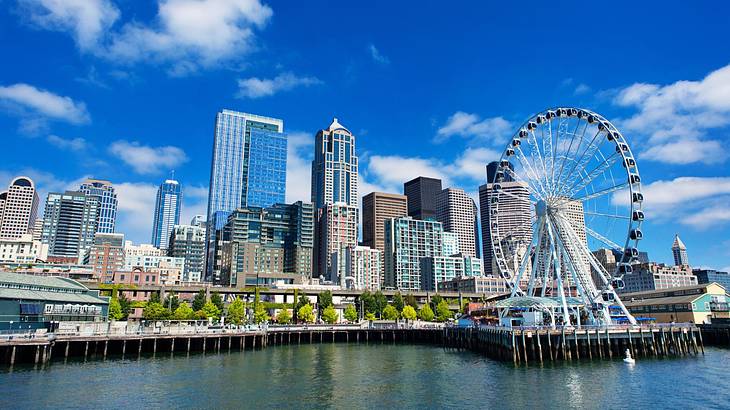

Seattle is the largest city in Washington state. It sits on a narrow strip of land between Puget Sound to the west and Lake Washington to the east, with the Olympic and Cascade mountain ranges visible on either side.
It's where grunge was born, where Starbucks got its start, and where Boeing built its first planes over a century ago. That depth of history produces a long list of Seattle nicknames. There are 14 worth knowing. Keep reading to find out the story behind each one.
14 Nicknames for Seattle

The City of Goodwill
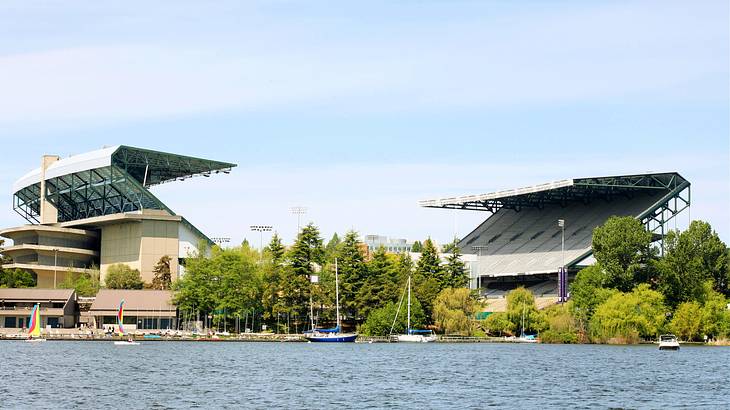
In the summer of 1990, Seattle hosted the Goodwill Games, an international multi-sport competition that brought athletes from around the world to the city.
The City Council marked the occasion on July 16 of that year by adopting the "City of Goodwill" as an official slogan, one of only two Seattle has ever had.
Beyond the sporting context, the name also speaks to how locals feel about Seattle: a city with a reputation built on openness and a welcoming attitude toward newcomers and visitors.
The City of Flowers
The second official city slogan has older roots. On October 7, 1942, the City Council passed a resolution designating Seattle the "City of Flowers."
It acknowledged the parks and flower-filled green spaces already found throughout the city while calling on residents to plant even more varieties, to make Seattle as beautiful as possible across its streets and neighborhoods.
The Gateway to the Gold Fields
When the Klondike Gold Rush began in 1897, Seattle merchants moved quickly to capitalize on the city's position as the closest major Pacific port to Alaska.
Advertisements declared Seattle the "Gateway to the Gold Fields," promising prospectors everything they needed for the journey north, from food and warm clothing to tents and transportation.
Of the roughly 100,000 people who headed for the goldfields, around 70,000 of them came through Seattle to stock up before sailing north.
The city's role in the Gold Rush was significant enough that the Seattle Channel, the city's own public broadcaster, later produced a 2004 documentary titled "Seattle, City of Gold."
The City of Music
Music runs through Seattle's identity at almost every level. The city is widely recognized as the birthplace of grunge, a genre that emerged from its club scene in the mid-1980s and gave rise to bands including Nirvana and the Foo Fighters.
Jimi Hendrix was born in Seattle. The city also has a long history in jazz dating back to the first half of the twentieth century, an established opera company, Seattle Opera, and dozens of live music venues spanning every genre.

The Coffee Capital of the United States
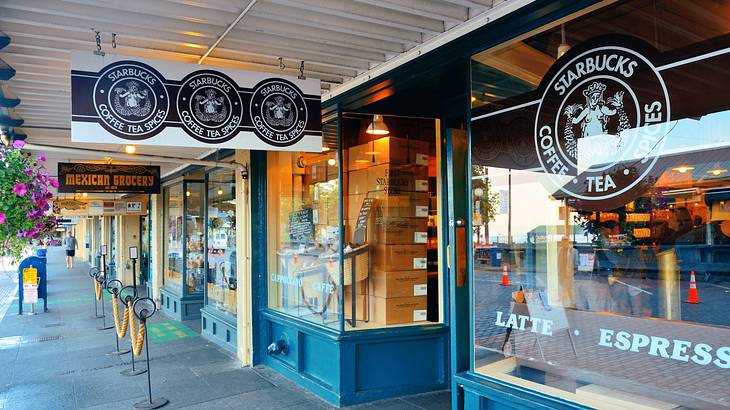
Many cities around the world claim to be "coffee capitals" for various reasons, such as Melbourne, Shanghai, and Rome, but Seattle makes its case on the strength of one particularly well-known company.
Starbucks, the largest coffeehouse chain in the world with locations in more than 80 countries, was founded in Seattle. That founding connection, combined with the city's deeply embedded coffee culture, is the basis for the "Coffee Capital of the United States" nickname.
Cloud City
This nickname works on two levels. The more obvious one is Seattle's famously overcast Pacific Northwest climate.
The less obvious one comes from tech: a 2014 Puget Sound Business Journal article used the phrase to describe Seattle's growing prominence in the cloud computing industry, a fitting double meaning for a city that has become a major technology hub.
Emerald City
Seattle's most recognized nickname has a clear origin. In the summer of 1981, the Seattle-King County Convention and Visitors Bureau ran a contest for a new city nickname.
The winning submission came from Sarah Sterling-Franklin, a California-based writer who proposed "Seattle, the Emerald City." The Bureau formally adopted it in 1982, replacing the previous nickname, "Queen City of the Pacific Northwest."
The name refers to the deep green of the evergreen forests that blanket the region year-round, a color as saturated as the gemstone itself.
The Gateway to Alaska
On July 17, 1897, the steamship Portland arrived in Seattle from Alaska carrying 68 prospectors and what newspapers described as "a ton of gold."
News had spread that gold had been discovered along a remote river in what is today the Yukon Territory of Canada. Seattle, as the closest major city on the continental US to the Alaskan coast, became the natural departure point for those heading north.
Today, that geographic reality still holds, with Alaska-bound cruises continuing to depart from the city's downtown waterfront each summer.

The Rainy City
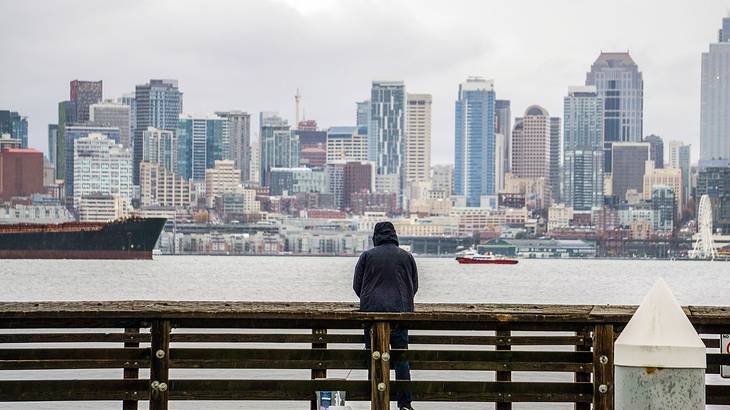
"Rainy City" is self-explanatory. Seattle's Pacific Northwest location means overcast skies and drizzle are a constant feature of city life. The city averages around 150 rainy days a year.
Locals are fond of pointing out that Seattle receives less total annual rainfall than places like Miami or New York. However, the frequency of gray, wet days rather than the total amount of rain is what fixed this nickname in place.
The frequent rain also adds to the area's natural beauty, keeping the city's many parks and outdoor spaces lush and green.
Grunge City
Few cities can claim to have invented a music genre, but Seattle's case is well-documented. Grunge took shape in Seattle's club scene in the mid-1980s, built on a hybrid of punk and heavy metal.
By the 1990s, the sound had gone global through bands like Nirvana, Pearl Jam, Soundgarden, and Alice in Chains.
The genre even carries an alternate name, "Seattle sound," first promoted by local label Sub Pop, making the geographic connection explicit. "Grunge City" was a natural result.
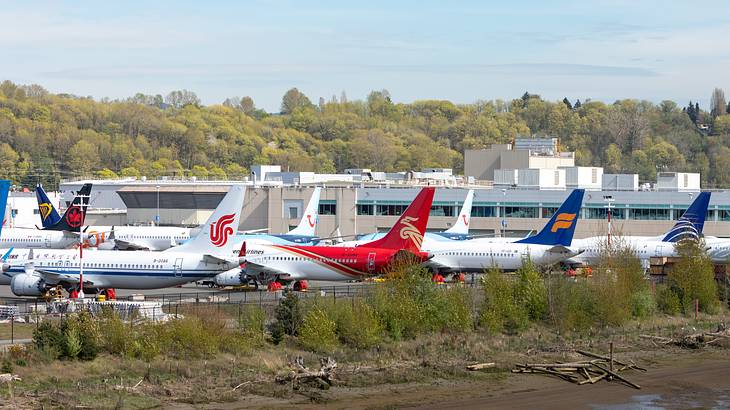

Jet City
"Jet City" traces back to World War II, when Boeing, a small airplane manufacturer founded in Seattle in 1916, grew into a primary producer of heavy bombers for the US Air Force, including the B-17 and B-29.
Over the years, Boeing's transformation into one of the country's most important aerospace companies has put Seattle firmly on the map as a hub for aviation.
The nickname Jet City gained further traction in the 1950s as Boeing introduced America's first passenger jet (the 707) to commercial aviation.
Today, Boeing's history in Seattle is documented at the Museum of Flight, which is housed in part in the company's original red-barn factory.
Queen City of the Pacific Northwest
Before Emerald City, this was the name Seattle went by. It dates to 1869 and was first coined by Portland-based real estate agents looking to attract interest in Seattle as it grew.
The shortened version, "Queen City," served as the official nickname until 1982, when the Convention and Visitors Bureau adopted Emerald City in its place.
The name is still familiar to longtime residents but rarely used today. Cincinnati is now more widely known as the Queen City.
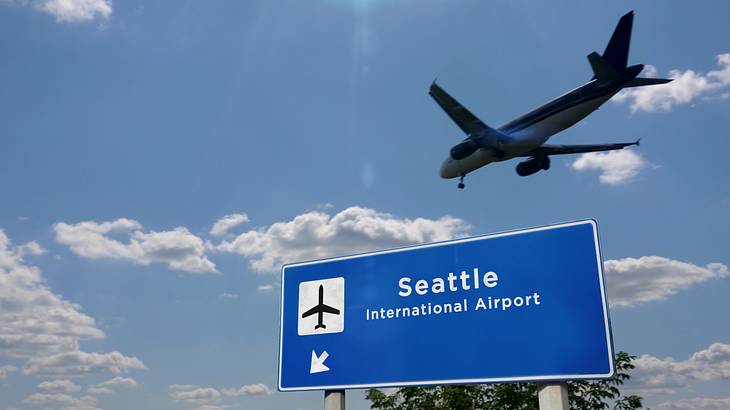

Sea-Town
Part nickname, part wordplay, "Sea-Town" draws on the city's name while also connecting it to SEA, the airport code for Seattle-Tacoma International Airport.
It functions more as informal slang than as official branding, but it's recognizable enough to sometimes appear on merchandise and in casual conversation, in person or online.
The 206
Area code nicknames are common in large North American cities, and Seattle's version is "The 206." The 206 area code has served Seattle since 1947, when the North American Numbering Plan established the first regional calling zones across the continent.
Originally covering all of Washington state, it now serves Seattle and parts of the surrounding King County. It remains one of the more widely recognized nicknames for the city among both locals and visitors.
In Conclusion
Few cities in the Pacific Northwest have had as much influence as Seattle has, and its many nicknames reflect that legacy. From the waterfront and coffee culture to the music scene and tech industry, the city has inspired generations to describe it in different ways. Fourteen nicknames later, and each one still captures a distinct side of Seattle's identity.

Want to keep exploring?
Subscribe for our latest guides.
Thank you for subscribing
We will be in touch soon with our latest guides.
Want to keep exploring?
Subscribe for our latest guides.
Thank you for subscribing
We will be in touch soon with our latest guides.