
32 Famous Landmarks in China to Visit

Destguides may receive commissions from purchases made through affiliate links in this article.
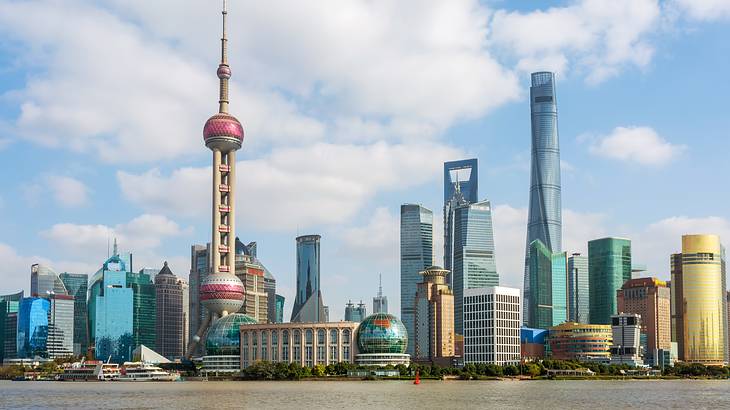

China's recorded history stretches back more than 3,000 years, and the landmarks left behind reflect every era of that timeline. Imperial palaces, carved cliff-face Buddhas, sacred mountains, and neon-lit skylines all sit within the same borders. The country also holds the second-highest number of UNESCO World Heritage sites in the world, behind only Italy.
This guide covers 32 famous landmarks in China, from ancient temples and fortified walls to modern towers and natural wonders. Continue reading to learn which landmarks to plan your visit around.
Heading to China and planning last-minute?
To make the most of your visit to China, we recommend you book entrance tickets and tours soon. See the short list of top suggestions below.
☂️ Top tours and experiences in China
- Chinese Kung fu Experience Class in Beijing (rated highly)
- Xi'an Silk Road - Legend of Camel Bell Show Ticket w Options (rated highly)
- Beijing - Tickets for the Temple of Heaven (rated highly)
- Beijing - All-Inclusive Mutianyu Great Wall Private Tour
- Xi'an - Terracotta Army, Lunch, City Wall, Pagoda, Bazaar
32 Famous Chinese Landmarks
- Great Wall of China, Northern China
- Forbidden City - The Palace Museum, Beijing
- Tiananmen Square, Beijing
- Temple of Heaven, Beijing
- Summer Palace, Beijing
- Lama Temple, Beijing
- Houhai, Beijing
- Yu Garden, Shanghai
- The Bund (Waitan), Shanghai
- Nanjing Road, Shanghai
- Shanghai World Financial Center, Shanghai
- Oriental Pearl TV Tower, Shanghai
- Emperor Qinshihuang's Mausoleum Site Museum, Xi'an
- The Giant Wild Goose Pagoda, Xi'an
- Ming Dynasty Tombs, Changping District
- Jiuzhai Valley National Park, Sichuan
- Guangzhou Opera House, Guangzhou
- Reed Flute Cave, Guilin
- Mount Hua, Huayin
- Chengdu Research Base of Giant Panda Breeding, Chengdu
- Li River, Southern China
- Tianmen Mountain National Forest Park, Zhangjiajie
- Mogao Caves, Dunhuang
- Leshan Giant Buddha, Leshan
- West Lake, Hangzhou
- Mount Huangshan, Huangshan
- Mount Tai, Tai'an
- Rainbow Mountains, Gansu
- Harbin Ice & Snow World, Harbin
- Saint Sophia Cathedral, Harbin
- Longmen Grottoes, Luoyang
- White Horse Temple, Luoyang
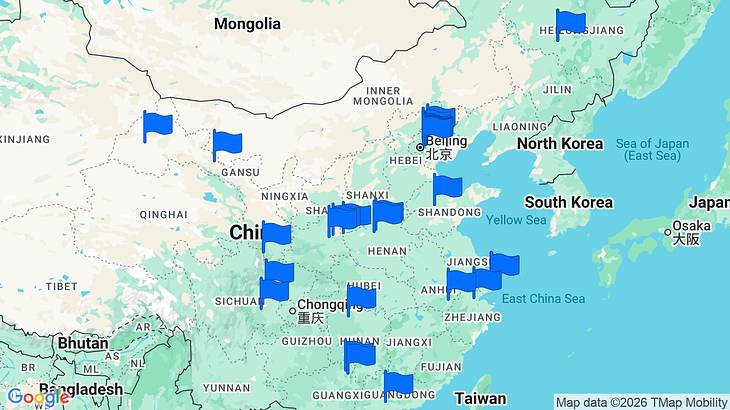
China Landmarks Map
A map of China landmarks. Use the map to explore all of the points of interest.

Great Wall of China, Northern China
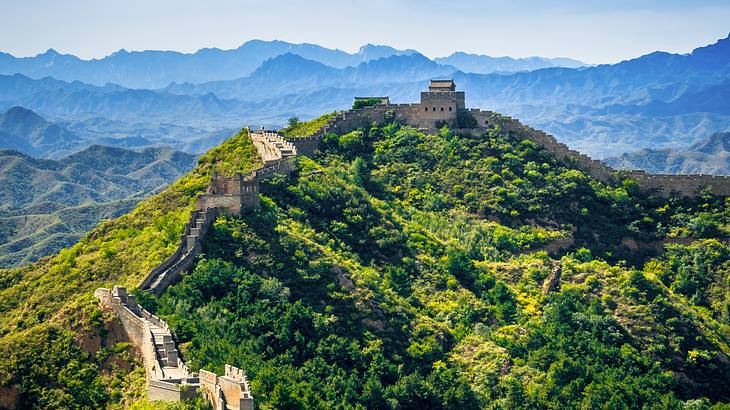
Stretching a total of 13,170 miles across 15 provinces, the Great Wall is the longest defensive structure ever built. The earliest sections date to the 7th century BCE, when rival states raised walls for protection. After unifying China, Emperor Qin Shi Huang connected many of those walls around 221 BCE, and successive dynasties extended the system for centuries.
The best-preserved sections belong to the Ming dynasty (1368 to 1644 CE) and are the brick-and-stone walls most visitors recognize today. Mutianyu and Jinshanling offer walkable stretches with fewer crowds than Badaling. Clear mornings tend to deliver the best views of the surrounding ridgelines.
☂️ See Great Wall of China on a tour
- Beijing Private TourMutianyu Badaling Great Wall & Panda House (widely acclaimed)
- Beijing Essential Full-Day Tour Including Great Wall at Badaling, Forbidden City & Tiananmen Square (popular and sought-after)

Forbidden City - The Palace Museum, Beijing
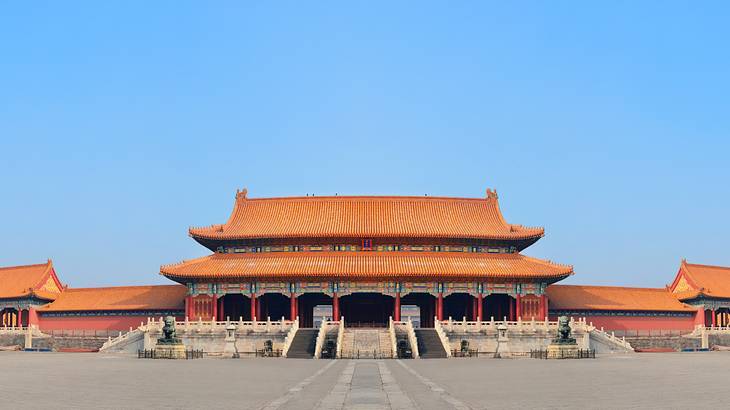
Between 1406 and 1420, more than a million laborers built this 72-hectare palace complex in the heart of Beijing. Completed under the Yongle Emperor, the Forbidden City served as the seat of power for 24 emperors across the Ming and Qing dynasties. It remains the largest preserved imperial palace complex in the world and one of the most famous landmarks on Earth.
Now called the Palace Museum, the complex contains close to 1,000 buildings, elaborate gardens, and vast collections of art and artifacts. Audio guides are available in several languages. Entering through the southern Meridian Gate and exiting north gives a natural flow through the major halls.
☂️ Visit The Palace Museum on a tour
- Private In-depth Forbidden City Tour With Imperial Icehouse Lunch (rated five stars)
Tiananmen Square, Beijing
Tiananmen Square sits directly south of the Forbidden City, separated by Chang'an Avenue. The square is one of the largest public plazas in the world, covering about 440,000 square meters of paved stone.
Surrounding the square are several significant structures, including the Monument to the People's Heroes and the National Museum of China. A daily flag-raising ceremony takes place at sunrise and a lowering at sunset, both drawing large crowds.
Flower displays decorate the square during major holidays like National Day in October, making it a popular spot for photography during those periods.
☂️ Visit Tiananmen Square with an experience

Temple of Heaven, Beijing
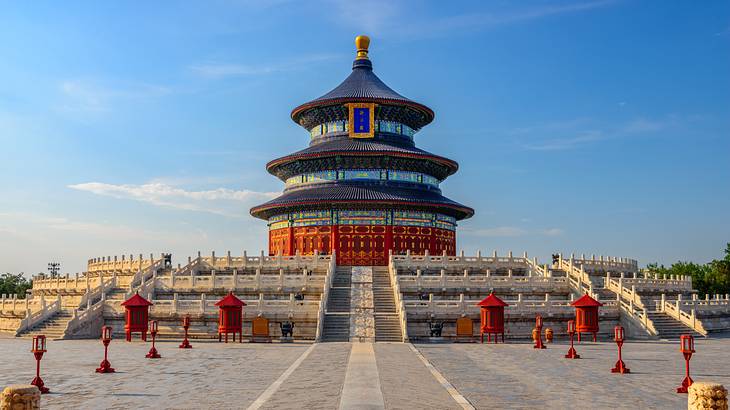
Constructed alongside the Forbidden City between 1406 and 1420, this ceremonial complex is where Ming and Qing emperors performed annual rites to pray for good harvests. Covering 273 hectares, the Temple of Heaven is nearly four times larger than the Forbidden City itself.
The Hall of Prayer for Good Harvests is the most recognized structure: a triple-gabled circular building supported by 28 wooden pillars arranged to represent the seasons, months, and hours. The Circular Mound Altar and the Imperial Vault of Heaven are also worth visiting. The temple opened to the public in 1918 and became a UNESCO World Heritage Site in 1998.
☂️ Visit Temple of Heaven on a tour

Summer Palace, Beijing
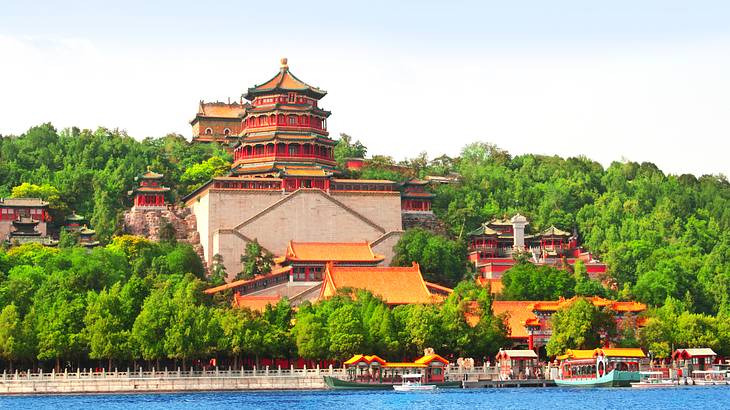
Fifteen kilometers from central Beijing, the Summer Palace is the largest and best-preserved imperial garden in China. Emperor Qianlong ordered its construction in 1750 as a birthday gift for his mother. The complex centers on Kunming Lake and Longevity Hill, with design elements borrowed from Hangzhou's West Lake and southern Chinese garden traditions.
The Long Corridor stretches 700 meters and is decorated with more than 8,000 painted scenes. Boating on Kunming Lake and walking through the Garden of Harmonious Pleasures are popular ways to spend time here. A UNESCO World Heritage Site since 1998, the palace rewards visitors who set aside at least half a day.
☂️ Visit Summer Palace with a tour
- All-Inclusive Day Tour - Mutianyu Great Wall & Summer Palace (rated five stars)

Lama Temple, Beijing
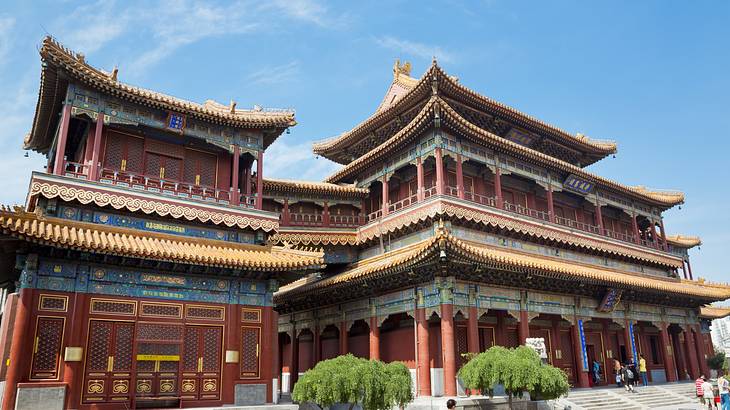
Built in 1694 as a residence for the Yongzheng Emperor, this Dongcheng District complex was later converted into a Tibetan Buddhist monastery. The Lama Temple (Yonghegong) is one of the most important Tibetan Buddhist sites outside Tibet and has remained an active place of worship for over 300 years.
The compound runs from south to north through a series of grand halls connected by courtyards. Inside the Wanfuge Pavilion stands an 18-meter-tall Maitreya Buddha carved from a single piece of white sandalwood, recorded in the Guinness Book of World Records. Incense smoke fills the courtyards on most mornings as worshippers and visitors move through.
☂️ Explore Lama Temple on a tour

Houhai, Beijing
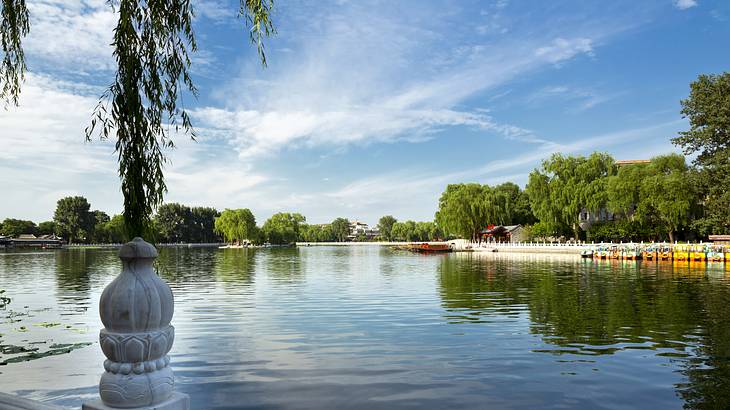
The name Houhai translates to "Back Lake," and this large artificial lake in central Beijing has been open to the public since the fall of the Qing dynasty. During the Yuan dynasty, the surrounding waterways served as a terminus for grain barges entering the capital.
Today, Houhai is ringed by traditional courtyard houses and narrow hutong alleys that are worth exploring on foot or by rickshaw. Former residences of notable historical figures line the lakeside streets. The area is especially pleasant in winter, when parts of the frozen lake are cleared for ice skating.

Yu Garden, Shanghai
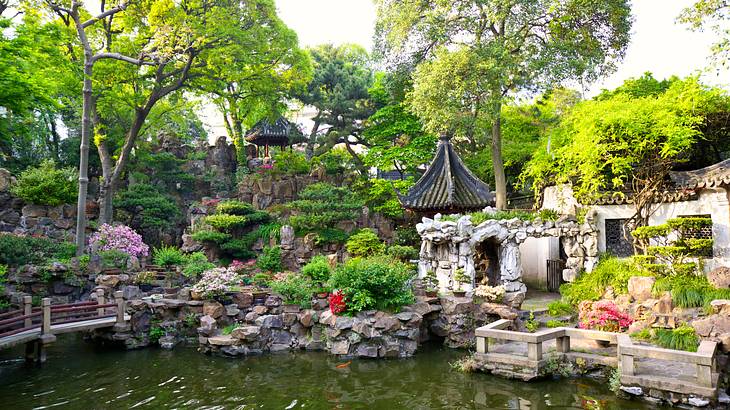
Dating to 1559, Yu Garden (Yu Yuan) was built during the Ming dynasty by a government official named Pan Yunduan for his aging father. The two-hectare site in Shanghai's Old City has survived wars and neglect, and was restored after 1949.
Rockeries, pavilions, ponds, and elaborate stone carvings fill the garden's six main scenic areas. The Great Rockery and the Exquisite Jade Rock are two standout features. Adjacent to the garden sits Yuyuan Bazaar, a market with traditional Chinese architecture and food stalls. Mornings tend to be quieter before tour groups arrive in force.
☂️ Visit Yu Garden with a tour

The Bund (Waitan), Shanghai
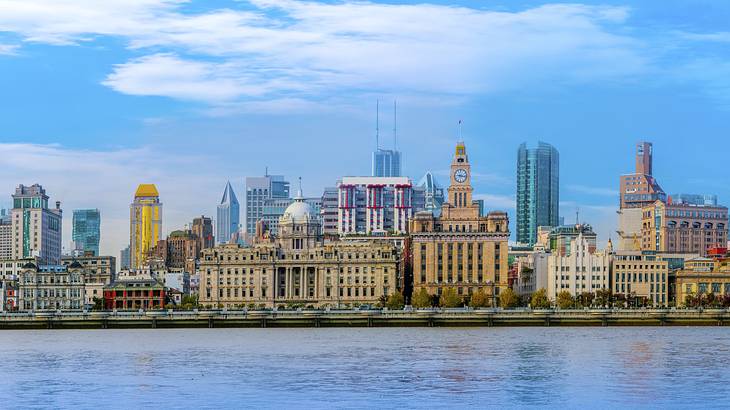
The Bund (Waitan) is a 1.5-kilometer waterfront promenade along the Huangpu River in Shanghai. The west side is lined with 52 buildings in a mix of Gothic, Baroque, Romanesque, and Art Deco styles, built mostly during the late 19th and early 20th centuries when Shanghai was a major treaty port.
Across the river, the Pudong skyline of glass towers creates a sharp visual contrast. The promenade is particularly striking after dark, when both sides are fully illuminated. Huangpu Park, at the northern end, offers a quieter spot to sit and take in the panorama.

Nanjing Road, Shanghai
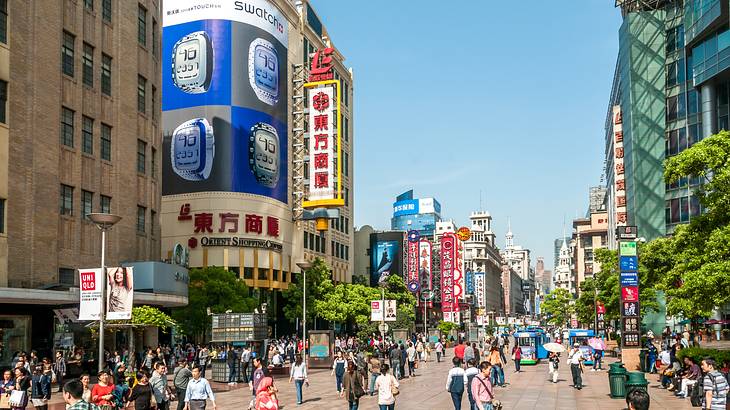
Often compared to New York's Fifth Avenue, Nanjing Road (Nanjing Lu) is one of the busiest shopping streets in the world. The eastern stretch runs about six kilometers from the Bund to People's Square and is partly pedestrianized. Shanghai is easily one of the best places to visit in China, and Nanjing Road captures much of the city's energy.
Small local shops selling trinkets and souvenirs sit alongside international luxury brands. The road's neon signs and constant foot traffic make it a sensory experience on its own, especially after sunset.

Shanghai World Financial Center, Shanghai
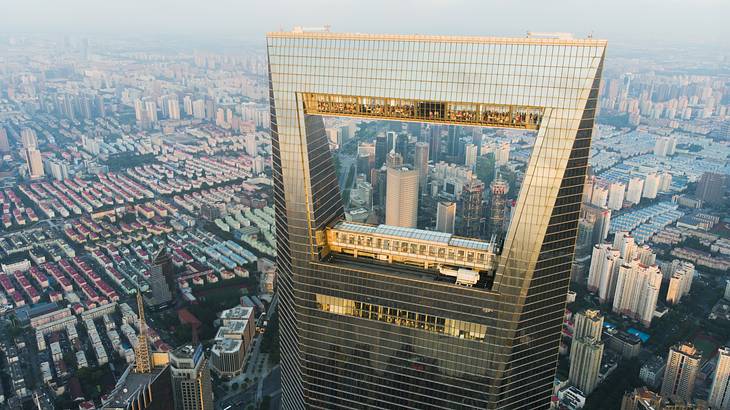
At 492 meters and 101 floors, the Shanghai World Financial Center (nicknamed "the Bottle Opener" for its distinctive trapezoidal opening) is one of the tallest skyscrapers in the city. It opened in 2008 after 11 years of construction.
The 100th-floor observation deck features a 55-meter glass-bottomed corridor offering a 360-degree view of Shanghai. For the clearest sightlines, visit on a day with low humidity and little smog.
Smog is just one of the many things to keep in mind before visiting China. The tower stands in a cluster with the Jin Mao Tower and Shanghai Tower in the Lujiazui financial district of Pudong.
☂️ Join a tour to see Shanghai World Financial Center
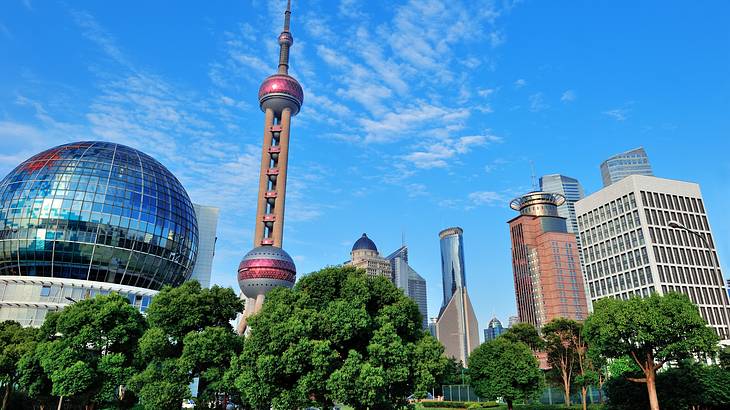

Oriental Pearl TV Tower, Shanghai
Completed in 1994 after three years of construction, the Oriental Pearl TV Tower rises 468 meters above the Pudong riverbank. Its design of 11 steel spheres at different heights evokes a classical Chinese image of pearls falling onto a jade plate.
The tower houses the Shanghai Municipal History Museum at its base, a revolving restaurant, and multiple observation decks. Because everything is indoors, it works as a rainy-day option. The tower's silhouette against the Pudong skyline has become one of Shanghai's most recognized images.
☂️ Visit Oriental Pearl TV Tower with an experience
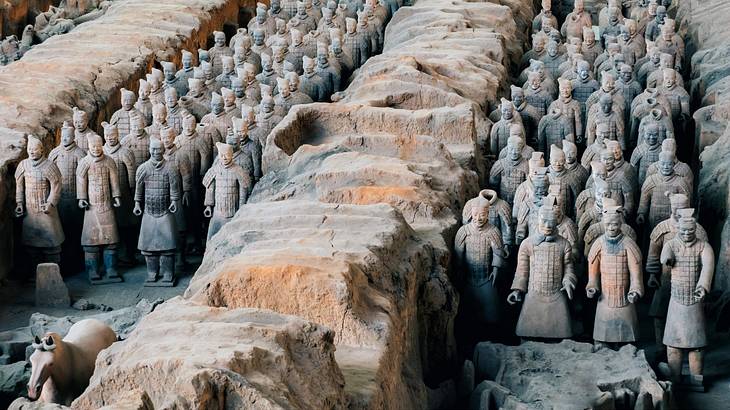

Emperor Qinshihuang's Mausoleum Site Museum, Xi'an
In 1974, farmers digging a well near Xi'an uncovered fragments of a terracotta figure. Excavation revealed thousands of life-sized clay soldiers, horses, and chariots buried around 210 BCE to guard the tomb of China's first emperor. The Terracotta Army, as it became known, is now displayed in three main excavation pits at this museum.
No two figures are identical. Each warrior has distinct facial features, hairstyles, and armor details, reflecting the ranks and roles of a real army. The site is about an hour from central Xi'an by bus. Arriving early helps avoid the heaviest crowds, which is one of many useful China travel tips worth knowing before your trip.
☂️ Explore Emperor Qinshihuangs Mausoleum Site Museum with a tour
- Terracotta Warriors Five-Hour Private Tour (rated very highly)
- Mini Group Xian Day Tour to Terracotta Army, City Wall, Pagoda & Muslim Bazaar (extremely popular)
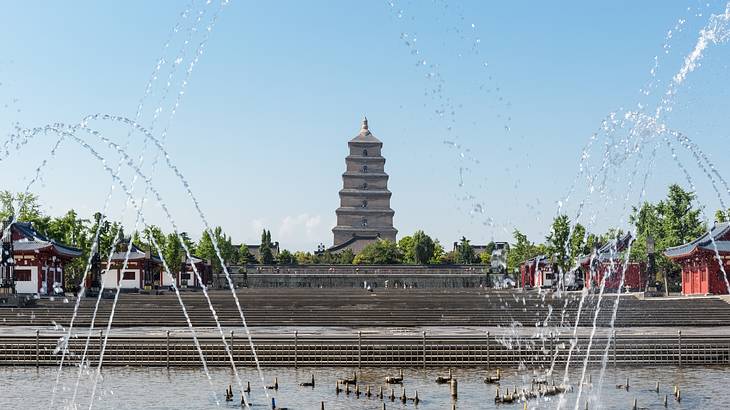

The Giant Wild Goose Pagoda, Xi'an
Emperor Gaozong of the Tang dynasty commissioned this pagoda in 652 CE to house Buddhist scriptures and relics brought from India by the monk Xuanzang. The Giant Wild Goose Pagoda (Dayanta) stands 64 meters tall in Xi'an and has survived earthquakes and wars over nearly 1,400 years.
The pagoda sits within the Da Ci'en Temple complex, surrounded by gardens and public squares. North Square features one of China's largest musical fountain displays, with choreographed water shows set to music. The pagoda became a UNESCO World Heritage Site in 2014 as part of the Silk Roads nomination.
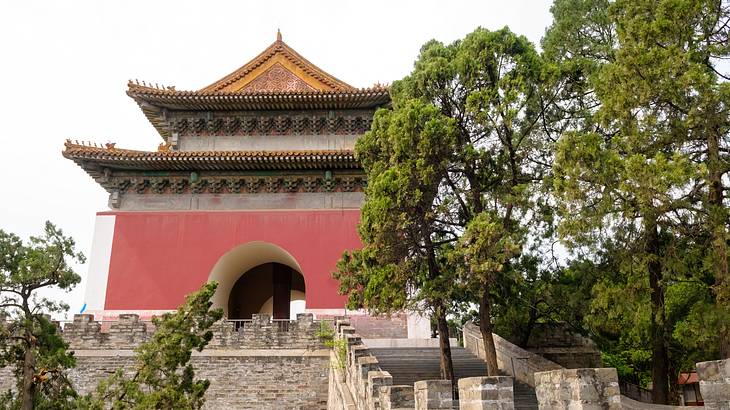

Ming Dynasty Tombs, Changping District
About 50 kilometers northwest of Beijing, 13 Ming dynasty emperors are buried in a valley chosen for its feng shui alignment. The Ming Tombs complex (Shisan Ling) was built between 1409 and 1644 CE, and the site became a UNESCO World Heritage Site in 2003.
The Sacred Way, a seven-kilometer stone path lined with statues of animals and officials, leads into the complex. The Dingling tomb is the only one that has been fully excavated, revealing an underground palace with artifacts on display. Visiting with a guide adds context that the site's sparse signage does not provide.
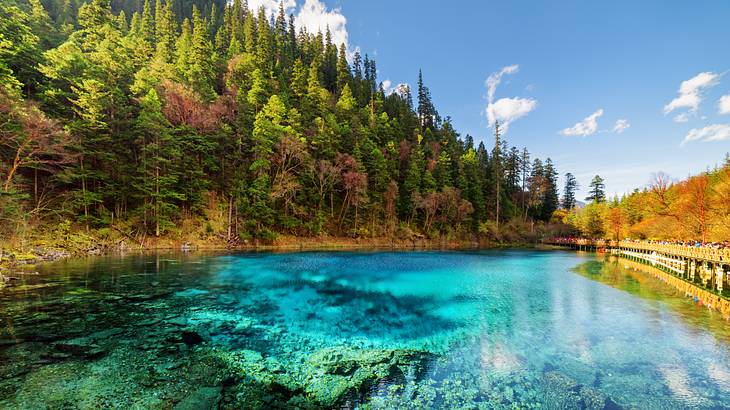

Jiuzhai Valley National Park, Sichuan
The turquoise and emerald lakes of Jiuzhai Valley get their vivid colors from calcium carbonate deposits and underwater plant life. Located in the mountains of northern Sichuan, this national park was inscribed as a UNESCO World Heritage Site in 1992 for its exceptional natural beauty.
Nuorilang Waterfall, one of the widest in China, and the multi-tiered pools of Shuzheng Valley are among the park's highlights. Autumn turns the surrounding forests gold and red, creating dramatic reflections on the lake surfaces. That season is also the busiest, so booking accommodations and arranging a guide well in advance is wise.
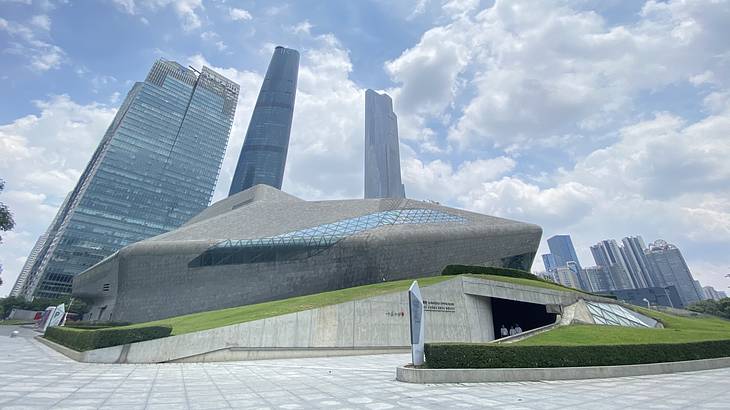

Guangzhou Opera House, Guangzhou
Zaha Hadid, the first woman to receive the Pritzker Architecture Prize, designed this performing arts center on the banks of the Pearl River. The Guangzhou Opera House opened in 2010, and its fluid, asymmetrical form was inspired by river-smoothed pebbles.
Two auditoriums host ballet, opera, orchestral concerts, and theatrical performances throughout the year. Even without attending a show, the building's exterior and surrounding plaza are worth visiting for their bold modern architecture. The opera house anchors a cultural district in the Tianhe area of Guangzhou.
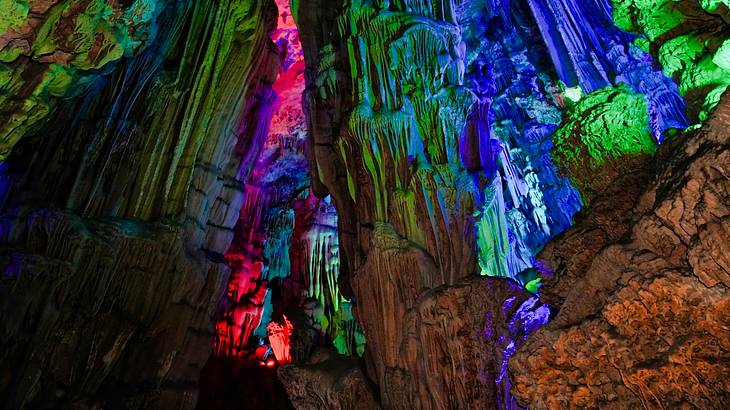

Reed Flute Cave, Guilin
Known locally as "the Palace of Natural Arts," Reed Flute Cave (Ludi Yan) takes its name from the reeds that once grew at its entrance and were used to make flutes. The limestone cave in Guilin, Guangxi, extends about 240 meters underground.
Stalactites, stalagmites, and rock formations have been illuminated with multicolored lighting, turning the cave into a vivid underground gallery. Ink inscriptions on the cave walls date back over 1,000 years, left by visitors during the Tang dynasty. The walking route through the cave takes about an hour to complete.
☂️ Experience Reed Flute Cave with a tour
- Private day Tour Guilin-LiRiver Bamboo Boat-Yangshuo Highlights (frequently earns a five-star rating)
- One-Day Guilin Tour to Reed Flute Cave, Xianggong Hill, Bamboo Boat & Night Show
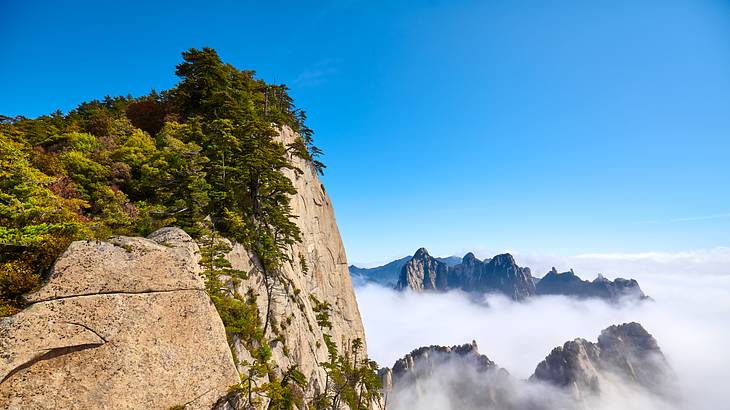

Mount Hua, Huayin
About 120 kilometers east of Xi'an, Mount Hua (Huashan) is the westernmost of China's Five Great Mountains. Its highest peak, South Peak, stands at 2,154 meters.
The mountain earned its reputation through the Huashan Plank Trail, a narrow wooden path bolted to a sheer cliff face where hikers clip into a safety harness and shuffle sideways above a steep drop. The government has widened many paths and added cable cars and railings, but the plank trail remains a genuine test of nerve.
The mountain has five peaks, each with temples and viewpoints, and an overnight hike to catch the sunrise from East Peak is a popular route.


Chengdu Research Base of Giant Panda Breeding, Chengdu
Founded in 1987 with six rescued giant pandas, the Chengdu Research Base has grown into one of the most important conservation centers in Asia. The base now supports a large population of giant pandas and red pandas across open-air enclosures designed to mimic their natural bamboo forest habitat.
The facility combines breeding, veterinary care, and public education. Giant pandas were reclassified from "endangered" to "vulnerable" in 2016, partly due to efforts at centers like this one. The pandas are most active during morning feeding times, so arriving early makes for a better experience.
☂️ Join a tour to see Chengdu Research Base of Giant Panda Breeding

Li River, Southern China
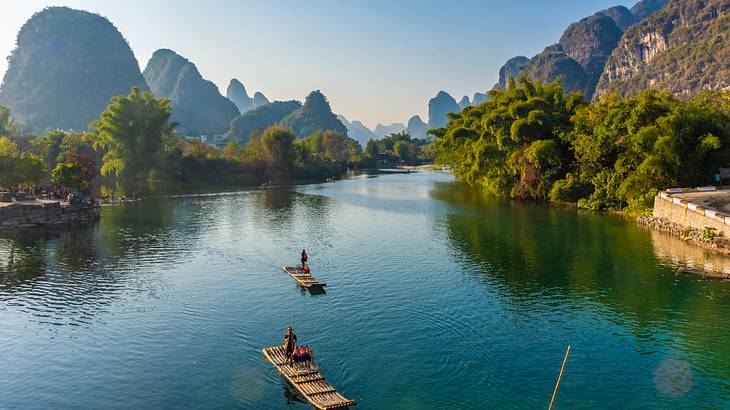
The 83-kilometer stretch of the Li River between Guilin and Yangshuo is one of China's most celebrated scenic waterways. Karst limestone peaks rise sharply from the riverbanks, their reflections doubled in the calm water below.
Bamboo rafting and cruise boats are the most common ways to travel this section. The landscape appears on the 20-yuan banknote, and the peak depicted (called Yellow Cloth Shoal) is a frequent photo stop.
Fishermen with trained cormorants still work sections of the river and have become part of its visual identity. Clear weather between April and October generally offers the best conditions.

Tianmen Mountain National Forest Park, Zhangjiajie
Tianmen Mountain, near the city of Zhangjiajie in Hunan province, is defined by a natural arch near its summit called Tianmen Cave, or "Heaven's Gate." The arch measures about 131 meters tall and 57 meters wide, carved through the rock by centuries of erosion.
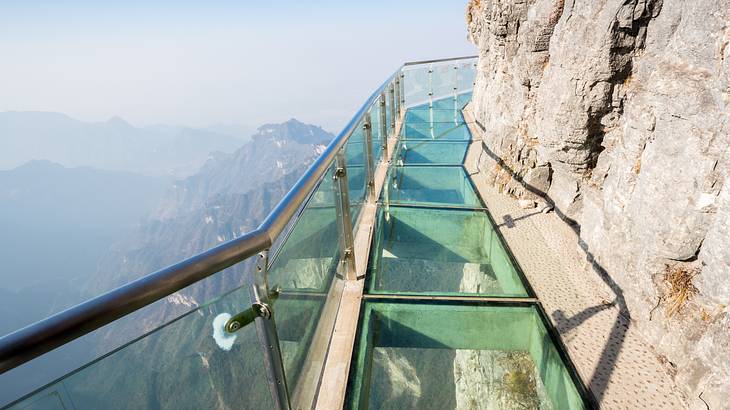
The Cliffside Loop walk circles the summit along a 1.6-kilometer glass-bottomed pathway fixed to the mountain's edge. A winding road with 99 sharp bends leads partway up, and the final ascent to the cave requires climbing 999 steps. The longest passenger cable car in the world connects the base station to the summit area.

Mogao Caves, Dunhuang
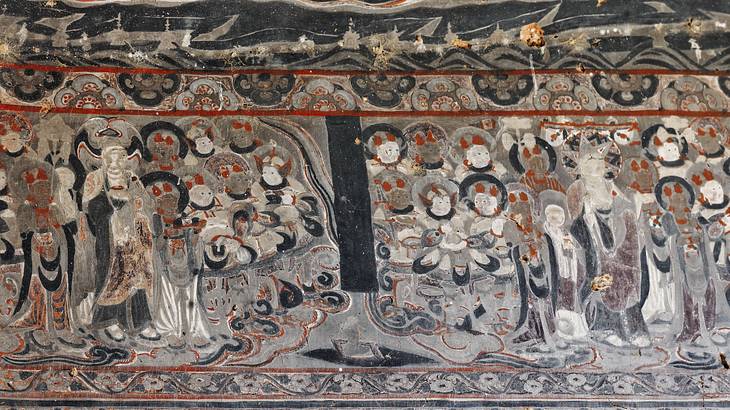
Along the ancient Silk Road near Dunhuang in Gansu province, 492 cave sanctuaries were carved into a cliff face over roughly 1,000 years, beginning in 366 CE. The Mogao Caves contain about 45,000 square meters of murals and more than 2,000 painted sculptures, making them one of the world's largest collections of Buddhist art.
The caves became a UNESCO World Heritage Site in 1987. Visitors watch two introductory films at the Digital Exhibition Center before a guide takes them through a rotating selection of caves. Only a small number are open on any given day to protect the fragile pigments from humidity and light.

Leshan Giant Buddha, Leshan
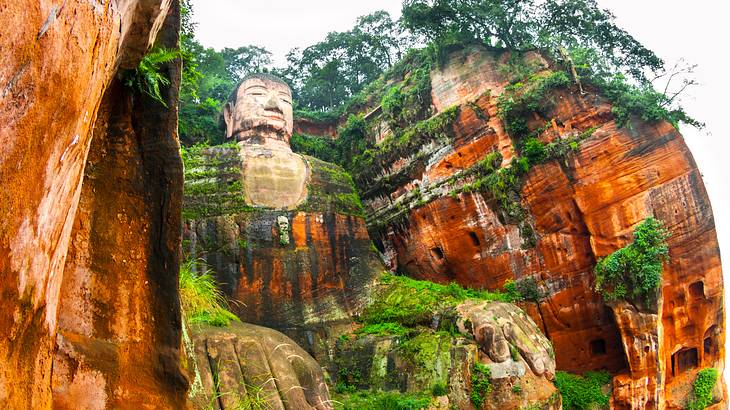
Carved into the red sandstone cliffs at the confluence of the Min, Dadu, and Qingyi rivers, the Leshan Giant Buddha stands 71 meters tall. A monk named Hai Tong began the project in 713 CE, believing a colossal Buddha would calm the dangerous river currents. The carving took 90 years and three generations of workers to complete, finishing in 803 CE.
The statue depicts Maitreya, a future Buddha, seated with hands resting on his knees. A hidden drainage system channels rainwater through the figure's hair, collar, and chest to prevent erosion.
Viewing the Buddha by boat from the river provides the most complete perspective and is a must-visit site in China. A UNESCO World Heritage Site since 1996, the statue is about two hours from Chengdu by train.
☂️ Visit Leshan Giant Buddha with an experience
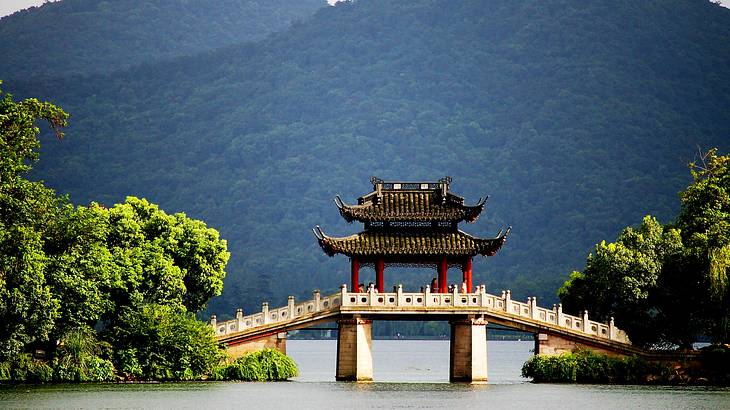

West Lake, Hangzhou
Hangzhou's West Lake (Xi Hu) became a UNESCO World Heritage Site in 2011, recognized for its influence on garden design across China, Japan, and Korea over many centuries. The lake covers about 6.5 square kilometers and is divided by causeways, dotted with islands, and surrounded by hills.
Well-maintained paths connect temples, pagodas, gardens, and bridges around the lakeshore. The Leifeng Pagoda on the southern shore and the Three Pools Mirroring the Moon are two of the lake's highlights. Boating on the lake in the early morning, before the paths fill with visitors, is a particularly peaceful way to experience the scenery.
☂️ Discover Xi Lake on a tour
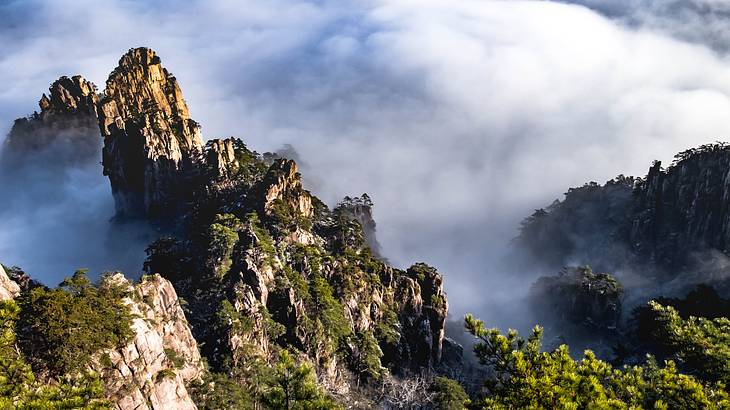

Mount Huangshan, Huangshan
Granite peaks draped in twisted Huangshan pine trees and wrapped in shifting clouds have made Mount Huangshan (Yellow Mountain) one of the most painted and written-about landscapes in Chinese art and literature. Located in Anhui province, the mountain became a UNESCO World Heritage Site in 1990 under both cultural and natural criteria.
Cable cars reach two of the main scenic areas, but hikers can also take stone-step paths between the peaks. The mountain's famous "sea of clouds" effect occurs most reliably in the cooler months, when low-lying mist fills the valleys and only the peaks emerge above.
☂️ Visit Huangshan Mountain with an excursion
Mount Tai, Tai'an
Emperors made pilgrimages to Mount Tai (Taishan) for over 3,000 years, performing ceremonies at its summit to communicate with heaven. It is the easternmost of the Five Great Mountains and holds deep significance in Confucian, Taoist, and Buddhist traditions. Mount Tai became one of China's first UNESCO World Heritage Sites in 1987.
The main climbing route follows about 6,660 stone steps from the base to Jade Emperor Peak at 1,545 meters. Along the way, temples, inscriptions carved into rock faces, and the South Heavenly Gate mark the ascent. Many hikers begin the climb at night to reach the summit for sunrise.
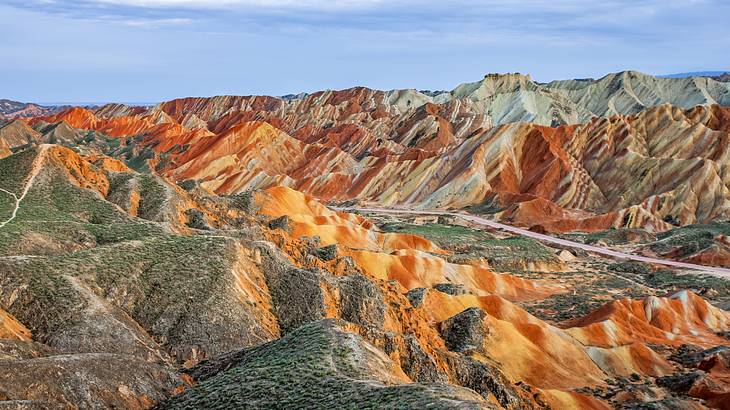

Rainbow Mountains, Gansu
The Zhangye Danxia National Geopark in Gansu province contains a mountain range streaked with bands of red, orange, yellow, and blue, the result of layers of sandstone and mineral deposits compressed and tilted over millions of years. The park became a UNESCO Global Geopark in 2020.
Boardwalks and viewing platforms at several points within the park offer unobstructed perspectives of the colored rock formations. The colors shift with the light throughout the day, and sunrise and sunset produce the most vivid contrasts. The park is about 40 kilometers from the city of Zhangye, and shuttle buses run between the viewing areas.
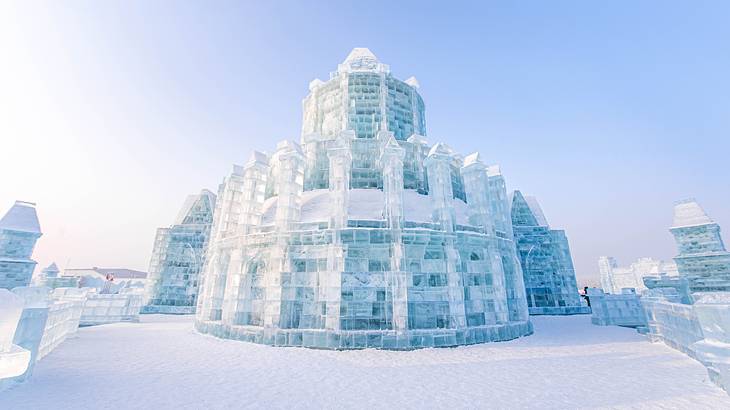

Harbin Ice & Snow World, Harbin
Each winter, typically from late December or early January through March, Harbin hosts the world's largest ice and snow festival. Blocks of ice cut from the nearby Songhua River are carved into enormous illuminated sculptures, some reaching the height of multi-story buildings.
The sculptures are lit from within by colored LEDs, and the display is most dramatic after dark. Ice slides, winter activities, and fireworks fill out the program. Temperatures regularly drop below minus 20 degrees Celsius during the festival, so layering warm clothing and waterproof boots is not optional.

Saint Sophia Cathedral, Harbin
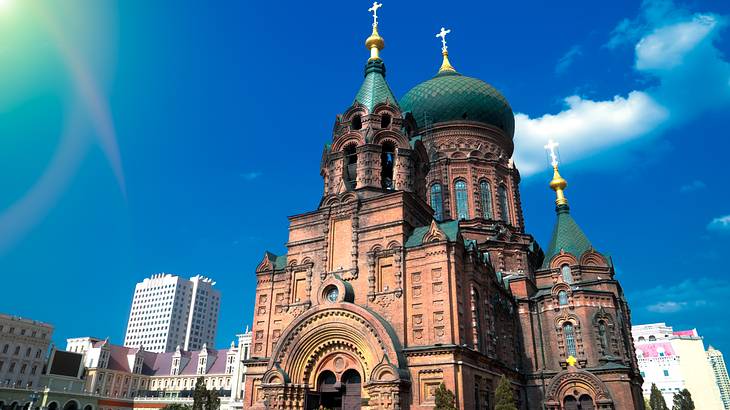
The green onion dome and red brick walls of Saint Sophia Cathedral sit in the center of Harbin, a visual reminder of the city's Russian history. A wooden chapel was first built on the site in 1907 for Russian soldiers.
The current brick-and-timber structure was completed in 1932 after a nine-year reconstruction, and it became the largest Eastern Orthodox church in the Far East.
The cathedral no longer functions as a church. It now houses the Harbin Architecture Art Gallery, with historical photographs documenting the city's development and its blend of Chinese and European architectural traditions.

Longmen Grottoes, Luoyang
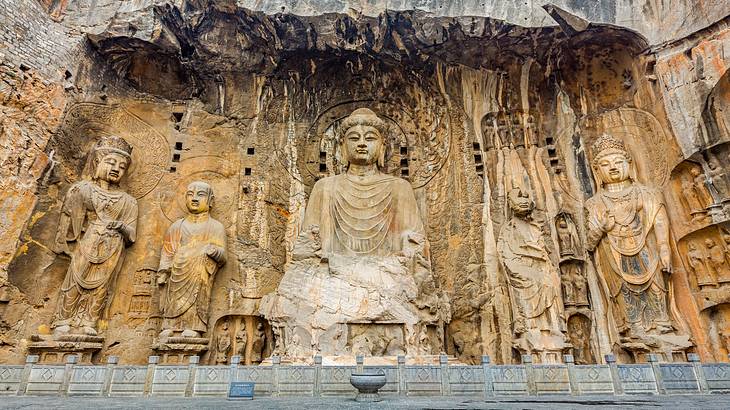
Thousands of Buddhist statues peer out from cliff-face niches along the Yi River near Luoyang. Carving at the Longmen Grottoes began around 493 CE, when the Northern Wei dynasty moved its capital to Luoyang, and continued through several subsequent dynasties. The site became a UNESCO World Heritage Site in 2000.
The largest figure, a 17-meter-tall seated Vairocana Buddha in the Fengxian Temple cave, dates to the Tang dynasty. In total, the grottoes contain more than 100,000 statues in over 2,300 caves and niches. Walking the path along the river between the east and west banks covers the main clusters.
☂️ Explore Longmen Grottoes on a tour
- Luoyang Private Day Tour to Longmen Grottoes & Shaolin Temple (frequently earns a five-star rating)
White Horse Temple, Luoyang
White Horse Temple (Bai Ma Si) in Luoyang is traditionally regarded as the first Buddhist temple established in China, founded in 68 CE during the Eastern Han dynasty.
According to tradition, Emperor Ming sent envoys to India to learn about Buddhism. They returned carrying scriptures on a white horse, and the temple was built to house the texts and the monks who accompanied them.
The complex is divided into several halls, including the Hall of Heavenly Kings and the Great Buddha Hall. Later additions include an Indian-style shrine and a Thai-style pavilion, reflecting Buddhism's international reach. The temple remains an active site of worship.
Conclusion
China fits 3,000 years of history into one country, and these 32 landmarks cover the highlights. Ming dynasty walls, Tang dynasty cave art, sacred mountains, and 21st-century skyscrapers all share the same map. The variety is what makes planning a route through the country half the fun.

Want to keep exploring?
Subscribe for our latest guides.
Thank you for subscribing
We will be in touch soon with our latest guides.
Want to keep exploring?
Subscribe for our latest guides.
Thank you for subscribing
We will be in touch soon with our latest guides.