
13 Landmarks in Chicago, Illinois to See

Destguides may receive commissions from purchases made through affiliate links in this article.
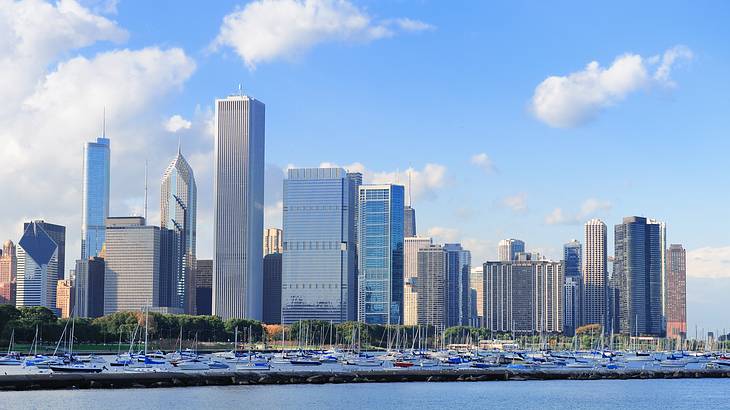

Chicago grew into an industrial powerhouse in the 19th century, only to be leveled by the Great Fire of 1871. The rebuilding effort gave rise to the modern skyscraper and set the tone for a city that has been reinventing itself ever since.
Today, landmarks in Chicago, Illinois, range from world-class museums and famous high-rises to public parks and a ballpark with ivy-covered walls. Continue reading to explore 13 of the most notable Chicago landmarks.
Are you on your way to Chicago last-minute?
Book your entrance tickets and tours for your trip to Chicago early! Here are some top choices to make your trip enjoyable.
☂️ Top tours and experiences in Chicago
- Chicago River 45-Minute Architecture Tour From Magnificent Mile (likely to sell out)
- Chicago Architecture River Cruise (very popular)
- Lake Michigan Skyline Cruise in Chicago (very popular)
- Flyover in Chicago (very popular)
- Chicago River Ghost & Dark History Night Cruise
13 Chicago Landmarks
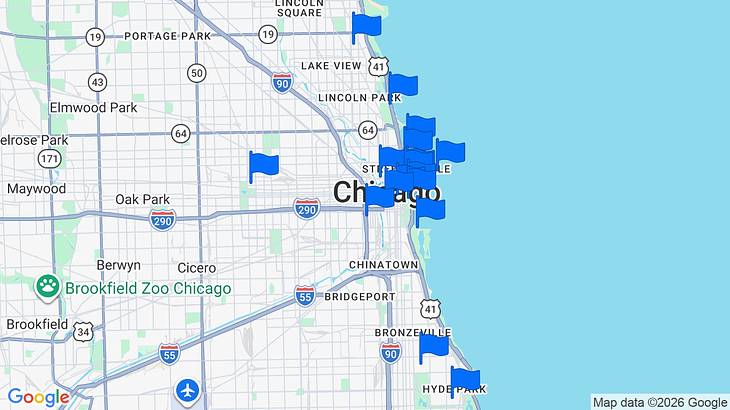
Chicago Landmarks Map
A map of Chicago landmarks. Use the map to explore all of the points of interest.
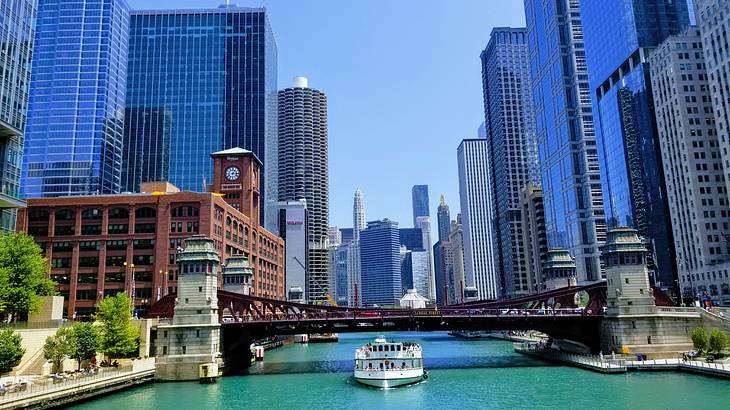

The Chicago River
The Chicago River winds through the heart of downtown, flanked on both sides by some of the city's most striking skyscrapers. The Chicago Riverwalk runs alongside it, functioning as a public park with jogging paths, kayak launches, restaurants, and bars along its banks.
Every year around St. Patrick's Day, the Chicago Plumbers Union dyes the river bright green, a tradition dating back over 60 years. The practice began when plumbers noticed that a dye used to trace wastewater leaks turned a vivid emerald color. Today, it is one of Chicago's most recognized annual events and draws large crowds to the riverbanks.
☂️ Experience Chicago River with a tour
- Chicago River 45-Minute Architecture Tour From Magnificent Mile (often fully booked)
- Chicago Architecture River Cruise (a sort after tour)

Millennium Park
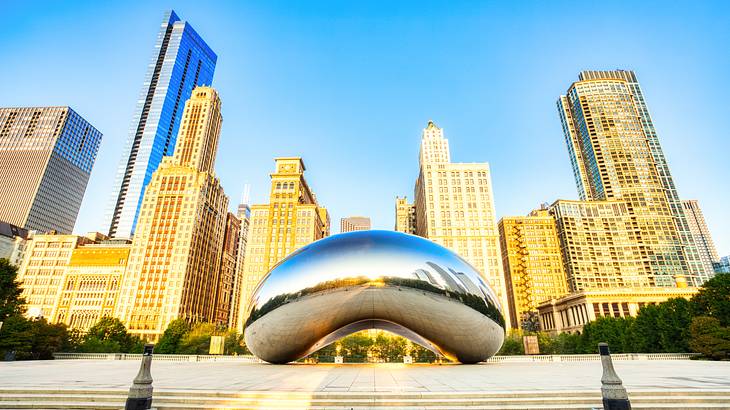
Millennium Park occupies 24.5 acres in the northwest corner of Grant Park. Before it opened in 2004, the site was a stretch of disused railroad yards and parking lots. The park was designed as a public gathering space combining art, architecture, and green space.
Its centerpiece is Cloud Gate, a 110-ton polished stainless steel sculpture by British artist Anish Kapoor. Nicknamed "the Bean" by locals, the work reflects Chicago's skyline across its curved surface.
The park also features the Jay Pritzker Pavilion, an outdoor concert venue designed by Frank Gehry, and the Crown Fountain, a pair of 50-foot glass towers that project video portraits of Chicago residents. An insider tip is to visit Lurie Garden at the park's south end for a quieter spot away from the crowds around Cloud Gate.
☂️ Explore Millennium Park on a tour
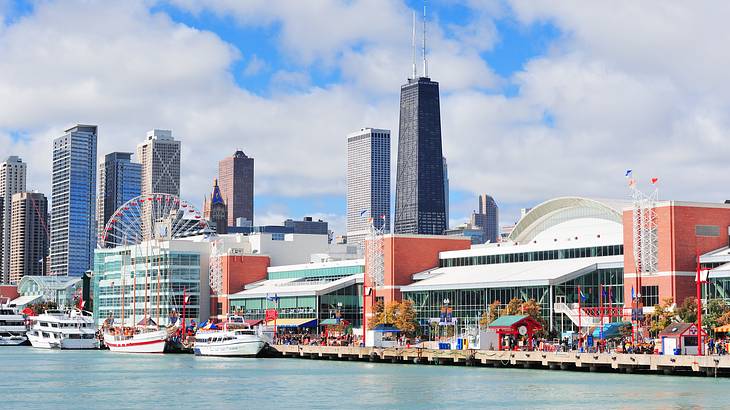

Navy Pier
Navy Pier stretches 3,300 feet into Lake Michigan from the city's Near North Side. It opened on July 15, 1916, as Municipal Pier and was designed by architect Charles Sumner Frost as part of Daniel Burnham's Plan of Chicago. At the time, it was the longest pier in the world.
The pier was renamed in 1927 to honor the Navy personnel who trained here during World War I. After decades of declining use, it was redesigned and reopened in 1995 as a mixed-use entertainment and cultural venue.
It is now one of the most visited attractions in the Midwestern United States, with shops, restaurants, gardens, and the 196-foot Centennial Wheel.
Chicago Water Tower
Built in 1869 from Joliet limestone, the Chicago Water Tower is the only public building in the fire zone to have survived the Great Chicago Fire of 1871. It stands on Michigan Avenue along the Magnificent Mile in the Near North Side.
The tower was originally part of the city's water supply system, drawing water from Lake Michigan. It became obsolete by the early 1900s but was saved from demolition by public outcry. Today, the interior houses the City Gallery, a free exhibition space that showcases work by local Chicago photographers and artists.
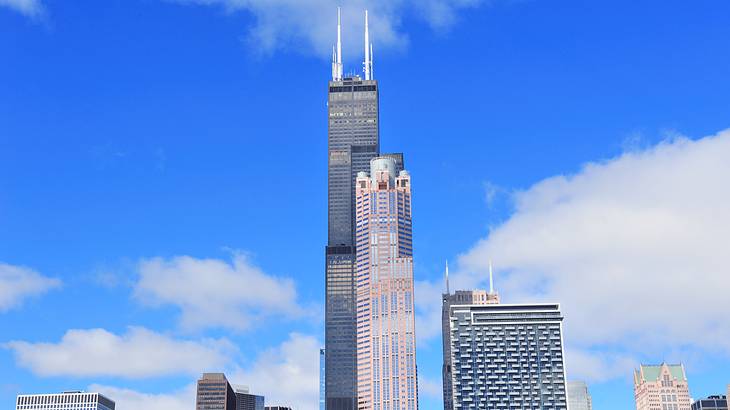

The Willis Tower
The Willis Tower, still commonly called the Sears Tower by locals, rises 1,451 feet above Chicago's Loop. Designed by architect Bruce Graham and structural engineer Fazlur Khan of Skidmore, Owings and Merrill, the building opened in 1973 as the headquarters of Sears, Roebuck and Co. It held the title of the world's tallest building for nearly 25 years.
The Skydeck on the 103rd floor offers panoramic views that can stretch across four states on a clear day. The Ledge, a set of glass-floored balconies extending from the building, lets visitors look straight down to the street below.
Jane Addams Hull-House Museum
In 1889, Jane Addams and Ellen Gates Starr founded Hull-House on Chicago's Near West Side to serve immigrant communities. The settlement house provided education, childcare, and social services to working-class families arriving in the city during the late 19th and early 20th centuries.
Hull-House became a center for social reform and helped shape labor and immigration policy in the United States. Addams was awarded the Nobel Peace Prize in 1931.
Today, the Jane Addams Hull-House Museum is part of the University of Illinois Chicago campus and preserves artifacts and records from the settlement's history.
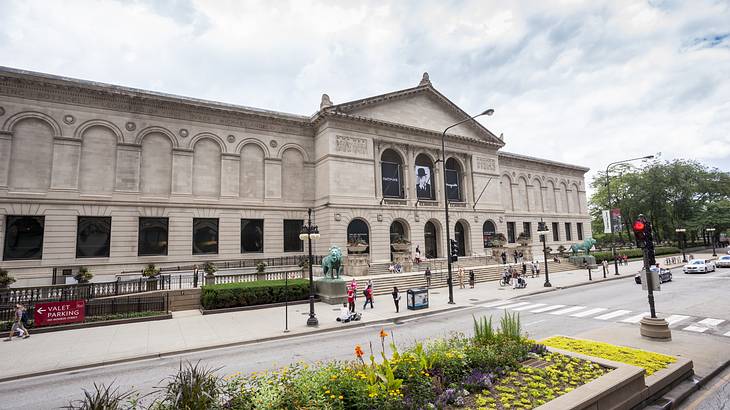

The Art Institute of Chicago
Founded in 1879, the Art Institute of Chicago is one of the oldest and largest art museums in the US. Its permanent collection spans over 5,000 years of human artistic expression and includes nearly 300,000 works across several departments.
The museum is especially well known for its collection of Impressionist and Post-Impressionist paintings. Among the most recognized works on display is Georges Seurat's "A Sunday on La Grande Jatte," which has been part of the collection since 1926.
The main building on Michigan Avenue was constructed for the 1893 World's Columbian Exposition, and its entrance is still flanked by the two bronze lion sculptures that have greeted visitors for over a century.
☂️ Experience The Art Institute of Chicago with a tour
- Chicago CityPASS (very popular)
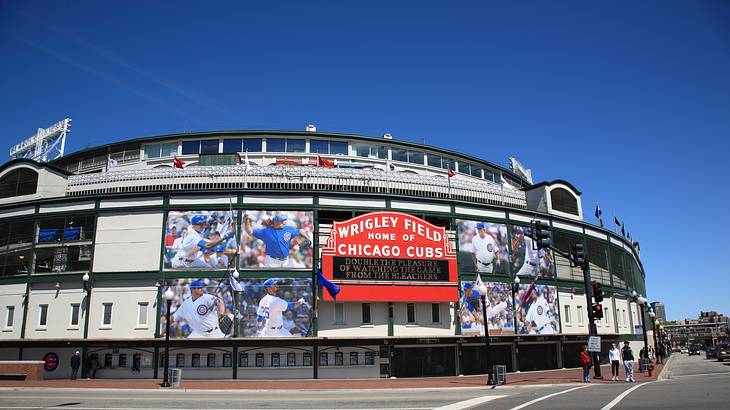

Wrigley Field
Wrigley Field opened in 1914 as Weeghman Park, making it the second-oldest ballpark in Major League Baseball after Boston's Fenway Park. It was renamed Wrigley Field in 1926 after chewing gum magnate William Wrigley Jr. acquired a controlling interest in the team.
The ballpark sits in the Lakeview neighborhood, in an area now known as Wrigleyville. Its ivy-covered outfield walls, planted in 1937, remain one of the most distinctive features in professional baseball.
The park was designated a National Historic Landmark in 2020. Visitors during the off-season can take guided ballpark tours that include the dugout, press box, and field.
☂️ Explore Wrigley Field on a tour
- Private 45-Minute Chicago Skyline Helicopter Tour (top-rated tour)
- Chicago Bike & Classic Food Tour - Bikes, Bites & Views - Adults (extremely popular)
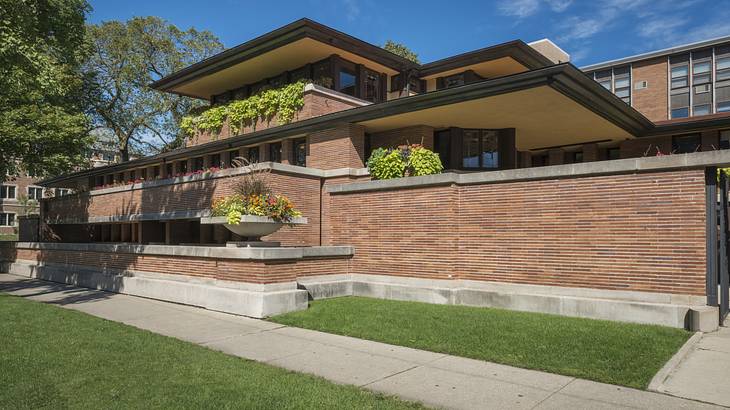

Frank Lloyd Wright's Robie House
Completed in 1910 in Chicago's Hyde Park neighborhood, the Robie House is widely considered the finest example of Frank Lloyd Wright's Prairie style.
Wright designed the residence for businessman Frederick C. Robie, with dramatically cantilevered rooflines, continuous bands of art-glass windows, and long horizontal lines inspired by the Midwestern prairie landscape.
The house is a National Historic Landmark and was added to the UNESCO World Heritage List in 2019 as part of "The 20th-Century Architecture of Frank Lloyd Wright." It is located on the University of Chicago campus and is open to the public for guided tours operated by the Frank Lloyd Wright Trust.
☂️ Visit Frederick C Robie House with an experience
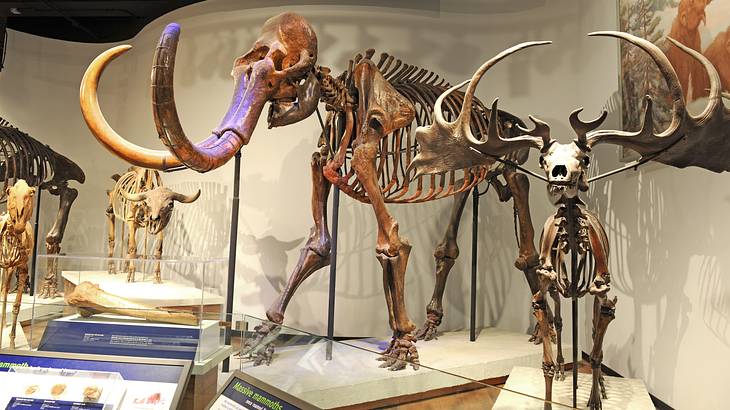

The Field Museum
The Field Museum sits on Chicago's Museum Campus along the Lake Michigan shoreline. It is one of the largest natural history museums in the world, with a collection of over 40 million artifacts and specimens spanning geology, botany, zoology, and anthropology.
The museum's most famous resident is SUE, the largest and most complete Tyrannosaurus rex skeleton ever discovered. SUE dates to the Cretaceous period, roughly 67 million years ago, and measures more than 40 feet long. The specimen is housed in a dedicated exhibit within the museum's Griffin Halls of Evolving Planet.
The main hall, Stanley Field Hall, features Maximo, a cast of one of the largest dinosaurs ever found, a Patagotitan from Argentina.
☂️ Visit Field Museum with an experience
- Chicago Sightseeing River & Lake Cruise (a hit among most)
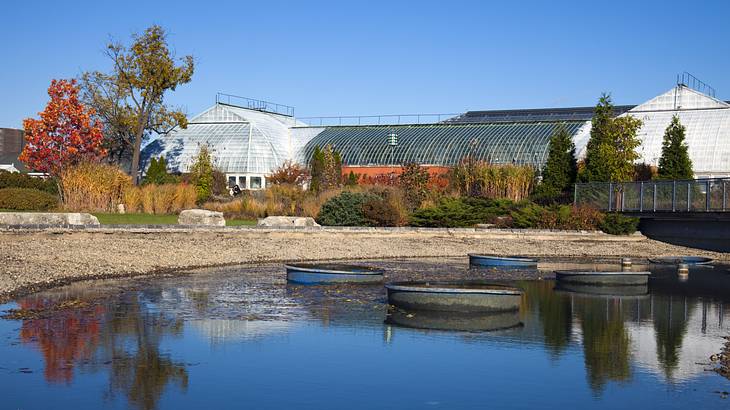

Garfield Park Conservatory
The Garfield Park Conservatory opened in 1908 and occupies approximately 4.5 acres of indoor and outdoor space on Chicago's West Side. Designed by Jens Jensen, who served as the West Park Commission's chief landscape architect, the conservatory was intended as "landscape art under glass."
The facility includes several permanent plant rooms featuring specimens from around the world, including palms, ferns, desert plants, and aroid species. It is listed on the National Register of Historic Places and serves as both a horticultural facility and a community gathering space.
Admission is free for Chicago residents. The conservatory is also a popular date spot in Chicago, especially during the winter months when the tropical rooms offer a warm escape.


Lincoln Park Zoo
Lincoln Park Zoo was founded in 1868, making it one of the oldest zoos in the United States. It began with a gift of two pairs of swans from New York's Central Park.
The zoo is free and open to the public year-round. It is home to roughly 200 species, with exhibits featuring big cats, gorillas, penguins, and polar bears. The Regenstein African Journey recreates several African habitats with indoor and outdoor viewing opportunities and is among the zoo's most popular attractions.
☂️ Visit Lincoln Park Zoo with an excursion
- Chicago Crime & Mob Bus Tour (very popular)
- Chicago Night Crimes Tour by Bus
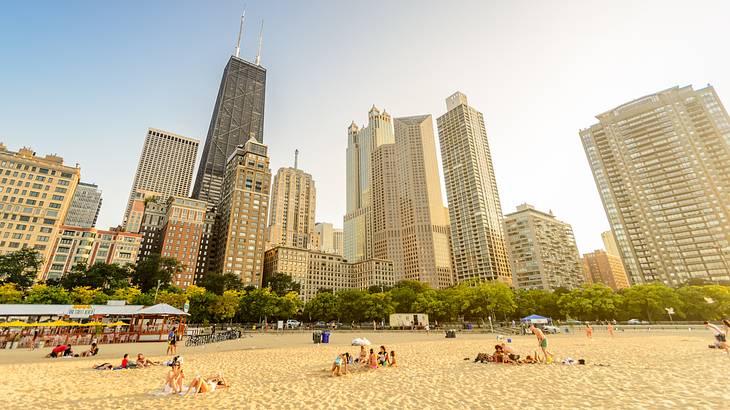

Oak Street Beach
Oak Street Beach sits at the southern end of Chicago's Lake Shore Drive, just steps from Michigan Avenue and the Magnificent Mile. The beach offers views of the city skyline and the Lake Michigan shoreline.
The Chicago Park District manages a network of public beaches along approximately 26 miles of lakefront. Oak Street is one of the most centrally located and is a popular spot for sunbathing, volleyball, and swimming during the summer months.
The beach is also a convenient starting point for the Lakefront Trail, an 18.5-mile paved path that runs along the water's edge from the South Side to the northern neighborhoods. The city's lakeside nickname reflects just how central the waterfront is to Chicago's identity.
In Summary
Chicago's landmarks span centuries, from a limestone water tower that survived the Great Fire of 1871 to a skyscraper that once stood as the tallest building on Earth.
The city's museums, public spaces, and architectural icons reward visitors who take the time to look closely. Whether you are drawn to art, history, architecture, or the lakefront, Chicago has something for everyone.

Want to keep exploring?
Subscribe for our latest guides.
Thank you for subscribing
We will be in touch soon with our latest guides.
Want to keep exploring?
Subscribe for our latest guides.
Thank you for subscribing
We will be in touch soon with our latest guides.