
13 Famous Landmarks in Cleveland, Ohio

Destguides may receive commissions from purchases made through affiliate links in this article.
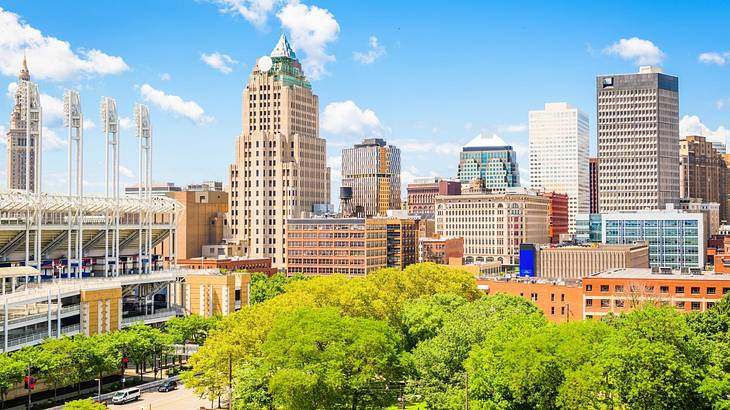

Cleveland sits on the southern shore of Lake Erie in northeast Ohio. The city grew into a major industrial center in the 19th century and has since developed a cultural identity anchored in its architecture, museums, and public spaces.
You can find famous landmarks in Cleveland, Ohio, that cater to a wide range of interests. A 19th-century church that survived two major fires, the second-largest performing arts center in the country, and one of America's first indoor shopping arcades are all here. Keep reading to learn about 13 Cleveland landmarks and the history behind each.
Planning a last-minute trip to Cleveland?
To make the most of your visit to Cleveland, we recommend you book entrance tickets and tours soon. See the short list of top suggestions below.
☂️ Top tours and experiences in Cleveland
13 Famous Cleveland Landmarks
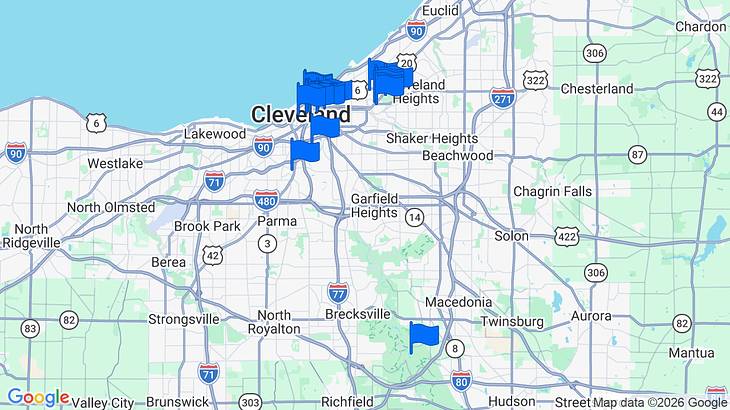
Cleveland Landmarks Map
A map of Cleveland landmarks. Use the map to explore all of the points of interest.
Cleveland Botanical Garden
Established in 1930, the Cleveland Botanical Garden covers 10 acres in the University Circle neighborhood. It is now part of Holden Forests & Gardens, which also manages Holden Arboretum in nearby Kirtland.
The 18,000-square-foot Eleanor Armstrong Smith Glasshouse is the garden's centerpiece. This conservatory recreates two distinct ecosystems: the spiny desert of Madagascar and the cloud forest of Costa Rica. You can walk among free-flying butterflies and rare plant species inside.
Outdoors, the Japanese garden and the Hershey Children's Garden are among the most popular areas. The grounds are especially colorful during spring and early summer, and the garden also makes for a romantic date in Cleveland.

Old Stone Church
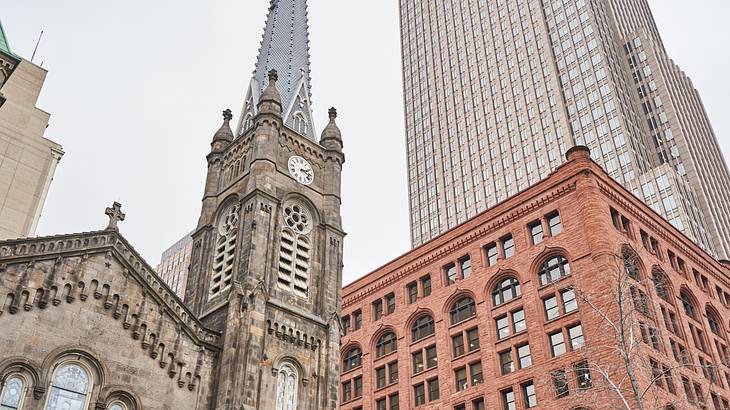
Old Stone Church is the oldest building on Cleveland's Public Square. Dedicated in August 1855, the Romanesque Revival structure was designed by Heard and Porter and built from Berea sandstone quarried in nearby Carlisle Township.
The church survived two major fires, in 1857 and 1884. After the second, architect Charles Schweinfurth redesigned the interior. Much of his work remains visible today, along with four stained glass windows crafted by Louis Comfort Tiffany.
The congregation has worshipped on this site since 1820, predating every other building on the square. You can attend a service or visit during open hours to see the architecture up close.

Great Lakes Science Center
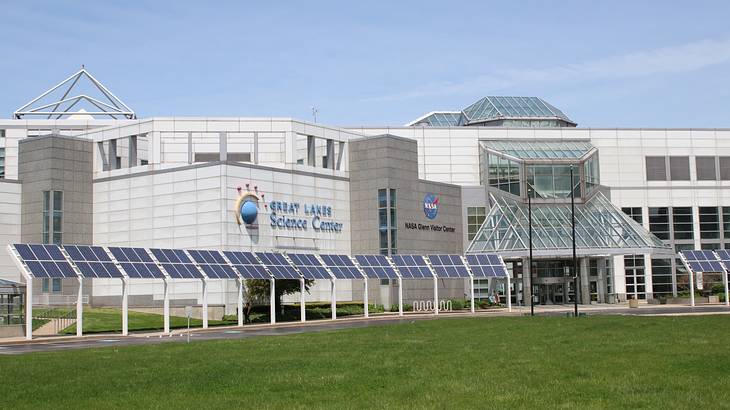
Located on the Lake Erie waterfront, the Great Lakes Science Center focuses on science, technology, and environmental education. The center opened in 1996 and sits near several of Cleveland's other major waterfront attractions.
Interactive exhibits let you explore subjects from space travel to Great Lakes ecology. Younger visitors can engage directly with hands-on displays, and the center regularly rotates its featured programming.
The building houses a dome theater that displays science-focused films on a screen several stories tall. Outdoors, you can board the Steamship William G. Mather, a restored 1925 Great Lakes freighter docked at the center.
Cleveland Cultural Gardens
The first Cleveland Cultural Garden was established in April 1916 as the Shakespeare Garden in Rockefeller Park. Journalist Leo Weidenthal led the effort, and the concept grew as Cleveland's immigrant communities each created their own garden.
Today, more than 35 themed gardens line Martin Luther King Jr. Drive and East Boulevard on the city's east side. Each is designed and maintained by the cultural group it represents. The collection was added to the National Register of Historic Places in 2005.
You can walk the full chain in a single afternoon. One World Day, an annual festival held each August, celebrates the gardens with performances and food from the represented cultures.

Lake View Cemetery
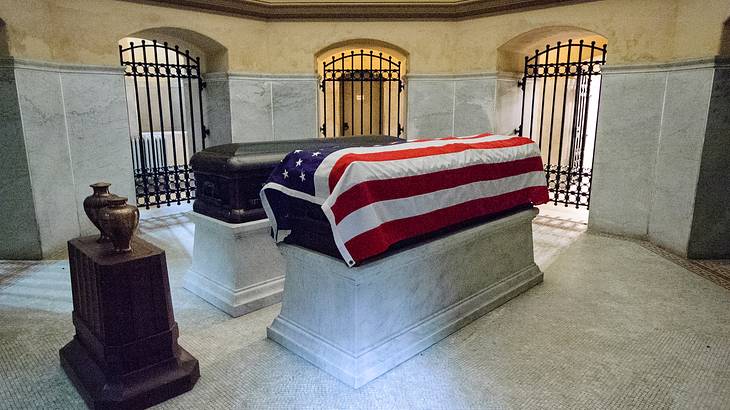
President James A. Garfield's memorial is the most recognized feature of Lake View Cemetery. The 180-foot tomb, dedicated in May 1890, was designed by architect George Keller and sits on the National Register of Historic Places.
Founded in 1869, the cemetery covers 285 acres across parts of Cleveland, Cleveland Heights, and East Cleveland. John D. Rockefeller and Eliot Ness are among the more than 100,000 people interred on the grounds.
Wade Memorial Chapel, also on-site, contains one of the few remaining interiors designed entirely by Louis Comfort Tiffany. The cemetery is open daily and functions as both a burial ground and a green space for walking.
Cleveland Public Library
Twenty-seven branches make up the Cleveland Public Library system, which dates to February 1869. It was among the first major public libraries in the country to let patrons browse shelves and select books directly.
The Main Library downtown opened in 1925. Designed by Walker and Weeks, the building features marble staircases, murals in Brett Hall, and a collection of more than 10 million items. The Louis Stokes Wing, completed in 1997, added 11 floors of additional space.
Special collections are a draw for researchers. The John G. White Chess Collection is widely considered the most comprehensive of its kind anywhere.

Cleveland Public Square
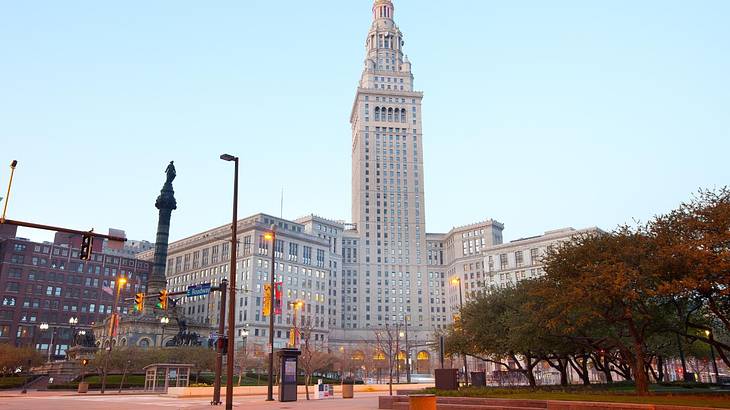
Moses Cleaveland's surveying party laid out Public Square in 1796 as the center of the original town plan. Modeled after a New England village green, the 10-acre space has served as Cleveland's civic core since the city's founding.
A $50 million redesign completed in 2016 unified the four quadrants into a single pedestrian park with open lawns and a splash pad. The square is listed on the National Register of Historic Places.
Monuments on the square honor key figures in the city's past. The 1894 Soldiers' and Sailors' Monument commemorates Cuyahoga County's Civil War veterans, and a statue of Moses Cleaveland has stood here since 1888.
House From A Christmas Story
The 1983 film A Christmas Story used a Victorian house in Cleveland's Tremont neighborhood for the exterior of Ralphie Parker's family home. Built in 1895, the property was purchased in 2004 and restored to match its on-screen appearance.
You can tour the furnished interior, which recreates the film's setting with period-accurate furniture and props. Across the street, a museum holds production photographs, costumes, and memorabilia from the shoot.
The House From A Christmas Story is open year-round and is a designated Cleveland Municipal Landmark. December draws the heaviest crowds, so consider visiting during a quieter month to take your time inside.
☂️ Visit House from A Christmas Story with an excursion
- Hidden Sights & Stops of Cleveland (top-rated tour)

Playhouse Square
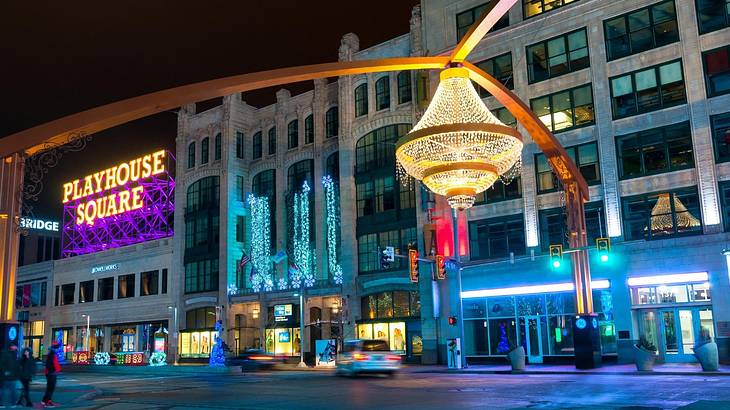
The five original theaters of Playhouse Square opened along Euclid Avenue between 1921 and 1922. After decades of declining attendance and near-demolition in the 1970s, a grassroots restoration effort brought the district back to life.
Playhouse Square is now the largest performing arts center in the country outside of New York City, second only to Lincoln Center. Nine theaters host touring Broadway productions, comedy acts, concerts, and dance performances year-round.
The outdoor GE Chandelier, suspended above Euclid Avenue, has become a recognized Cleveland photo spot. Weeknight shows tend to be less crowded than weekend performances.

Rock & Roll Hall of Fame
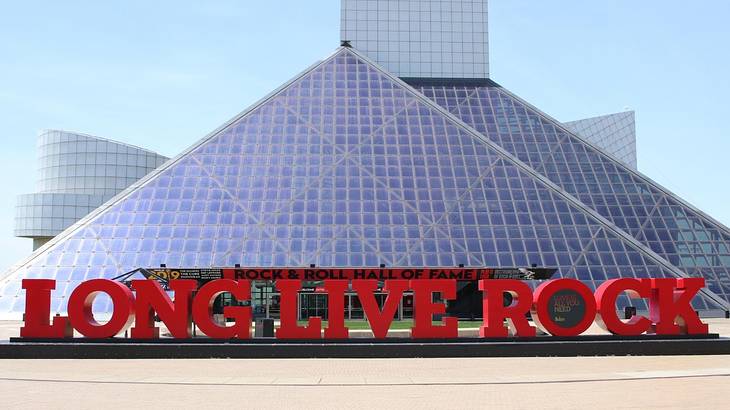
Architect I.M. Pei designed the Rock & Roll Hall of Fame, a 150,000-square-foot museum on the shore of Lake Erie. Cleveland earned the location after radio station WMMS collected over 600,000 signatures in support of the bid.
The museum traces rock's roots through gospel, blues, and country, then follows its evolution across decades. Exhibits display handwritten lyrics, stage costumes, and instruments from inducted artists. A theater screens music-related films throughout the day.
Cleveland's connection to rock and roll dates to the 1950s, when local disc jockey Alan Freed popularized the term. The museum opened in 1995, further cementing the city's status as the "Rock and Roll Capital of the World."
☂️ Join a tour to see Rock & Roll Hall of Fame
- Rock & Roll Hall of Fame Admission in Cleveland (widely sought after)
- Cleveland Comedy City Tour
Severance Hall
Severance Hall, also known as the Severance Music Center, has served as the permanent home of the Cleveland Orchestra since February 1931. Named for patrons John and Elisabeth Severance, the concert hall sits in University Circle at the intersection of Euclid Avenue and East Boulevard.
Walker and Weeks designed the building in a neoclassical style that echoes the nearby Cleveland Museum of Art. A $36 million renovation completed in 2000 restored original Art Deco details and enhanced the hall's acoustics.
The venue is listed on the National Register of Historic Places as part of the Wade Park District. You can attend a Cleveland Orchestra performance or explore the building on a guided tour.

Cleveland Museum of Art
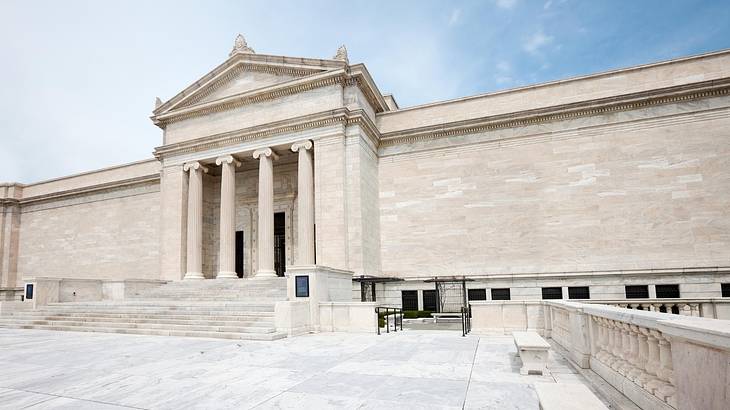
The Cleveland Museum of Art holds more than 63,000 works spanning 6,000 years of creative achievement. Founded in 1913 and opened in 1916, the museum was built with bequests from industrialists Hinman Hurlbut, John Huntington, and Horace Kelley.
The permanent collection is free to visit, a policy maintained since the founding. Galleries cover ancient Egyptian, Asian, European, and American art, with works by Monet, Picasso, and Caravaggio among the collection.
The museum sits in Wade Park in University Circle. A renovation completed in 2013 connected the original 1916 structure with newer wings, creating a continuous circuit through the galleries. Allow at least two hours for a thorough visit.

The Arcade
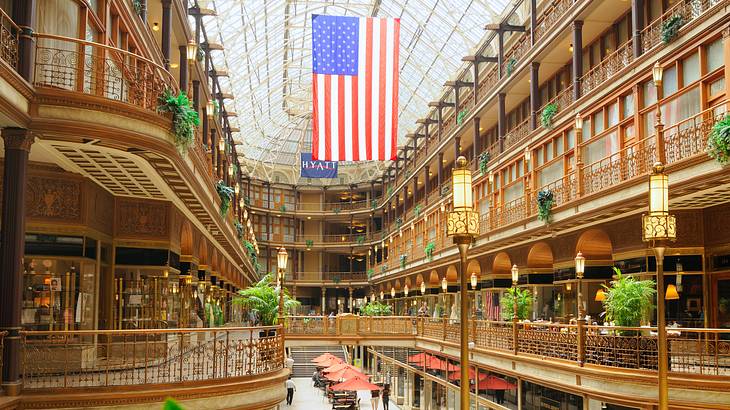
Two nine-story buildings connected by a five-story arcade with a glass skylight over 300 feet long make up Cleveland's Arcade. Opened on Memorial Day 1890, it was the first indoor shopping center in the country.
Designed by John Eisenmann and George H. Smith, the project was financed by several of Cleveland's most prominent businesspeople, including John D. Rockefeller. The design was modeled after the Galleria Vittorio Emanuele II in Milan, and the building quickly earned the nickname "Cleveland's Crystal Palace."
The Arcade was designated a National Historic Landmark in 1975. Shops and restaurants still occupy the ground-floor spaces, and the original skylight remains the building's most striking architectural feature.
In Summary
With so many famous landmarks to explore, Cleveland is a great city to visit for history, culture, and entertainment. From beautiful gardens and historic buildings to museums, parks, and iconic attractions, there's something for every type of traveler.

Want to keep exploring?
Subscribe for our latest guides.
Thank you for subscribing
We will be in touch soon with our latest guides.
Want to keep exploring?
Subscribe for our latest guides.
Thank you for subscribing
We will be in touch soon with our latest guides.