
15 Philadelphia Nicknames You Should Know

Destguides may receive commissions from purchases made through affiliate links in this article.
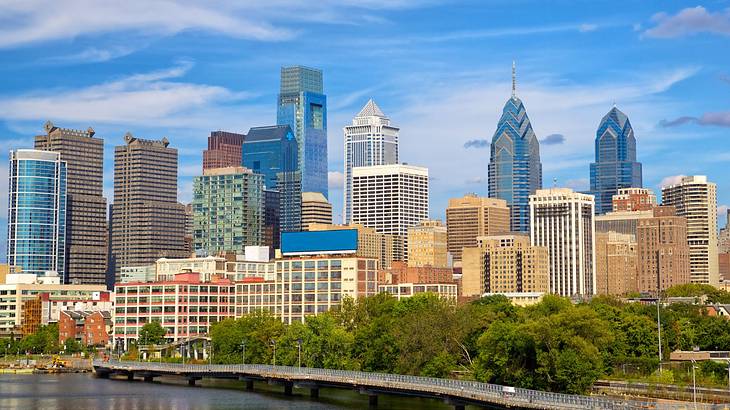

Philadelphia nicknames start with the city's own name. William Penn combined two Greek words meaning "brotherly love" when he founded the place in 1682, and the labels have been piling up ever since.
The list runs from the affectionate to the unflattering, and each one says something about what the city was, or wanted to be, at the time. Keep reading for 15 nicknames and the stories behind them.
15 Nicknames for Philadelphia
- America's Garden Capital
- Filthadelphia
- Philly
- The Athens of America
- The Birthplace of America
- The City of Brotherly Love
- The City of Champions
- The City of Firsts
- The City of Neighborhoods
- The City of Homes
- The Place That Loves You Back
- The Cradle of Liberty
- Quaker City
- The Sixth Borough
- The Workshop of the World

America's Garden Capital
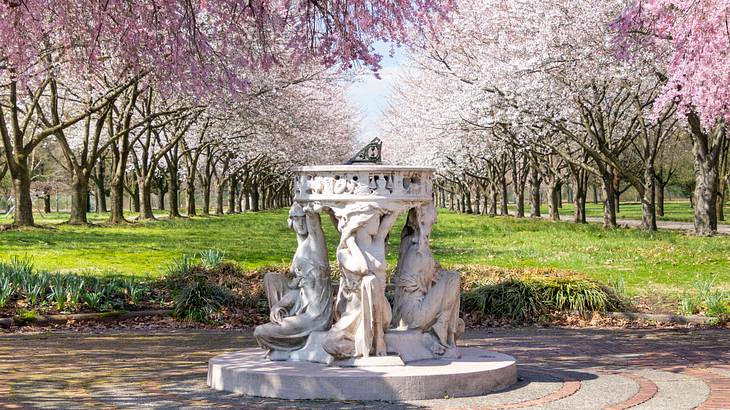
Philadelphia's horticultural history runs almost as deep as its political one. The city is home to more than 30 public gardens, parks, and arboreta, several of which date to the 18th century.
Morris Arboretum and Gardens is among the most visited. The sheer concentration of green space earned Philadelphia the title of "America's Garden Capital," along with a secondary nickname: the "Cradle of Horticulture."
Filthadelphia
Not every nickname is a compliment. "Filthadelphia" is a blend of "filth" and "Philadelphia," pointing to the city's ongoing struggle with litter and cleanliness.
Benjamin Franklin established one of the earliest organized street-cleaning efforts in the country in the 18th century, and by 1952, the city tied with Memphis for the cleanest in the nation. That reputation fell apart over the following decades.
After the 2008 financial crisis, the city cut its residential street-sweeping program entirely, making Philadelphia the only major American city without one. The label has been hard to shake since, though city officials have launched initiatives aimed at changing that.

Philly
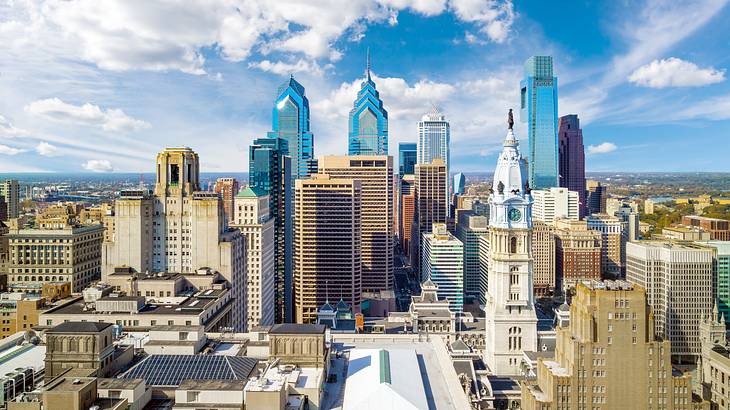
Easily the most common shorthand for the city, "Philly" is used by locals daily and has crossed over into mainstream American vocabulary. Even the city's baseball team adopted it.
The Philadelphia Phillies have been playing under that name since 1883, making it one of the oldest professional sports team names in the country. You will hear Philly far more often than the full name in casual conversation, and it shows up everywhere from news headlines to restaurant menus.
The Athens of America
The nickname dates to at least 1733, when the directors of the Library Company of Philadelphia used it to describe the city's intellectual culture. It gained wider traction in the 1790s, when the federal government moved to Philadelphia, and the city became the nation's political, commercial, and cultural center.
Greek Revival architecture, including the Second Bank of the United States, modeled on the Parthenon, reinforced the comparison. The name Philadelphia itself comes from two Greek words, which only deepened the connection.
Even today, the city has many cultural and educational institutions, from galleries and museums to well-regarded universities. Boston also claims this nickname for similar reasons.

The Birthplace of America
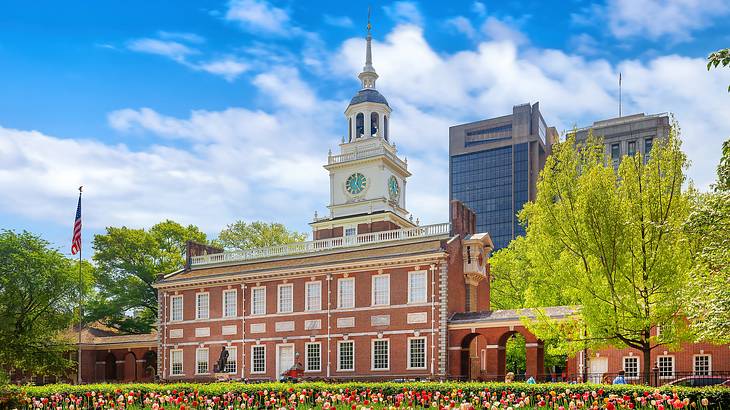
Philadelphia played a central role in the founding of the United States, which is how it earned this nickname. The Founding Fathers met in the city frequently to discuss the direction of the new nation.
Both the Declaration of Independence and the US Constitution were debated and signed at Independence Hall. The city also served as the nation's capital from 1790 to 1800 while Washington, D.C., was under construction. With that much founding history in one place, the "Birthplace of America" nickname is hard to argue with.
The City of Brotherly Love
This is the most famous Philadelphia nickname and a direct translation of the city's name. William Penn combined the Greek words "phileo" (to love) and "adelphos" (brother) when he founded the city in 1682.
He wanted Philadelphia to be a place of religious tolerance and mutual respect. The nickname has been used with both sincerity and sarcasm ever since, but it remains the one most people know.

The City of Champions
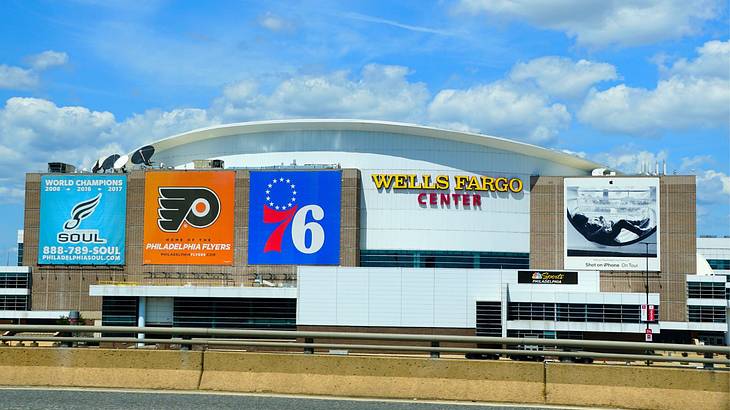
Philadelphia has a team in all four major American sports leagues: the Eagles (NFL), the Phillies (MLB), the 76ers (NBA), and the Flyers (NHL). All four have won at least one championship.
The title is contested by Pittsburgh (who also claims the nickname) and other cities, and not everyone outside Philadelphia agrees that the name holds up. Locals tend to disagree.
The City of Firsts
The nickname is well earned. Philadelphia was home to some of the first banks, the first medical school, and the first anti-slavery society in the US.
The Convention and Visitors Bureau has made the title a central part of the city's branding, and the Encyclopedia of Greater Philadelphia devotes an entire section to cataloging the claims. Philadelphia has continued to be an innovative city into the 21st century.

The City of Neighborhoods
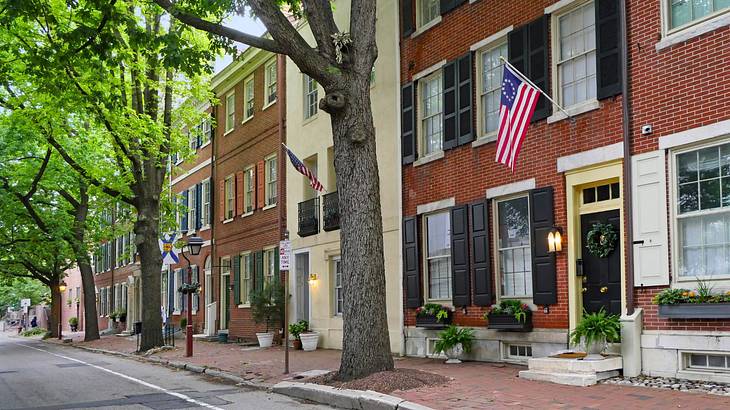
The exact origin of the nickname the "City of Neighborhoods" is unclear, but it is obvious to anyone who has walked through the city. Philadelphia is made up of dozens of distinct neighborhoods, each with its own historical background, culture, and character.
From the colonial-era streets of Old City to the Italian roots of South Philadelphia, moving from one neighborhood to another can feel like crossing into an entirely different city.
The City of Homes
The "City of Homes" dates to the 1870s and reflects a period when home ownership in Philadelphia was unusually high compared to other major American cities.
This nickname is closely related to the City of Neighborhoods and another variant, the "City of Residences." The name is rarely heard today but appears in historical literature on the city's housing stock.

The Place That Loves You Back
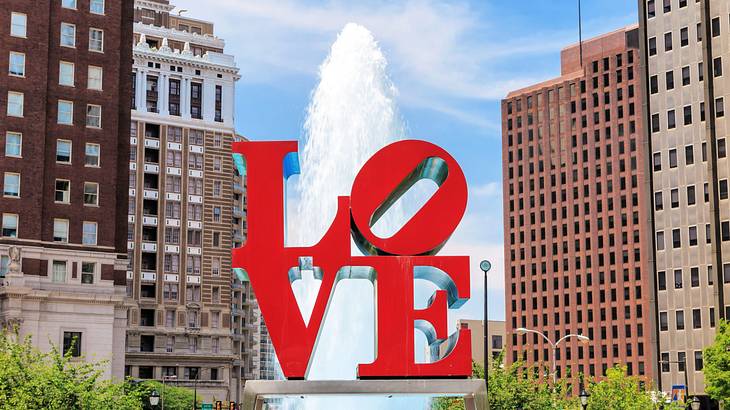
The Greater Philadelphia Tourism Marketing Corporation introduced this slogan in a 1997 advertising campaign. It was partly a response to New York's "I Love New York" and partly an attempt to counter Philadelphia's reputation as an unwelcoming city.
The wording deliberately used "Place" instead of "City" to include the surrounding suburbs. The slogan is not used as heavily today, but locals would say it still applies, with the city offering a welcoming atmosphere to those who visit and move there.
The Cradle of Liberty
Philadelphia also shares this nickname with Boston, and both cities have a reasonable claim to it. As mentioned previously, the Declaration of Independence and the Constitution were drafted and signed in Philadelphia, and the documents explicitly promised freedom and liberty as founding principles.
Independence Hall and the Liberty Bell remain some of the most-visited Pennsylvania landmarks that reflect that history. The nickname still shows up in local institutions, including the Cradle of Liberty Council, a Scouting America organization based in the Philadelphia area.

Quaker City
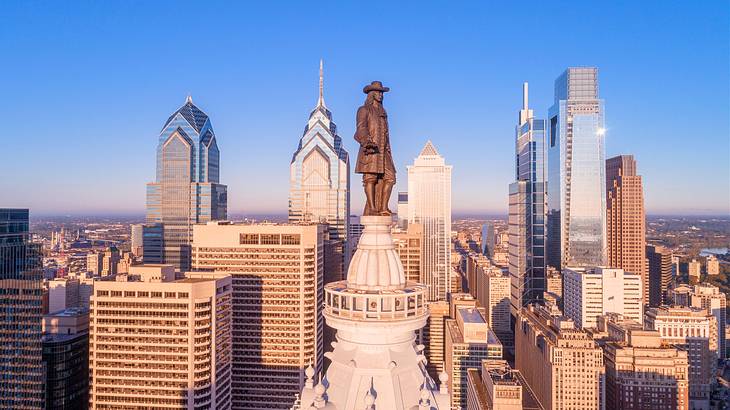
William Penn was a Quaker, and so were many of Philadelphia's earliest settlers. The Religious Society of Friends shaped the city's founding principles of tolerance and pacifism.
There is no evidence Penn himself used the "Quaker City" label, but the association between the city and the Quaker community was strong enough that the nickname developed on its own over time.
The Sixth Borough
New York City is made up of five boroughs, and several cities with close ties to it have been jokingly called "The Sixth Borough." Philadelphia is one of them.
As the closest largest city to NYC, Philadelphia sees a constant flow of residents moving between the two for work, short trips, and longer relocations. The nickname is used more by outsiders than by Philadelphians themselves, and other cities also lay claim to it.

The Workshop of the World
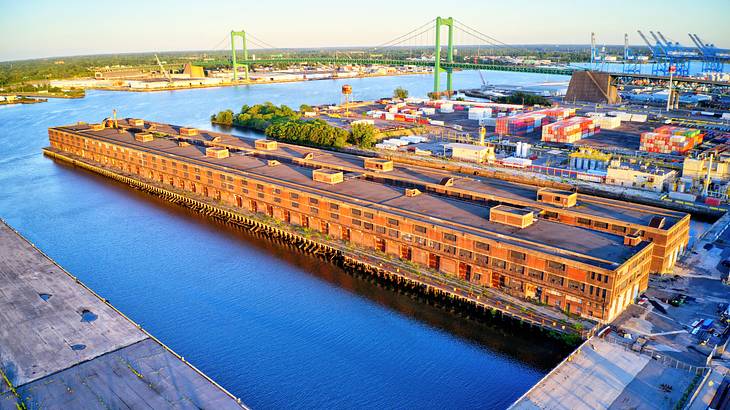
By the early 1900s, Philadelphia had become one of the largest and most diversified manufacturing hubs in the world. Its factories produced everything from locomotives and streetcars to textiles and cigars.
While these items were mainly made in large factories, not small workshops, the more quaint "Workshop of the World" nickname stuck anyway. Most of that industry is gone now, but the phrase still appears in historical literature about the city's industrial peak.
In Conclusion
Philadelphia has been naming itself since 1682, when Penn picked a Greek word for a Quaker experiment. The nicknames that followed have tracked every shift in the city's identity, from revolutionary capital to industrial powerhouse to the place the tourism board promises will love you back. Not all of the names are flattering, but they are all earned.

Want to keep exploring?
Subscribe for our latest guides.
Thank you for subscribing
We will be in touch soon with our latest guides.
Want to keep exploring?
Subscribe for our latest guides.
Thank you for subscribing
We will be in touch soon with our latest guides.