
15 Pittsburgh Nicknames and the History Behind Them

Destguides may receive commissions from purchases made through affiliate links in this article.
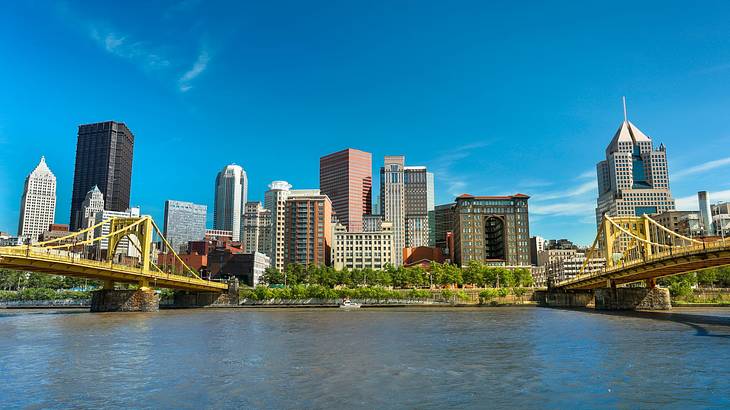

Three rivers, 446 bridges, and a skyline that announces itself through a tunnel. Pittsburgh is a city that earns its nicknames. What started as a frontier outpost named for a British prime minister grew into an industrial powerhouse, a sports capital, and a cultural hub with more personality than it sometimes gets credit for.
Some of these Pittsburgh nicknames date back to the 1800s, others to the Steelers, and one even came from a video game. Keep reading for 15 nicknames for Pittsburgh and the stories behind them.
15 Nicknames for Pittsburgh
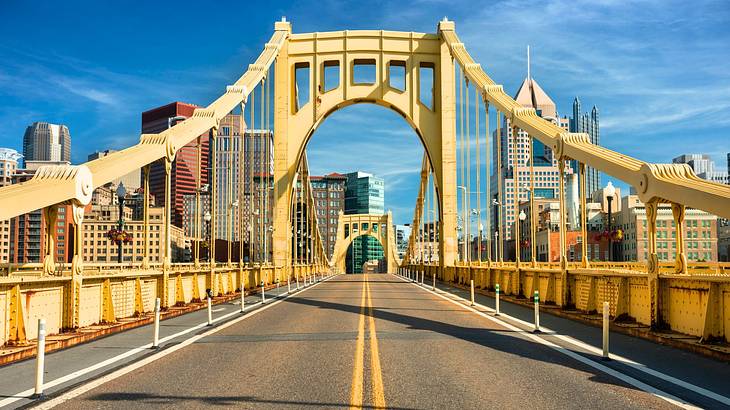

The City of Bridges
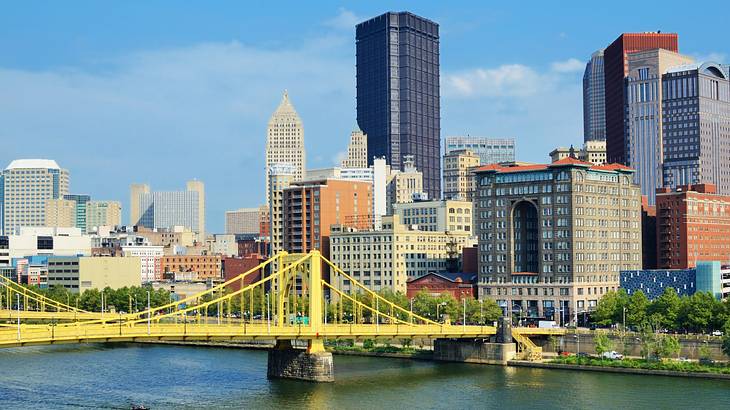
With 446 bridges spread across its landscape, Pittsburgh has long been known as "The City of Bridges." The number is staggering, but it makes sense once you understand the terrain.
Pittsburgh sits at the confluence of three rivers and is carved up by deep valleys and steep hillsides, all of which require crossing. Well-known examples include the Fort Pitt Bridge and the Smithfield Street Bridge, which is one of the oldest in the city.
Benigno Numine
On the Great Seal of the City of Pittsburgh, the Latin phrase Benigno Numine appears along the outer edge. It translates roughly to "By Divine Providence" or "With the Benevolent Deity."
The motto originates from the coat of arms of William Pitt, the British statesman, after whom the city was named. When the seal was first created in 1816, the phrase was actually omitted.
It was not officially added until 1950, when the city council voted to restore the motto. While not widely used as a nickname in everyday conversation, locals recognize it as the city's official motto.
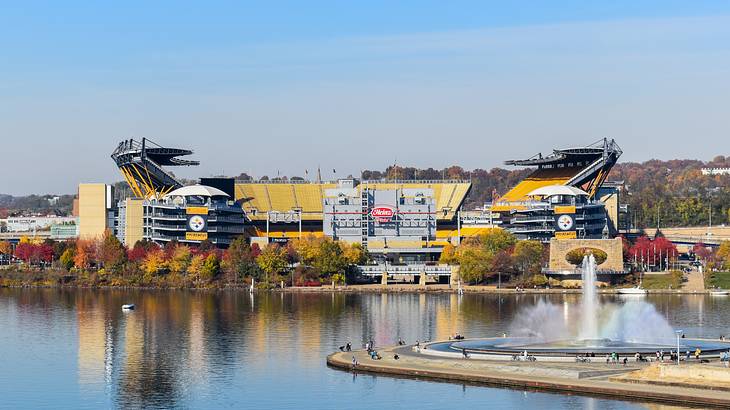

Blitzburgh
Few cities are as closely tied to their sports teams as Pittsburgh is to the Steelers. That devotion gave rise to "Blitzburgh," a nickname born in 1994 when radio analyst Myron Cope asked callers on his talk show to suggest a name for the Steelers defense.
Cope went with a different pick, but sportswriter Ed Bouchette of the Pittsburgh Post-Gazette liked Blitzburgh and used it in a story. The name caught on instantly.
It was inspired by the team's zone blitz scheme, a tactic developed by coach Dick LeBeau that became a signature of the mid-1990s Steelers defense.
Dirty 'Burgh
At the height of its industrial era, Pittsburgh was one of the world's largest steel producers. That output came at a cost. The air was thick with soot, smoke, and pollutants, so much so that locals used to joke you could leave the house in white clothes and return wearing black.
That grimy reality gave birth to the nickname "Dirty 'Burgh." The name has faded in use as air quality improved dramatically over the decades, but older residents still know it well.
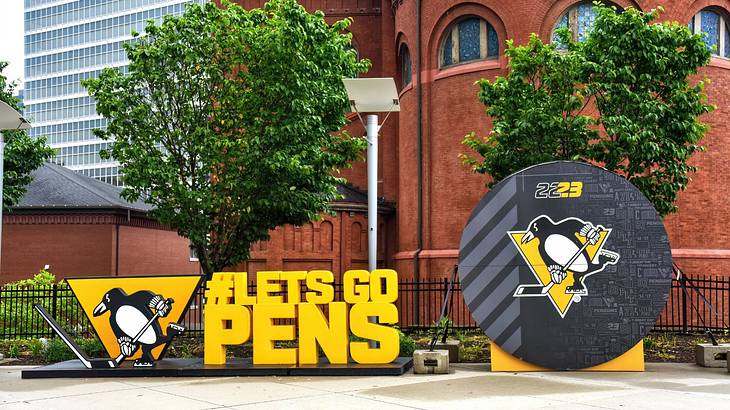

The City of Champions
When it comes to professional sports titles, Pittsburgh has a trophy case that justifies this one. The Pittsburgh Steelers have won six Super Bowl Championships, tying with the New England Patriots for the most Super Bowl titles in NFL history.
The Pittsburgh Penguins have claimed five Stanley Cup titles, which is tied for the most among non-Original Six NHL teams. Add in five World Series Championships won by the Pittsburgh Pirates, and "The City of Champions" nickname writes itself.
Hell With the Lid Taken Off
In 1868, writer James Parton visited Pittsburgh and published his impressions in The Atlantic Monthly. What he saw from the hilltops above the city was a landscape of blackened smoke, flames from furnaces, and the pounding of hundreds of steam hammers.
He described looking down over it all as peering into "hell with the lid taken off." The phrase stuck, much to the dismay of residents. Today, the city looks nothing like the industrial inferno Parton described, but the nickname endures as a piece of Pittsburgh lore.
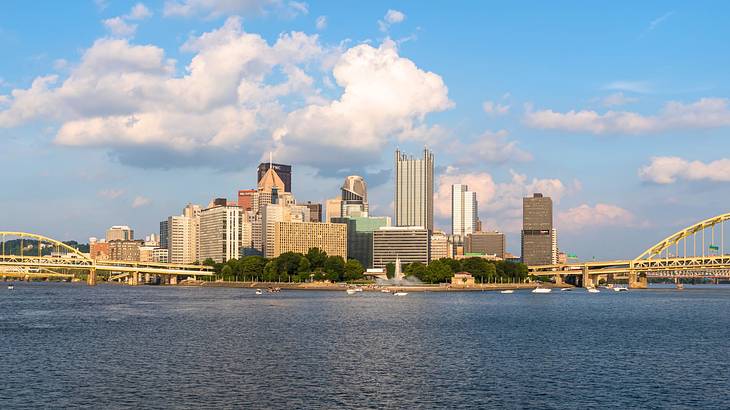

River City
Unlike most American cities, Pittsburgh sits at the confluence of three rivers. The Monongahela River arrives from the south, and the Allegheny River from the north, and the two join to form the Ohio River at Point State Park.
This geography shaped the city from its earliest days and remains one of its most defining features. Views of the rivers are visible from neighborhoods, bridges, and hillside overlooks throughout the city, and the nickname "River City" captures that identity simply and directly.
Iron City
Before steel, there was iron. Ironworking was a thriving industry in Pittsburgh during the 1700s and 1800s, and the city became widely known as "Iron City" during that period.
As steelmaking eventually overtook ironworking, the nickname became less common. It never disappeared entirely, though, thanks in large part to the Iron City Brewing Company. Founded in 1861, the brewery has kept the name alive in Pittsburgh for well over a century.
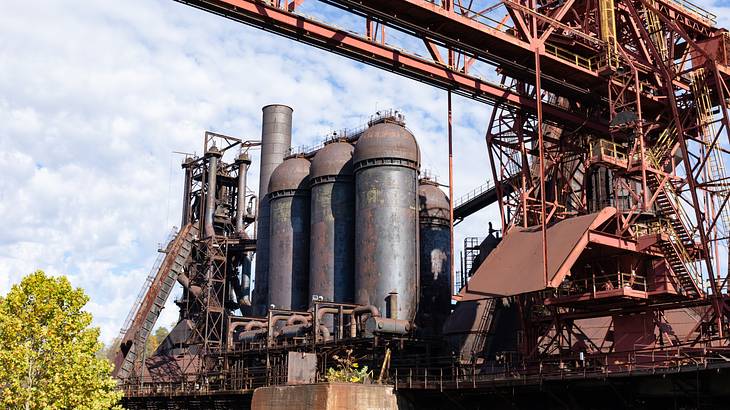

Steel City
No nickname is more synonymous with Pittsburgh than "Steel City." The city's steel industry defined its economy, its workforce, and its identity for generations, and the name reflects all of that.
It also connects to the Pittsburgh Steelers, whose name was itself drawn from the industry. The exact origin of the Steel City nickname is unclear, but it is thought to have emerged in the 19th or early 20th century when production was at its peak.
The 412
Like many American cities, Pittsburgh has adopted its telephone area code as a nickname. The code 412 covers Allegheny County, which includes Pittsburgh, and has been assigned to the region since 1947, when the original North American Numbering Plan was introduced.
That makes it a number associated with Pittsburgh for well over 75 years. Locals use "The 412" casually as shorthand for the city and its surrounding communities.
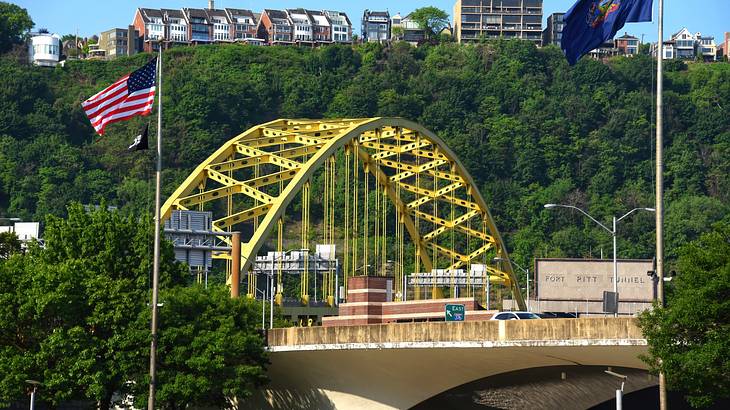

The Only City in America With an Entrance
Arriving in Pittsburgh from the airport means driving through the Fort Pitt Tunnel, a passage that cuts through Mount Washington. The moment you emerge from the darkness, the Fort Pitt Bridge delivers a stunning panoramic view of the city skyline and the Monongahela River.
The New York Times once wrote that Pittsburgh is "the only city in America with an entrance," and the description resonated. It is one of the most-quoted lines about the city and a source of local pride.
The Paris of Appalachia
Pittsburgh is one of the largest cities in the Appalachian region, and despite its rugged industrial past, it has built a serious cultural identity. The city is home to the largest single-artist museum in North America, the Andy Warhol Museum, one of Pennsylvania's most famous landmarks.
A book of the same name popularized the nickname, The Paris of Appalachia: Pittsburgh in the Twenty-First Century by Brian O'Neill. With Pittsburgh's growing collection of museums, theaters, and galleries, the comparison to the French capital has become less tongue-in-cheek over time.

The Burgh
Among the most affectionate local nicknames is "The Burgh." It works as a shortening of Pittsburgh, but it also carries a bit of civic pride. The "h" at the end of Pittsburgh is relatively unique among American cities.
Many other places use the "burg" spelling, including the Pennsylvania state capital of Harrisburg. Pittsburgh received its name in 1758, after William Pitt.
In 1891, the US Board on Geographic Names standardized spellings and dropped the "h," officially rendering the city's name "Pittsburg." Locals and institutions pushed back for two decades. The "h" was restored on July 19, 1911, and that date, known as "H Day," is still celebrated in the city.
The Smoky City
Closely tied to the same industrial forces behind Steel City and Dirty 'Burgh, the "Smoky City" nickname reflects what Pittsburgh looked and felt like during the 19th and early 20th centuries.
The combined output of steel mills, iron foundries, and coal-burning plants blanketed the city in a near-constant haze. The name shows up in historical accounts, newspaper archives, and city records from the era.
As mentioned above, air quality has improved dramatically since those days, and the smoke is long gone, but the name remains part of the city's story.

The Pitt
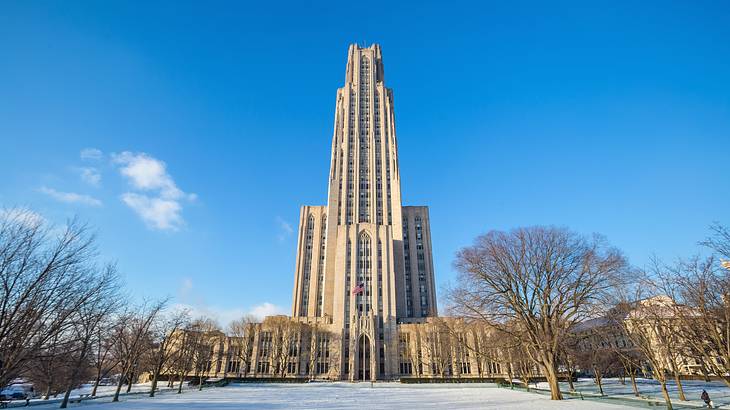
Less frequently, Pittsburgh is shortened to simply "The Pitt." The name works on a few levels. It is a quick abbreviation of the city's name and also a popular nickname for the University of Pittsburgh.
A few people connect it to the city's physical geography as well, noting that Pittsburgh is somewhat nestled in a natural basin surrounded by hilly terrain.
The name also gained pop culture recognition through a downloadable expansion for the video game Fallout 3. In it, The Pitt is set in the post-apocalyptic ruins of Pittsburgh, reimagining the city as a settlement ravaged by nuclear war. More recently, a medical drama series called The Pitt premiered on Max in 2025, set in a Pittsburgh hospital.
In Conclusion
Taken together, these 15 names tell a layered story. Some reflect the city's industrial past. Others come from its sporting success. A few are just good fun.
What connects them all is the fact that Pittsburgh keeps earning new nicknames, which says something about a place that has reinvented itself more than once and shows no sign of stopping.

Want to keep exploring?
Subscribe for our latest guides.
Thank you for subscribing
We will be in touch soon with our latest guides.
Want to keep exploring?
Subscribe for our latest guides.
Thank you for subscribing
We will be in touch soon with our latest guides.