
16 Milwaukee Nicknames and the Reasons for Them

Destguides may receive commissions from purchases made through affiliate links in this article.
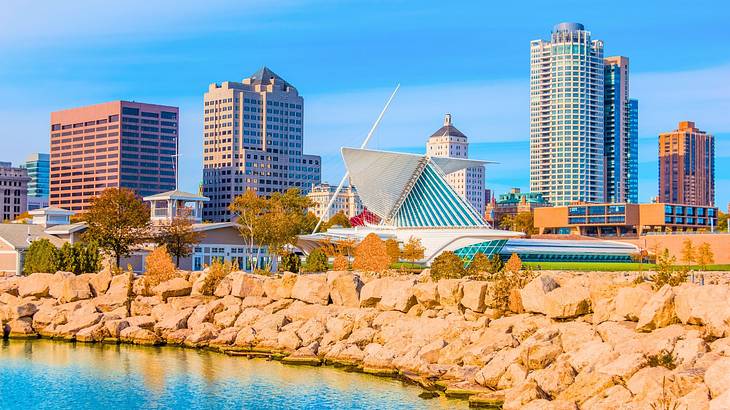

Milwaukee is Wisconsin's largest city and sits on the western shore of Lake Michigan. It has a reputation as a bustling cultural hub with a diverse population, a deep brewing history, and more nicknames than most cities know what to do with.
In fact, Milwaukee has so many monikers that it has been called the City of Nicknames (according to Visit Milwaukee). From beer to bricks to bikes, each name tells a different part of the city's story. Continue reading for 16 Milwaukee nicknames and how the city earned them.
16 Nicknames for Milwaukee
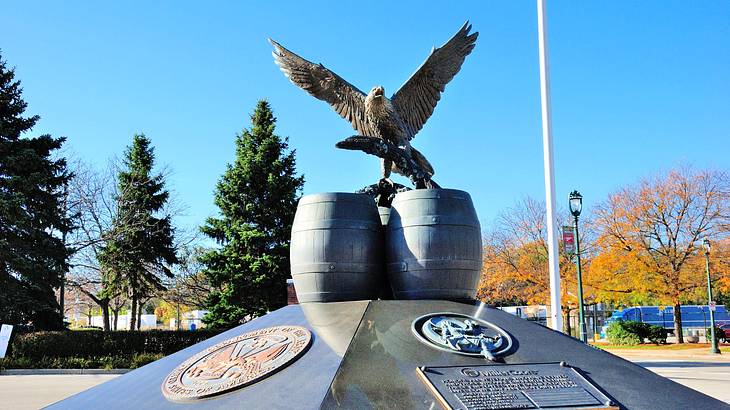

The Beer Capital of the World
The "Beer Capital of the World" is the first of several beer-related nicknames for Milwaukee. While many cities in the US try to claim similar nicknames to this title, including Denver, Portland, and Grand Rapids, Milwaukee has a strong case.
The city's beer culture dates back to the 19th century, when German immigrants brought their brewing traditions with them.
Today, the Molson Coors Milwaukee Brewery, which has been operating in the city's Miller Valley since 1855, produces up to 9 million barrels of beer annually. The city is also home to a large number of independent breweries and pubs.
Brew City
"Brew City" is another moniker that nods to Milwaukee's beer history. When German immigrants settled in Milwaukee in the 19th century, they brought their love for brewing and their successful techniques along with them. Eventually, this helped Milwaukee establish itself as a powerhouse in the US brewing scene.
By the end of the 19th century, the city boasted several large breweries, including Pabst and Miller. Their products were distributed worldwide, putting Milwaukee on the beer map.
Milwaukee is also known as "Brewtown," a variation that reflects the abundance of craft breweries that still thrive in the city today. Lakefront Brewery, Eagle Park Brewing Company, and Good City Brewing are among the most popular.
Cream City
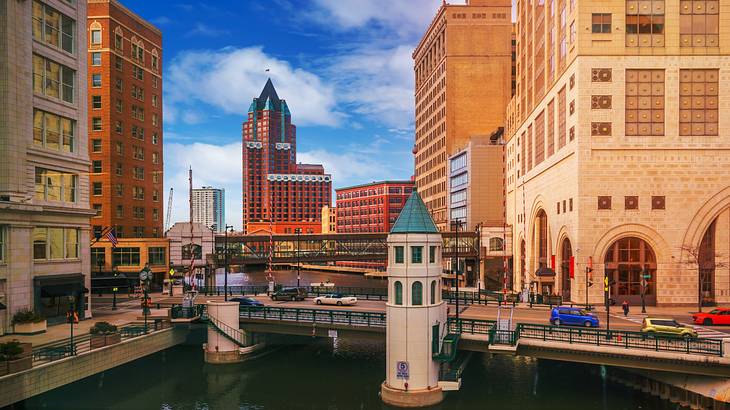
Many people assume the Milwaukee nickname "Cream City" refers to the state's dairy industry, but it actually has more to do with architecture. In the mid-1800s, local kilns produced a distinctive pale-yellow brick made from clay from the Menomonee River Valley.
These cream city bricks were used to construct buildings throughout the city, from old breweries to government buildings and the Milwaukee Public Library.
Wisconsin native Frank Lloyd Wright, one of the most influential architects in the world, also left his mark on Milwaukee. His most notable local project is the Burnham Block, a group of six small houses.
Santiago Calatrava later cited Wright's Prairie-style architecture as one of several inspirations for the iconic Quadracci Pavilion at the Milwaukee Art Museum, alongside Eero Saarinen's original building and the city's topography.

The Machine Shop of the World
One of the more unique nicknames for Milwaukee is the "Machine Shop of the World." The name refers to the city's role as a major manufacturing center in the late 19th and early 20th centuries, when companies mass-produced everything from automobile frames to industrial gears to beer.
Much of this growth was driven by European immigrants, and by 1870, roughly a third of Milwaukee residents had been born in Germany. The most common industries included breweries, tanneries, steel mills, and granaries.
Milwaukee's position on Lake Michigan's western shore gave it excellent transportation links, and the expansion of the railway system made it easier to ship goods to the western United States.
MKE
Many cities adopt their nearest airport's IATA code as an informal nickname, and Milwaukee is no different. "MKE," short for Milwaukee Mitchell International Airport, has become one of the most popular ways to refer to the city.
The code appears all over Milwaukee, from the airport welcome sign to businesses named after the city. It is also how some locals refer to Milwaukee on social media.

Smallwaukee
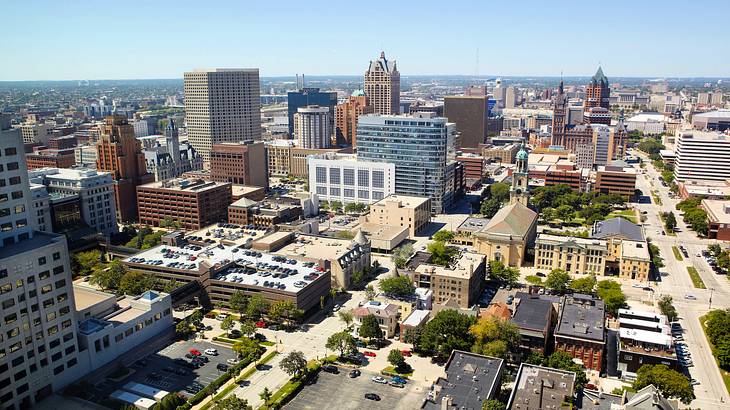
Despite having a larger population than Madison, the state capital, Milwaukee retains a small-town feel. This has led to the nickname "Smallwaukee." The city is compact enough that it is possible to walk or cycle to most tourist attractions.
There is also a strong sense of community among residents, with plenty of small businesses and farmers' markets to support. Bay View is an excellent example of this community spirit. The neighborhood feels more like a small village, and it even existed as its own independent place between 1879 and 1887.
The 414
"The 414" is Milwaukee's area code, and locals have adopted it as a symbol for the city. Like many cities across the US, the code has become shorthand for hometown pride.
But Milwaukee has taken it a step further by dedicating a day to it. April 14th is when Milwaukeeans celebrate the city they call home. If you visit on this day, you will find celebrations across town, along with plenty of Milwaukee's craft beer.

The City of Festivals
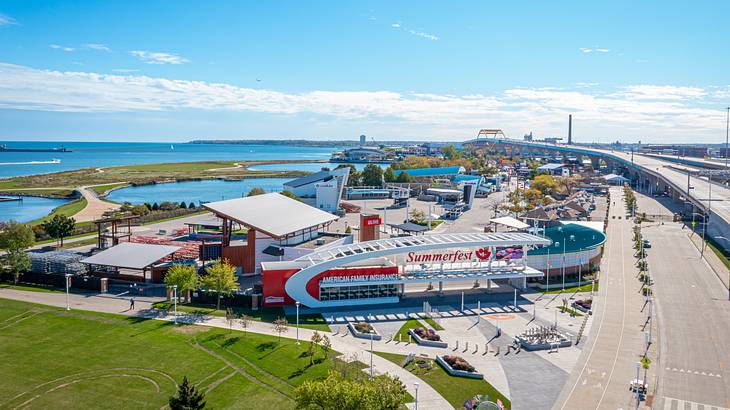
Milwaukee is known for hosting festivals throughout the year, earning it the nickname the "City of Festivals." Some highlights include Milwaukee Brew and Spirits (formerly BrewFest), an annual celebration of all things beer, and Riverwest 24, a 24-hour community cycling event that takes over the Riverwest neighborhood every July. Summerfest, widely regarded as the world's largest music festival, is another major draw.
The German Athens of America
Wisconsin is rich with German heritage, and nowhere is this clearer than in Milwaukee. This has led to the city being dubbed the "German Athens of America," or das Deutsch-Athen Amerikas in German.
The comparison to Athens refers to the Greek capital's reputation as the cultural hub of an ancient civilization. Milwaukee was, and still is, home to a substantial German community that allowed music, theater, and German-language newspapers to thrive throughout the 19th and 20th centuries.

The City of Steeples
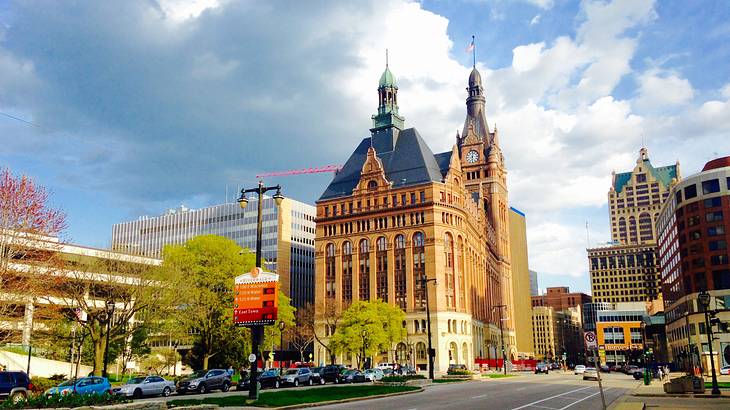
The "City of Steeples" is another name that pays homage to Milwaukee's European influence. When immigrants from countries like Germany, Poland, and the UK settled in the city, they built churches with impressive steeples throughout Milwaukee.
Visitors interested in this architectural heritage should seek out the Calvary Presbyterian Church and the Saint John Evangelical Lutheran Church, two of the most striking examples in the city.
The Good Land
Milwaukee translates to "Good Land" from Native American languages associated with the region. The Milwaukee Public Library attributes the name to the Ojibwa, Potawatomi, and Menominee languages.
At the same time, the University of Wisconsin-Milwaukee traces its origins to Anishinaabe and/or Algonquin peoples, with "gathering place" as an alternative meaning. The area is the traditional homeland of the Potawatomi, Ho-Chunk, and Menominee nations.
The Good Land nickname was popularized by a scene in the 1992 film Wayne's World, in which Alice Cooper states that Milwaukee is an Algonquin term meaning "the good land." The scene became an internet favorite and helped spread the nickname well beyond Wisconsin.

The Mil
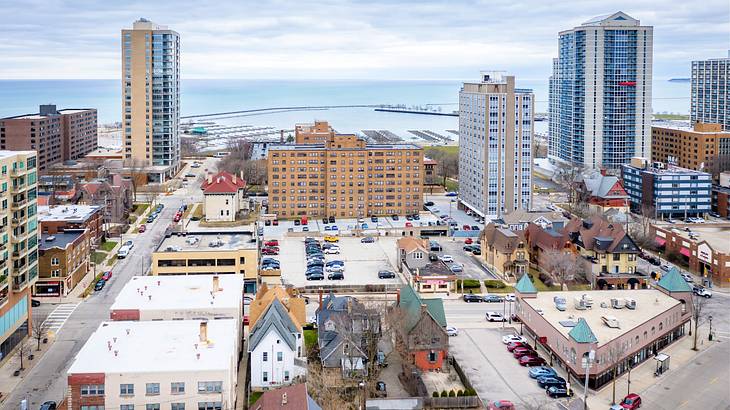
Not every nickname needs a long backstory. "The Mil" is simply a shortened version of Milwaukee, used by younger locals as a more relaxed way to refer to the city. While it is not an official nickname, it is sometimes heard in everyday conversation and reflects Milwaukee's laid-back atmosphere.
Third Coast
It is commonplace to refer to the US as having three coasts: the West Coast, the East Coast, and the Third Coast. The Third Coast refers to the Great Lakes region, which encompasses the five Great Lakes: Superior, Michigan, Huron, Erie, and Ontario.
Milwaukee sits on the edge of Lake Michigan, making it part of the"Third Coast." The nickname connects Milwaukee to a broader regional identity shared with cities like Chicago and Detroit.

Motorcycle Mecca
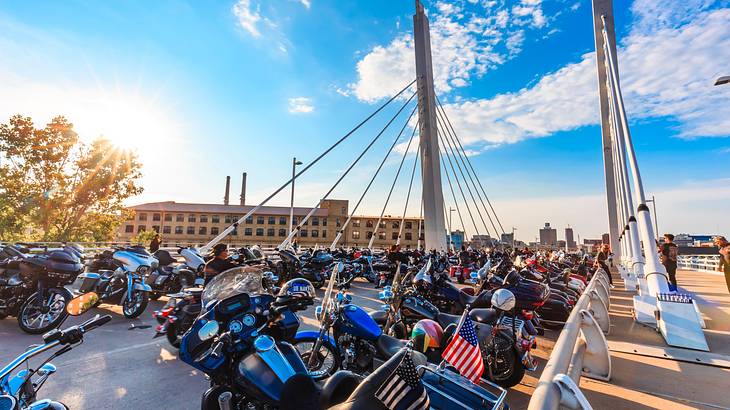
"Motorcycle Mecca" is a fun way to refer to Milwaukee, and the reason is straightforward. Harley-Davidson was founded in the city in 1903, and its headquarters are still here today.
The Menomonee Valley neighborhood is home to the Harley-Davidson Museum, one of Milwaukee's top landmarks. If motorcycles are your thing, the Brewtown Rumble, Milwaukee's most popular annual motorcycle show, is also worth attending.
Terrible City
While most of Milwaukee's nicknames have been coined over decades or centuries, "Terrible City" is a modern one with an awkward origin. In 2021, during the NBA playoffs, ESPN analyst Stephen A. Smith referred to Milwaukee as a "terrible city" live on air during the show First Take.
The Milwaukee Bucks and residents were understandably upset at first. Outrage poured in over social media. But what followed has been a tongue-in-cheek effort to reclaim the nickname as a rallying cry, proving that Milwaukee is anything but terrible.
The Fresh Coast
Former Milwaukee Mayor Tom Barrett is responsible for this one. During a speech in Washington, DC, in 2008, he proposed referring to Milwaukee as the "Fresh Coast," a nod to Lake Michigan's freshwater.
The term was also a deliberate pushback against the "Rust Belt" label, a negative term used to describe the industrial decline many cities in the northern and midwestern regions of the US have experienced. Barrett wanted to reframe the narrative, and the Fresh Coast name has stuck around as a point of local pride.
In Summary
Milwaukee is a city with a long list of names, and each one has earned its place. The beer nicknames chart a brewing history that dates back to the 1800s. The German Athens of America and the City of Steeples capture the lasting influence of European immigration on the city.
And newer entries like Fresh Coast and Terrible City show that Milwaukee is still writing its own story. For a city that calls itself the City of Nicknames, it certainly lives up to the title.

Want to keep exploring?
Subscribe for our latest guides.
Thank you for subscribing
We will be in touch soon with our latest guides.
Want to keep exploring?
Subscribe for our latest guides.
Thank you for subscribing
We will be in touch soon with our latest guides.