
30 Famous Canadian Landmarks You Need to Visit

Destguides may receive commissions from purchases made through affiliate links in this article.
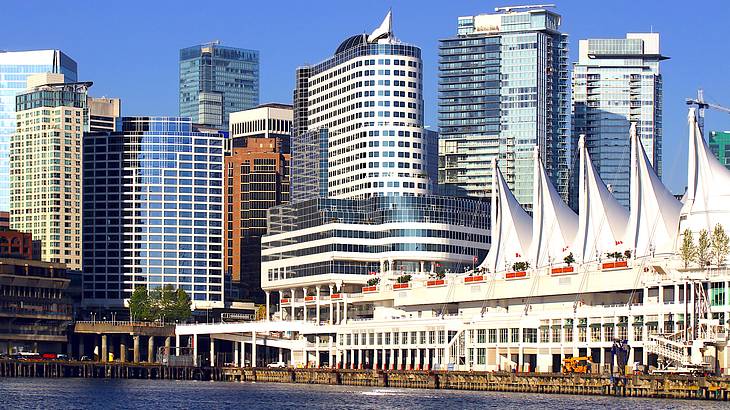

Canada is full of breathtaking scenery, rich history, and vibrant cities, making it home to some of the most famous landmarks in the world. From natural wonders to architectural icons, there is something for every traveler.
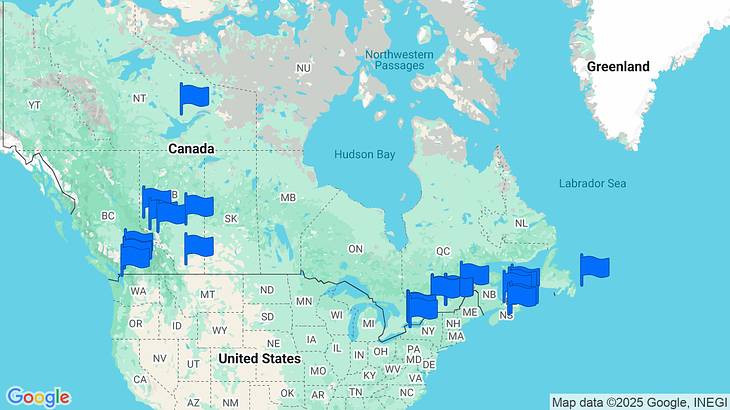
This guide features 30 famous Canadian landmarks to help you plan an unforgettable trip. A map is also included to make it easier to explore these must-see destinations.
Read on to discover the top sights that make Canada a truly remarkable place to visit.
Organizing a last-minute visit to Canada?
When visiting Canada, book your entrance tickets and tours before you go. Below are some top recommendations to get you started.
☂️ Top tours and experiences in Canada
- Toronto - Niagara Falls Day Tour Boat & Behind Falls Entry (likely to sell out)
- Banff Gondola Ride Admission (likely to sell out)
- Vancouver Half-Day Whale Watching Adventure With Free Photos (likely to sell out)
- Moraine Lake Sunrise & Lake Louise Golden Hour Experience (rated highly)
- Niagara Falls Tour With Boat Ride & Journey Behind the Falls (very popular)
30 Famous Landmarks in Canada
- Green Gables Heritage Place, Prince Edward Island
- Confederation Bridge, Prince Edward Island
- Hopewell Rocks, New Brunswick
- Halifax Citadel, Nova Scotia
- Peggy's Cove Lighthouse, Nova Scotia
- Signal Hill, Newfoundland and Labrador
- Fairmont Le Chateâu Frontenac, Quebec
- Notre-Dame Basilica of Montreal, Quebec
- Saint Joseph's Oratory, Quebec
- Canadian Museum of History, Quebec
- Rideau Canal, Ontario
- Parliament Hill, Ontario
- National Gallery of Canada, Ontario
- Royal Ontario Museum, Ontario
- CN Tower, Ontario
- Casa Loma, Ontario
- Hockey Hall of Fame, Ontario
- Niagara Falls, Ontario
- The Canadian Rockies
- West Edmonton Mall, Alberta
- Banff National Park, Alberta
- Head-Smashed-In Buffalo Jump, Alberta
- Jasper National Park, Alberta
- Mount Robson, British Columbia
- Stanley Park and Seawall, British Columbia
- Whistler, British Columbia
- Grouse Mountain, British Columbia
- Capilano Suspension Bridge, British Columbia
- Butchart Gardens, British Columbia
- The Northern Lights, Northwest Territories
Canada Landmarks Map
A map of Canada landmarks. Use the map to explore all of the points of interest.
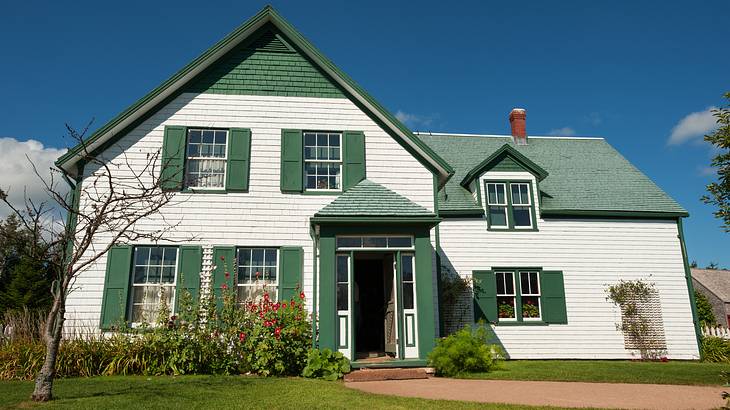

Green Gables Heritage Place, Prince Edward Island
Located in Prince Edward Island National Park, Green Gables Heritage Place is a 19th-century farm and a famous Canadian literary landmark. This site is best known as the setting for Lucy Maud Montgomery's novel Anne of Green Gables.
The house and nearby historic buildings have been carefully restored to match the descriptions in the book. Visitors can tour Green Gables House and several small museums that explore the story's history. You can also visit key locations from the novel, such as the Haunted Woods trail and Lovers Lane.
Guided tours are available for those who want to learn more about this landmark. Keep in mind that this site is only accessible by car, so plan your transportation accordingly.
☂️ Visit Green Gables Heritage Place with an excursion
- Green Gables House & Our Island Experience (often fully booked)
- Amazing PEI Experience Five Passengers Only (widely acclaimed)
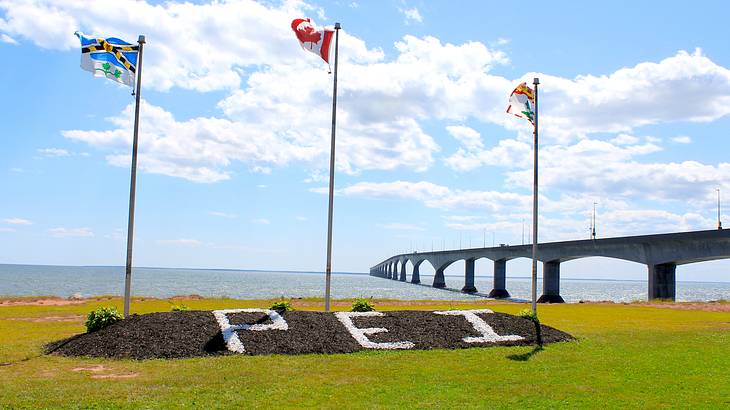

Confederation Bridge, Prince Edward Island
Confederation Bridge is a 12,900-meter-long bridge connecting Prince Edward Island to New Brunswick. It is the longest bridge in the world and in Canada, and at times spans ice-covered waters.
Completed in 1997, the bridge was named after the Canadian Confederation, as Charlottetown, PEI, hosted key meetings of the Fathers of Confederation.
The bridge runs from Borden-Carleton in PEI to Cape Jourimain in New Brunswick. Despite its length, it takes about 10 minutes to drive across. Even if you don't drive over the bridge, viewing it from either side is recommended. The long arched structure stretching over the water is an impressive sight.
Hopewell Rocks, New Brunswick
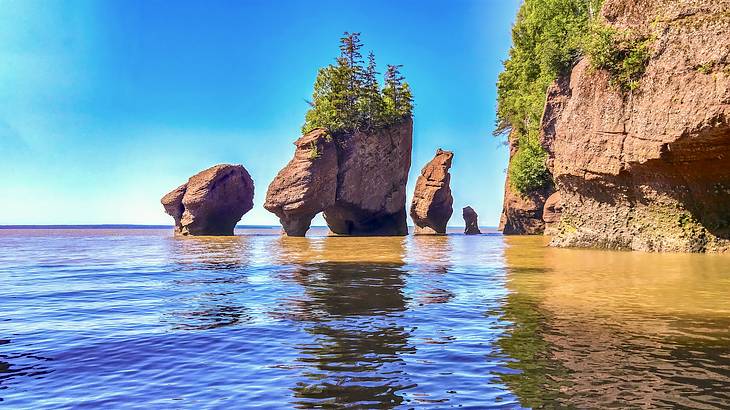
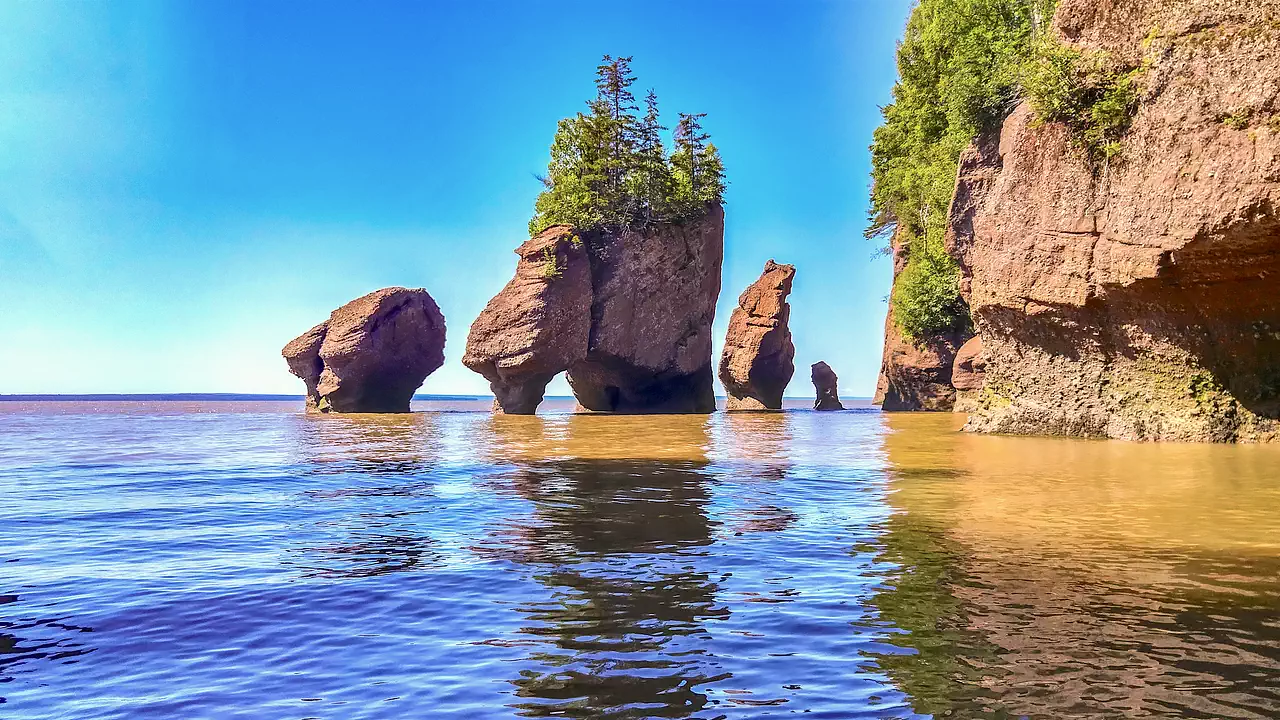
Hopewell Rocks is a famous natural landmark located along the Bay of Fundy, home to the world's highest tides. The unique rock formations have been shaped over hundreds of years by tidal erosion.
The rocks are situated within Hopewell Rocks Provincial Park. Visiting during low tide allows you to walk around the formations, while at high tide, they can only be viewed from above.
In addition to the rocks, the park features two sandy beaches and several hiking trails. Hopewell Rocks is a must-see attraction in New Brunswick, open to visitors from mid-May to mid-October.

Halifax Citadel, Nova Scotia
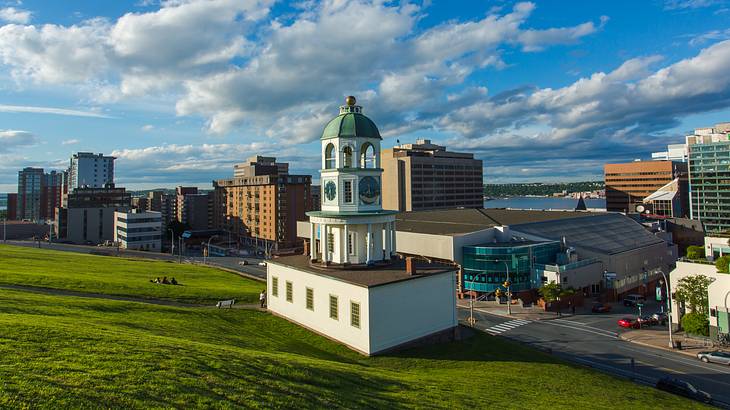
The Halifax Citadel National Historic Site features a star-shaped fort built atop Citadel Hill, a key site in Canadian military history. Founded in 1749, British settlers and military leaders chose the location for its strategic view of the harbor and natural defenses.
Over time, three major forts were built on the hill, evolving into the current citadel completed in the 1850s. Known also as Fort George, the Citadel sits close to Downtown Halifax and offers visitors a chance to explore its walls, learn about its history, and experience military reenactments.
Within the complex, the Halifax City Army Museum provides additional insights into the citadel's role in Halifax's defense and Canada's military past.
☂️ Visit the Halifax Citadel National Historic Site with a tour

Peggy's Cove Lighthouse, Nova Scotia
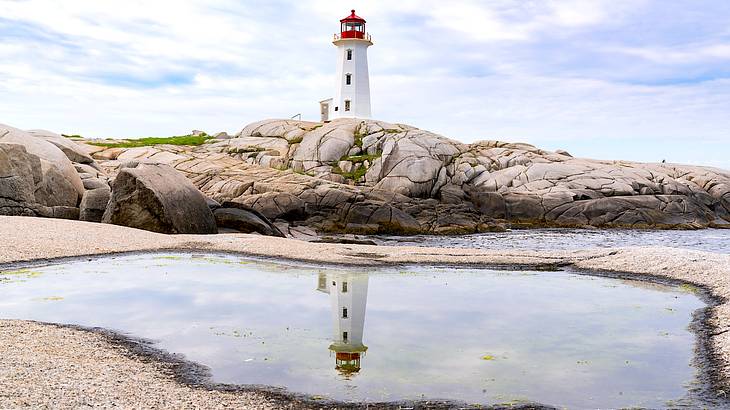
Peggy's Point Lighthouse is located in Peggy's Cove, just outside Halifax, Nova Scotia. This Canadian landmark is one of the province's most recognizable sights and a must-visit destination.
The lighthouse is still operational and sits along the scenic Lighthouse Route. Nestled in a fishing village, visitors can enjoy the charming coastal atmosphere. There are plenty of unique photo opportunities that capture both the lighthouse and the stunning surrounding coastline.
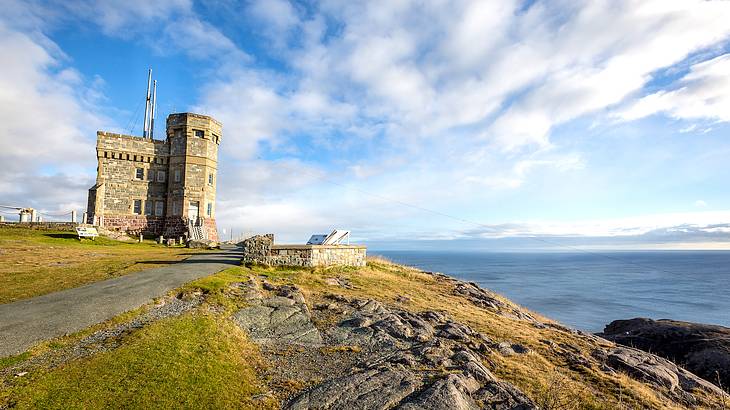

Signal Hill, Newfoundland and Labrador
Signal Hill overlooks St. John's in Newfoundland and Labrador and has been designated a National Historic Site of Canada. The hill played a key role in the defense of St. John's harbor from the 17th century through to World War II. It is also where Guglielmo Marconi received the first transatlantic wireless signal in 1901.
Visitors can explore Cabot Tower, which houses exhibits on Marconi's achievements and the site's military history. Several cannons remain on display across the hill, and a visitor center provides further historical context.
The area also features scenic hiking trails, including the North Head Trail, which follows the cliffs along the harbor, and the Ladies' Lookout Trail, which leads to Signal Hill's highest point.
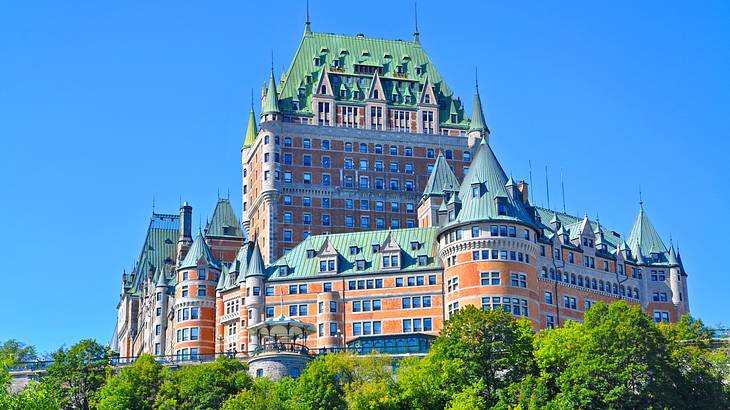

Fairmont Le Chateâu Frontenac, Quebec
Fairmont Le Château Frontenac is a 19th-century château-style building with Gothic elements located in Quebec City. It is one of the most recognizable landmarks in Quebec, Canada, and a famous landmark in North America.
Often described as the "heart of Old Quebec," the building has been designated a National Historic Site of Canada. Constructed in the 1890s by the Canadian Pacific Railway, the hotel was named after Louis de Buade, Comte de Frontenac, a governor of New France in the late 1600s.
Today, it operates as a luxury hotel managed by the Fairmont chain. While much of the building is reserved for guests, visitors can admire its striking exterior and explore select interior areas, including guided tours offered on-site.
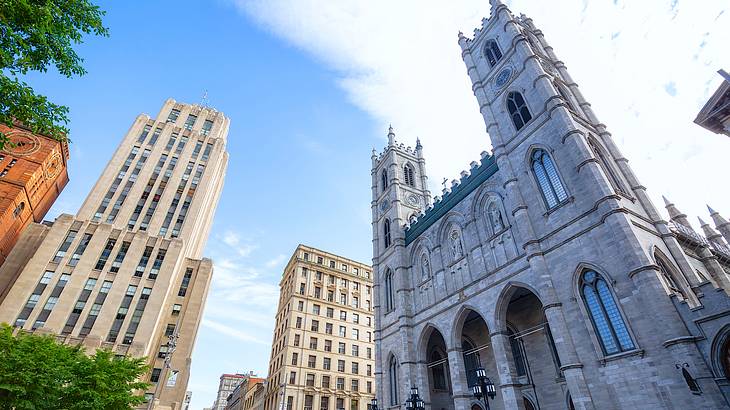

Notre-Dame Basilica of Montreal, Quebec
Notre-Dame Basilica is located in Old Montreal, near the city's downtown and Old Port areas. It is one of Montreal's most important religious and historical landmarks.
The current church was built in the 1820s, making it one of the oldest surviving examples of Gothic Revival architecture in Canada. However, the site has been home to a Catholic church since the mid-1600s, when the original parish was established.
The basilica's façade features twin towers flanking the main structure, giving it a distinctive and imposing appearance. Inside, visitors will find rich colors, intricate wood carvings, and vaulted ceilings.
One of the basilica's most unique features is its stained glass windows. Instead of traditional biblical scenes, they depict moments from Montreal's religious and social history.
☂️ Explore the Notre-Dame Basilica of Montreal with a tour
- Old Montreal Guided Food Tour With 8 Local Delicacies Tastings (high demand)
- Old Montreal Walking Tour Small Group Max 10 by MTL Detours (popular and sought-after)
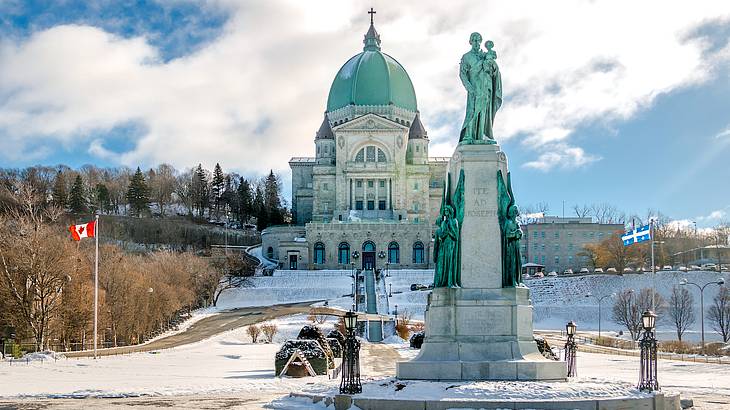

Saint Joseph's Oratory, Quebec
Saint Joseph's Oratory is a Roman Catholic basilica located on the edge of Mount Royal Park in Montreal. It is Canada's largest church and has been designated a National Historic Site. Catholic Mass is held regularly in both English and French, and the church welcomes visitors of all backgrounds.
The oratory, founded in 1904 by Saint André Bessette, is the largest shrine in the world dedicated to Saint Joseph. Its massive dome is a defining feature and makes it the largest domed church in North America.
Visitors can explore the basilica's main chapel, which contains over 10,000 devotional candles. The site also includes a religious museum and the Garden of the Way of the Cross, a landscaped path with life-sized Stations of the Cross sculptures.
☂️ Discover Saint Josephs Oratory of Mount Royal on a tour
- Montreal City Sightseeing Tour With Live Commentary (usually booked)
- The Full-Day Small-group Comprehensive Tour of Montreal (very popular)
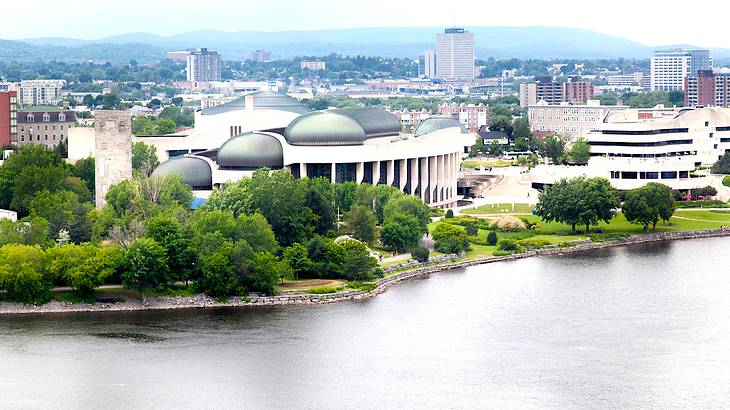

Canadian Museum of History, Quebec
The Canadian Museum of History is a major cultural landmark located in Gatineau, Quebec, just across the Ottawa River from Downtown Ottawa. While often mistaken as being in Ottawa, it's only a five-minute drive from Parliament Hill, making it easily accessible from the capital.
As the name suggests, the museum features a wide range of exhibits highlighting Canada's history, with a strong focus on the achievements and cultures of Indigenous peoples.
One of its most renowned features is the Grand Hall, which contains the world's largest indoor collection of totem poles. The museum building itself is architecturally striking and was designed by celebrated Indigenous architect Douglas Cardinal.
☂️ Visit the Canadian Museum of History on a tour
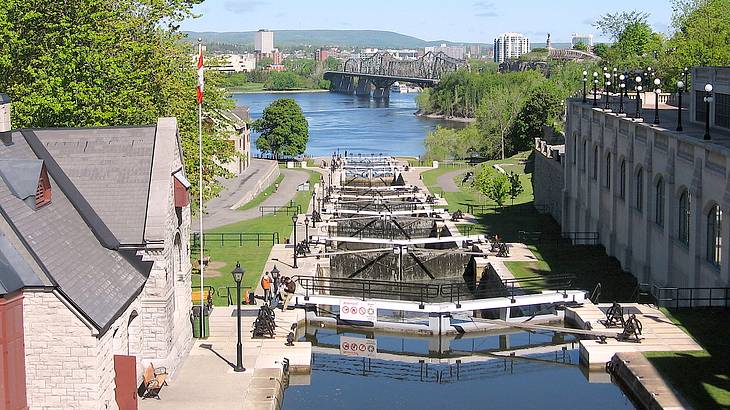

Rideau Canal, Ontario
The Rideau Canal is a historic waterway that connects Ottawa, Canada's capital city, to the St. Lawrence River at Kingston, Ontario. Though originally built for military purposes in the early 19th century, it is now a defining feature of Downtown Ottawa and a popular year-round attraction.
In winter, a section of the canal transforms into the world's largest naturally frozen skating rink — a scene that draws both locals and tourists. The canal is also a designated UNESCO World Heritage Site, recognized for its well-preserved engineering and historical significance.
From May to October, the canal hosts a range of activities, including boating, kayaking, and guided cruises. Visitors can also enjoy walking or cycling along the scenic pathways that line the canal. A nearby highlight is the Corktown Footbridge, a pedestrian bridge covered in "love locks" left by couples, inspired by similar traditions in European cities.
☂️ Discover the Rideau Canal on a tour
- Ottawa City Tour by Land & Water (highly sought-after)
- Ottawa Boat Cruise - Rideau Canal Cruise
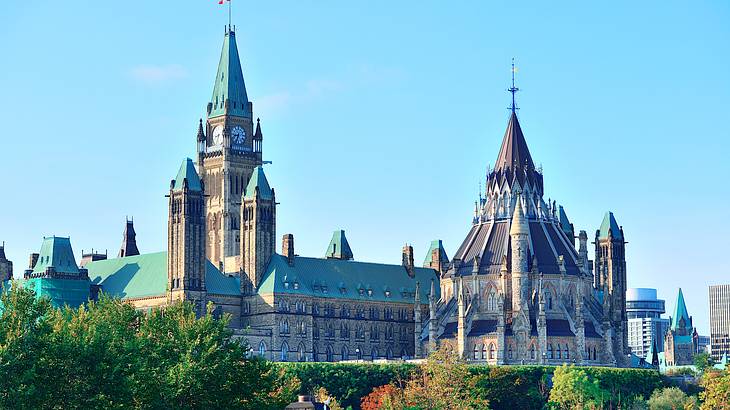

Parliament Hill, Ontario
Parliament Hill, located in the heart of Ottawa, is one of Canada's most significant landmarks. Its main feature is the Gothic Revival–style Centre Block, which traditionally houses the federal government, including the Senate and the House of Commons.
While the Centre Block is currently closed for long-term renovations, visitors can still take guided tours of other parliamentary buildings, such as the West Block (House of Commons) and the Senate of Canada Building (former train station).
Tours include access to the chambers, historic spaces, and exhibits on Canadian politics and governance. Statues of key historical figures can also be found on the grounds, including Alexander Mackenzie (Canada's second Prime Minister) and the late Queen Elizabeth II, who served as Canada's monarch until 2022.
If visiting in summer, don't miss the Changing of the Guard ceremony — a longstanding tradition that draws crowds to the Hill in the mornings.
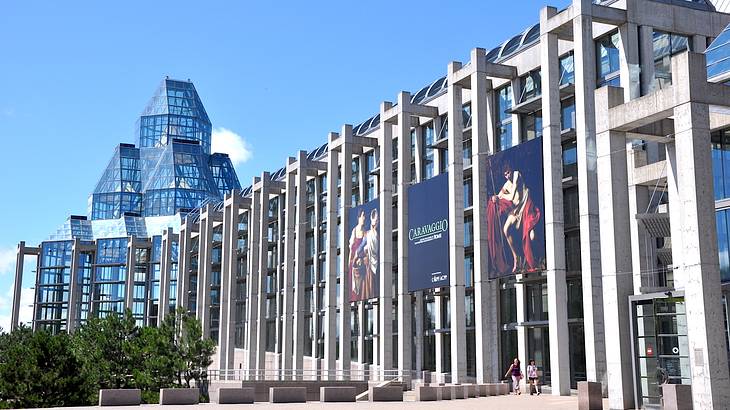

National Gallery of Canada, Ontario
The National Gallery of Canada is one of the largest art museums in North America, with a footprint of over 46,000 square meters. Located in Downtown Ottawa, the museum building itself is architecturally striking, featuring floor-to-ceiling glass walls and a glass tower designed to resemble a greenhouse.
The building was designed by architect Moshe Safdie and opened in its current location in 1988. Outside the gallery, visitors can see Maman, the famous 9-meter-tall spider sculpture by Louise Bourgeois. It is one of seven bronze castings installed at major art institutions around the world.
Inside, the museum houses extensive collections of Canadian, Indigenous, and international art. Highlights include Renaissance and Baroque masterpieces, contemporary installations, photography, and sculptures.
The gallery also hosts rotating temporary exhibitions throughout the year. Visitors are encouraged to check the museum's website for current and upcoming shows.
Royal Ontario Museum, Ontario
Located in downtown Toronto, the Royal Ontario Museum (ROM) is Canada's largest museum and one of North America's most visited cultural institutions. Since its opening in 1914, the ROM has amassed over 18 million artworks, artifacts, and specimens, spanning natural history, world cultures, and art.
Highlights include dinosaur fossils, ancient Egyptian mummies, and Indigenous art. The museum's striking architecture blends historic and modern elements, notably the Michael Lee-Chin Crystal, a glass-and-aluminum addition that opened in 2007. With 40 galleries and rotating exhibitions, the ROM offers an immersive experience for visitors of all ages.
☂️ Discover Royal Ontario Museum on a tour
- 20 km Helicopter Tour Over Toronto (usually sells out)
- Royal Ontario Museum Admission

CN Tower, Ontario
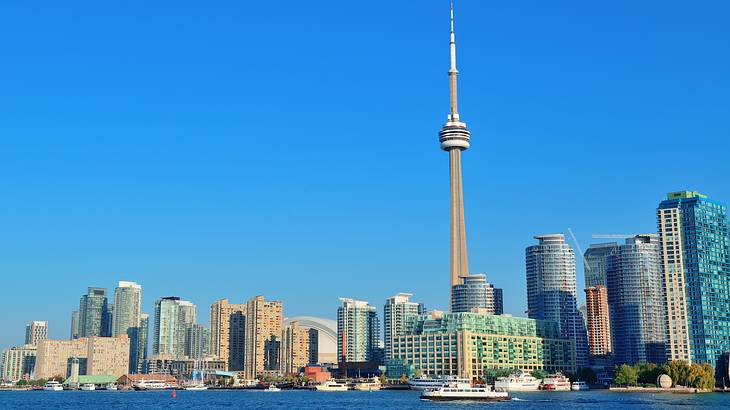
The CN Tower is one of the most iconic landmarks in Toronto and a defining feature of the city's skyline. Standing at 553 meters tall, it was once the world's tallest free-standing structure and remains one of the tallest observation towers globally. It is a must on any Toronto itinerary!
The main observation deck is located at 346 meters and offers sweeping views of the city and Lake Ontario. For an even higher perspective, visitors can head up to the SkyPod, which sits at 447 meters above ground level.
The tower also features 360 The Restaurant, a revolving dining experience that completes a full rotation every 72 minutes, providing panoramic views as you eat.
For those exploring the city on foot, the CN Tower makes for a great photo subject—especially at night, when it's illuminated in vibrant colors. One of the best vantage points to view or photograph the tower is from the Toronto Islands, just across the harbor.
☂️ Explore the CN Tower on a tour
Casa Loma, Ontario
Perched atop a hill in Toronto's midtown, Casa Loma is a majestic Gothic Revival mansion that offers visitors a glimpse into early 20th-century opulence. Built between 1911 and 1914 by financier Sir Henry Pellatt, the estate features 98 rooms, secret passages, an 800-foot tunnel, and five acres of meticulously landscaped gardens.
Today, Casa Loma stands as a testament to Pellatt's vision, attracting over 650,000 visitors annually who come to explore its rich history, architectural grandeur, and immersive experiences.
☂️ Visit Casa Loma with an excursion
- StClair West & Casa Loma Food & Walking Experience (frequently sold out)
- 14-Minute Helicopter Tour Over Toronto


Hockey Hall of Fame, Ontario
No list of Canadian landmarks would be complete without mentioning one dedicated to the country's most beloved sport: ice hockey.
The Hockey Hall of Fame, located in Downtown Toronto, spans 65,000 square feet and features a wide range of exhibits on the National Hockey League (NHL), international hockey, and Team Canada.
Visitors can explore memorabilia from the sport's greatest moments and legends, including dedicated displays for players like Wayne Gretzky and Mario Lemieux.
A highlight for many is the Stanley Cup, which is housed here for most of the year. Fans can get up close to the legendary trophy and snap a photo—a must-do for any hockey enthusiast.
☂️ Visit the Hockey Hall of Fame on a tour

Niagara Falls, Ontario
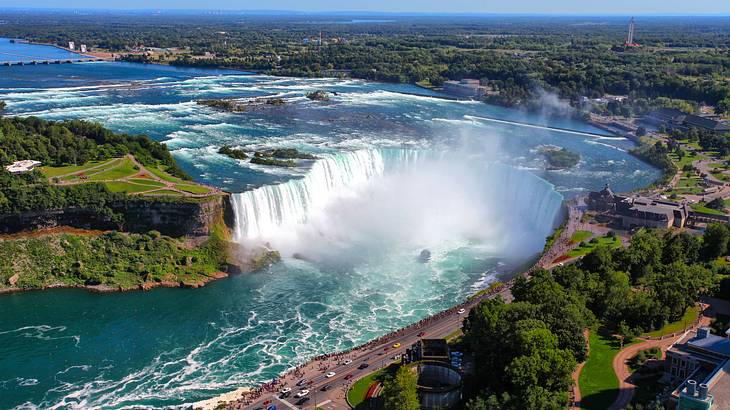
Niagara Falls is one of the world's most famous landmarks. Located about 1.5 hours from Toronto by car, it's an easy and unforgettable day trip from the city — and a convenient stop if you're driving between New York City and Toronto. The falls span the border between Canada and the United States, with the Canadian side offering the most expansive views.
Horseshoe Falls, the largest of the three waterfalls that make up Niagara Falls, is located primarily on the Canadian side. It measures approximately 2,600 feet (792 meters) wide and drops about 167 feet (51 meters).
To take in the view from above, head to the Skylon Tower, which rises 775 feet (236 meters) and provides sweeping 360-degree panoramas of the falls and the surrounding area.
For a closer experience, visitors can take a boat tour that ventures right into the mist at the base of Horseshoe Falls. There are also many restaurants and viewpoints nearby that offer dining experiences with a view.
☂️ Visit Niagara Falls with a tour

The Canadian Rockies
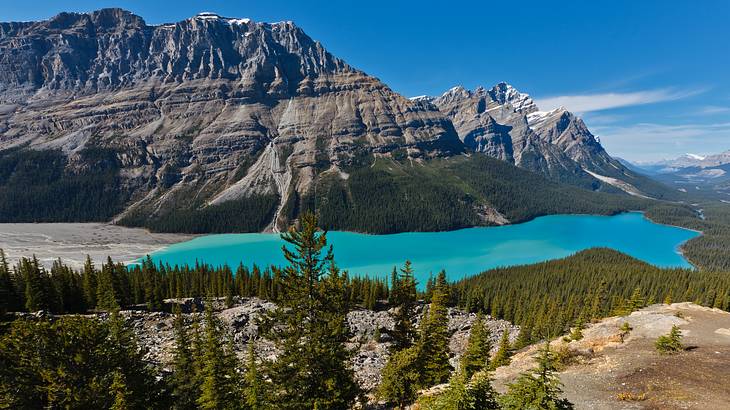
The Canadian Rockies are a major mountain range that spans parts of Alberta and British Columbia. They form the northernmost section of the larger Rocky Mountains, which extend south through the United States to New Mexico.
This landmark draws millions of domestic and international visitors each year. The region is home to several world-renowned national parks, including Banff, Jasper, Yoho, and Kootenay, as well as numerous provincial parks that showcase the Rockies' dramatic peaks, glaciers, alpine lakes, and wildlife.
One of the most scenic ways to experience the Canadian Rockies is by taking a Rocky Mountaineer train journey. These luxury rail tours offer multi-day routes through the mountains, with onboard commentary covering regional history, including the construction of the Canadian Pacific Railway and the early settlement of Western Canada.
West Edmonton Mall, Alberta
The West Edmonton Mall, located in Edmonton, Alberta, is one of Canada's most impressive entertainment and retail landmarks. It's the largest shopping mall in North America and was the world's largest until 2004. Today, it's among the top 25 largest malls globally and the second most-visited mall in Canada, after Toronto's Eaton Centre.
With over 800 stores, including designer brands, popular retail chains, and independent boutiques, the mall is a shopping destination in its own right. But what truly sets it apart are its entertainment offerings.
Visitors can enjoy attractions like World Waterpark—one of the world's largest indoor water parks—and Galaxyland, a massive indoor amusement park. The mall also features an indoor skating rink, aquarium, mini golf, bowling, escape rooms, and more.
There are over 100 dining options as well, ranging from casual eateries to upscale restaurants and cafes. Whether you're visiting to shop, dine, or play, West Edmonton Mall delivers a full day of entertainment for all ages.

Banff National Park, Alberta
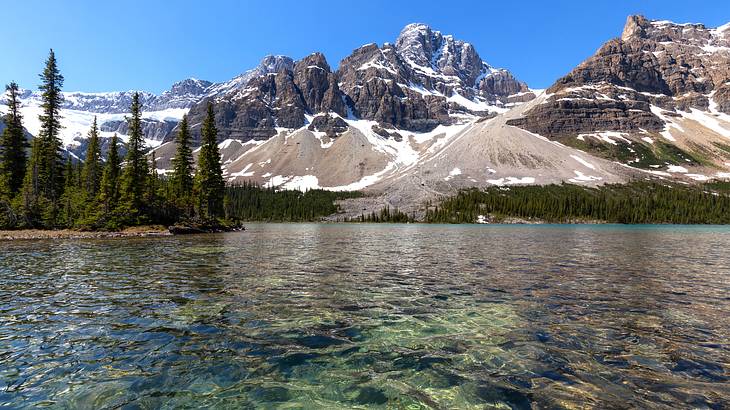
Banff National Park, located in Alberta's Rocky Mountains, is one of Canada's most famous and visited national parks. Known for its dramatic alpine scenery, the park features snow-capped peaks, dense forests, glaciers, and striking turquoise lakes.
One of the park's most iconic spots is Lake Louise, a glacial lake known for its vibrant blue-green color and stunning mountain backdrop. It's widely considered one of the most beautiful natural landmarks in Canada and a top destination for photographers and nature lovers.
Visitors to Banff can enjoy a wide range of outdoor activities year-round, including hiking, canoeing, skiing, and wildlife spotting. The park is easily accessible from both Calgary, Alberta (about 90 minutes by car) and parts of eastern British Columbia.
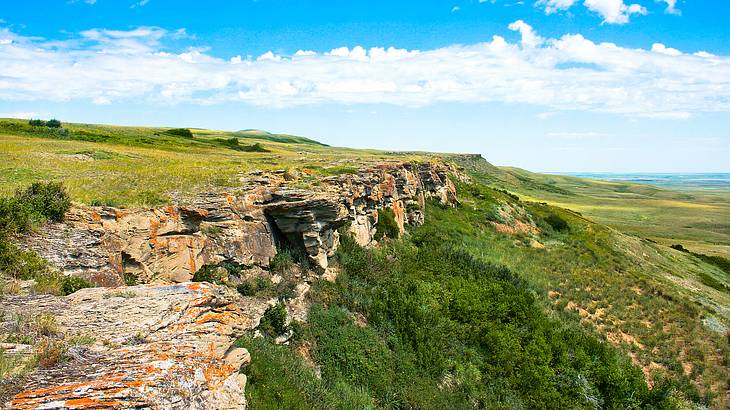

Head-Smashed-In Buffalo Jump, Alberta
Head-Smashed-In Buffalo Jump is one of the oldest and best-preserved buffalo jump sites in North America. Located near Fort Macleod, Alberta, in the foothills of the Rocky Mountains, it has been designated a UNESCO World Heritage Site for its cultural and historical significance.
For over 6,000 years, Indigenous Plains Peoples—particularly the Blackfoot—used this site to hunt bison by driving herds off the cliff. This method provided food, clothing, tools, and shelter, and was a cornerstone of their way of life.
Visitors can explore walking trails with views of the jump site, as well as an award-winning interpretive center built into the cliffside. Inside, you'll find exhibits, artifacts, and multimedia presentations that explain the site's history, archaeology, and cultural importance.
Jasper National Park, Alberta
Jasper National Park, located in Alberta's Rocky Mountains, is Canada's largest national park in the Rockies, covering over 11,000 square kilometres of stunning wilderness. The park is renowned for its dramatic mountain landscapes, pristine lakes, glaciers, and abundant wildlife, including elk, bears, and wolves.
Outdoor enthusiasts can enjoy hiking, canoeing, skiing, and stargazing in one of the world's largest Dark Sky Preserves. With its breathtaking natural beauty and endless adventure opportunities, Jasper National Park is a must-visit destination for anyone exploring Canada's wild side.
Mount Robson, British Columbia
Mount Robson is a towering peak in the Canadian Rockies, located in Mount Robson Provincial Park in British Columbia. At 3,954 meters (12,972 feet), it is the highest mountain in the Canadian Rockies.
You can take in the mountain's beauty from several viewpoints throughout the park or explore its scenic hiking trails, such as the Berg Lake Trail, known for its glaciers, waterfalls, and alpine lakes. While exploring, you might spot native wildlife including moose, caribou, grizzly bears, and black bears.
Mount Robson Provincial Park borders Jasper National Park, so it is possible to visit both in a single trip and experience some of Canada's most spectacular mountain landscapes.
☂️ See Mount Robson on a tour
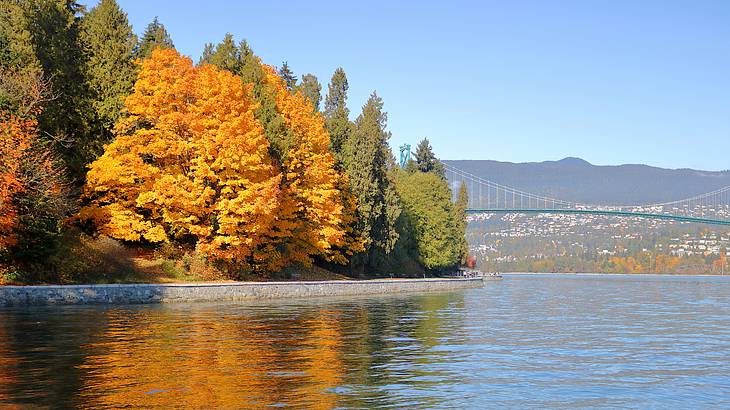

Stanley Park and Seawall, British Columbia
Stanley Park and the Stanley Park Seawall are popular landmarks in Vancouver, British Columbia. The park is one of the largest urban parks in Canada. It is a must on any Vancouver itinerary!
The park features trails, gardens, and attractions, such as the First Nations Totem Poles, the Rose Garden, and Prospect Point. The seawall is a 28-kilometer path that runs from the Vancouver Convention Centre to Spanish Banks and is open for walking, biking, and in-line skating.
The Stanley Park Seawall is the world's longest uninterrupted urban pathway. Along the seawall, visitors will pass beaches like English Bay Beach and Kitsilano Beach.
☂️ Visit Stanley Park on a tour
- Vancouver Panorama Scenic Seaplane Tour (often fully booked)
- Vancouver City Sightseeing Tour - Capilano Suspension Bridge & Vancouver Lookout (popular with most)
Whistler, British Columbia
Whistler, located in the Coast Mountains of British Columbia, is one of Canada's most famous year-round destinations. Renowned for hosting the 2010 Winter Olympics, the area draws visitors from around the world for its world-class skiing and snowboarding in winter, as well as mountain biking, hiking, and alpine adventures in summer.
The picturesque pedestrian village offers boutique shopping, fine dining, and lively cultural events, while the surrounding wilderness is home to pristine lakes, forests, and rugged peaks. Whether you're seeking adrenaline-pumping sports, tranquil nature, or a mix of both, Whistler provides an unforgettable experience for every traveler.
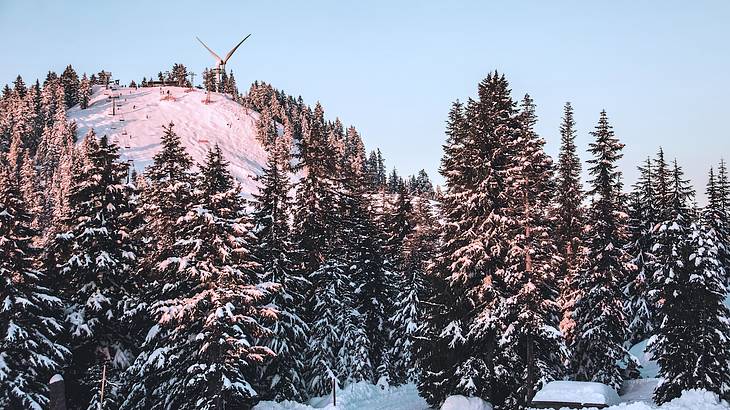

Grouse Mountain, British Columbia
Grouse Mountain is a natural landmark located about a 20-minute drive from Downtown Vancouver. It is accessible year-round and offers a range of outdoor activities.
A popular challenge is the Grouse Grind, an uphill hike of 2,830 steps that typically takes around 2 to 2.5 hours to complete. Visitors can also reach the summit via the Grouse Skyride.
At the top, there are panoramic views of the Vancouver area. Other attractions include winter snowsports, summer zip-lining, and the resident grizzly bears at the Wildlife Refuge.
☂️ Visit Grouse Mountain with an excursion
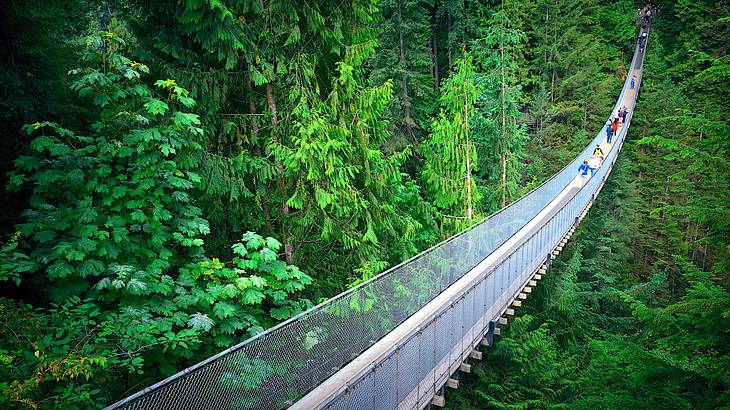

Capilano Suspension Bridge, British Columbia
The Capilano Suspension Bridge in North Vancouver is another of Canada's major landmarks. The bridge spans 450 feet across a canyon and sits 230 feet above the Capilano River.
Visitors can enjoy views of the surrounding forest and take photos from the bridge. Other attractions in the area include the Capilano Cliff Walk and the Tree Top Adventure, which provide additional elevated views of the forest. The bridge is also illuminated during the Canyon Lights event from November to January.
Butchart Gardens, British Columbia
Located near Victoria, British Columbia, Butchart Gardens is a 55-acre botanical haven that was transformed from a limestone quarry into a stunning garden paradise. Founded by Jennie Butchart in 1904, it has become a National Historic Site and draws over a million visitors each year.
The gardens include five distinct areas — the Sunken Garden, Japanese Garden, Italian Garden, Rose Garden, and Mediterranean Garden — each with unique designs and seasonal blooms. With more than 900 plant varieties, Butchart Gardens offers a vibrant and fragrant landscape, perfect for both garden enthusiasts and anyone looking for a peaceful retreat.
☂️ Visit The Butchart Gardens with a tour
- Vancouver to Victoria Day Trip by Seaplane Butchart Gardens (usually booked)
- From Vancouver - Butchart Gardens, Victoria, & Gulf Islands Cruise (popular and sought-after)
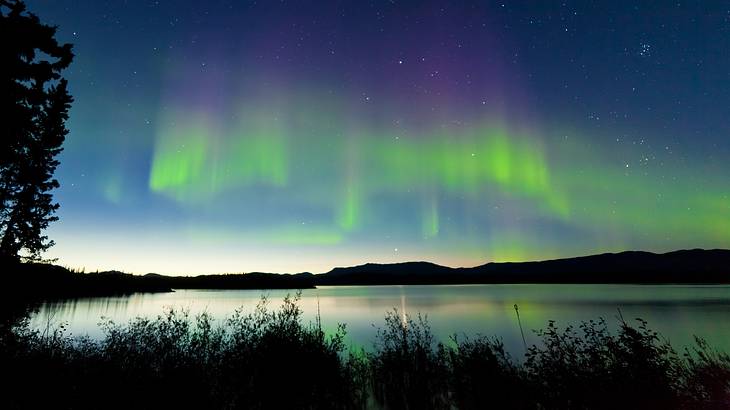

The Northern Lights, Northwest Territories
Canada's Northwest Territories is one of the best places to see the Northern Lights (Aurora Borealis), with Yellowknife being the most popular destination.
The Aurora Borealis produces a natural light display in green, blue, and purple colors across the night sky. The region's location and climate make it ideal for viewing.
The Northern Lights are visible in the Northwest Territories on roughly 200 nights per year, with the best viewing season from early fall to April.
In Summary
Canada is a fantastic destination for travelers, offering everything from stunning natural landscapes to vibrant cities and charming small towns.
These 30 landmarks highlight some of the most iconic and memorable places to visit across the country. With so many incredible sights and experiences, you're sure to have an unforgettable trip—no matter where your Canadian adventure takes you.

Want to keep exploring?
Subscribe for our latest guides.
Thank you for subscribing
We will be in touch soon with our latest guides.
Want to keep exploring?
Subscribe for our latest guides.
Thank you for subscribing
We will be in touch soon with our latest guides.