
21 Famous Landmarks in Mexico You Must See

Destguides may receive commissions from purchases made through affiliate links in this article.

There are many famous landmarks in Mexico to explore. Ancient Maya cities, colonial-era churches, natural wonders, and world-class museums make this country one of the richest destinations in the Americas.
The Yucatan Peninsula alone holds archaeological sites, cenotes, and underwater art, while Mexico City rivals any capital in the world for its concentration of historical and cultural attractions.
This list covers 21 of the most notable landmarks across the country, from the jungle ruins of Chiapas to the petrified waterfalls of Oaxaca. Keep reading to discover the famous places in Mexico worth adding to your bucket list.
Organizing a last-minute visit to Mexico?
Before traveling to Mexico, book your entrance tickets and tours ahead of time. Below are some top recommendations to get you started.
☂️ Top tours and experiences in Mexico
21 Famous Mexican Landmarks
- Arena México
- Basílica de Santa María de Guadalupe
- The Bonampak Murals
- Museo Frida Kahlo
- Castillo Chapultepec
- Catedral Metropolitana de la Ciudad de México
- Chichén Itzá
- Central University City Campus of UNAM
- Dos Ojos Cenote
- Cascada El Chiflón
- Estadio Banorte
- Hierve el Agua
- Monte Albán
- Monumento a la Revolución
- Museo Nacional de Antropología
- Torre Latinoamericana
- Uxmal
- El Ángel de la Independencia
- El Tajin
- Palenque
- Museo Subacuático de Arte
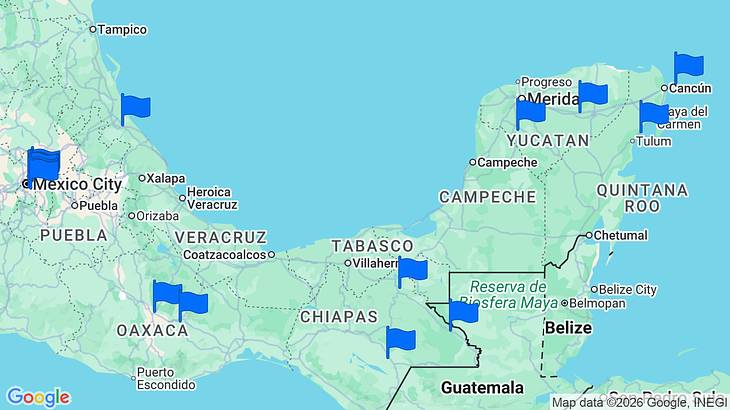
Mexico Landmarks Map
A map of Mexico landmarks. Use the map to explore all of the points of interest.
Arena México
Known as the "Cathedral of Lucha Libre," Arena México in Mexico City is the largest arena in the world built specifically for professional wrestling. The current building opened in 1956 and has been home to the Consejo Mundial de Lucha Libre (CMLL) ever since.
Lucha libre is distinct from other wrestling traditions. Matches pit masked "tecnicos" (heroes) against "rudos" (villains) in bouts that combine acrobatics, storytelling, and spectacle. Attending a Friday night event is one of the most energetic cultural experiences you can have in Mexico.
☂️ Visit Arena México on a tour

Basílica de Santa María de Guadalupe
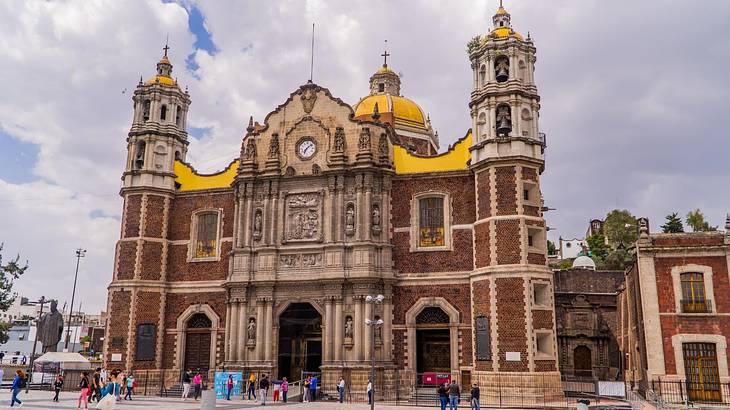
More than 20 million pilgrims visit this site each year, making it one of the most visited Catholic shrines in the world. The complex in northern Mexico City houses both the original 18th-century basilica and the circular New Basilica, completed in 1976 to accommodate growing crowds.
The New Basilica houses the tilma (cloak) of Juan Diego, which bears the image of the Virgin of Guadalupe. Moving walkways carry visitors beneath the relic for closer viewing. The older basilica, a baroque structure that had begun to sink into the soft lakebed, has been restored and is now open to visitors.
☂️ Discover Basilica of Our Lady of Guadalupe on a tour
- Teotihuacan Tour With Basilica of Guadalupe & Cave Restaurant (rated five stars)
- Teotihuacan, Guadalupe Shrine & Tlatelolco Day Tour With Lunch (widely sought after)

The Bonampak Murals
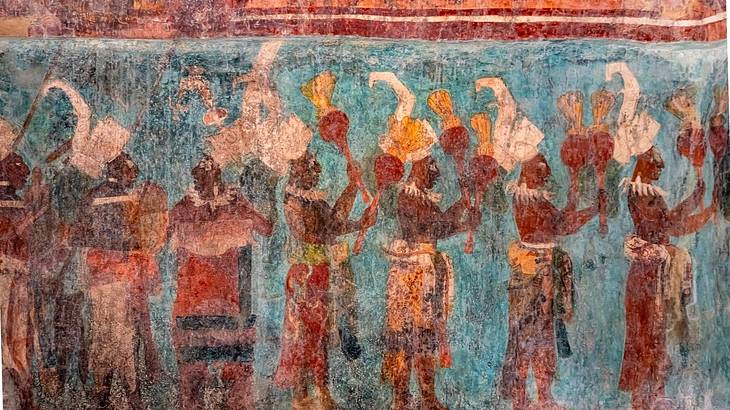
Deep in the Chiapas rainforest, the ancient Maya city of Bonampak holds some of the best-preserved murals from the pre-Columbian world. Painted between 790 and 792 CE, the floor-to-ceiling frescoes cover three rooms inside the Temple of the Murals and span roughly 100 square meters.
The scenes depict a royal heir presentation, a brutal battlefield raid, and a ritual of bloodletting and sacrifice. Their discovery in 1946 was significant because they overturned the long-held idea that the ancient Maya were a peaceful civilization. The murals remain vivid thanks to their sheltered location and the lime-based plaster technique used by the original artists.
☂️ Visit Zona Arqueológica de Bonampak with an experience

Museo Frida Kahlo
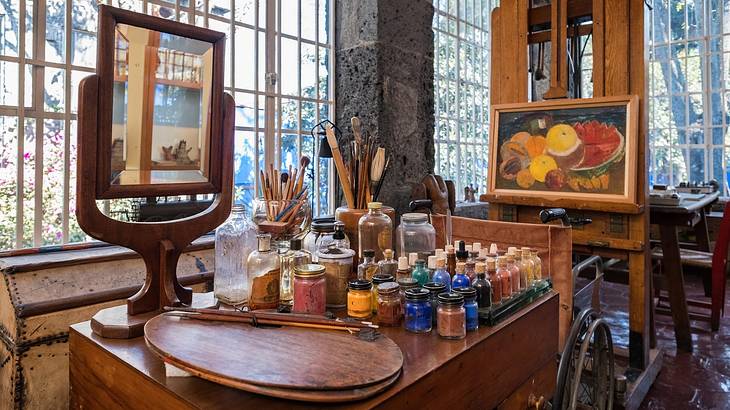
The cobalt-blue walls of La Casa Azul are impossible to miss in the Coyoacán neighborhood of Mexico City. Built in 1904 by Frida Kahlo's father, this house is where the artist was born, grew up, married Diego Rivera, and ultimately died in 1954. A bus collision at the age of 18 left Kahlo with lifelong injuries, and she began painting during her long recovery at home.
The museum opened in 1958 and preserves the house largely as it looked in the early 1950s. Visitors can see original artwork, personal belongings, pre-Columbian artifacts the couple collected, and a garden filled with native plants. It is a compact visit but a vivid window into the artist's daily world.
☂️ See Frida Kahlo Museum on a tour

Castillo Chapultepec
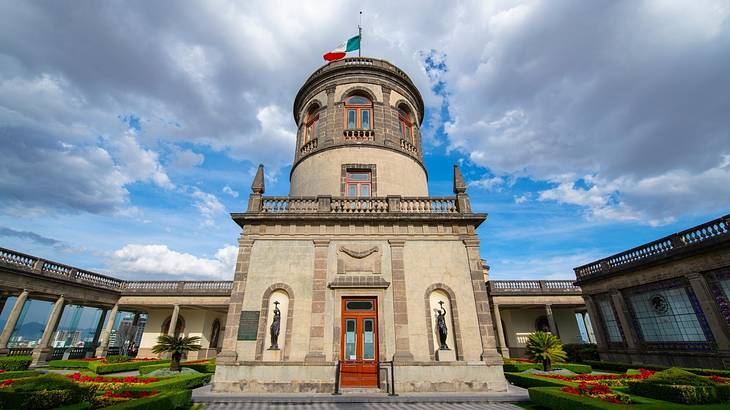
Built in 1785 for Viceroy Bernardo de Galvez and completed in 1864, Chapultepec Castle sits at the highest point of Chapultepec Park in Mexico City. Over the centuries, the building served as a military academy, an imperial residence for Maximilian and Carlota, an astronomical observatory, and a presidential home.
In 1939, President Lázaro Cárdenas decreed that the castle would become the Museo Nacional de Historia (National Museum of History), which opened to the public in 1944.
The museum's collection includes paintings, documents, and furniture spanning the period from the Spanish conquest to the Mexican Revolution. The views of Mexico City from the castle terrace are worth the uphill walk alone.
☂️ Explore Chapultepec Castle on a tour
- Five Hour Tour Through Chapultepec, Anthropology Museum & Castle (rated five stars)
- Early Access Chapultepec Castle & Anthropology Museum (very popular)

Catedral Metropolitana de la Ciudad de México
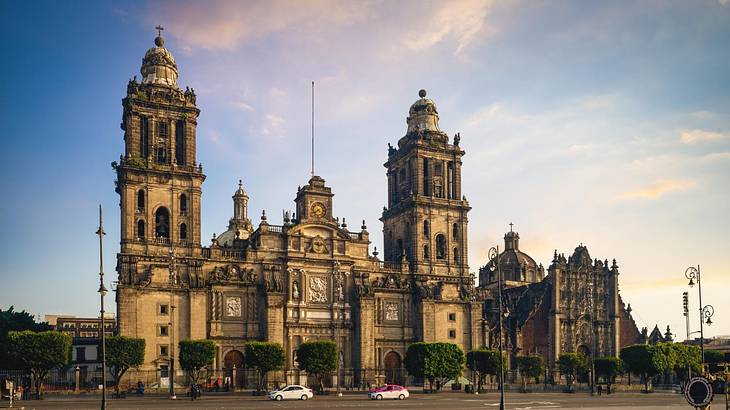
Construction began in 1573 and was not fully completed until 1813, resulting in a cathedral with nearly 250 years of accumulated architectural styles. Renaissance, Baroque, Churrigueresque, and Neoclassical elements all appear across the facade and interior.
Catedral Metropolitana is the largest cathedral in Latin America and one of the oldest on the continent. It was built on the foundations of the former Aztec Templo Mayor.
Two historic pipe organs dating from the late 17th and early 18th centuries still stand inside the nave. If you visit during a mass, their sound carries throughout the space and can be heard from the Zocalo outside.
☂️ Explore Mexico City Metropolitan Cathedral on a tour
- 10 Wonders of the Historic Center of Mexico City Food & Music (highly rated)
- Walking Tour of the Historic Center of Mexico City (widely sought after)

Chichén Itzá
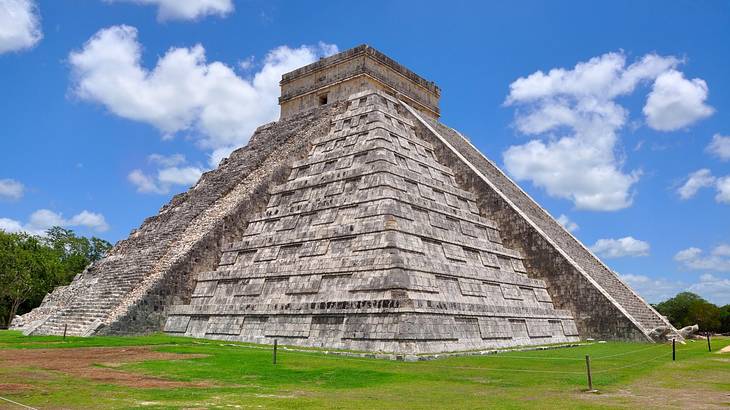
Named one of the New Seven Wonders of the World in 2007 and a UNESCO World Heritage Site since 1988, Chichen Itza is one of the most recognizable archaeological sites on Earth. The ancient Maya city was founded around the 6th century and became a major political, religious, and economic center in the Yucatan.
El Castillo, the central pyramid, has 365 steps representing the days of the solar year. The site also includes the Great Ball Court, the largest in Mesoamerica, and El Caracol, a circular observatory aligned with the movements of Venus.
If you are visiting Cancun, Chichen Itza is one of the unique places to visit nearby. Arrive early in the morning to beat the midday crowds and heat.
☂️ Visit Chichén-Itzá on a tour
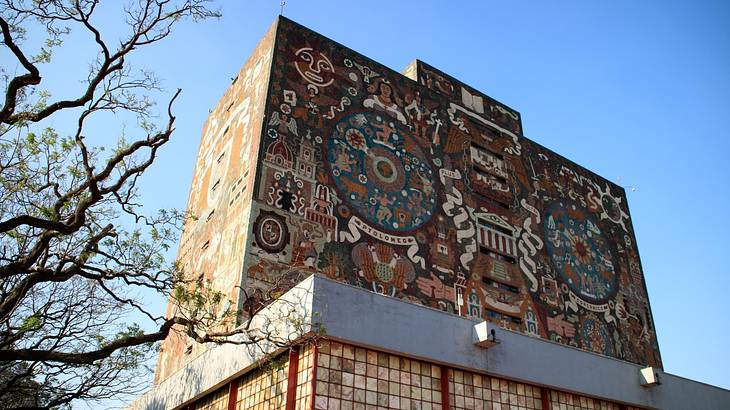

Central University City Campus of UNAM
The main campus of the Universidad Nacional Autónoma de México (UNAM) is the oldest university in the country and was declared a UNESCO World Heritage Site in 2007.
Built in the mid-1950s in Mexico City, Ciudad Universitaria is celebrated as one of the finest examples of 20th-century modernist architecture in Latin America.
The most recognized building on campus is the Central Library, whose four exterior walls are covered in a massive stone mosaic by artist Juan O'Gorman.
Made from naturally colored stones collected across Mexico, the 4,000-square-meter mural depicts the nation's pre-Hispanic, colonial, and modern history. The campus also features a Diego Rivera relief on the Olympic Stadium, which hosted events during the 1968 Summer Games.
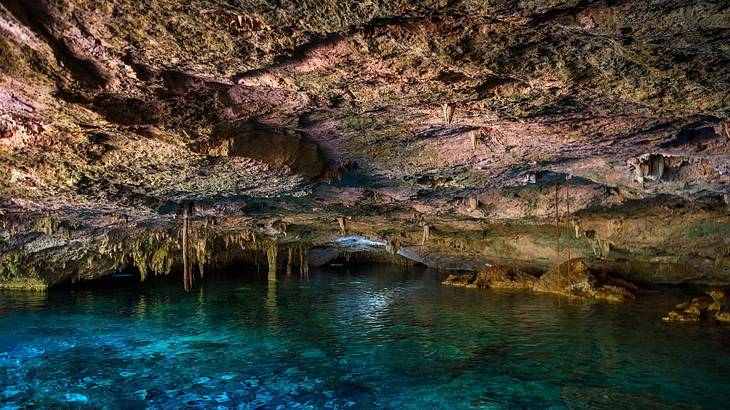

Dos Ojos Cenote
Just north of Tulum in the state of Quintana Roo, Dos Ojos (Two Eyes) Cenote is one of the largest cave systems in Mexico. An underground tunnel connects its two sinkholes, and the water visibility is remarkably clear year-round.
Snorkeling and diving are the main draws here. The water temperature remains comfortable most days, making it a reliable stop regardless of when you visit.
A fun fact about the Cancun region is that thousands of cenotes dot the Yucatan Peninsula, formed by the collapse of limestone bedrock above underground rivers. Dos Ojos is among the most accessible and well-known of these natural formations.
☂️ Experience Two Eyes Cenote with a tour
- Cenote Dos Ojos Private Tour Snorkeling & Mayan Lunch (frequently sold out)
- Private Cenote Tour - Dos Ojos, Jaguar & Nicte-Ha (often praised)
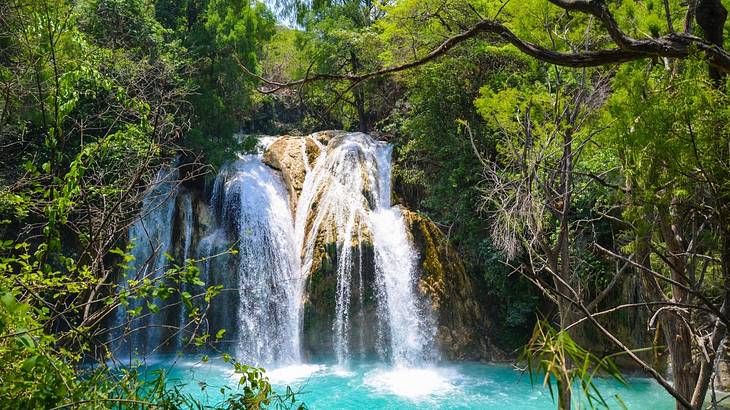

Cascada El Chiflón
A series of five cascading waterfalls fed by the San Vicente River in Chiapas, El Chiflon can be visited on a day trip from San Cristobal de las Casas. The trail runs uphill through tropical vegetation, with turquoise pools and smaller falls along the way.
The main fall is Velo de Novia (Bridal Veil), a 120-meter waterfall that crashes into a basin below with enough force to feel it from the closest viewing platform.
Bring hiking shoes with good grip, sunblock, and mosquito repellent. The lookout points along the trail, called miradores, provide excellent photo opportunities and rest stops during the climb.
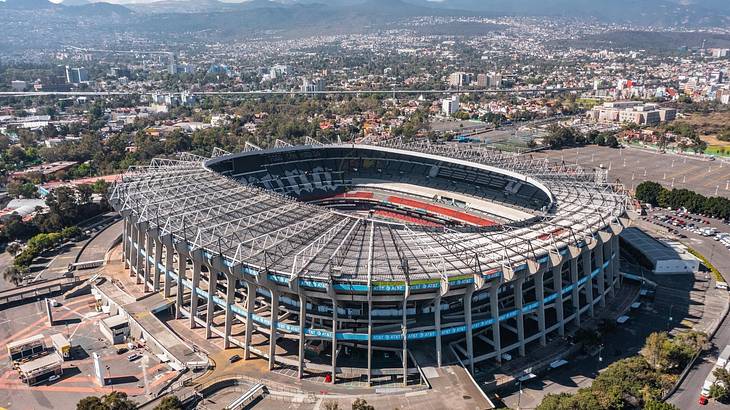

Estadio Banorte
No other stadium in the world has hosted three FIFA World Cups (1970, 1986, 2026) like Estadio Banorte (Estadio Azteca) in Mexico City. It was inaugurated in 1966 and has been the home ground of Club America and the Mexican national team ever since.
The 1970 final saw Pele lift the trophy for the third time with Brazil. In 1986, the stadium was the stage for Diego Maradona's "Hand of God" goal and his legendary solo run against England.

Hierve el Agua
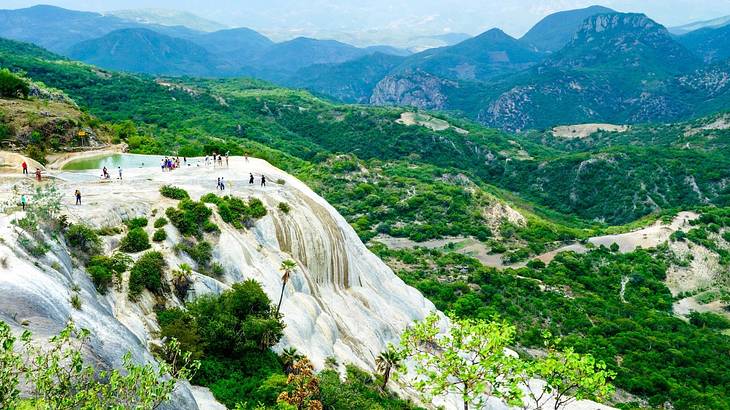
The name translates to "the water boils" in English, though the springs are not actually boiling. Located about 70 kilometers from Oaxaca, this site features two petrified waterfall formations created over thousands of years by mineral-rich spring water flowing over cliff edges and depositing calcium carbonate as it drips.
At the top of the formations, small natural pools offer a place to wade while overlooking the valleys of Oaxaca. The road to Hierve el Agua is unpaved and bumpy in sections, so a guided tour is worth considering if you prefer not to drive yourself.
☂️ Join a tour to see Hierve el Agua
- Hierve el Agua Guided Full Day Tour in Oaxaca (often fully booked)
- Hierve el Agua 25 Hours, Mitla, Tule, Rugs & Mezcal for a Day (popular and sought-after)

Monte Albán
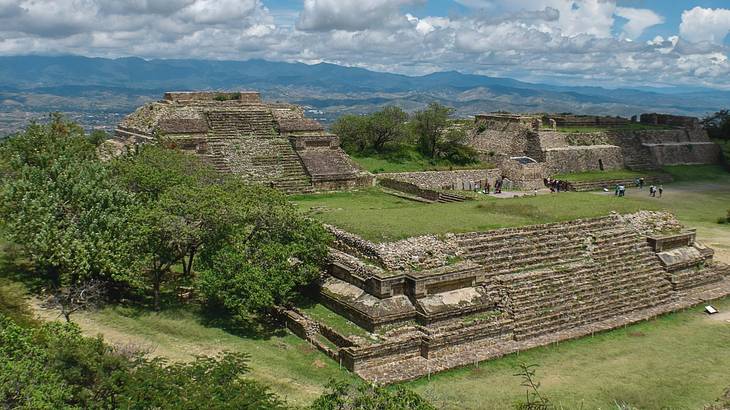
Carved from the top of a mountain in the Oaxaca Valley, Monte Albán was the capital of the Zapotec civilization and one of the earliest major cities in the Americas. It was inhabited for over 1,500 years by a succession of Olmec, Zapotec, and Mixtec peoples, beginning around 500 BC.
The terraces, dams, canals, and pyramids visible today were literally excavated from the mountainside. UNESCO inscribed the site in 1987 alongside the nearby historic center of Oaxaca.
The structures were engineered to withstand the region's seismic activity, and they remain standing after more than two millennia. A site museum displays ceramics, stone carvings, and artifacts from the nearly 200 tombs discovered in the area.
☂️ Explore Zona Arqueológica de Monte Albán on a tour
- Monte Alban Guided Half Day Tour (popular and sought-after)
- Monte Alban, Ancestral Mezcal, Alebrijes & Black Mud Tour

Monumento a la Revolución
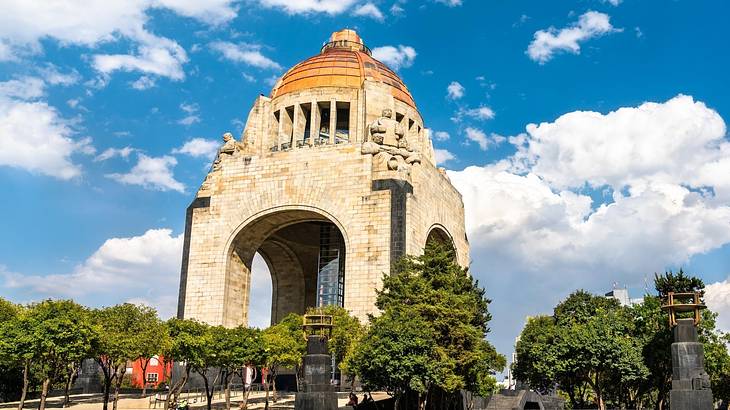
Standing 67 meters tall, the Monumento a la Revolucion in Mexico City holds the record as the world's tallest memorial arch. Its origin story is unusual. Construction began in 1910 on the dome of a grand legislative palace under President Porfirio Díaz, but the Mexican Revolution halted the project.
In the 1930s, architect Carlos Obregon Santacilia repurposed the unfinished steel structure into a monument honoring the Revolution. Today, it serves as both a mausoleum and a museum.
The remains of key revolutionary figures, including Pancho Villa and Lazaro Cardenas, are interred at the base. A glass elevator takes visitors up to a viewing deck inside the dome, which offers panoramic views of the surrounding Plaza de la Republica and beyond.

Museo Nacional de Antropología
Opened in September 1964 in Chapultepec Park, the Museo Nacional de Antropología is one of the most comprehensive anthropology museums in the world.
Its ground-floor halls cover the major pre-Columbian civilizations of Mesoamerica, while the upper floor is dedicated to the ethnography of Mexico's living Indigenous communities.
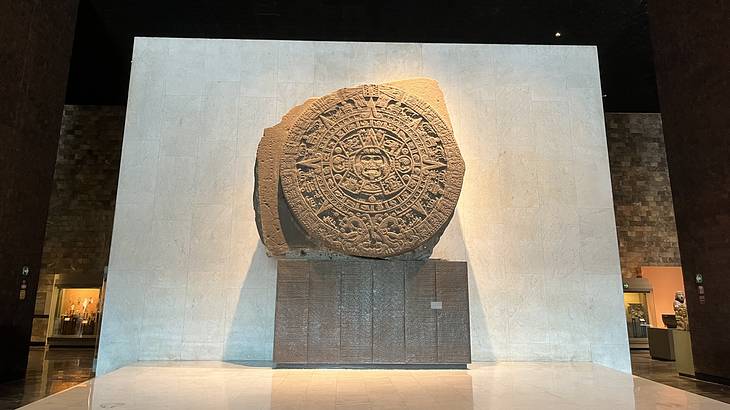
The museum's centerpiece is the Aztec Sun Stone (Piedra del Sol), a 24-ton basalt disk that was buried after the Spanish conquest and rediscovered beneath the Zocalo in 1790.
The building itself is notable for its enormous central courtyard and the "umbrella" column, a single concrete pillar that supports a cascading rainwater waterfall. Plan for at least half a day here, as the collection is vast and easy to lose track of time in.
☂️ Explore Museo Nacional de Antropología on a tour
- Anthropology Museum Guided Tour (popular and sought-after)
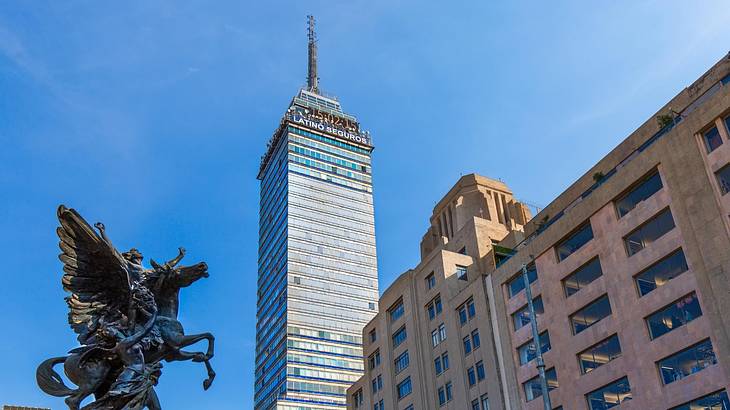

Torre Latinoamericana
When the 8.1-magnitude earthquake struck Mexico City in September 1985, buildings across the downtown core collapsed. Torre Latinoamericana, standing in the heart of the historic center, survived without damage. That feat alone earned it a permanent place in the city's identity.
Completed in 1956, the tower was Mexico City's tallest building for over 25 years. It was the first skyscraper in the world engineered for a high-risk seismic zone, with 361 deep-driven piles anchoring it into the soft lakebed clay.
The observation deck on the 44th floor remains the highest publicly accessible viewpoint in the city center. It is a must-see on any Mexico City itinerary.
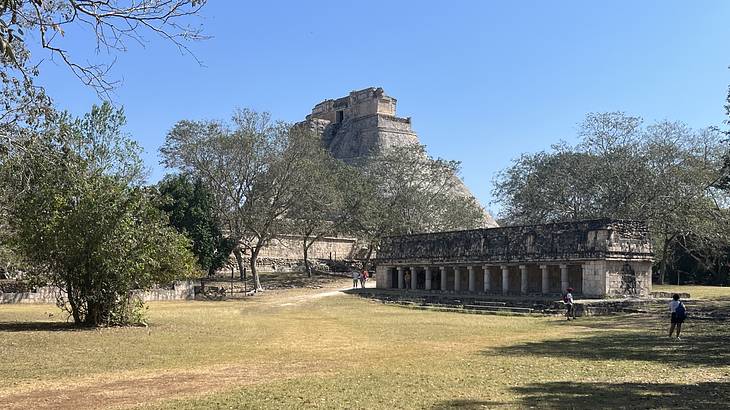

Uxmal
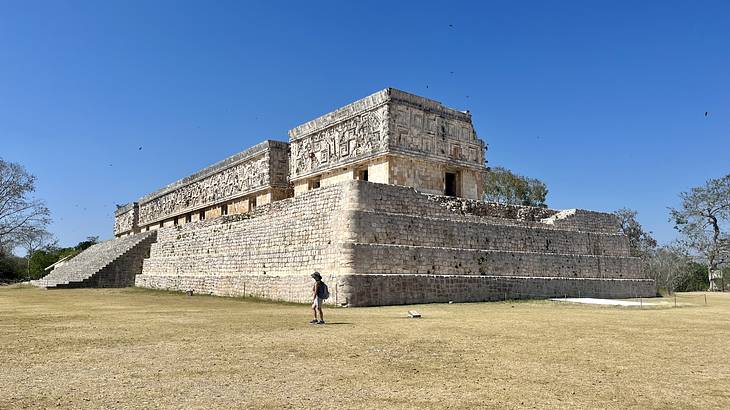
Uxmal was first settled around 500 BC, and by the 7th century it had grown to roughly 30,000 inhabitants, according to INAH. UNESCO inscribed Uxmal as a World Heritage Site in 1996, and it is the best example of the classical Puuc style.
The Pyramid of the Magician, with its distinctive rounded edges, dominates the site. The Nunnery Quadrangle and the Governor's Palace demonstrate the Maya's precision in aligning buildings with astronomical events. The city also contained chultunes (cisterns), evidence of sophisticated water management in a region with no surface rivers.
☂️ Visit Uxmal Archaeological Zone with an excursion
- Tomorrow in Uxmal From Merida (high demand)
- Uxmal, two Amazing Cenotes & Local Food Tour From Mérida (often praised)
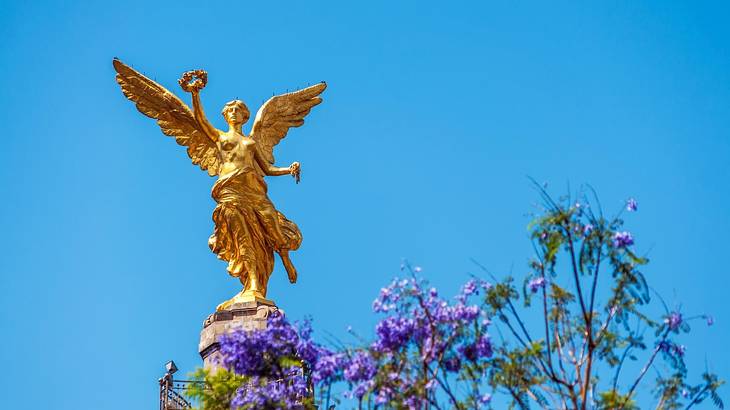

El Ángel de la Independencia
Officially called the Monumento a la Independencia, this golden-winged victory column stands on a roundabout along Paseo de la Reforma in Mexico City. The monument was inaugurated in 1910 to mark the centennial of Mexico's War of Independence.
The angel figure at the top sits above a mausoleum that holds the remains of some of the country's most important independence-era heroes. Because of its central location and visibility, El Ángel also serves as a gathering point for celebrations, protests, and public events.
☂️ Visit The Angel of Independence with an excursion
- Mexico City E-Bike Tour With a Taco & Churros Stop (usually booked)
- Mexico City - 19 City Highlights Bicycle Tour (a sort after tour)
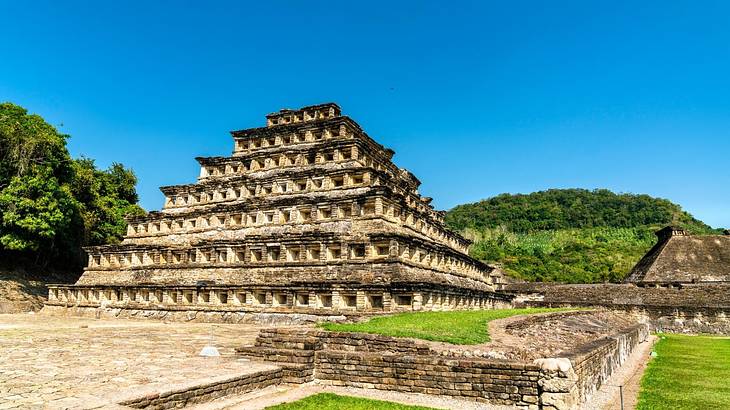

El Tajin
Quieter and more remote than many of Mexico's famous archaeological sites, El Tajin in Veracruz reached its peak between 600 and 1200 CE, when it was gradually abandoned.
The main attraction is the Pyramid of the Niches, whose four facades contain exactly 365 square niches, one for each day of the solar calendar. El Tajin also has 17 ball courts, more than any other known Mesoamerican city, suggesting that the ritual ball game held particular importance here.
The site became a UNESCO World Heritage Site in 1992, and much of the surrounding jungle has been cleared to reveal the temple complex.
☂️ Visit Zona Arqueológica El Tajín on a tour

Palenque
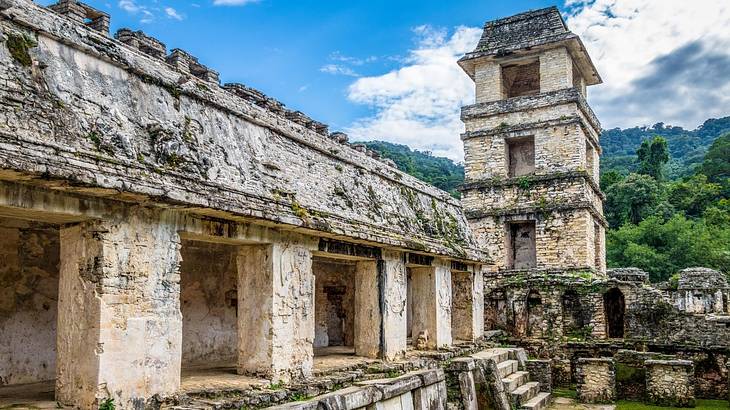
One of the most powerful Maya cities of the Classic period (roughly 400 to 900 AD), Palenque sits at the edge of the Chiapas jungle. The city was home to a formidable dynasty, and its detailed hieroglyphic inscriptions have given archaeologists one of the most complete records of any Maya kingdom.
The defining discovery at Palenque came in 1952, when archaeologist Alberto Ruz L'Huillier found the tomb of K'inich Janaab Pakal deep inside the Temple of the Inscriptions. Pakal took the throne at the age of 12 and ruled for 68 years, overseeing much of the city's construction.
His jade funeral mask is now displayed at the Museo Nacional de Antropología in Mexico City. Palenque became a UNESCO World Heritage Site in 1987.


Museo Subacuático de Arte
Off the coast near Cancun and Isla Mujeres, the Museo Subacuatico de Arte (MUSA) is one of the world's largest underwater art installations.
Founded in 2009, the museum holds over 500 permanent sculptures by British artist Jason deCaires Taylor and other contributors, resting on the ocean floor at depths between three and eight meters.
The sculptures are made from pH-neutral marine-grade cement, designed to encourage coral and algae growth on their surfaces over time.
Visitors can explore the museum by snorkeling, scuba diving, or glass-bottom boat. MUSA also serves a conservation purpose by drawing visitors away from the nearby natural reef, reducing pressure on fragile ecosystems.
☂️ Visit MUSA with an excursion
In Summary
Mexico's landmarks stretch well beyond its most famous beach resorts. The country holds more UNESCO World Heritage Sites than any other nation in the Americas, and its history spans thousands of years across dozens of distinct civilizations.
Whether you are drawn to the Maya cities of the Yucatan, the colonial architecture of Mexico City, or the petrified waterfalls of Oaxaca, these 21 landmarks offer a great starting point for exploring what makes Mexico so remarkable.

Want to keep exploring?
Subscribe for our latest guides.
Thank you for subscribing
We will be in touch soon with our latest guides.
Want to keep exploring?
Subscribe for our latest guides.
Thank you for subscribing
We will be in touch soon with our latest guides.