
25 Most Famous Landmarks in North America to Visit

Destguides may receive commissions from purchases made through affiliate links in this article.
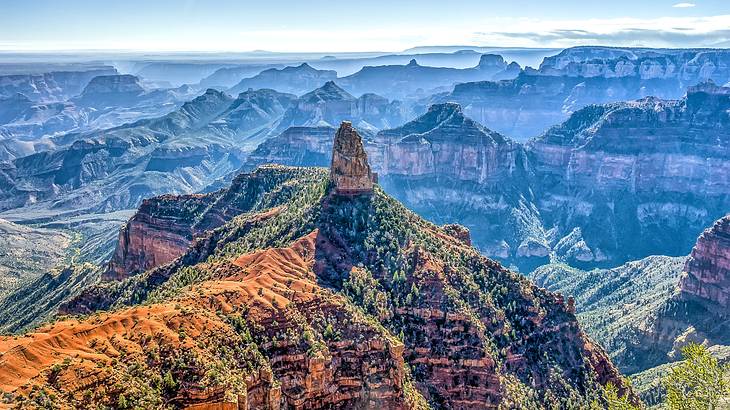

North America is one of the world's most visited continents, offering something for every traveler. Canada's national parks showcase stunning lakes and untouched mountain landscapes.
The United States features iconic landmarks like the Statue of Liberty, blending history, architecture, and natural wonders. Mexico is rich in Mayan and Aztec heritage, with vibrant landmarks that reveal its cultural roots.
This guide highlights famous landmarks in North America that will inspire you to explore the continent to your heart's content. Continue reading to learn more.
25 Famous North America Landmarks
- Statue of Liberty, New York, USA
- Empire State Building, New York, USA
- The Metropolitan Museum of Art, New York, USA
- Times Square, New York, USA
- 9/11 Memorial & Museum, New York, USA
- Mount Rushmore, South Dakota, USA
- Cloud Gate, Illinois, USA
- Grand Canyon National Park, Arizona, USA
- Washington Monument, Washington, D.C., USA
- The White House, Washington, D.C., USA
- Redwood National Park, California, USA
- Yosemite National Park, California, USA
- Golden Gate Bridge, California, USA
- Hoover Dam, Nevada, USA
- Space Needle, Washington, USA
- Niagara Falls, Ontario, Canada
- CN Tower, Ontario, Canada
- Parliament Hill, Ontario, Canada
- Fairmont Le Château Frontenac, Quebec, Canada
- Banff National Park, Alberta, Canada
- Chichen Itza, Yucatan, Mexico
- Tulum Archaeological Zone, Quintana Roo, Mexico
- Chapultepec Castle, Mexico City, Mexico
- Metropolitan Cathedral, Mexico City, Mexico
- Teotihuacan Pyramids, Teotihuacan, Mexico
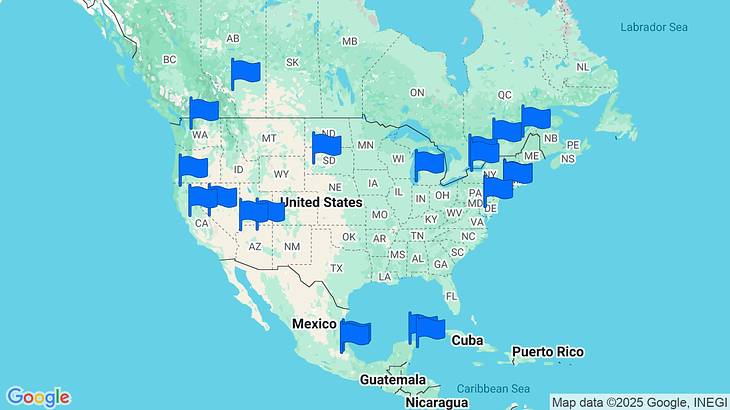
North America Landmarks Map
A map of North America landmarks. Use the map to explore all of the points of interest.

Statue of Liberty, New York, USA
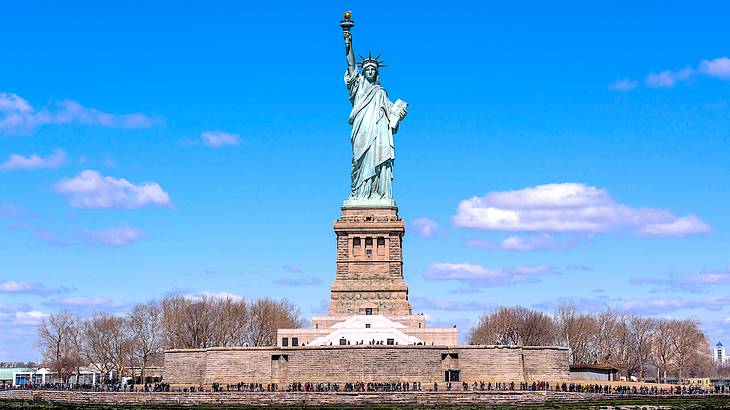
The Statue of Liberty, a symbol of the United States, is one of New York and North America's most famous landmarks. Gifted to the U.S. by France in 1886, it stands on Liberty Island just minutes from New York City.
The Statue of Liberty represents independence and is inspired by the Roman goddess of freedom. It draws around four million visitors each year. While the statue is visible from New York City, you'll need to take a ferry to reach the island.
Once here, you can climb 374 steps to the top for stunning views of the New York City skyline, including the Empire State Building.
Empire State Building, New York, USA
One of the most famous landmarks in the world, the Empire State Building has stood tall since its completion in 1931. This Art Deco skyscraper reaches 1,454 feet to its tip, including its antenna, and was the tallest building in the world for nearly 40 years.
Visitors can explore the observation decks on the 86th and 102nd floors, which offer stunning panoramic views of Manhattan, the Hudson River, and beyond. The building is especially striking at night, when its tower lights are illuminated in various colors to celebrate holidays, events, and causes.
A symbol of American ambition and innovation, the Empire State Building continues to draw millions of visitors each year, making it a must-see landmark in North America.

The Metropolitan Museum of Art, New York, USA
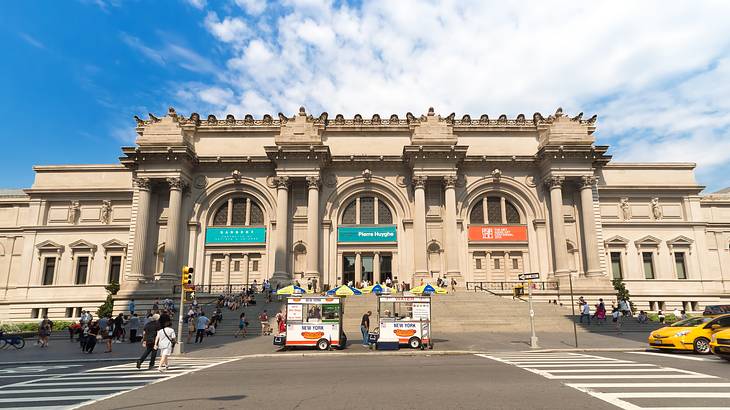
There are many museums across the U.S. and North America, but the most famous is undoubtedly the Metropolitan Museum of Art (also known as "The Met") in New York City. One of the continent's major cultural landmarks, it attracts over five million visitors annually.
The museum is organized into 17 departments and houses over two million works in its permanent collection. You can admire masterpieces by Edgar Degas, Vincent van Gogh, and Jackson Pollock, among many other notable artists.
Historical artifacts on display include the world's oldest piano, the Astor Chinese Garden Court, an ancient Egyptian temple (Temple of Dendur), and Henry VIII's armor.
For a more off-the-beaten-path experience in NYC, check out lesser-known museums such as the Morgan Library & Museum or the Mmuseumm, each offering unique collections and exhibitions.
Times Square, New York, USA
Times Square, located in the heart of New York City, is one of the most famous landmarks in the United States and a global symbol of the city that never sleeps. Known for its bright neon lights, massive digital billboards, and bustling atmosphere, it attracts millions of visitors each year.
The square is home to Broadway theaters, flagship stores, restaurants, and entertainment venues, making it a must-visit destination for tourists. Whether you're visiting during the New Year's Eve ball drop or exploring the vibrant streets with your loved one, Times Square offers an unforgettable New York City experience.
9/11 Memorial & Museum, New York, USA
The 9/11 Memorial & Museum in Lower Manhattan honors the lives lost during the September 11, 2001, terrorist attacks. The memorial features twin reflecting pools set in the footprints of the original Twin Towers, surrounded by the names of nearly 3,000 victims.
The museum provides historical context through artifacts, multimedia exhibits, and personal stories, preserving the memory of the attacks while educating visitors about resilience and recovery. It is a solemn but essential site for understanding modern American history.
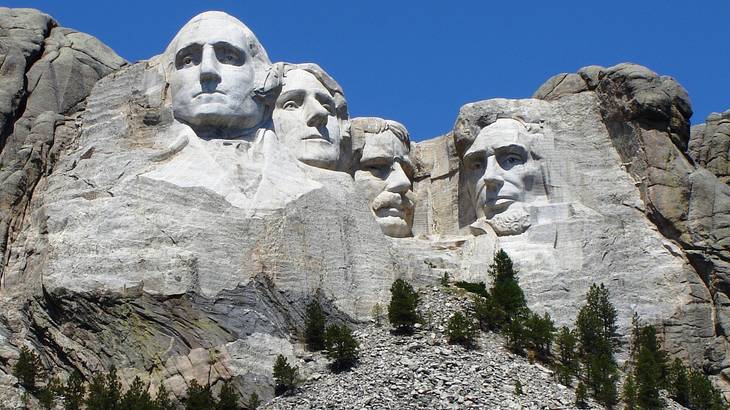

Mount Rushmore, South Dakota, USA
Another famous United States landmark that has become synonymous with the country is Mount Rushmore. Completed in 1941, Mount Rushmore National Memorial is located near Keystone in the Black Hills of South Dakota.
This colossal mountain sculpture features the faces of four U.S. presidents: George Washington, Thomas Jefferson, Theodore Roosevelt, and Abraham Lincoln. Carved over the course of 14 years by sculptor Gutzon Borglum, the monument has been a popular destination for visitors ever since its unveiling.
Cloud Gate, Illinois, USA
Nicknamed "The Bean," Cloud Gate is a public sculpture in Chicago's Millennium Park created by British artist Anish Kapoor. Unveiled in 2004, its stainless steel surface mirrors the city skyline and the surrounding park, making it a favorite spot for photos.
The sculpture stands 10 meters high and 20 meters long, symbolizing Chicago's creative and modern spirit. At night, its reflective surface creates a dazzling effect as the city lights dance across it.
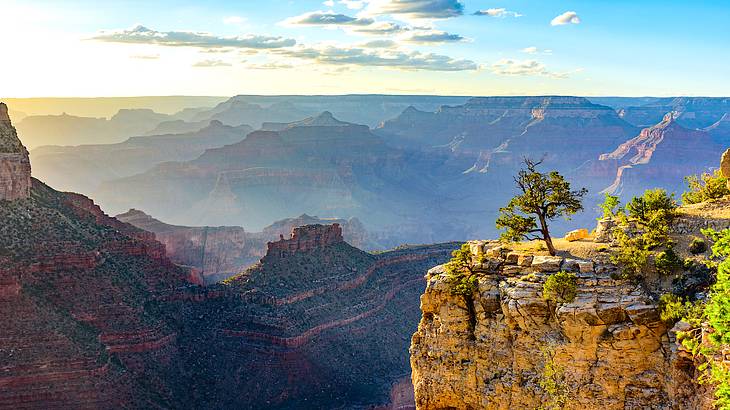

Grand Canyon National Park, Arizona, USA
The Grand Canyon in Arizona is one of North America's most-visited landmarks, drawing tourists and locals throughout the year. While not the deepest canyon in the world, its vast size and stunning landscapes make it a highlight of any trip.
The park spans 1,904 square miles (4,931 km²) and stretches approximately 447 km (278 miles) along the Colorado River. Within the canyon lies Supai, a remote village with about 200 residents, recognized as one of the most isolated communities in the contiguous United States.
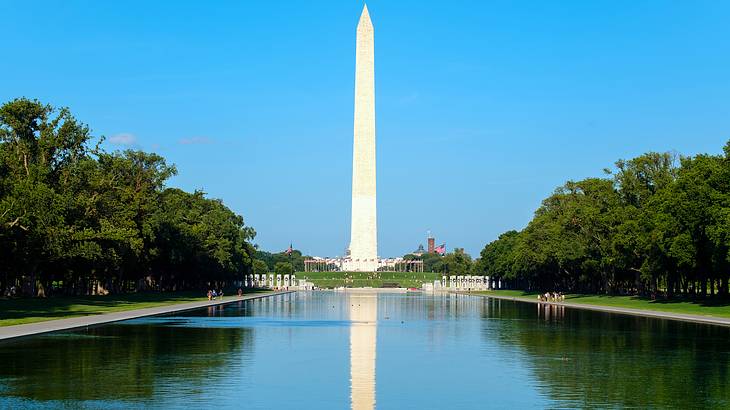
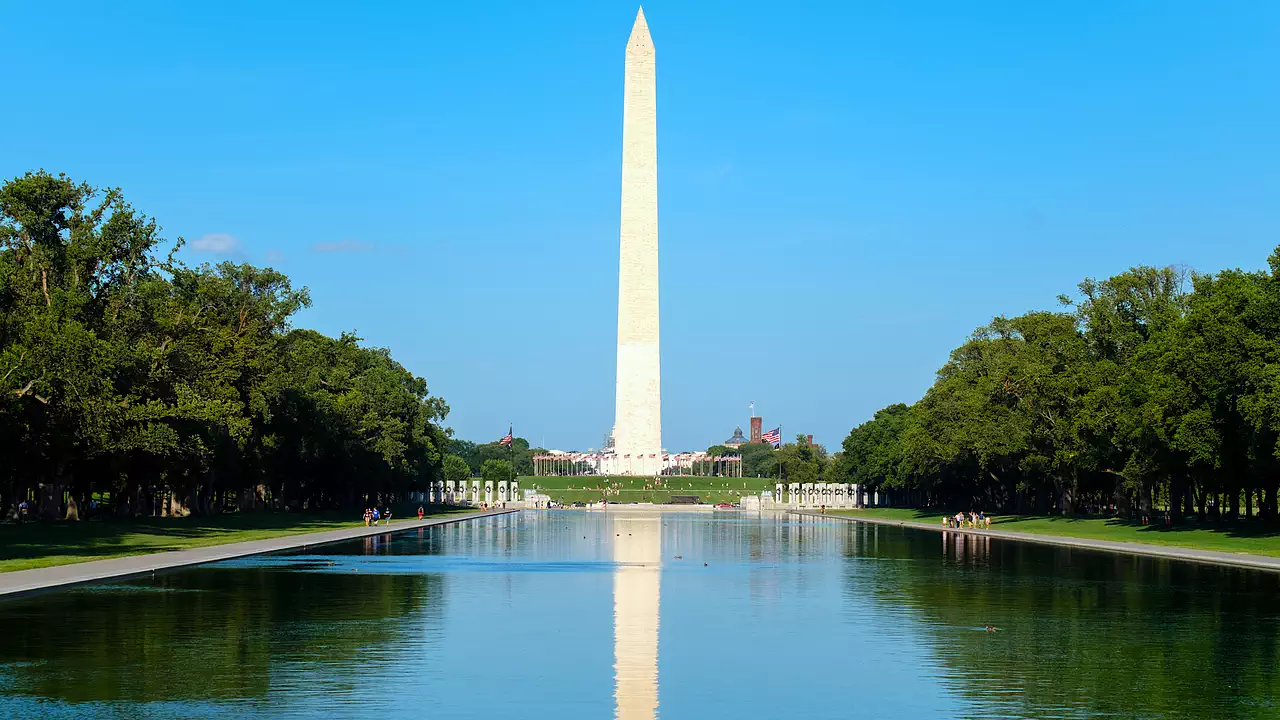
Washington Monument, Washington, D.C., USA
Washington, D.C., is home to many famous landmarks, including the Lincoln Memorial and the Washington Monument. It honors the first U.S. president, George Washington, and stands prominently on the National Mall.
The Washington Monument is a 555-foot-tall (169-meter) white marble obelisk, completed in 1884 and designed by architect Robert Mills. Initially, the project was intended to include a more elaborate design featuring Revolutionary War heroes and Washington in a horse-drawn chariot, but funding limitations prevented these additions.
The White House, Washington, D.C., USA
The White House serves as the official residence and workplace of the U.S. president and has done so since 1800, starting with John Adams. Located at 1600 Pennsylvania Avenue in Washington, D.C., it represents American leadership and history.
Visitors can admire the White House from Lafayette Square or book a guided tour through a congressional office to explore rooms such as the Library and the State Dining Room. The surrounding area also features beautiful gardens and monuments that highlight the city's political and cultural heritage.
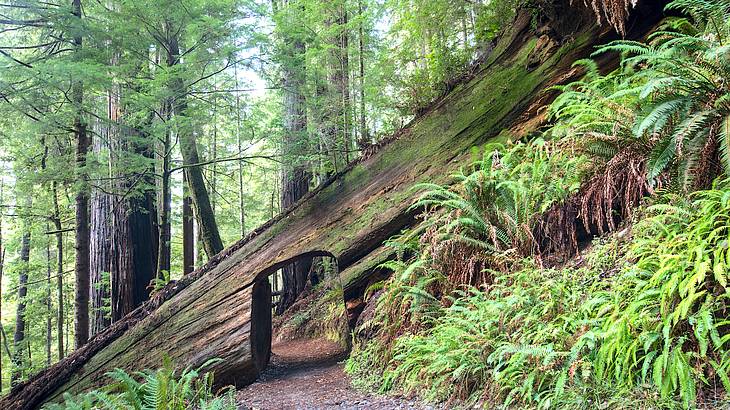

Redwood National Park, California, USA
The Redwood National Park in California is one of North America's most famous natural landmarks. It is home to the tallest trees on Earth, the Coast Redwoods, which can live between 500 and 700 years, with some exceeding 2,000 years.
The tallest tree in the park, Hyperion, reaches 379 feet (115 meters). Walking among these towering giants gives visitors a true sense of the resilience and majesty of nature. Hiking, scenic drives, and ranger-led programs offer multiple ways to experience the park's stunning forests and diverse wildlife.
Yosemite National Park, California, USA
Yosemite National Park is one of the most celebrated natural landmarks in the United States, known for its dramatic granite cliffs, waterfalls, giant sequoias, and diverse wildlife. Established in 1890, it covers an area of 3,027 square kilometers in the Sierra Nevada mountains.
Visitors can explore landmarks such as El Capitan, Half Dome, and Yosemite Falls, hike scenic trails, or camp among towering trees. Yosemite's breathtaking landscapes and commitment to conservation continue to captivate visitors
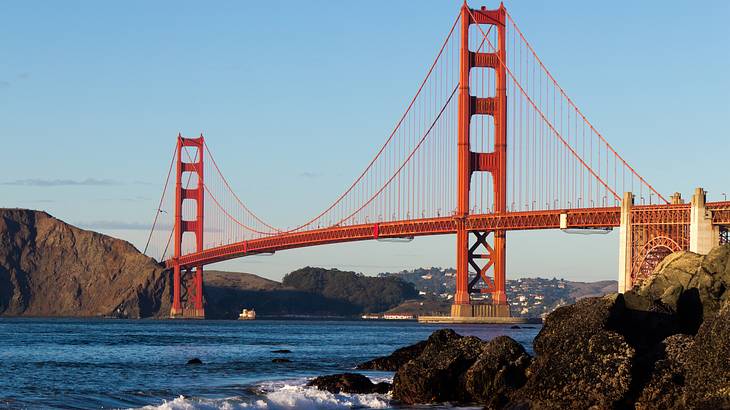

Golden Gate Bridge, California, USA
Even if you've never been to the United States, you've likely heard of the Golden Gate Bridge. Completed in 1937, this famous California landmark connects San Francisco to Marin County. It is a must-see on any San Francisco itinerary!
The Golden Gate Bridge spans 1.7 miles (2.7 km) and was the longest suspension bridge in the U.S. until 1964, when the Verrazzano-Narrows Bridge in New York City surpassed it.
Its distinctive "International Orange" color contrasts beautifully with the surrounding green hills and blue waters. Originally planned to be yellow and blue, the final color was chosen after the steel arrived pre-painted red.
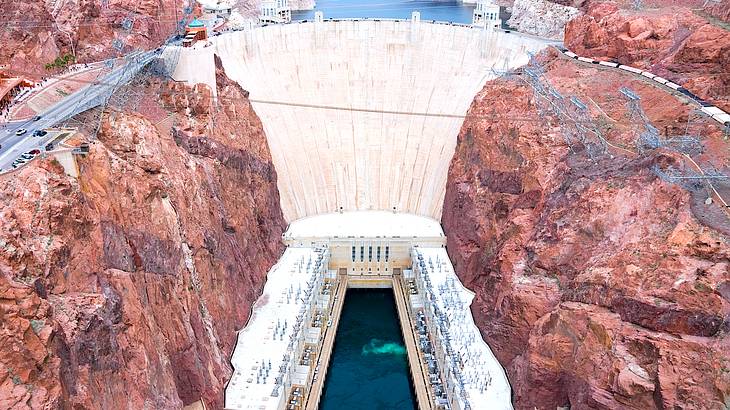

Hoover Dam, Nevada, USA
The Hoover Dam in Nevada is one of the engineering marvels of the modern world. Known for its massive size, the dam provides hydroelectric power and water to seven U.S. states and part of Mexico.
Designated a National Historic Landmark in 1985 and named one of America's Seven Modern Civil Engineering Wonders in 1994, the Hoover Dam is located about 45 minutes from Las Vegas, making it an easy day trip. Visitors can walk across the top of the dam at no cost, but guided tours are highly recommended.
The dam's 17 turbines generate enough electricity to power 1.3 million homes, irrigate 2 million acres of land, and hold back the Colorado River. Construction began in 1922 and was completed in 1936.
Space Needle, Washington, USA
The Space Needle in Seattle, Washington, is one of the city's most recognizable landmarks and a symbol of the Pacific Northwest. Built for the 1962 World's Fair, the tower stands 605 feet (184 meters) tall and offers panoramic views of downtown Seattle, Mount Rainier, Puget Sound, and the surrounding mountains.
You can take an elevator to the observation deck and enjoy 360-degree views, a rotating glass floor, and a cafe serving local cuisine. The Space Needle remains a must-visit attraction for first-time visitors and those looking to experience Seattle from above.
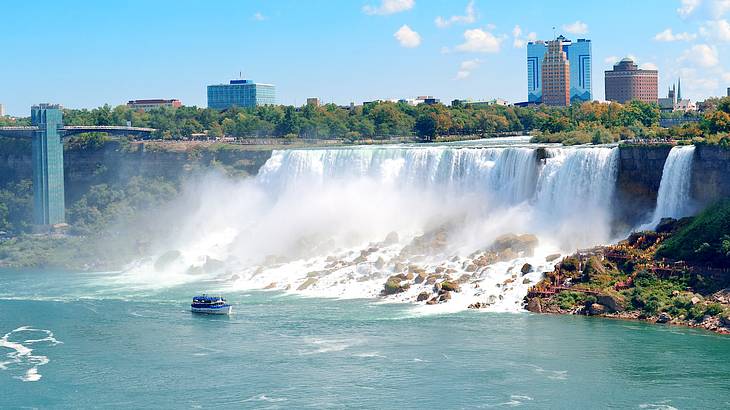

Niagara Falls, Ontario, Canada
This list wouldn't be complete without Niagara Falls, which straddles the border of Ontario, Canada, and New York, USA. The falls attract around 12 million visitors annually and comprise three distinct waterfalls: the American Falls, Bridal Veil Falls, and the Canadian Horseshoe Falls.
Niagara Falls is spectacular both day and night, with fireworks and a nightly light show that illuminates the cascading waters for an unforgettable experience. You can also take boat tours or walk along observation decks to get up close to the roaring waters.
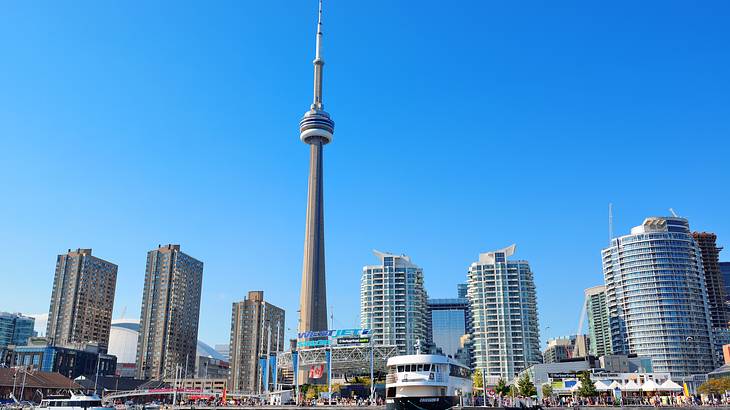

CN Tower, Ontario, Canada
There are several landmarks that are synonymous with a country, and for Canada, one of these is the CN Tower in Toronto. It has become a national symbol and is one of the most-visited landmarks in Canada.
The tower stands 553 meters tall and serves as a central navigation point in the city, helping visitors and locals alike find their way around Toronto. Completed in 1976, it has drawn millions of people over the decades.
The CN Tower is also one of the most photographed sites in Toronto. In 1995, it was designated a Wonder of the Modern World by the American Society of Civil Engineers, making it a must-visit attraction on any Toronto itinerary.


Parliament Hill, Ontario, Canada
Parliament Hill (also known as "The Hill" locally) is the heart of Canada's federal government, located on the southern bank of the Ottawa River. The site is famous for its Gothic Revival architecture and the iconic Peace Tower.
Construction began in 1859, and the Centre Block had to be rebuilt after a fire in 1916. Around 1.5 million people visit the grounds annually, take guided tours, and witness events such as the Changing of the Guard or Canada Day celebrations. The Library of Parliament and the beautifully landscaped gardens are highlights for visitors.
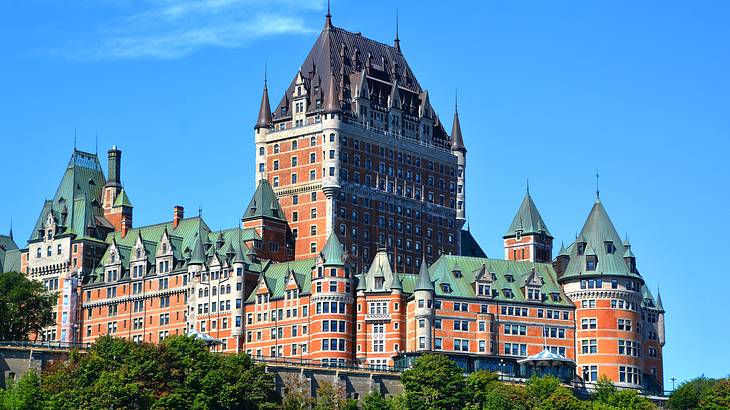

Fairmont Le Château Frontenac, Quebec, Canada
Old Quebec City is known as the center of historic architecture in Canada, featuring buildings that span centuries of the country's history. One of its most recognizable landmarks is Le Château Frontenac, a grand hotel overlooking the St. Lawrence River.
Built in 1892 by the Canadian Pacific Railway and named after Louis de Buade, Comte de Frontenac, the building was designed to promote luxury rail travel. Although it was never a seat of government, it has hosted many significant events and dignitaries over the years.
Designated a National Historic Site in 1981, Le Château Frontenac remains a symbol of Quebec's European charm. Whether you admire its fairy-tale architecture from Dufferin Terrace or stay overnight in the elegant hotel, it's a beautiful landmark to see.


Banff National Park, Alberta, Canada
One of Canada's celebrated natural landmarks, Banff National Park is an idyllic destination featuring lush forests, pristine lakes, and historic towns. Moraine Lake, a glacially-fed lake, turns a vivid turquoise during the summer months, offering breathtaking scenery.
The town of Banff sits within the park, surrounded by mountains that enhance its picturesque charm. Visitors can stroll down Banff Avenue to explore quaint architecture, shops, museums, and restaurants.
The park also offers year-round outdoor activities, ranging from hiking and canoeing in the summer to skiing and snowshoeing in the winter, making it a destination for every season.
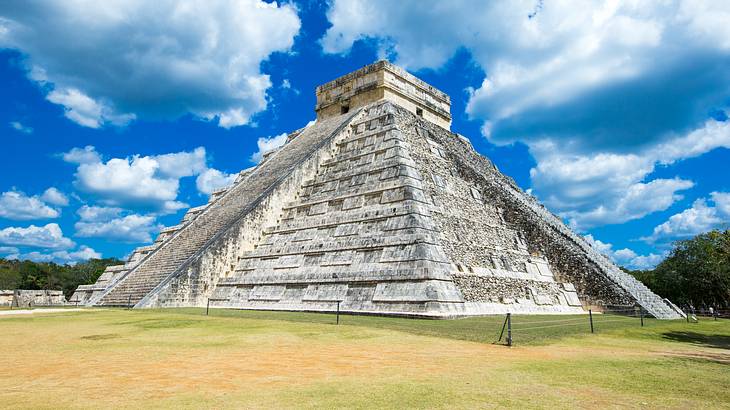

Chichen Itza, Yucatan, Mexico
Chichen Itza was the center of pilgrimage for the ancient Mayan civilization for over a thousand years. It was declared a UNESCO World Heritage Site in 1988 and is recognized as one of the New Seven Wonders of the World.
The archaeological site features several Mayan structures, with the Chichen Itza Pyramid, known as El Castillo, being the main highlight. Visitors can also explore the Temple of the Warriors and the Observatory, each offering insight into the ingenuity and culture of the Maya.
Exploring the site allows you to walk among ancient plazas, climb the steps of the pyramid, and imagine the vibrant ceremonies and daily life of the Mayan people.
Tulum Archaeological Zone, Quintana Roo, Mexico
Perched on a cliff overlooking the Caribbean Sea, the Tulum Archaeological Zone was once a major port city for the ancient Mayan civilization. The site features well-preserved ruins, including temples, walls, and the iconic El Castillo pyramid, which served as both a watchtower and a religious center.
Tulum is unique among Mayan cities due to its coastal location, which offers stunning sea views alongside historical exploration. The site was inhabited from around the 13th to the 16th centuries. Visitors can wander the ruins, learn about Mayan culture, and enjoy nearby beaches and cenotes for swimming and relaxation.
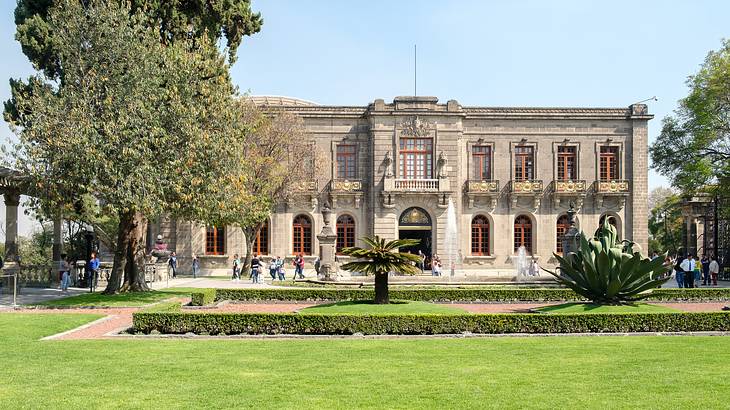

Chapultepec Castle, Mexico City, Mexico
Castillo Chapultepec, the only castle in North America to serve as a royal residence, is a notable landmark in Mexico City. Construction began in 1785, and after changes in ownership and architects, the building was purchased by the municipal government in 1806.
The castle later served as the home of Emperor Maximilian I and Empress Carlota from 1864 to 1867. Following their reign, the castle has been used as an observatory, a military college, and an official guest house for state dignitaries.
Today, it houses the Museum of National History, offering visitors a glimpse into Mexico's past. The castle has also been featured in films like Romeo and Juliet and is rumored to be haunted, adding to its intrigue.
Metropolitan Cathedral, Mexico City, Mexico
One of Mexico's most famous landmarks, the Catedral de Metropolitana de la Asunción, stands 220 feet tall with a prominent central dome. Construction began in 1573 and features a blend of Gothic, Baroque, Neoclassical, and Churrigueresque (a style of Mexican Baroque) architectural styles.
Completed in 1813, the cathedral's main facade features statues of Saint Peter, Paul the Apostle, Saint Andrew, and James the Just. Inside, 16 chapels are dedicated to various saints, and the cathedral houses two historic organs from the 18th century, which are still used for concerts and ceremonies.
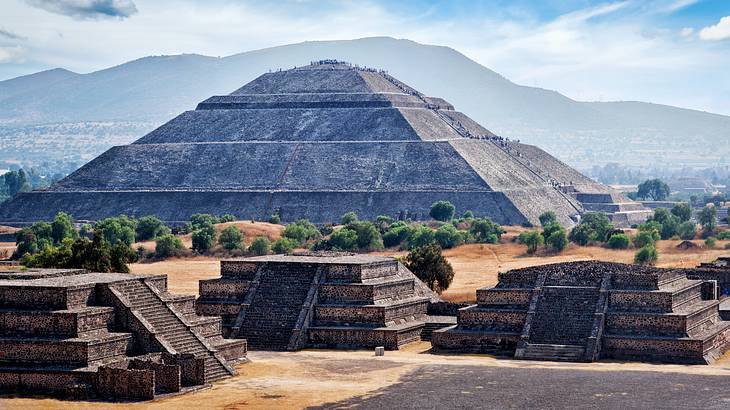

Teotihuacan Pyramids, Teotihuacan, Mexico
In the ancient city of Teotihuacan, two grand pyramids dominate the landscape: the Pyramid of the Sun and the Pyramid of the Moon. Teotihuacan flourished between 100 BC and 550 AD and was once one of the largest cities in Mesoamerica, with an estimated population of around 125,000 to 200,000 people.
The pyramids sit along the Avenue of the Dead, a 1.5-mile-long ceremonial road. The Pyramid of the Moon, built between 200 and 450 AD, was dedicated to the Great Goddess of Teotihuacan.
At the same time, the Pyramid of the Sun, completed around 100 AD, rises 216 feet and served as a center for religious and astronomical ceremonies. Both offer striking views of the ancient city from the top.
Conclusion
North America is full of natural beauty, historic sites, and ancient archaeological wonders. Whether you love exploring history or want to experience unique attractions, like walking across the top of a dam, we hope this list of famous North American landmarks helps you discover the best spots in the U.S., Mexico, and Canada to visit. Happy travels!

Want to keep exploring?
Subscribe for our latest guides.
Thank you for subscribing
We will be in touch soon with our latest guides.
Want to keep exploring?
Subscribe for our latest guides.
Thank you for subscribing
We will be in touch soon with our latest guides.