
14 Baltimore Nicknames and the History Behind Them

Destguides may receive commissions from purchases made through affiliate links in this article.
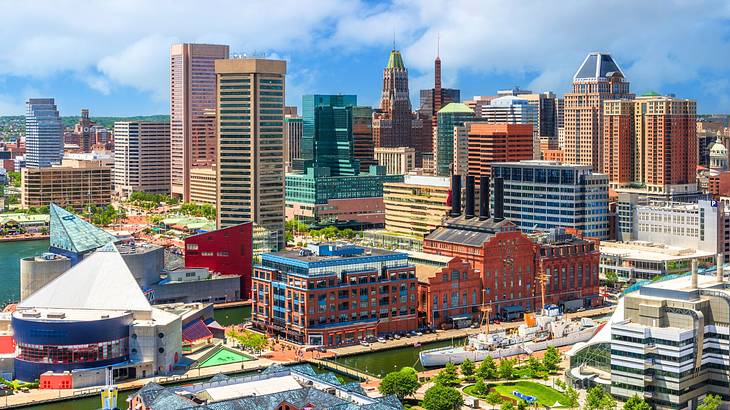

No single nickname has ever been enough for Baltimore. The city has collected 14 of them over three centuries, and they constantly contradict one another. Charm City sits alongside Mobtown.
Bodymore shares zip codes with The Greatest City in America. Some names came from ad campaigns, others from riots, and one arrived on a bench courtesy of a mayor who figured repetition would make it true. Here are 14 Baltimore nicknames and the stories behind them.
14 Nicknames for Baltimore
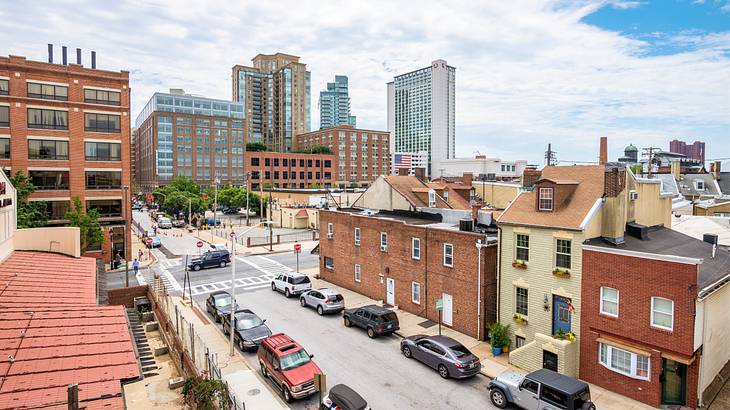

B-more
Baltimore's distinctive local dialect does the heavy lifting here. Locals have always compressed the city's name, dropping syllables and softening consonants, like "t." White working-class Baltimoreans tend to say "Bawlmer," while Black locals often pronounce it "Baldamore."
"B-more" sits between the two, a shared shorthand that reflects the way the city actually sounds when its residents say the name. It shows up in hip-hop, on merchandise, and in everyday conversation.
Bodymore
"Bodymore" is a dark, tongue-in-cheek nickname that grew out of Baltimore's struggles with homicide, particularly during the 1990s, when the city consistently recorded one of the highest murder rates in the country. It tends to be used by locals processing the reality of violence in certain neighborhoods rather than by tourism boards.

America's Comeback City
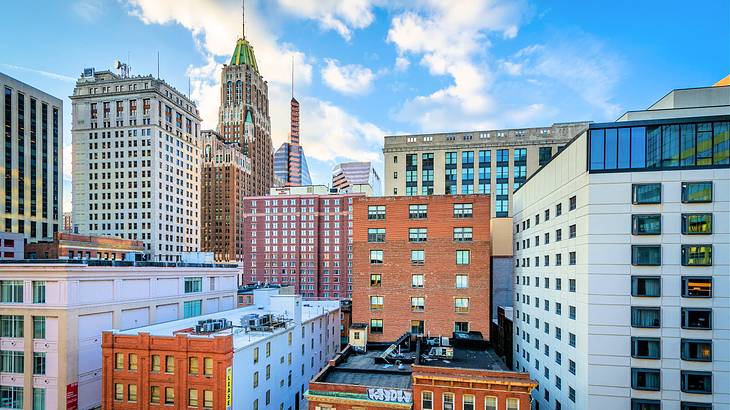
As Baltimore's murder rate hit a nearly 50-year low in 2024 and the city's population grew for the first time in decades, Mayor Brandon Scott began framing Baltimore as "the greatest comeback story in the country."
In a February 2026 CBS Evening News interview, he pointed to a 25% drop in vacant buildings and a 15-year, $3 billion plan to continue the work. The comeback framing has caught on with residents and in national coverage.
Bulletmore, Murderland
Unlike Bodymore, this nickname combines both the city and the state into one phrase. It gained wider circulation through David Simon's Baltimore-based journalism and television show, particularly The Wire, which drew international attention to the city's structural problems. It sometimes reappears in national commentary whenever Baltimore's homicide numbers make the news.

Charm City
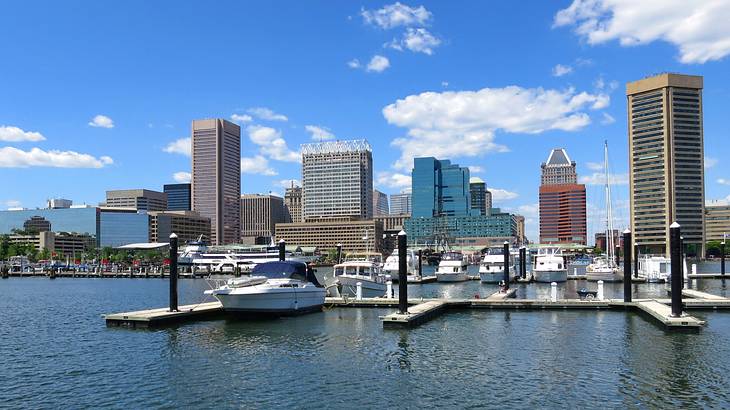
Baltimore's most famous nickname emerged from a crisis in civic morale. In the mid-1970s, Mayor William Donald Schaefer brought together executives and creatives from the city's top ad agencies to fix Baltimore's image.
Copywriter Bill Evans coined the phrase, inspired by the idea that Baltimore had more unspoiled charm than most cities out in the spotlight. The campaign launched in 1975 with a charm-bracelet promotion in which visitors collected charms at various attractions. The ads faded within a few years, but the nickname never did.
The City That Reads
Mayor Kurt Schmoke took office in 1987 and made education the centerpiece of his three terms. His administration invested in public schools and adult literacy programs, intending to rebrand Baltimore as "The City That Reads." The slogan appeared throughout the late 1980s and 1990s more prominently.
The Crab Cake Capital of the World
Baltimore's claim to crab cake supremacy is built on two things. The first is geography: Chesapeake Bay blue crabs have been the backbone of the region's seafood industry for generations.
The second is Old Bay, the red-tin seasoning that German refugee Gustav Brunn developed in Baltimore in 1939. Put the two together, and you get a dish so closely tied to the city that the title has gone largely uncontested.
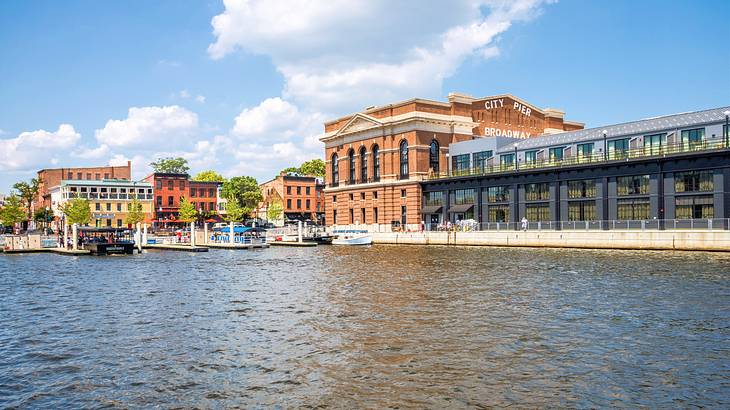

Clipper City
In the late 1700s and early 1800s, shipbuilders at Fell's Point turned out fast topsail schooners that became known as Baltimore Clippers. The ships were famous for their speed and played a major role in the War of 1812, when Baltimore-built privateers harassed British merchant vessels up and down the Atlantic. The Fell's Point yards cemented the city's reputation as a shipbuilding powerhouse and "Clipper City."
Harm City
Locals use "Harm City" to call out the gap between Baltimore's marketing and the lived reality of parts of the city, pointing to both the homicide rate and the long history of Baltimore Police Department misconduct.
The BPD has faced multiple federal investigations, a consent decree, and high-profile settlements, including the $6.4 million paid after Freddie Gray died in 2015.
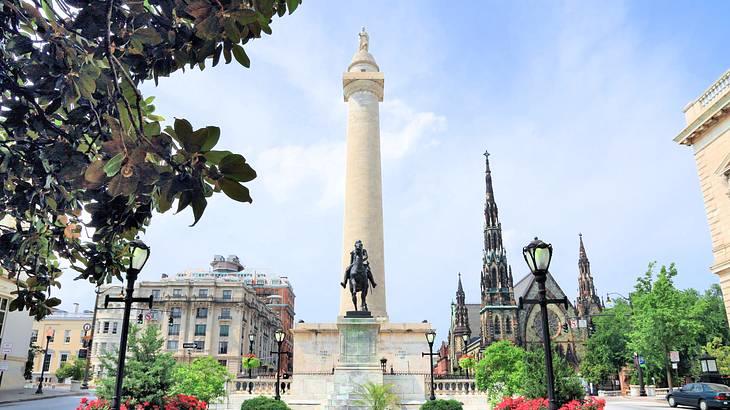

Monumental City
President John Quincy Adams made this nickname famous during a visit in 1827. He saw Baltimore's Battle Monument, honoring defenders who died repelling the British in 1814, and the Washington Monument, the first major memorial to George Washington in the country.
Impressed, he raised a toast at Barnum's Hotel to "Baltimore, the Monumental City." Other sources have also shown that the phrase appeared in print as early as 1823, coined by a Washington editor, but it was Adams's toast that made it stick.
Mobtown
Baltimore earned this one the hard way. The nickname traces back to the 1812 riots, when pro-war crowds attacked a Federalist newspaper and killed Revolutionary War general James Lingan.
The name was further reinforced in August 1835, when the collapse of the Bank of Maryland and fraud accusations against its directors set off several days of rioting that destroyed the homes of the accused.
It was one of the most destructive episodes of civil unrest in antebellum America. Today, "Mobtown" shows up on local business signs with a kind of reclaimed pride.
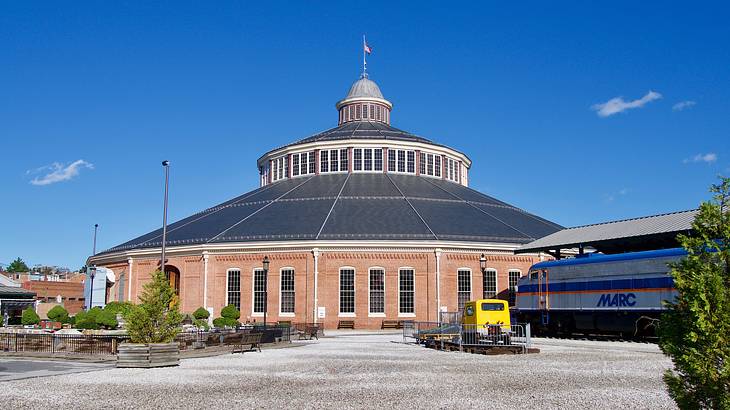

A City of Firsts
Baltimore's position as a major port and gateway to the West made it a hub for innovation. The city became the eastern terminus of the National Road, the country's first federally funded highway, in 1824.
The Baltimore & Ohio Railroad, chartered in 1827, became the first common carrier railroad in the US. Samuel Morse sent the first telegraph message from the B&O's Mount Clare Station in 1844. The list goes on, from the world's first dental college to the country's first research university at Johns Hopkins.
Smalltimore
Despite a population of around 570,000, Baltimore has a reputation for feeling much smaller. "Smalltimore" captures the everyday experience of running into the same familiar faces across neighborhoods, workplaces, and bars. It's an affectionate nickname that reflects the tight-knit social fabric of a city that, for all its size, often behaves like a much smaller town.
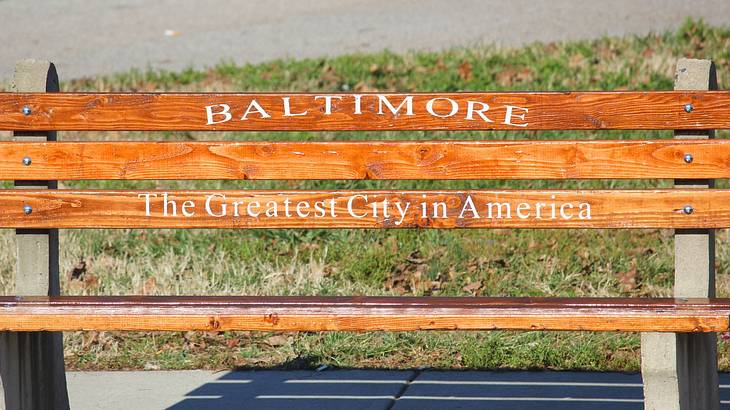

The Greatest City in America
Mayor Martin O'Malley introduced this slogan in the early 2000s as part of a municipal rebranding effort. It appears on many benches across the city. The initiative drew plenty of eye-rolling at the time, but the benches outlasted the campaign.
In 2015, the City Council officially adopted "Birthplace of The Star-Spangled Banner" as Baltimore's slogan, but "The Greatest City in America" benches are still a fixture on Baltimore sidewalks.
In Summary
Baltimore's nicknames don't agree with each other, and that's the point. Mobtown and Charm City share the same maps. Bodymore and The Greatest City in America show up on the same blocks.
The city keeps stacking names because no single one has ever been big enough to hold the whole story, and each new administration seems to add another.

Want to keep exploring?
Subscribe for our latest guides.
Thank you for subscribing
We will be in touch soon with our latest guides.
Want to keep exploring?
Subscribe for our latest guides.
Thank you for subscribing
We will be in touch soon with our latest guides.