
20 Famous Landmarks in South Carolina to Visit

Destguides may receive commissions from purchases made through affiliate links in this article.
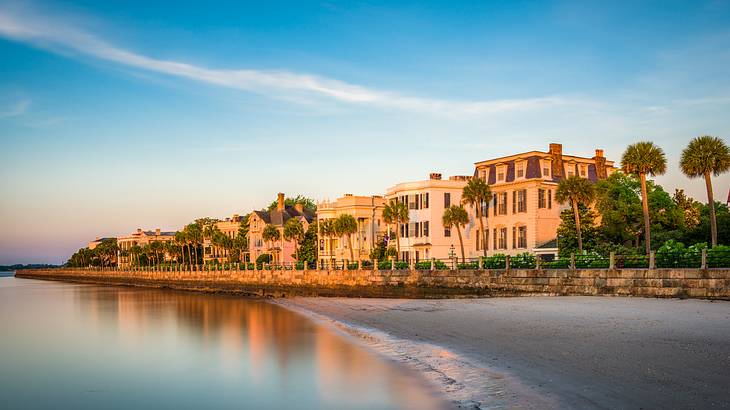

South Carolina was among the first regions in North America settled by Europeans, and many of the landmarks that remain today date back to the colonial period. The state is also home to old-growth floodplain forests, a barrier island lighthouse, and the highest point in South Carolina.
This article covers 20 famous landmarks in South Carolina, from historic sites in Charleston to waterfalls, mountains, and other notable places across the state. Continue reading to see which landmarks made the list.
Heading to South Carolina and planning last-minute?
Before traveling to South Carolina, book your entrance tickets and tours ahead of time. Below are some top recommendations to get you started.
☂️ Top tours and experiences in South Carolina
- Charleston Harbor Luxury Dinner Cruise With Live Music (very popular)
- Haunted Evening Horse & Carriage Tour of Charleston (very popular)
- Charleston's Old South Carriage Historic Horse & Carriage Tour (very popular)
- Hilton Head Island Dolphin Boat Cruise
- Charleston Harbor Live Narrated History Day or Sunset Boat Cruise
20 Famous South Carolina Landmarks
- Charleston Historic District
- Arthur Ravenel Jr. Bridge
- Huntington Beach State Park
- Beaufort National Cemetery
- Middleton Place
- Congaree National Park
- Angel Oak Tree
- Fort Sumter and Fort Moultrie National Historical Park
- Harbour Town Lighthouse
- Hunting Island State Park
- Laurel Fork Falls
- Sassafras Mountain
- Ninety Six National Historic Site
- Patriots Point Naval and Maritime Museum
- Rainbow Row
- Reconstruction Era National Historical Park
- Robert Mills House and Gardens
- South Carolina State House
- South Carolina State Museum
- Drayton Hall
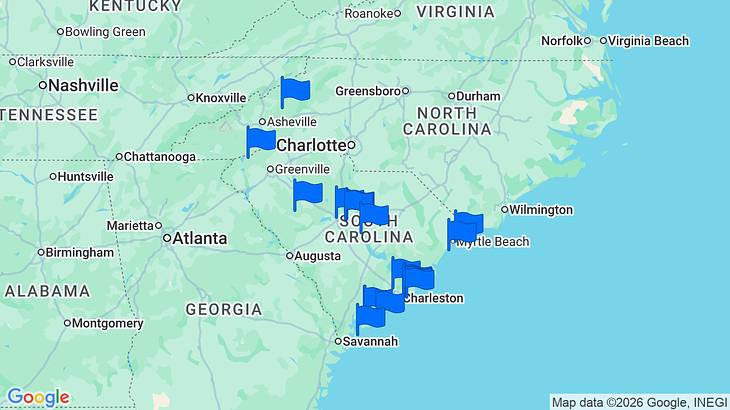
South Carolina Landmarks Map
A map of South Carolina landmarks. Use the map to explore all of the points of interest.
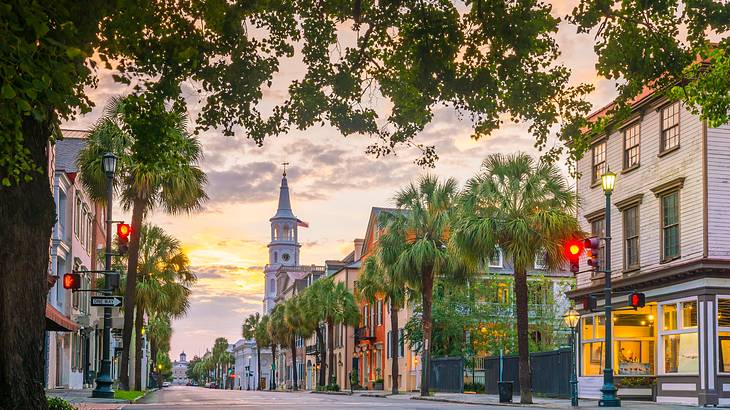

Charleston Historic District
Charleston was founded in 1670, making it one of the oldest cities in the United States. You can still walk its cobblestone streets past hundreds of colonial-era stucco-and-brick buildings, many painted in pastel shades dating to the early 20th century.
The city played a central role in the transatlantic trade in enslaved people. The Old Slave Mart Museum on Chalmers Street is the last known building used as an auction gallery for enslaved people in the state.
Charleston's Historic District is a National Historic Landmark District. Guided walking tours cover everything from pre-Revolutionary church architecture to the Gullah Geechee cultural heritage preserved in the Lowcountry.
☂️ Experience Charleston City Market with a tour

Arthur Ravenel Jr. Bridge
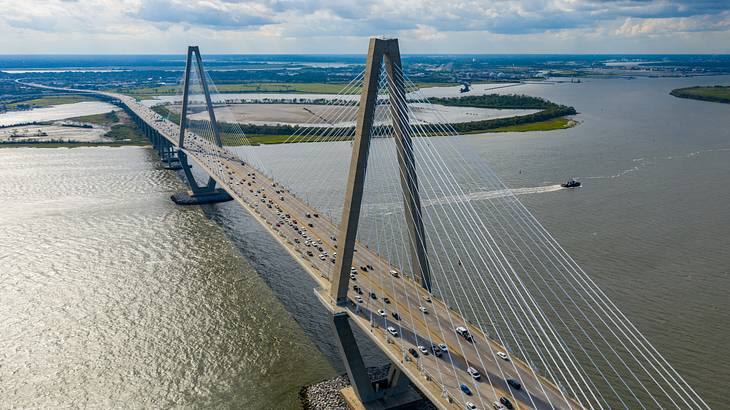
Opened in 2005, the Arthur Ravenel Jr. Bridge carries US Route 17 across the Cooper River between Charleston and Mount Pleasant. Its two diamond-shaped towers rise 575 feet, making them the tallest structures in South Carolina.
When completed, it held the record for the longest cable-stayed span in North America. A 12-foot-wide pedestrian and bicycle lane runs alongside the traffic lanes with views of Charleston Harbor.
Crossing the bridge on foot takes about 30 minutes each way. The path is open from dawn to dusk and is one of the best free outdoor activities in the area.
☂️ Experience Arthur Ravenel Jr Bridge with a tour
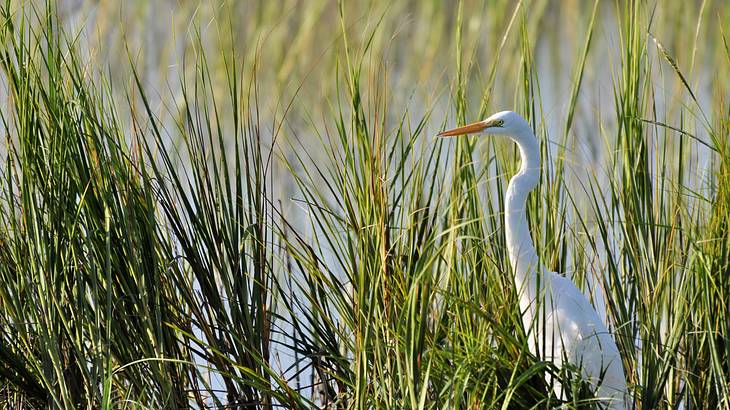

Huntington Beach State Park
Salt marshes, a freshwater lagoon, and three miles of undeveloped beach make Huntington Beach State Park one of the top birding destinations on the East Coast. Species you may spot include the painted bunting, the reddish egret, and various terns.
The park also contains Atalaya, the Moorish-style winter home of sculptor Anna Hyatt Huntington and her husband, Archer. Built in the 1930s, it hosts the annual Atalaya Arts and Crafts Festival each September.
Boardwalks wind through the salt marsh, and a nature center near the beach offers educational programs. Camping is available year-round.
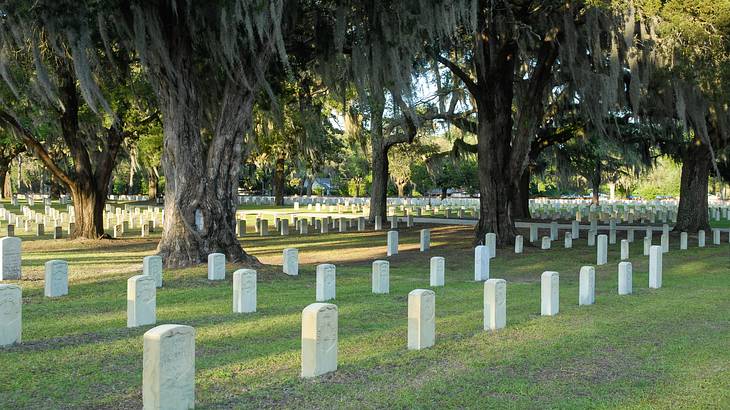

Beaufort National Cemetery
Established in 1863, Beaufort National Cemetery was one of the first national cemeteries designated for the burial of Union soldiers. Its half-wheel layout fans out from the main gate, with roads radiating through the grounds like spokes.
A granite obelisk near the entrance honors Union troops. It was erected in 1870 by Eliza McGuffin Potter, a nurse who cared for soldiers in Beaufort's wartime hospitals.
Two granite blocks mark the 1989 reinterment of soldiers from the Massachusetts 54th Infantry. Today, the cemetery holds veterans from every major American conflict. Its live oak-lined avenues make for a quiet, solemn walk.
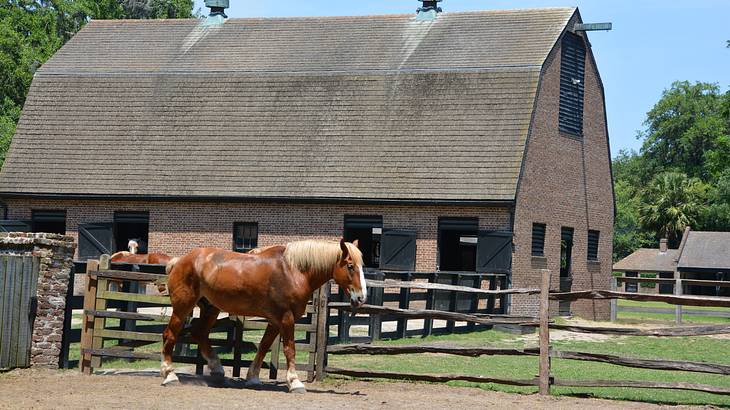

Middleton Place
Middleton Place along the Ashley River near Charleston is a National Historic Landmark and the site of America's oldest landscaped gardens, begun in 1741.
The estate was the home of Henry Middleton, president of the First Continental Congress, and his son Arthur, a signer of the Declaration of Independence. It was also a productive rice plantation, part of the agricultural system that earned South Carolina the nickname the "Rice State."
The property also tells the story of the hundreds of enslaved people who built, maintained, and worked the rice plantation. Eliza's House, a freedman's dwelling on the grounds, serves as the starting point for guided programs on the lives and labor of those forced to work here.
You can tour the surviving South Flanker house, explore 65 acres of formal gardens, and visit the stableyards where heritage-breed livestock are raised using 18th-century methods.
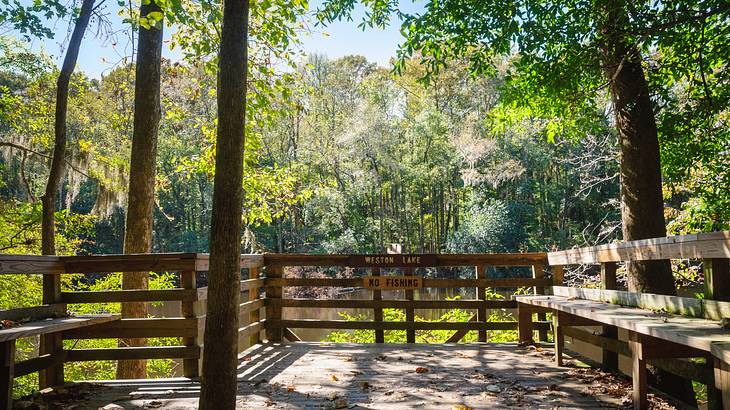

Congaree National Park
Congaree National Park, southeast of Columbia, protects the largest intact expanse of old-growth bottomland hardwood forest in the southeastern United States. Seasonal flooding deposits nutrient-rich sediment that fuels the growth of national and state champion trees.
A 2.4-mile elevated Boardwalk Loop Trail leads through the floodplain with 20 interpretive stops. You can also paddle the 50-mile Congaree River Blue Trail or explore over 25 miles of hiking trails.
Entrance and camping are free. In late May and early June, synchronous fireflies put on a coordinated light display. Check the NPS calendar for lottery dates if you plan to attend.
Angel Oak Tree
On Johns Island, about 12 miles from downtown Charleston, a southern live oak estimated at 400 to 500 years old spreads its branches over nearly 17,200 square feet.
The Angel Oak stands about 65 feet tall, and its longest limb reaches 187 feet. The tree takes its name from the Angel family, who owned the land beginning in the early 18th century.
It survived Hurricane Hugo in 1989 and has been under the care of the City of Charleston since 1991. Angel Oak Park is free to visit and open daily. Arriving early in the morning helps you avoid the crowds.
☂️ Visit Myrtle Beach State Park on a tour
- Capture Unforgettable Moments - Private Holiday Photography (highly rated)
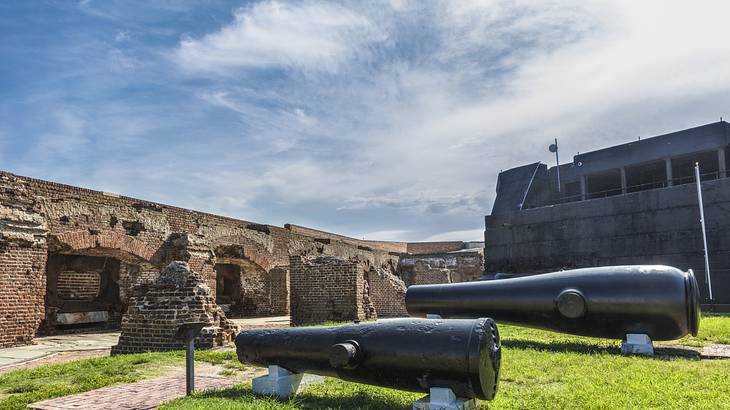

Fort Sumter and Fort Moultrie National Historical Park
Confederate forces fired on the Union-held Fort Sumter in Charleston Harbor on April 12, 1861, beginning the Civil War. The fort changed hands several times during the war and was heavily damaged by bombardment. Today you can visit the site and learn how the conflict began through its museum exhibits.
Fort Moultrie on nearby Sullivan's Island tells a longer military story, from the 1776 Revolutionary War battle in which a palmetto-log fort repelled the British fleet to its use through World War II. The National Park Service manages both sites.
Fort Sumter is only accessible by ferry from the Fort Sumter Visitor Education Center in Charleston or from Patriots Point in Mount Pleasant. Booking ferry tickets in advance is strongly recommended, especially during peak season.
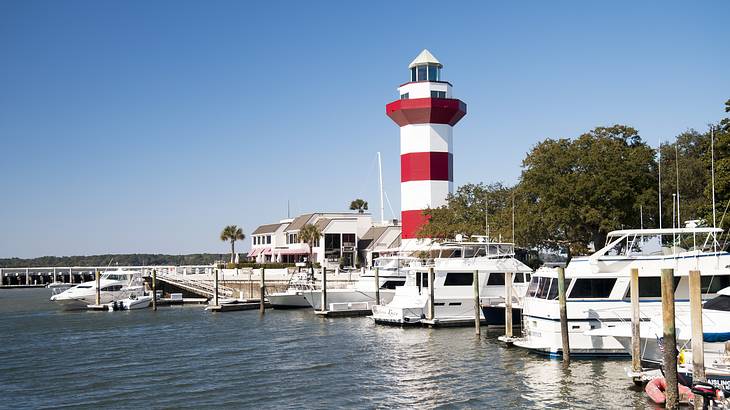

Harbour Town Lighthouse
Built in 1970 at the Harbour Town Marina on Hilton Head Island, this red-and-white-striped lighthouse has become one of the most recognized symbols of the South Carolina coast. It stands about 90 feet tall and still functions as a private aid to navigation.
Inside, 114 steps lead to an observation deck with views of Calibogue Sound. Museum exhibits on each landing cover Hilton Head's history, from Native American roots to the Gullah culture.
The lighthouse is also the backdrop for the 18th hole of Harbour Town Golf Links, host of the PGA Tour's annual RBC Heritage tournament.
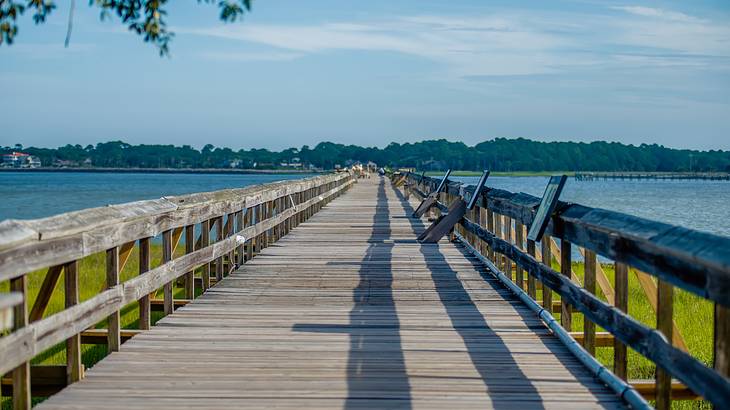

Hunting Island State Park
The main draw at Hunting Island State Park near Beaufort is the only publicly accessible lighthouse in South Carolina. Built in 1875 using interchangeable cast-iron plates, it replaced an 1859 brick tower destroyed during the Civil War.
In 1889, severe erosion forced the lighthouse to be relocated 1.3 miles inland. You can climb 167 steps to the observation deck for panoramic views of the barrier island and the Atlantic.
Beyond the lighthouse, the park offers five miles of beach and over 100 campsites. The "boneyard beach," where sun-bleached trees stand in the surf, is a favorite spot for photographers.
Laurel Fork Falls
Tucked into a narrow cove at the northeast end of Lake Jocassee, Laurel Fork Falls drops 80 feet off a rock face directly into the lake. It is one of the most scenic waterfalls in the South Carolina Upstate.
The most popular way to see the falls is by boat. You can launch at Devils Fork State Park and navigate to the Laurel Fork Creek cove. A grotto behind a rocky outcrop offers a dramatic profile view.
Hikers can reach the falls via a roughly 9-mile round-trip trail from the Laurel Creek Road trailhead. Several backcountry campsites make an overnight trip a good option.
Sassafras Mountain
At 3,553 feet, Sassafras Mountain in Pickens County is the highest point in South Carolina. The summit sits on the border with North Carolina, and on clear days you can see into four states.
An observation tower that opened in 2019 gives visitors an elevated vantage point above the tree line. It is accessible from a paved parking area via a short walk, making it one of the more approachable state high points in the country.
A roughly 4.2-mile round-trip hike from Chimneytop Gap reaches the peak through dense hardwood forest. The mountain's name comes from the sassafras trees on its lower slopes.
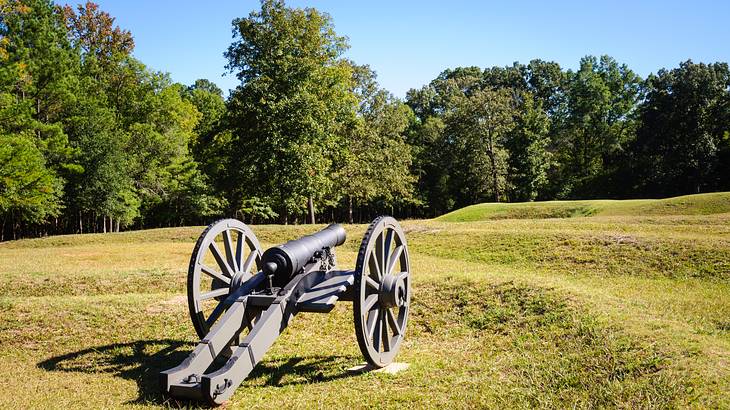

Ninety Six National Historic Site
Long before the Revolutionary War, the area around present-day Ninety Six was the frontier edge of European settlement in South Carolina. The site preserves traces of a colonial trading post, the Cherokee Path, and a fortified village.
Two Revolutionary War battles took place here. The first, in November 1775, was one of the earliest land engagements in the Southern colonies. The second, in 1781, was a 28-day siege led by General Nathanael Greene against a British-held star fort.
The NPS maintains the grounds, which include a visitor center and a one-mile interpretive trail. You can still trace the outline of the Star Fort.


Patriots Point Naval and Maritime Museum
Docked in Mount Pleasant, the USS Yorktown is a World War II-era aircraft carrier that serves as the centerpiece of Patriots Point. You can walk the flight deck, explore below-deck compartments, and see restored aircraft from several eras.
The museum also includes the USS Laffey, a destroyer that survived a concentrated kamikaze attack off Okinawa in 1945. A Vietnam Experience Exhibit on the grounds recreates a naval support base.
The views of Charleston Harbor from the Yorktown's flight deck are some of the best in the area. The museum is open daily and makes for a solid half-day visit.
☂️ Visit Patriots Point Naval & Maritime Museum with an excursion
- Afternoon Schooner Sightseeing Dolphin Cruise on Charleston Harbor (popular with most)
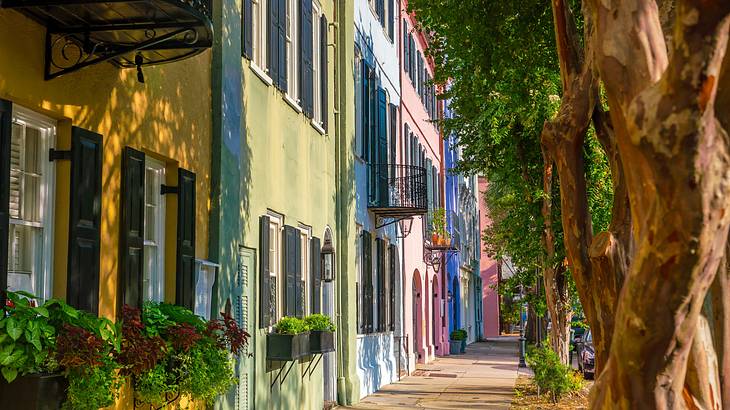

Rainbow Row
Thirteen pastel-colored Georgian row houses line East Bay Street along the Charleston waterfront. The buildings date to the 1740s and were originally used as merchant shops with residences above. They fell into disrepair by the early 20th century.
In 1931, a new owner, Dorothy Porcher Legge, purchased one of the houses and painted it pink. Her neighbors gradually followed suit, and by the 1940s, the full row had taken on the candy-colored appearance it has today. Local legend claims the bright facades were meant to help sailors find their way home, though no one has confirmed this.
Rainbow Row is one of the most photographed spots in the city. The houses are private residences and not open to the public, but the sidewalk and street offer clear views.
☂️ Visit Rainbow Row with an excursion
Reconstruction Era National Historical Park
Located in Beaufort, this is one of the newest parks in the NPS system and the first dedicated to the Reconstruction period. It focuses on the years from 1861 to 1900, when formerly enslaved people fought to establish their rights as citizens.
Sites include the Brick Baptist Church, where some of the first schools for freed people in the South were held, and Darrah Hall at the Penn Center on St. Helena Island, a hub for African American education.
Ranger-led programs cover topics from the passage of the 13th, 14th, and 15th Amendments to political gains made by Black South Carolinians.
Robert Mills House and Gardens
Designed in 1823 by Robert Mills, the first professionally trained American-born architect, this Classical Revival mansion sits on a full city block in Columbia. Mills is best known as the designer of the Washington Monument, and the house was designated a National Historic Landmark in 1973.
The home was originally built for Ainsley Hall, a Columbia merchant who died before its completion. It later served as the campus of the Columbia Theological Seminary and, briefly, as the founding site of Winthrop College in 1886.
Today the house is operated by Historic Columbia and open for guided tours. Period furnishings from the American Federal, English Regency, and French Empire styles fill the interior. The surrounding four-acre garden offers a peaceful break in downtown Columbia.


South Carolina State House
Construction began in 1851 under architect P.H. Hammarskold. After he was dismissed, John Niernsee redesigned the building, and work resumed in 1855. The Civil War interrupted progress when Sherman's troops shelled the unfinished structure in 1865. Six bronze stars on the western walls mark where artillery struck.
The main structure was completed by 1875, though work on the dome continued for decades. The building is a National Historic Landmark and still houses the General Assembly, Governor, and Lieutenant Governor.
Free guided tours run on the half hour. The grounds feature monuments spanning the state's involvement in conflicts from the Revolutionary War onward.
South Carolina State Museum
Housed in a former textile mill on the Congaree River in Columbia, the South Carolina State Museum covers art, natural history, science, and cultural heritage across four floors. The Columbia Mills Building dates to 1894 and is listed on the National Register of Historic Places.
Permanent exhibits explore topics from the state's prehistoric past to the contributions of African Americans in South Carolina. A planetarium, a 4D theater, and an observatory were added in 2014.
The museum rotates temporary exhibitions throughout the year. It pairs well with a trip to the nearby State House, about a mile east along Gervais Street.
Drayton Hall
Drayton Hall on the Ashley River is the oldest preserved plantation house in the United States open to the public. Construction began in 1738, and the house took 14 years to complete using the labor of enslaved people. It is the earliest example of Georgian Palladian architecture in the country.
Unlike other plantation houses in the area, Drayton Hall survived both the Revolutionary War and the Civil War without being burned. It has never been restored, so the original plaster, woodwork, and brickwork remain.
The site includes an African American cemetery and galleries examining the lives of the people enslaved here. It became a National Historic Landmark in 1960.
Conclusion
South Carolina's landmarks offer a look at the state's past, culture, and environment. Historic sites tell the story of South Carolina's colonial past, the Civil War, Reconstruction, and the plantation era, while its natural landmarks showcase the forests and mountains that define the state.
These 20 landmarks are a starting point for exploring South Carolina and seeing some of the places that have shaped its history and identity.

Want to keep exploring?
Subscribe for our latest guides.
Thank you for subscribing
We will be in touch soon with our latest guides.
Want to keep exploring?
Subscribe for our latest guides.
Thank you for subscribing
We will be in touch soon with our latest guides.