
25 Famous U.S. Landmarks You Must Visit

Destguides may receive commissions from purchases made through affiliate links in this article.
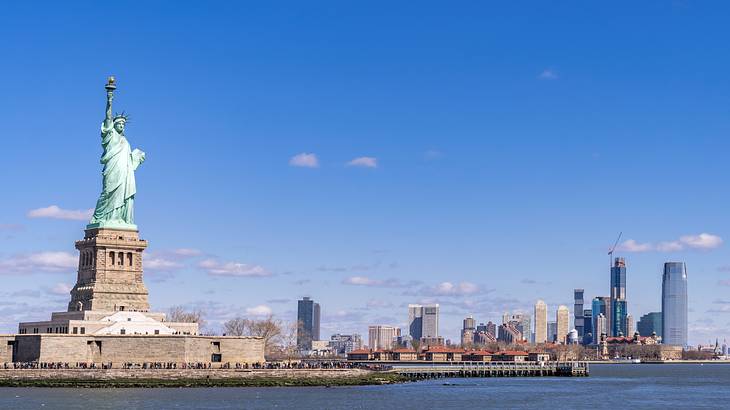

The United States is home to countless famous landmarks, from iconic monuments like the Statue of Liberty to stunning natural wonders like the Grand Canyon.
Historical sites such as Gettysburg and Pearl Harbor offer a window into the nation's past, while engineering marvels like the Golden Gate Bridge, Empire State Building, and Hoover Dam showcase America's architectural achievements.
Many of the country's most breathtaking landscapes are protected within national parks. Geysers in Yellowstone and granite cliffs in Yosemite highlight the natural beauty found across the United States.
Continue reading to discover 25 famous U.S. landmarks you should consider visiting at least once in your life.
Organizing a last-minute visit to the United States?
To make the most of your visit to the United States, we recommend you book entrance tickets and tours soon. Below are some top recommendations to get you started.
☂️ Top tours and experiences in the United States
- Chicago River 90-Minute Architecture Tour (likely to sell out)
- Oahu - Mauka Warriors Luau Honoring Polynesia's Forgotten History (very popular)
- Kenai Fjords National Park Glacier & Wildlife Cruise (very popular)
- Pearl Harbor USS Arizona Memorial Tour From Waikiki (very popular)
- Maui - te au Moana Luau at The Wailea Beach Marriott Resort
25 Famous USA Landmarks
- Grand Canyon, Arizona
- Monument Valley, Arizona
- Statue of Liberty, New York
- Empire State Building, New York
- Brooklyn Bridge, New York
- Niagara Falls, New York
- World Trade Center, New York
- Lincoln Memorial, Washington, D.C.
- The White House, Washington, D.C.
- Martin Luther King Jr. Memorial, Washington, D.C.
- United States Capitol, Washington, D.C.
- Washington Monument, Washington, D.C.
- Cloud Gate, Illinois
- Hoover Dam, Nevada
- Golden Gate Bridge, California
- Yosemite National Park, California
- Yellowstone National Park, Wyoming
- Arlington National Cemetery, Virginia
- Mammoth Cave National Park, Kentucky
- Whitney Plantation, Louisiana
- Gettysburg National Military Park, Pennsylvania
- Pearl Harbor National Memorial, Hawaii
- The Gateway Arch, Missouri
- Mount Rushmore, South Dakota
- The Space Needle, Washington
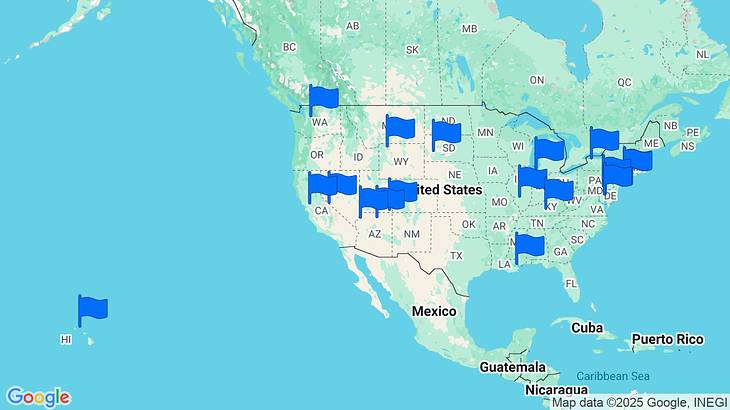
USA Landmarks Map
A map of the United States landmarks. Use the map to explore all of the points of interest.

Grand Canyon, Arizona
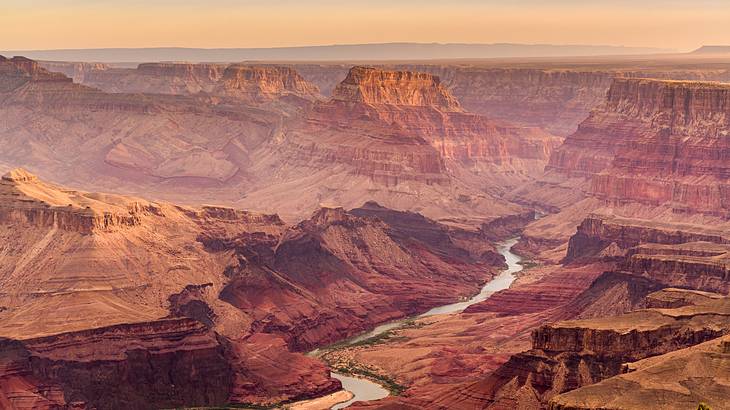
The Grand Canyon is located in northern Arizona, known as the "Grand Canyon State." This breathtaking geological wonder was carved over millions of years by the Colorado River. The canyon stretches approximately 277 miles long, up to 18 miles wide, and is more than a mile deep, making it the largest canyon in the United States.
The area surrounding the Grand Canyon is home to several Native American tribes, including the Havasupai, Hualapai, and Navajo. Grand Canyon National Park is one of the most-visited national parks in the country, welcoming around six million visitors a year.
☂️ See the Grand Canyon on a tour
- Grand Canyon Deluxe Helicopter Tour With Landing From Las Vegas (usually booked)
- Grand Canyon West, Hoover Dam Stop & Optional Lunch & Skywalk (popular and sought-after)

Monument Valley, Arizona
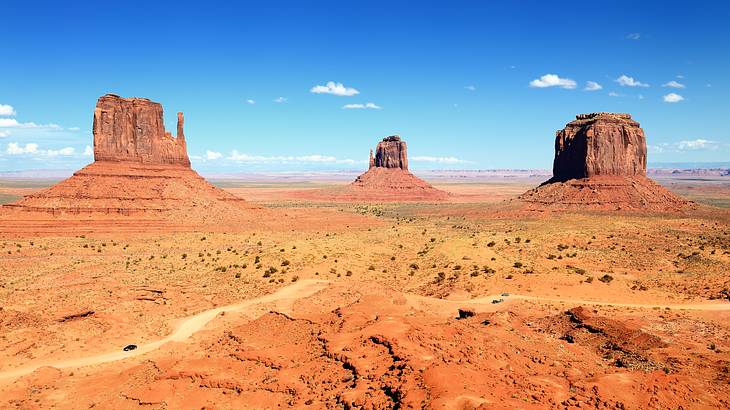
Monument Valley, located on the Navajo Nation Reservation along the Arizona-Utah border, is renowned for its towering red sandstone buttes, some reaching heights of nearly 1,000 feet.
These stunning formations were shaped over millions of years by erosion and have become iconic symbols of the American West, frequently featured in Western films and commercials.
Visitors can explore Monument Valley by driving the 17-mile scenic loop road, which winds through this vast red desert landscape. The valley offers unforgettable views and a deep connection to Navajo culture, making it a must-visit destination in the Southwest.
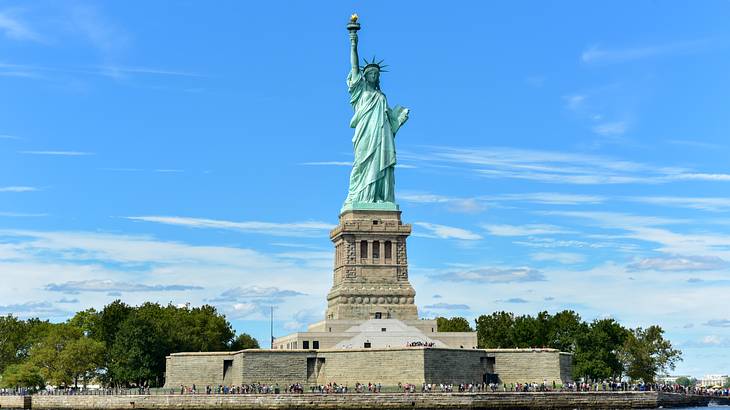

Statue of Liberty, New York
Forever a symbol of hope and freedom in New York City, the Statue of Liberty is one of the most famous monuments in the United States. Gifted to the U.S. by France in 1886, the statue was designed by Frédéric Auguste Bartholdi and built with the help of engineer Gustave Eiffel.
It quickly became a National Monument and a welcoming beacon for millions of immigrants arriving by sea. Today, over three million visitors take the ferry to Liberty Island each year to experience the Statue of Liberty up close.
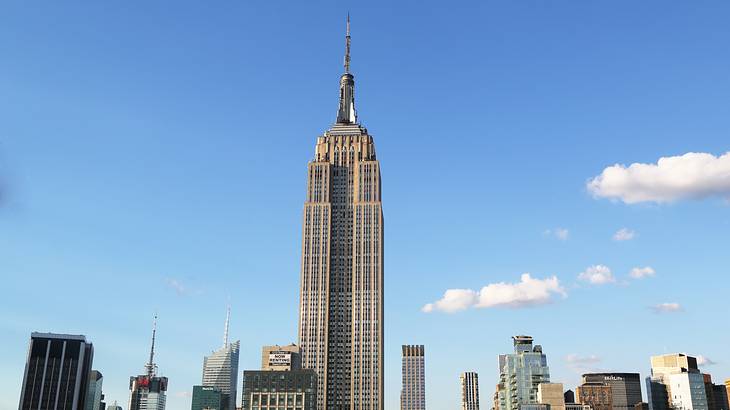

Empire State Building, New York
The Empire State Building stands tall over Manhattan at 1,454 feet, including its antenna, and has been a major part of the New York City skyline since its completion in 1931. It was the first building in the world to have more than 100 floors and held the title of the tallest building on Earth for nearly four decades.
Now a National Historic Landmark, it welcomes around three million visitors each year. Many come to take in sweeping views of the city from its 86th and 102nd-floor observatories. It has also been recognized as the #1 attraction in the U.S. by TripAdvisor's Travelers' Choice Awards.
☂️ Experience the Empire State Building with a tour
Brooklyn Bridge, New York
The Brooklyn Bridge connects Manhattan and Brooklyn across the East River and has been part of New York City since 1883. At the time it opened, it was the longest suspension bridge in the world and the first to use steel cables. The bridge's total length is 1,595 feet.
The bridge features a raised walkway for pedestrians and cyclists, offering open views of the city and river. It continues to serve both as a busy transportation link and as a familiar part of the New York skyline.
☂️ Join a tour to see Brooklyn Bridge
- Circle Line - New York City Statue of Liberty Super Express Cruise (popular and sought-after)
- New York City Dinner Cruise With Live Music
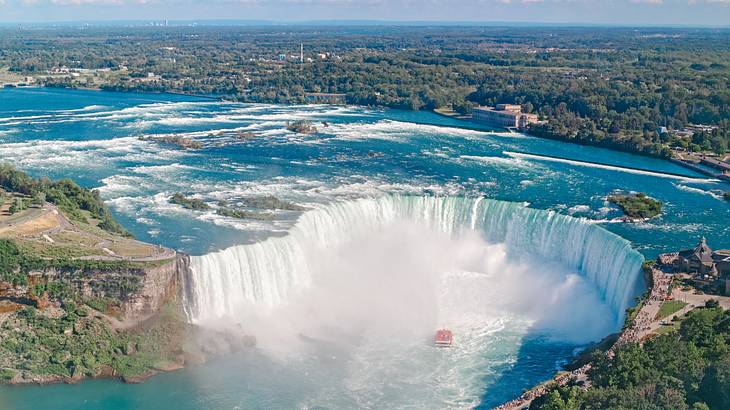

Niagara Falls, New York
Niagara Falls, straddling the border between New York and Ontario, is often considered one of the most famous waterfalls in the world. It's the largest waterfall in North America by volume, with more than 6 million cubic feet of water flowing over the crest every minute at peak flow.
On the U.S. side, visitors can explore Niagara Falls State Park and hop aboard the famous Maid of the Mist boat tour, which brings passengers up close to the thundering base of the falls. The park welcomes almost 10 million visitors each year, making it one of the most-visited natural attractions in the United States.
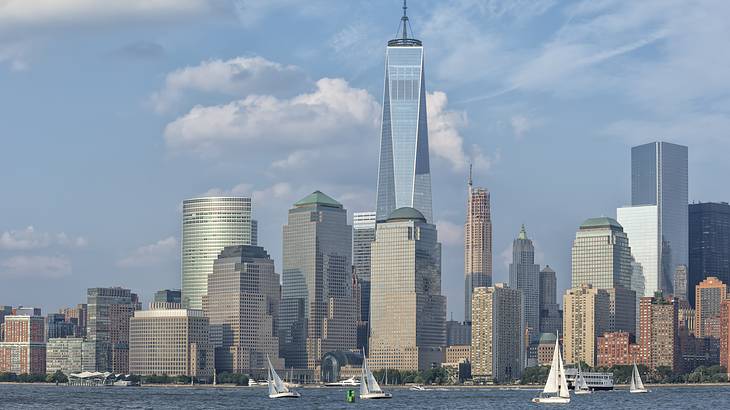

World Trade Center, New York
The World Trade Center complex in Lower Manhattan stands as both a powerful memorial and a symbol of renewal. At its heart are two large reflecting pools set within the footprints of the original Twin Towers, inscribed with the names of the nearly 3,000 victims of the September 11, 2001, attacks and the 1993 World Trade Center bombing.
Nearby, the 9/11 Memorial & Museum offers a moving and detailed account of the events and aftermath of 9/11. The area is surrounded by peaceful gardens, public spaces, and One World Trade Center—also known as the Freedom Tower—which was completed in 2014 and now serves as the tallest building in the Western Hemisphere.
☂️ Join a tour to see the World Trade Center
- City Cruises New York - Bateaux Premier Dinner Cruise (very popular)

Lincoln Memorial, Washington, D.C.
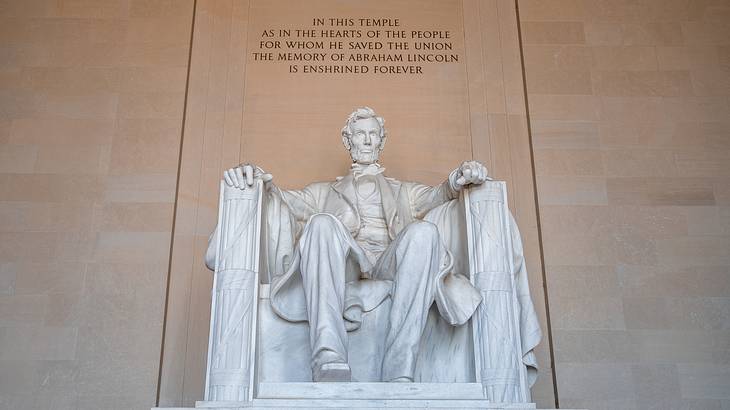
The Lincoln Memorial, located at the west end of the National Mall in Washington, D.C., honors Abraham Lincoln, the 16th president of the United States and a symbol of unity and freedom.
Completed in 1922, the memorial features a 19-foot-tall marble statue of Lincoln seated inside a grand neoclassical temple. The interior walls are inscribed with the full text of the Gettysburg Address and Lincoln's Second Inaugural Address, two of the most powerful speeches in American history.
☂️ Explore the Lincoln Memorial with a tour
The White House, Washington, D.C.
The White House has been the official home and workplace of every U.S. president since John Adams in 1800. Situated at 1600 Pennsylvania Avenue in Washington, D.C., it stands as a powerful symbol of American government and history.
While public tours require advance arrangements through a member of Congress, visitors can still view the iconic building from nearby Lafayette Square. Inside, guided tours offer glimpses of notable rooms like the Library and the State Dining Room.
The area around the White House is also known for its beautifully maintained gardens and nearby monuments that reflect the rich political and cultural legacy of the nation's capital.

Martin Luther King Jr. Memorial, Washington, D.C.
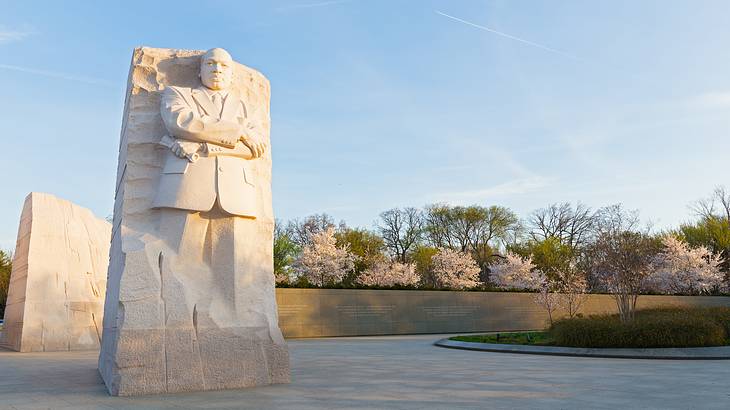
The Martin Luther King Jr. Memorial, located in West Potomac Park in Washington, D.C., honors the legacy of the civil rights leader who championed justice, nonviolence, and equality.
Dedicated in 2011, the memorial features a 30-foot-tall statue of Dr. King carved from granite, known as the "Stone of Hope," which emerges from a symbolic "Mountain of Despair." Surrounding the sculpture are excerpts from his speeches, including the famous "I Have a Dream" address.
United States Capitol, Washington, D.C.
The United States Capitol is the home of the U.S. Congress and the seat of the legislative branch of the federal government. Located on Capitol Hill, the building features a distinctive cast-iron dome completed in 1866 and houses the chambers for the Senate and the House of Representatives.
Construction of the Capitol began in 1793 and has undergone several expansions and restorations since. The Capitol also contains important artworks and historical artifacts that reflect the country's political history. It remains an active center of American democracy and a key landmark in Washington, D.C.

Washington Monument, Washington, D.C.
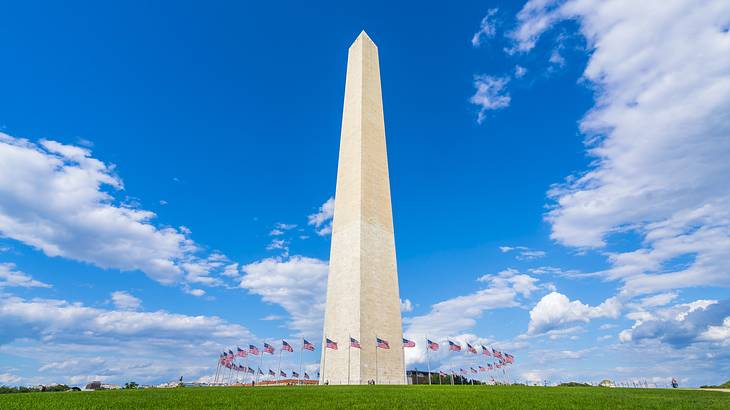
The Washington Monument is a 555-foot marble obelisk built to honor George Washington, the first president of the United States. Standing tall at the center of the National Mall in Washington, D.C., it's one of the most recognized monuments in the country.
Managed by the National Park Service, the monument offers visitors the chance to ride an elevator to the observation deck at the top, where they can enjoy sweeping views of the capital and its landmarks.
Cloud Gate, Illinois
Cloud Gate, often called "The Bean" by locals and visitors alike, is one of Chicago's most famous landmarks. Designed by British artist Anish Kapoor and unveiled in 2004, the sculpture sits in Millennium Park and reflects the city's skyline across its polished stainless steel surface.
Measuring 10 meters tall and 20 meters long, Cloud Gate captures the modern, artistic energy of the city. Its mirror-like finish creates an ever-changing view—especially striking at night, when Chicago's lights shimmer across its curved form, making it a must-see photo spot.

Hoover Dam, Nevada
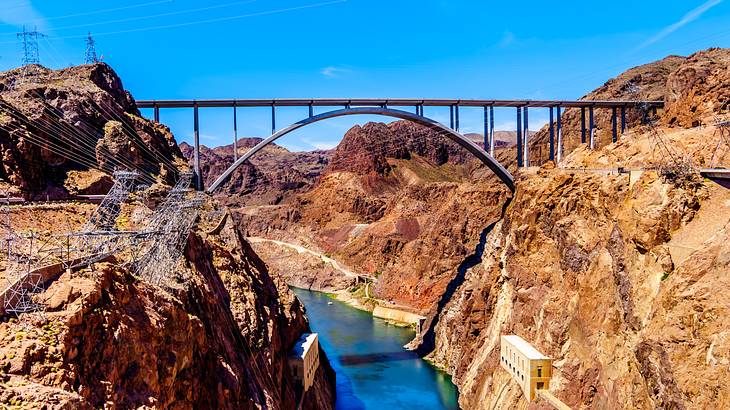
Built during the 1930s, the Hoover Dam was a monumental project designed to provide water and hydroelectric power to the arid Southwest. Spanning the Colorado River between Nevada and Arizona, the dam stands 726 feet tall and remains the tallest concrete arch dam in the United States.
At the time of its completion, it was considered one of the greatest engineering feats in the world. Today, the Hoover Dam is one of the most-visited landmarks in the U.S., drawing around seven million tourists each year who come to marvel at its scale and historic significance.
☂️ Join a tour to see the Hoover Dam

Golden Gate Bridge, California
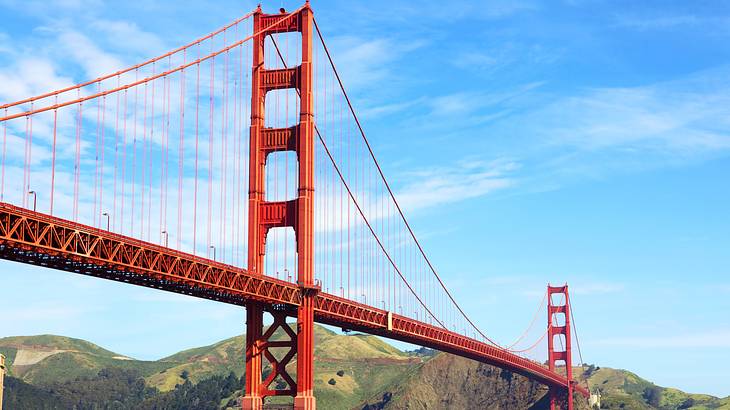
The Golden Gate Bridge is one of San Francisco's most recognizable landmarks, stretching 1.7 miles across the Golden Gate Strait to connect the city with Marin County. Completed in 1937, the bridge stands 746 feet tall at its highest point and was once the longest suspension bridge in the world.
Painted in its distinctive International Orange color, it was designed to be both visually striking and structurally sound, built to endure strong winds, ocean currents, and seismic activity. Today, it remains one of the most photographed and admired engineering marvels in the United States.

Yosemite National Park, California
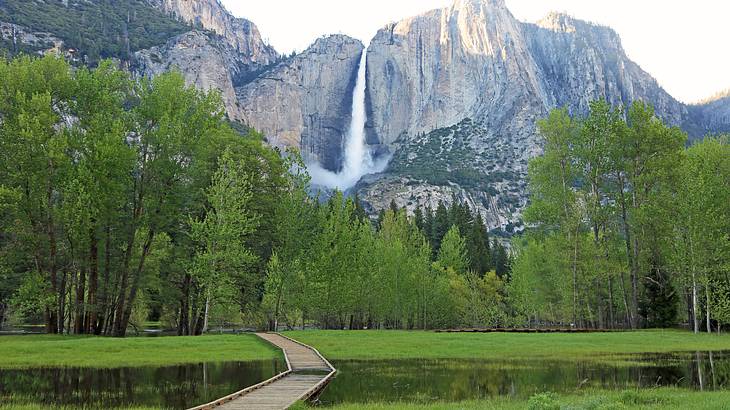
Yosemite National Park is one of California's most celebrated landmarks, known for its dramatic granite cliffs, sweeping meadows, and ancient groves of giant sequoias. Located in the Sierra Nevada Mountains, the park attracts around four million visitors each year who come for hiking, camping, rock climbing, and breathtaking scenery.
Among its most famous features is El Capitan, a towering 3,000-foot granite monolith that has become a world-renowned destination for climbers. With its diverse landscapes and outdoor experiences, Yosemite is a must-visit for nature lovers and adventure seekers alike.

Yellowstone National Park, Wyoming
Established in 1872, Yellowstone National Park is not only the first national park in the United States but also the first in the world. Yellowstone welcomes over four million visitors each year, drawn by its unique landscapes and wild beauty.
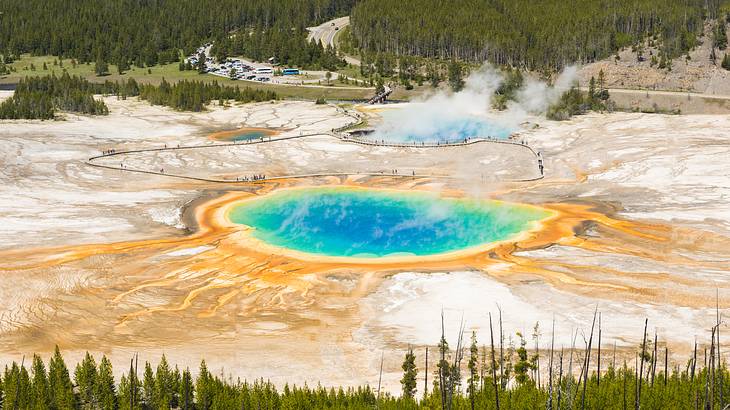
Spanning parts of Wyoming, Montana, and Idaho, the park is known for its dramatic canyons, scenic waterfalls, colorful hot springs, and over 500 active geysers. It's also home to an incredible variety of wildlife, including bison, elk, moose, bears, and wolves.
Two of its most iconic attractions are Grand Prismatic Spring, a rainbow-colored geothermal pool, and Old Faithful, a geyser famous for erupting at regular intervals.


Arlington National Cemetery, Virginia
Arlington National Cemetery, located in Virginia just across the Potomac River from Washington, D.C., is the final resting place for more than 400,000 U.S. service members, veterans, and their families.
Burials here date back to the Civil War, and the cemetery is also the site of the Tomb of the Unknown Soldier and the graves of notable Americans, including President John F. Kennedy and Supreme Court Justice Thurgood Marshall.
As one of the oldest and largest military cemeteries in the United States, Arlington is both a place of reflection and a living tribute to the nation's history. Visitors can explore memorials, monuments, and guided tours that offer a deeper understanding of the sacrifices made by those who served.

Mammoth Cave National Park, Kentucky
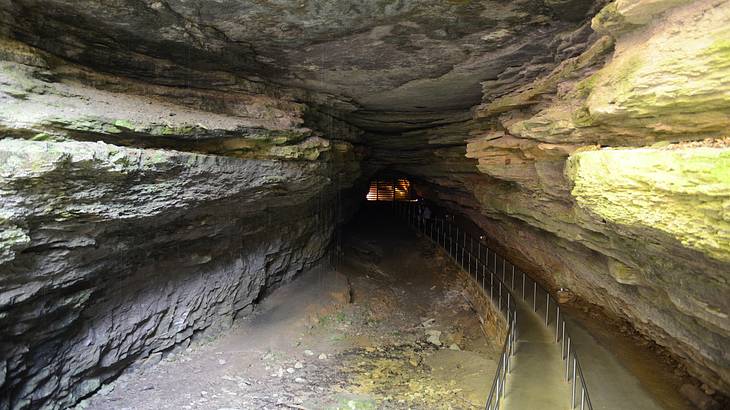
Mammoth Cave National Park in Kentucky is home to the longest-known cave system in the world, with over 400 miles of explored passageways, and more being discovered each year.
This vast underground network features dramatic chambers, limestone formations, and historic mining areas that date back thousands of years. Visitors can choose from a variety of guided cave tours, ranging from easy walks to more challenging spelunking adventures.
Above ground, the park also offers hiking trails, rivers, and scenic overlooks. It is recognized as both a UNESCO World Heritage Site and an International Biosphere Reserve.
Whitney Plantation, Louisiana
The Whitney Plantation is one of the only plantation museums in the United States that focuses entirely on the history of slavery. Located in Wallace, Louisiana, it offers a powerful and unfiltered look at the lives of the enslaved people who lived and worked here.
The site features memorials, sculptures, and exhibits that highlight the stories of over 100,000 enslaved individuals in Louisiana. Firsthand accounts from former slaves, many collected during the 1930s, are displayed throughout the grounds. These quotes provide a deeply personal look into the daily realities of life under slavery.
A visit to Whitney Plantation is not a typical plantation tour. It does not romanticize the past. Instead, it presents history with honesty and empathy, making it one of the most important places to learn about slavery in the United States.
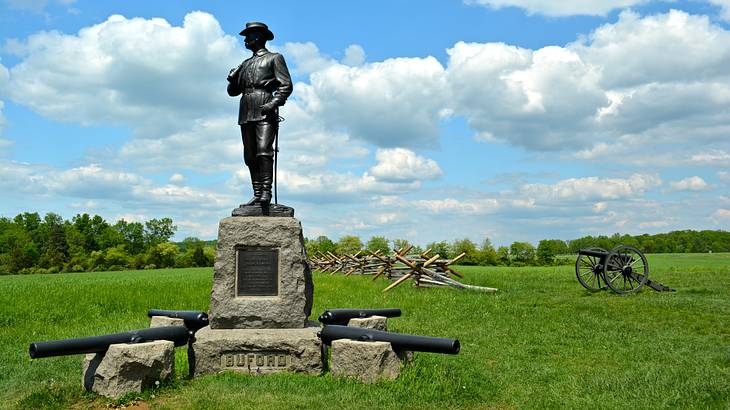

Gettysburg National Military Park, Pennsylvania
Gettysburg is one of the most famous battlefields in the United States and a defining site in American history. It was the location of a major Civil War battle in 1863 and the place where President Abraham Lincoln delivered the Gettysburg Address.
Today, the site draws over one million visitors each year. People come to explore the preserved battlefields, visit the museum, and learn more about the events that helped shape the nation.
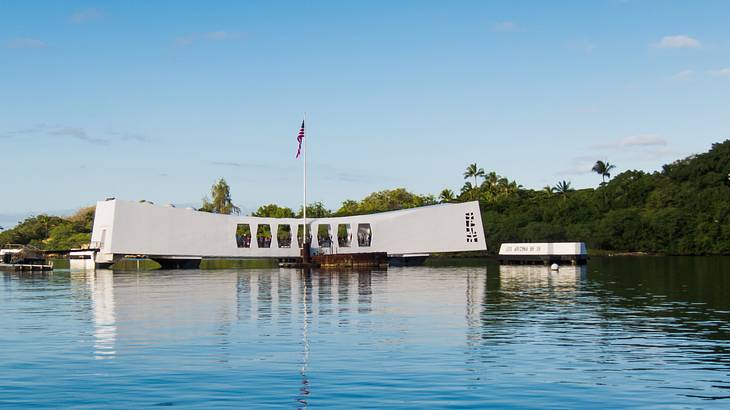

Pearl Harbor National Memorial, Hawaii
The Pearl Harbor National Memorial marks the site of the 1941 surprise attack that led to the United States' entering World War II. At the heart of the memorial is the sunken USS Arizona, the final resting place of more than 1,100 Navy service members who lost their lives during the attack.
The USS Arizona Memorial is one of Hawaii's most-visited landmarks. Surrounded by water and only accessible by boat, the site features a floating platform that sits directly above the sunken battleship. Today, around two million people visit Pearl Harbor each year to learn about this pivotal moment in American history.
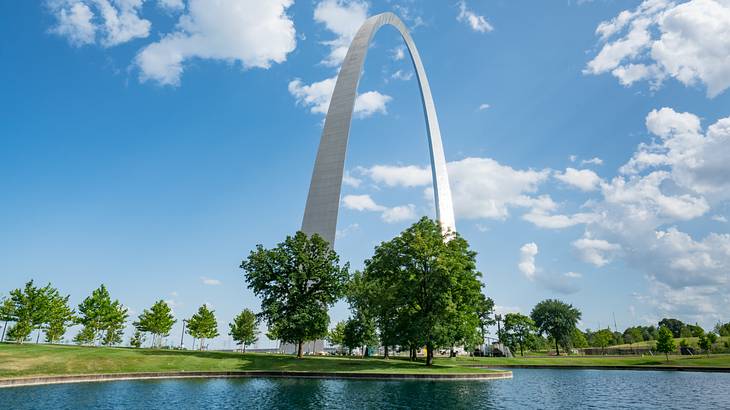

The Gateway Arch, Missouri
Standing at 630 feet, the Gateway Arch in St. Louis is the tallest monument in the United States and a symbol of westward expansion. Its stainless steel structure is visible for miles and offers some of the best views in the Midwest.
Inside, a one-of-a-kind tram system—part elevator, part Ferris wheel—carries visitors to an observation deck at the top. From here, passengers get sweeping views of downtown St. Louis and the Mississippi River. Thousands of people ride to the top each day, making it one of the most popular attractions in Missouri.
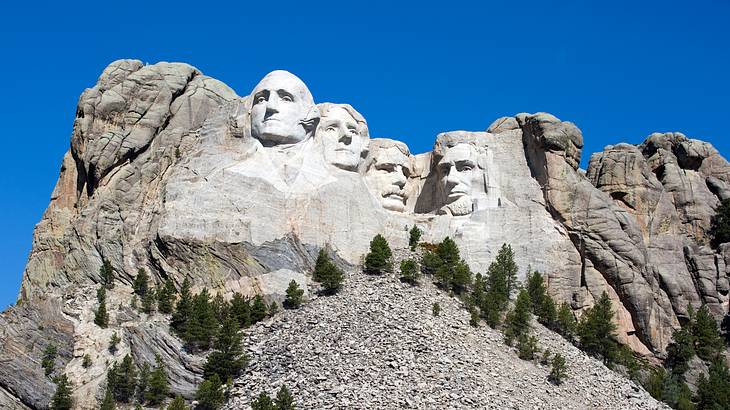

Mount Rushmore, South Dakota
Mount Rushmore is another famous landmark in the United States. It features the faces of four influential presidents: George Washington, Thomas Jefferson, Theodore Roosevelt, and Abraham Lincoln, carved into the granite cliffs of the Black Hills.
Created by sculptor Gutzon Borglum, the project began in 1927 and was completed in 1941. Today, Mount Rushmore National Memorial is one of South Dakota's top attractions and a lasting tribute to American history and leadership.
☂️ Discover Mount Rushmore National Memorial on a tour
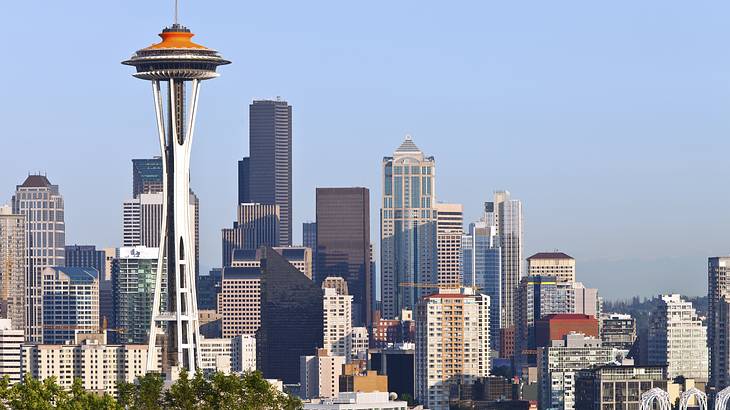

The Space Needle, Washington
The Space Needle is one of Seattle's most famous landmarks, standing 605 feet tall with sweeping views of the city, Mount Rainier, and Puget Sound. Built for the 1962 World's Fair, it quickly became a symbol of Seattle's futuristic vision and innovation.
The tower features an observation deck, a rotating restaurant, and a bar, making it a popular spot for both locals and tourists. Today, the Space Needle welcomes over a million visitors each year and remains one of the most well-known landmarks in the United States.
☂️ Visit the Space Needle with an excursion
In Summary
With so many famous landmarks across the United States to see, you're sure to find something unique no matter which part of the country you visit. Whether it's historical monuments and museums or outdoor adventures in a national park, the U.S. offers countless amazing places to explore!

Want to keep exploring?
Subscribe for our latest guides.
Thank you for subscribing
We will be in touch soon with our latest guides.
Want to keep exploring?
Subscribe for our latest guides.
Thank you for subscribing
We will be in touch soon with our latest guides.