
25 Landmarks in New Orleans, Louisiana to Visit

Destguides may receive commissions from purchases made through affiliate links in this article.
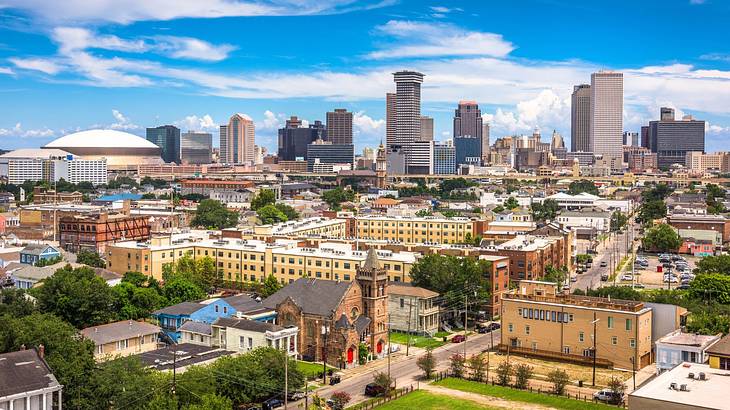

New Orleans was founded in 1718 as a French colonial outpost on the Mississippi River. In the three centuries since, the city has passed through French, Spanish, and American hands, layering cultures, architecture, and traditions unlike anywhere else in the United States. That history is written into its buildings, squares, and cemeteries.
From a convent that survived two devastating 18th-century fires to a park with oak trees estimated at 800 years old, the landmarks in New Orleans, Louisiana, are as diverse as the city itself. Continue reading for 25 landmarks to add to your New Orleans itinerary.
Heading to New Orleans and planning last-minute?
Before traveling to New Orleans, book your entrance tickets and tours ahead of time. We've pulled together top suggestions below.
☂️ Top tours and experiences in New Orleans
25 New Orleans Landmarks
- BK Historic House and Gardens
- New Orleans Pharmacy Museum
- Jackson Square
- Congo Square
- Longue Vue House & Gardens
- New Orleans Jazz National Historical Park
- Lalaurie Mansion
- New Orleans City Park
- Lafitte's Blacksmith Shop
- Lafayette Cemetery No. 1
- The Cabildo
- Old Ursuline Convent Museum
- St. Louis Cathedral
- Degas House
- The National WWII Museum
- Preservation Hall
- Gallier House
- The Historic New Orleans Collection
- Louisiana State Museum
- Pontalba Buildings
- New Orleans Jazz Museum
- New Orleans Museum of Art
- Mardi Gras World
- New Orleans African American Museum
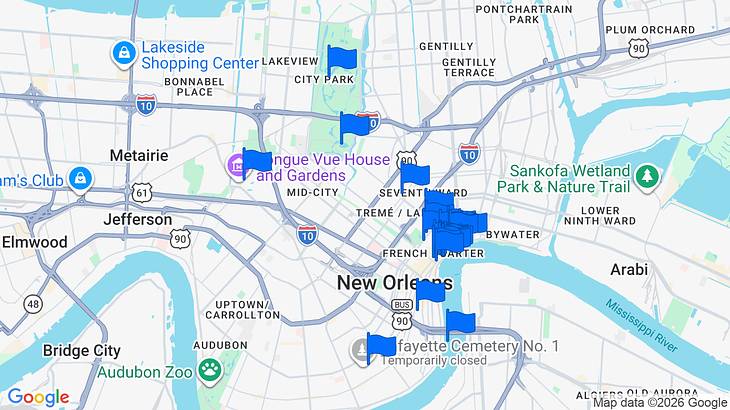
New Orleans Landmarks Map
A map of New Orleans landmarks. Use the map to explore all of the points of interest.

BK Historic House and Gardens
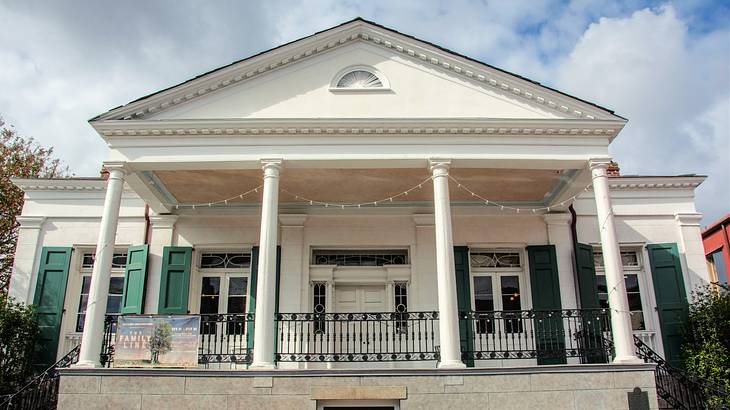
Built in 1826 for auctioneer Joseph LeCarpentier, this raised Greek Revival cottage sits on Chartres Street in the French Quarter. The house takes its name from two of its most notable residents: Confederate General P.G.T. Beauregard rented it in the late 1860s, and author Frances Parkinson Keyes lived and wrote here from the 1940s until her death.
Today, the property operates as a museum preserving French Quarter history. Its restored courtyard garden and period furnishings offer a quiet contrast to the bustle of the surrounding neighborhood.
☂️ Discover BK Historic House and Gardens on a tour

New Orleans Pharmacy Museum
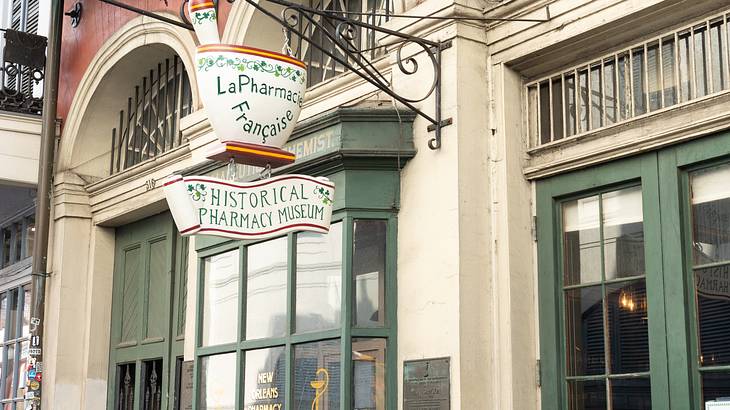
In 1816, Louis Joseph Dufilho Jr. became the first licensed pharmacist in the United States after passing an exam mandated by a Louisiana law enacted in 1804. He opened his apothecary in this French Quarter building on Chartres Street in 1823.
The museum now displays artifacts from early medicine, including hand-blown apothecary jars, surgical instruments, and voodoo remedies. It is a fascinating and sometimes unsettling look at how healthcare was practiced in 19th-century New Orleans.
☂️ Discover New Orleans Pharmacy Museum on a tour
- Pub Crawl - New Orleans Lewd Spirits Haunted Tour With Bar Stops (well-attended)
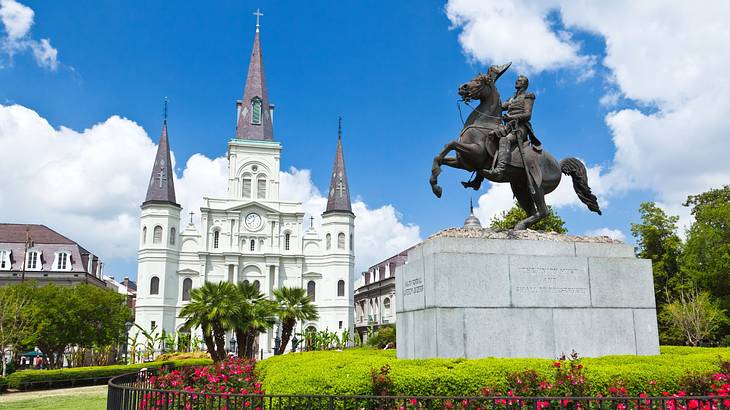

Jackson Square
Originally called Place d'Armes under French rule, this public square has been the civic heart of New Orleans since the city was laid out in 1721. It served as a military parade ground, a marketplace, and the site of the 1803 flag-raising ceremony marking the Louisiana Purchase. The formal transfer documents were signed in the adjacent Cabildo.
The square was renamed in honor of Andrew Jackson after the Battle of New Orleans in 1815. Today, it is surrounded by landmarks worth pairing on any New Orleans itinerary, including St. Louis Cathedral, the Cabildo, and the Pontalba Buildings.
☂️ Visit Jackson Square with a tour
Congo Square
On Sunday afternoons throughout the 18th and 19th centuries, enslaved people and free people of color gathered at this open plot of land to drum, dance, trade goods, and practice sacred African traditions. An 1817 mayoral decree formally restricted such gatherings to this spot, just north of Rampart Street.
Many scholars consider Congo Square the birthplace of the musical traditions that eventually became jazz. It now sits within Louis Armstrong Park in the Treme neighborhood and remains a place of cultural celebration and community gathering.
Longue Vue House & Gardens
Landscape architect Ellen Biddle Shipman began designing the gardens at this estate in the mid-1930s for philanthropists Edgar and Edith Stern. The gardens grew so remarkable that the Sterns replaced their original 1920s house with a new Classical Revival residence, completed in 1942, built to better integrate with Shipman's designs.
Today, the property spans eight acres and is preserved with its original furnishings. An insider tip is to walk the gardens slowly, as Shipman designed each one with a distinct theme and mood.
☂️ Visit Longue Vue House and Gardens with an experience
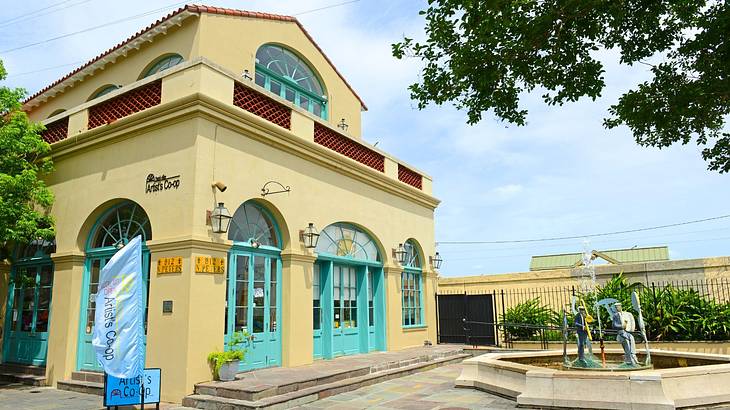

New Orleans Jazz National Historical Park
Established by Congress in 1994, this National Park Service site honors the evolution of jazz and its deep roots in New Orleans. The visitor center in the French Quarter offers ranger-led programs, educational exhibits, and an intimate performance space.
It occasionally hosts live concerts and cultural events that bring the park to life. It is a good starting point before exploring the city's other jazz-related landmarks on foot.
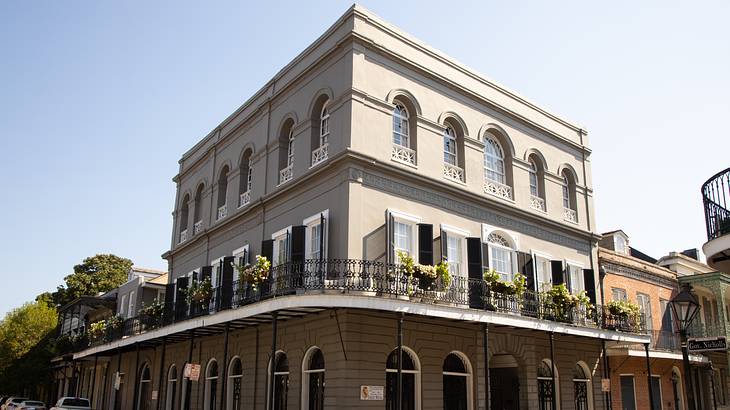

Lalaurie Mansion
Few buildings in New Orleans carry a darker reputation than the LaLaurie Mansion on Royal Street. In 1834, a fire at the property led rescuers to discover evidence that its owner, socialite Marie Delphine LaLaurie, had been torturing enslaved people held in the household.
The discovery horrified the city, and LaLaurie fled to France to escape her neighbors' outrage. The mansion has changed hands many times since and remains a private residence today, though its exterior is a frequent stop on French Quarter walking tours.
New Orleans City Park
Spanning 1,300 acres, New Orleans City Park is one of the largest urban parks in the country. It was first set aside as public land in 1854 and is home to the largest collection of mature live oaks in the world. The oldest, the McDonogh Oak, is estimated to be around 800 years old.
Beyond the oaks, the park holds a botanical garden, an art museum, and a sculpture garden set among moss-draped trees. It is a welcome escape from the city's energy and well worth a full afternoon.
☂️ Experience City Park with a tour
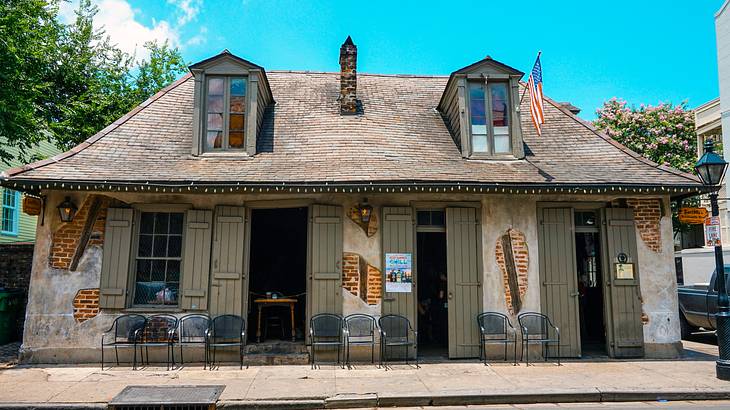

Lafitte's Blacksmith Shop
Tucked on the corner of St. Philip and Bourbon Street, this weathered structure is one of the oldest buildings in New Orleans. No one knows exactly when it was built, but the prevailing theory points to Spanish colonists in the 1770s.
The building's murky origins have made it the subject of local legends. Some believe it operated as a blacksmith shop, while others think it served as a front for smuggling contraband. Today it functions as a bar, and its candlelit interior feels genuinely unchanged by the centuries.
Lafayette Cemetery No. 1
Founded in 1833 in what was then the separate City of Lafayette, this Garden District cemetery reflects a burial tradition unique to New Orleans, shaped by the city's low-lying terrain and high water table. Immigrants from over 25 countries and natives of 26 states are identified on its closure tablets.
The cemetery's mix of weathered above-ground tombs and dense vegetation has made it a popular filming location over the years. Note that it has been closed for extensive repairs since 2019, so check current access before visiting.
☂️ See Lafayette Cemetery No 1 on a tour
The Cabildo
Louisiana spent nearly 40 years under Spanish colonial rule, and the Cabildo is one of the most tangible reminders of that era. Built in the 1790s as the seat of the Spanish governing council, it occupies the prime position on Jackson Square beside St. Louis Cathedral.
In 1803, the formal documents transferring Louisiana from France to the United States were signed inside the Cabildo. Today it is part of the Louisiana State Museum and houses exhibits on the state's colonial and legal history.
☂️ Visit The Cabildo Museum on a tour
- New Orleans French Quarter & More Carriage Ride (extremely popular)
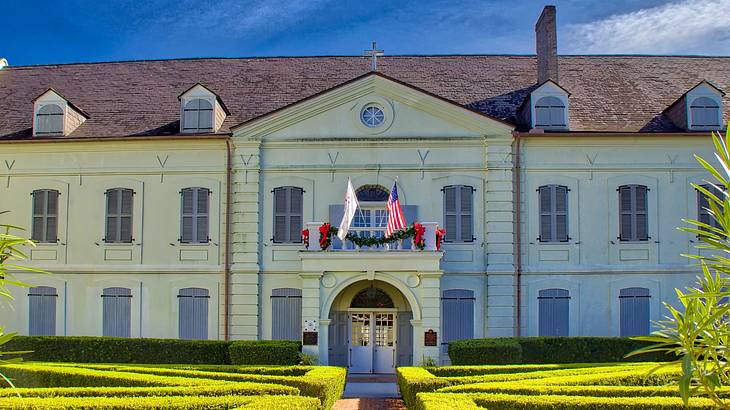

Old Ursuline Convent Museum
Twelve Ursuline nuns arrived in New Orleans from France in 1727 to educate young women, care for the sick, and run an orphanage. Their first wooden convent, completed in 1734, deteriorated quickly in the humid climate. The current brick structure, designed by royal engineer Ignace Francois Broutin, was completed around 1752.
It is the only surviving French colonial building in the French Quarter, having withstood the devastating fires of 1788 and 1794. The National Park Service recognizes it as the finest example of French colonial public architecture in the country.
St. Louis Cathedral
Few buildings are as instantly recognizable in New Orleans as St. Louis Cathedral, the centerpiece of Jackson Square. The parish was established in 1720, making it one of the French Quarter's oldest institutions. The first church on this site was destroyed in the great fire of 1788, and the current structure was rebuilt beginning in 1789 and expanded significantly in the 1850s.
Its architecture blends Spanish Colonial and French Neo-Gothic elements. The cathedral is the seat of the Archdiocese of New Orleans and shares the distinction of oldest continuously active cathedral in the United States with the Royal Presidio Chapel in Monterey, California.
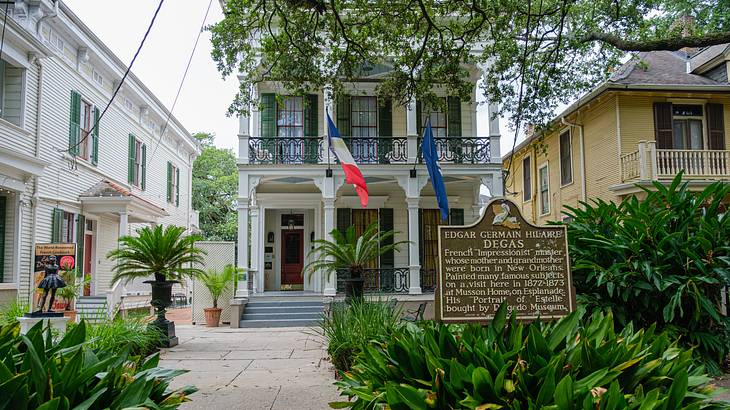

Degas House
French artist Edgar Degas arrived in New Orleans in the fall of 1872 to visit his mother's family, the Mussons. For approximately five months, he lived and worked in the family's Esplanade Avenue mansion, completing 18 paintings and four drawings during his stay.
Among them was "A Cotton Office in New Orleans," the first Impressionist painting purchased by a museum. The house, built in 1853, is now a museum and bed and breakfast, and the only home or studio of Degas open to the public anywhere in the world.
The National WWII Museum
This museum in the Warehouse District honors the contributions of American service members during the Second World War. It opened in 2000 and has since expanded into multiple pavilions housing immersive exhibits, research facilities, and restoration centers.
The collection includes personal artifacts, oral histories, and restored military vehicles. An insider tip is to allow at least half a day for a visit, as the exhibits are extensive and deeply detailed.
☂️ Experience The National WWII Museum with a tour
- The National WWII Museum Admission Ticket New Orleans (popular and sought-after)
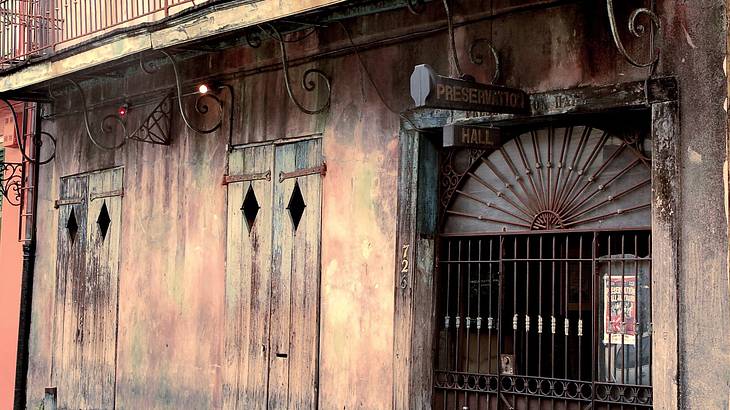

Preservation Hall
Since 1961, this intimate venue on St. Peter Street has been one of the most important places for traditional New Orleans jazz. Artists like George Lewis and Sweet Emma Barrett helped define the genre on this very stage.
The hall has no air conditioning, no drinks menu, and limited seating, yet it draws audiences almost every night. That stripped-down atmosphere is part of what makes a performance here feel closer to the music's roots.
☂️ Explore Preservation Hall with a tour
Gallier House
Architect James Gallier Jr. designed this Royal Street townhouse for his own family, with construction completed in 1860. The home blends Italianate and Greek Revival styles and incorporated rare innovations for the region at the time, including indoor plumbing and a ventilation system.
The house is fully restored to its 1860s appearance and is both a National Historic Landmark and listed on the National Register of Historic Places. Guided tours cover the architecture, period furnishings, and the domestic life of 19th-century New Orleans.
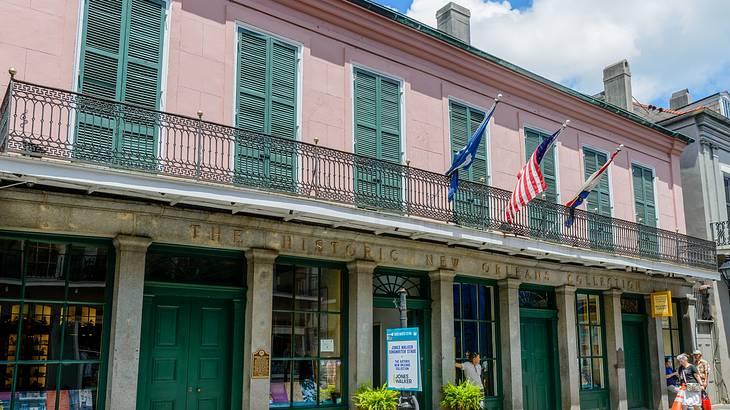

The Historic New Orleans Collection
Founded in 1966 by collectors Kemper and Leila Williams, this museum and research center preserves the history of New Orleans and the Gulf South. Its holdings span photographs, maps, manuscripts, and artifacts across multiple French Quarter campuses.
Admission is free, following the founders' wish to make historical resources available to everyone. The institution also publishes original books on the region's history, art, and culture.
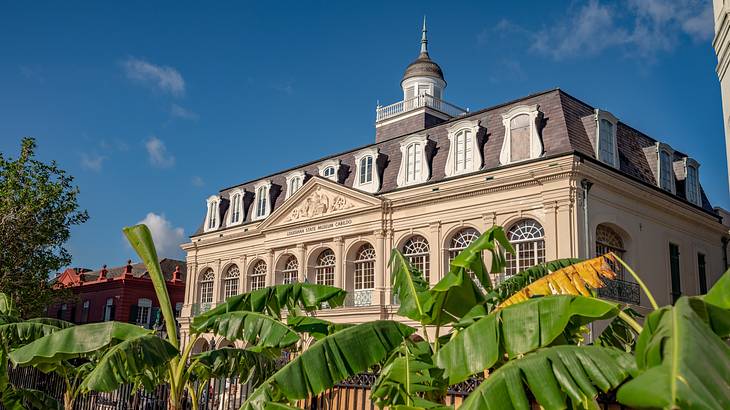

Louisiana State Museum
Founded in 1906, the Louisiana State Museum is not a single building but a network of historic properties spread across the state, with several located in New Orleans. These include the Cabildo, the Presbytere, and the 1850 House in the Pontalba Buildings, all clustered around Jackson Square.
Together they house thousands of artifacts preserving the state's colonial, antebellum, and modern history. The distributed format means you can visit different sites across different neighborhoods and still be exploring the same museum.
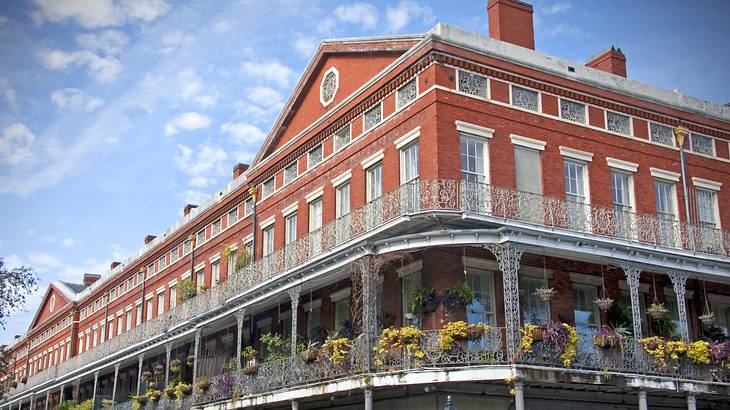

Pontalba Buildings
These twin red-brick row houses line two sides of Jackson Square, each stretching an entire city block. Baroness Micaela Almonester Pontalba commissioned them in the late 1840s, and they were completed in 1851. The ornate cast-iron balcony railings, featuring her entwined initials, helped establish ironwork as a defining feature of the French Quarter.
After Pontalba died in Paris in 1874, her heirs neglected the properties for decades. The lower building eventually passed to the Louisiana State Museum, while the upper went to the City of New Orleans. Both have since been restored and continue to house shops and apartments.
New Orleans Jazz Museum
New Orleans earned the nickname "Birthplace of Jazz" for good reason. This museum, housed in the Old US Mint building, traces how the genre developed and changed the music world. Its collection includes the cornet Louis Armstrong learned to play as a teenager at the Colored Waif's Home and the crown of zydeco pioneer Clifton Chenier.
The museum also hosts regular live performances and rotating exhibits that explore jazz's connections to blues, rhythm and blues, and other Louisiana-rooted genres.
☂️ Explore New Orleans Jazz Museum on a tour
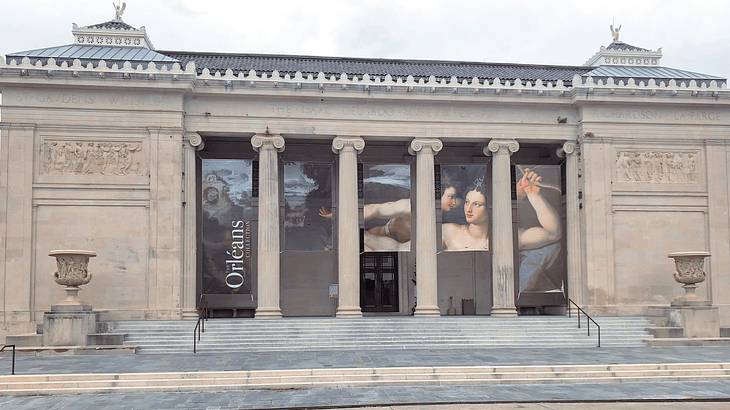

New Orleans Museum of Art
Known locally as NOMA, this Louisiana landmark sits inside City Park and has been the city's leading fine art institution since it opened in 1911. Its permanent collection includes French, American, African, and Japanese works spanning centuries.
Outside, the Sydney and Walda Besthoff Sculpture Garden displays dozens of sculptures set among live oaks, pines, and magnolias. The garden is free to enter and makes for a particularly striking visit in the late afternoon light.
☂️ Visit New Orleans Museum of Art on a tour
Mardi Gras World
The Mardi Gras parade is often the deciding factor for visitors choosing when to come to New Orleans. Mardi Gras World brings that spectacle to life year-round. This large-scale workshop on the riverfront is where the floats that roll through the city's streets are designed and built.
A visit lets you walk among the towering sculptures and colorful props, and see past parade costumes up close. It is one of the more unusual behind-the-scenes experiences the city has to offer.
New Orleans African American Museum
Located in the Treme neighborhood, widely recognized as the oldest African American community in the United States, this museum preserves stories that shaped the city's culture and identity. Its collection includes art, documents, and artifacts highlighting the contributions of Black New Orleanians across generations.
The museum is also a site on the Louisiana African American Heritage Trail, connecting it to a broader network of historically significant locations throughout the state.
In Summary
New Orleans rewards the curious. Its 25 landmarks span a colonial convent that survived two city-wide fires, the square where the Louisiana Purchase was finalized, and a jazz hall that has barely changed since 1961. Work your way through this list, and you will understand why the city is unlike anywhere else in the United States.

Want to keep exploring?
Subscribe for our latest guides.
Thank you for subscribing
We will be in touch soon with our latest guides.
Want to keep exploring?
Subscribe for our latest guides.
Thank you for subscribing
We will be in touch soon with our latest guides.