
18 New Orleans Nicknames From Big Easy to Necropolis

Destguides may receive commissions from purchases made through affiliate links in this article.
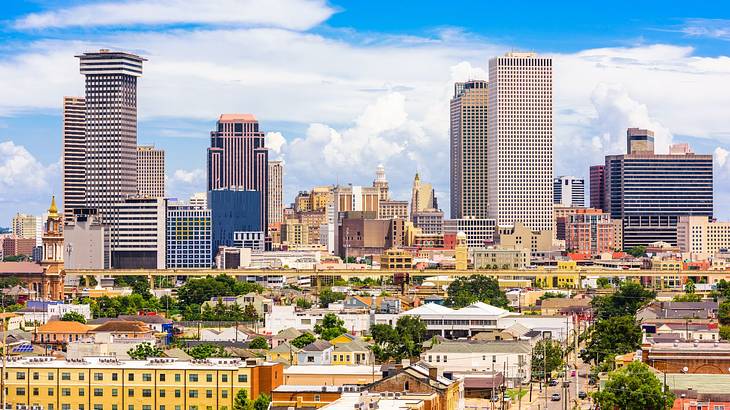

Most cities get one nickname, maybe two. New Orleans has racked up at least 18 over three centuries. The city is French, Spanish, Caribbean, African, and American all at once.
It fries almost everything, buries its dead above ground, and throws a weeks-long party every year before Lent. Jazz was born here, and so was the drive-through daiquiri.
With that much personality packed into one place, one name was never going to be enough. These are the 18 New Orleans nicknames that stuck, faded, or keep coming back, and the stories behind each one. Continue reading to learn more.
18 Nicknames for New Orleans
- The Big Easy
- The Big Sleazy
- The Birthplace of Jazz
- Chopper City
- The City of Yes
- The City That Care Forgot
- The City That Never Sleeps
- Crescent City
- Convention City
- Gumbo City
- Crawfish Town
- Mardi Gras City
- The Land of Dixie
- Nola
- The Paris of America
- City of a Million Dreams
- Northernmost Caribbean City
- Necropolis

The Big Easy
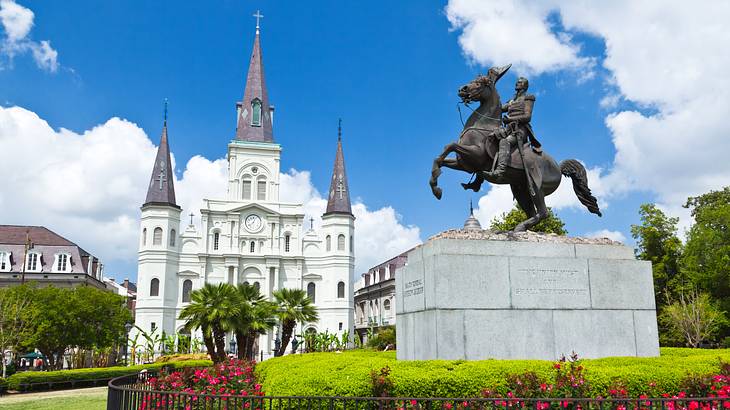
"The Big Easy" is the most widely recognized nickname for New Orleans. Nobody knows exactly how it started, but several theories have circulated for decades.
One explanation points to the city's relaxed, unhurried way of life compared to other major American cities, like New York City. Another suggests that musicians in the early 20th century found it unusually easy to land paying gigs in New Orleans.
A third traces the name to a dance hall called the Big Easy Hall that once operated in nearby Gretna, Louisiana. Whatever the true origin, columnist Betty Guillaud helped popularize the term in her Times-Picayune column just after the mid-1900s.
The Big Sleazy
Political corruption has followed Louisiana and its largest city for generations. "The Big Sleazy" plays on the Big Easy, flipping the city's most famous nickname into a jab at its long history of crooked governance.
The New Yorker used the phrase as the title of a 2006 feature, tracing that corruption back to Huey Long in the 1930s. TIME picked it up again in 2010, writing about whether New Orleans could finally clean up its reputation in the years after Hurricane Katrina.

The Birthplace of Jazz
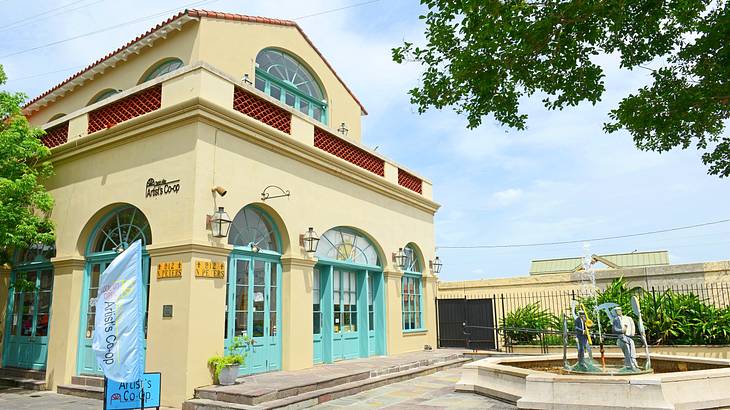
New Orleans earned this title because jazz music originated here. In the late 19th and early 20th centuries, musicians from African, European, and Caribbean backgrounds performed together in the city's dance halls, churches, and streets. Their combined styles created a new form of music that would eventually spread worldwide.
In its earliest years, this sound was sometimes called Dixieland jazz. Louis Armstrong, one of the genre's most influential figures, was born in New Orleans in 1901 and launched his career performing in the city's clubs and on its riverboats.
Chopper City
A locally born rapper gave New Orleans this nickname. Christopher Noel Dorsey, known by his stage name B.G. (short for Baby Gangsta), released his album Chopper City in 1996 and followed it up with the platinum-selling Chopper City in the Ghetto in 1999.
In his lyrics, "chopper" was slang for a firearm, such as an AK-47. B.G. later founded his own record label called Chopper City Records. In 2012, he was sentenced to 14 years in federal prison after pleading guilty to felony firearm possession and conspiracy to obstruct justice. He was released in September 2023.
The City of Yes
"The City of Yes" is one of the newer New Orleans nicknames. In 2010, MSNBC host Rachel Maddow pointed out that the city's government website address, cityofno.gov, sent an unfortunate message. She proposed rebranding New Orleans as the City of Yes and even purchased the domain cityofyes.us, which she donated to the city.
Eight years later, Mayor LaToya Cantrell adopted the City of Yes as her administration's official slogan. In June 2018, Cantrell unveiled new branding and artwork by local artist Ursula Rochon to accompany the campaign.
The City That Care Forgot
This nickname is not as widely used today as it once was, but it has deep roots. According to a piece in the New Orleans Bar Association newsletter, the phrase originated in 1910 when Alfred S. Amer took control of the St. Charles Hotel and declared that "The City Care Forgot" would become the hotel's new slogan.
Over the next few years, the phrase evolved into "The City That Care Forgot" and spread beyond the hotel. The intended meaning was inviting: New Orleans was a place where visitors could set aside their worries and enjoy themselves.

The City That Never Sleeps
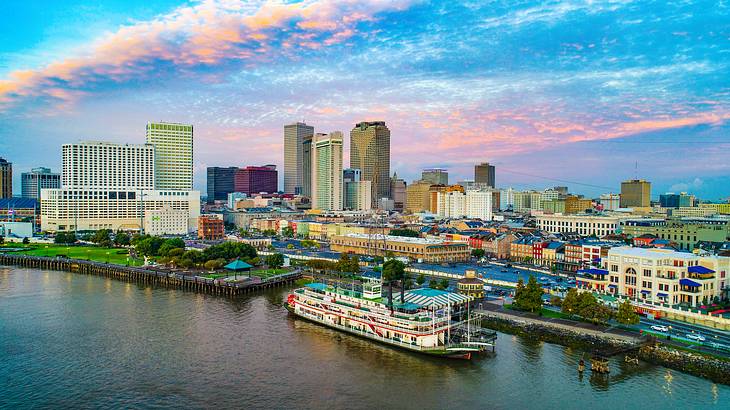
From the mid-1800s onward, New Orleans built a reputation for nightlife that simply did not stop. Bourbon Street in the French Quarter became famous for bars that stayed open and music that played until sunrise.
The city's tradition of 24-hour bars, late-night brass bands, and weekend festivals keeps that energy alive today. Other cities, particularly New York, have since become more commonly associated with this nickname. Even so, New Orleans can still claim it with good reason.
Crescent City
"Crescent City" is one of the oldest and most enduring nicknames for New Orleans. It refers to the shape of the bend in the Mississippi River where the Vieux Carré, now known as the French Quarter, was built beginning in 1718.
Geographer Richard Campanella credits author Joseph Holt Ingraham with coining the term in his 1835 travelogue, where Ingraham wrote that he had called New Orleans "the crescent city" because it was "built around the segment of a circle formed by a graceful curve of the river." The crescent-shaped bend remains a defining feature of the city's geography.

Convention City
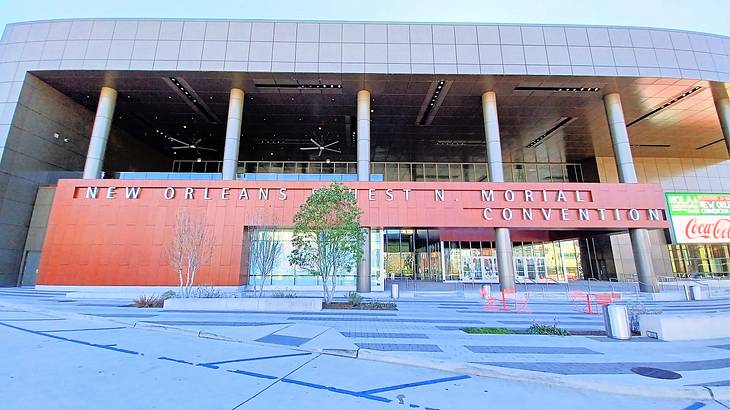
New Orleans has been a favorite destination for conventions and large-scale events for well over a century. In 1914, the Convention and Tourist Bureau of the New Orleans Association of Commerce published a book titled New Orleans: The Convention City and Gateway to Panama, promoting the city as a premier gathering place.
Today, that tradition continues at the Ernest N. Morial Convention Center. With 1.1 million square feet of contiguous exhibit space, it ranks as the sixth-largest convention facility in the country. The center sits along the Mississippi River, within walking distance of the French Quarter.
Gumbo City
This nickname carries a double meaning. Gumbo is a hearty stew made from seafood, meat, and vegetables. It holds the distinction of being Louisiana's official state cuisine, and New Orleans has its own celebrated version of the dish (Creole gumbo).
Beyond the food, "Gumbo City" also serves as a description of the city's cultural makeup. In the same way that the stew blends many ingredients, New Orleans is a combination of nationalities, traditions, and influences from around the world.
Crawfish Town
Crawfish are Louisiana's official state crustacean and a cornerstone of New Orleans Cajun culinary heritage. However, that is not exactly how the city got this nickname.
Journalists visiting New Orleans in the early 1900s were struck by how much crawfish was consumed in the city. Rather than referring to New Orleans by its proper name in their dispatches, they began calling it "Crawfish Town."

Mardi Gras City
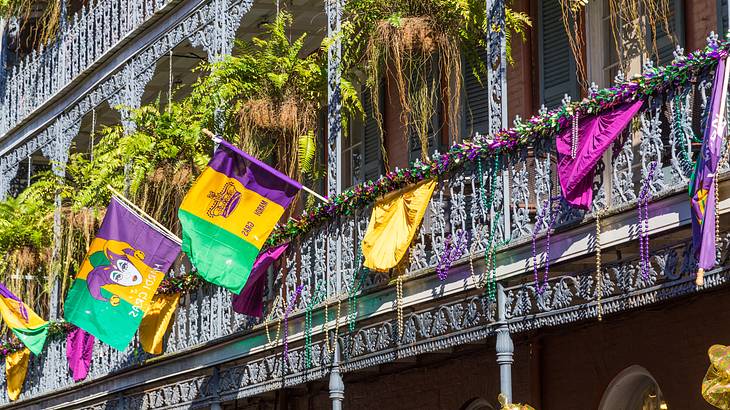
New Orleans had been throwing street parties long before anyone organized them, but the first formal Mardi Gras parade did not take place until 1857.
That year, a group known as the Mistick Krewe of Comus, founded by six men originally from Mobile, Alabama, staged a procession with themed floats and torchlit marchers.
The event was an immediate success. Every year thereafter, the festivities grew larger and more elaborate. Today, multiple parades roll through the city during the weeks leading up to Fat Tuesday, and no American city is more closely associated with Mardi Gras than New Orleans.
The Land of Dixie
This nickname became associated with New Orleans in the mid-19th century. Before the Civil War, the Citizens' Bank of New Orleans circulated ten-dollar bills printed with the French word "dix," meaning ten.
English-speaking residents began calling the notes "dixies." Over time, the area around New Orleans, then Louisiana as a whole, and eventually the entire American South became known as the "Land of Dixie," or simply "Dixieland."
Nola
"NOLA" is an abbreviation formed from the first letters of New Orleans and Louisiana's postal code, LA. It frequently appears in writing, on merchandise, and across social media as shorthand for the city.
The abbreviation also serves as the basis for the city's official government web address, nola.gov, and for the NOLA.com news website operated by The Times-Picayune.
The Paris of America
New Orleans was founded by the French in 1718 and named after Philippe II, Duke of Orléans, who served as regent of France. Before becoming part of the United States through the Louisiana Purchase in 1803, New Orleans served as the capital of French Louisiana.
The city's original street layout was designed by French engineer Adrien de Pauger in 1721, and French was the dominant language for much of the city's early history.
In 1920, the St. Charles Hotel published a booklet titled Souvenir of New Orleans, 'The Paris of America,' showing how firmly the nickname had taken hold by then.

City of a Million Dreams
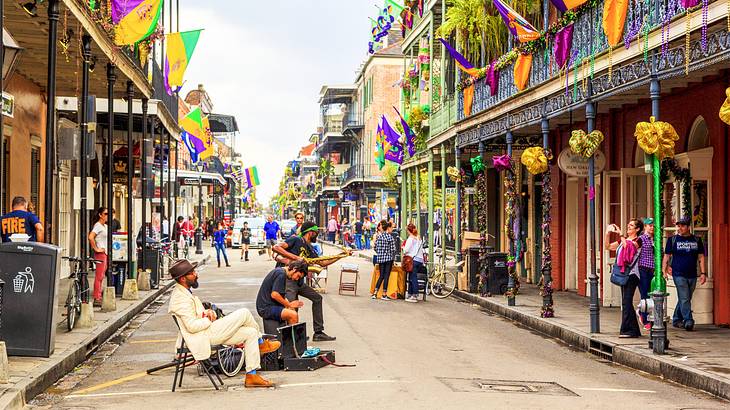
Author Jason Berry gave New Orleans this name with his 2018 book, City of a Million Dreams: A History of New Orleans at Year 300. The book examines 300 years of the city's history through the lens of music, race, and culture.
Berry later produced a companion documentary with the same title, filmed over 22 years. The film focuses on jazz funerals and the burial traditions that make New Orleans unlike any other city in the country.
Northernmost Caribbean City
New Orleans is often described as the "Northernmost Caribbean City" because of the deep influence that Caribbean and African communities have had on its culture since its founding. That influence extends to the cuisine, the music, and even the local accent, which differs from other cities in Louisiana.
The city also has a humid, semitropical climate, with rain throughout the year. As a city near the Gulf of Mexico, New Orleans offers residents warm, inviting weather year-round.
Necropolis
Although it is no longer used, "Necropolis" was a nickname given to New Orleans in the mid-19th century. During the 1850s, the city suffered devastating outbreaks of yellow fever. The disease was spread by mosquitoes that bred in the surrounding swamps, though this was not understood at the time.
In the worst epidemics, yellow fever killed up to ten percent of the city's population. With so many deaths occurring in such short periods, New Orleans became known as the Necropolis, or the "City of the Dead."
In Conclusion
Twenty nicknames and the list keeps growing. That is what happens when a city spends three centuries absorbing cultures, surviving disasters, and refusing to tone itself down. Each name is less a label and more a chapter in an ongoing story, and New Orleans has never been short on material for the next one.

Want to keep exploring?
Subscribe for our latest guides.
Thank you for subscribing
We will be in touch soon with our latest guides.
Want to keep exploring?
Subscribe for our latest guides.
Thank you for subscribing
We will be in touch soon with our latest guides.